Dry Skin Relief at Home: Moisturizers, Daily Care, and Remedies to Avoid
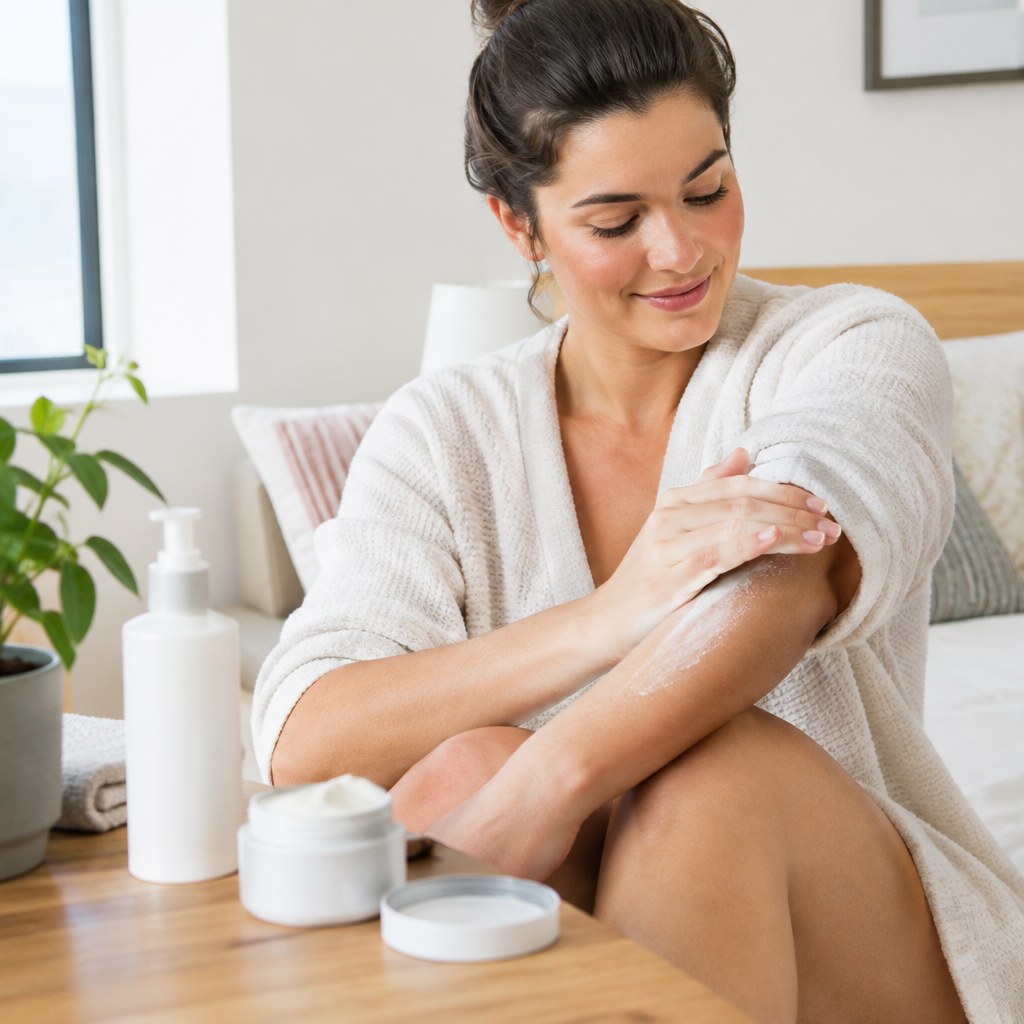
Dry skin can feel tight, rough or itchy and may flake or crack. The most useful home treatment is usually a consistent routine with a moisturizer your skin tolerates. You do not need a long list of kitchen ingredients to get started.
This guide covers everyday dryness in adults. Persistent rashes, painful cracks and a child’s skin problems may need an individual treatment plan rather than repeated home experiments.
Updated October 1, 2026.
Start with three changes
The American Academy of Dermatology (AAD) recommends short, warm showers, gentle cleansing and regular moisturizing. Keep baths or showers to about five to ten minutes, pat rather than rub with a towel, and apply moisturizer while the skin is damp.
Choose fragrance-free products. For very dry areas, a cream or ointment is usually more useful than a thin lotion. Reapply after handwashing and whenever the skin feels dry. Protect hands with suitable gloves during wet household tasks and in cold weather, and choose soft clothing that does not rub.
Make the routine easy to repeat: keep a tube beside the sink and another where you get dressed. If several products have been causing discomfort, write down their names and ingredients to show a pharmacist or clinician before buying replacements.
How to choose and use a moisturizer
Moisturizing treatments are also called emollients. They soften skin and help retain moisture. NHS guidance on emollients describes creams as a practical daytime choice and greasier ointments as useful for very dry skin, often at night. Ointments are not suitable for weeping eczema without professional guidance.
Plain petroleum jelly is one possible option for small dry areas. Petroleum jelly and mineral oil are different products; they are not interchangeable names. You can ask a pharmacist for an affordable fragrance-free choice rather than assuming a higher price means better relief.
Smooth emollient on gently. If a prescribed skin medicine is also part of your routine, ask how to space the applications; the NHS advises separating emollients and other treatments rather than mixing them together. Stop a new product if irritation persists, and seek advice on an alternative.
Practical safety: emollients can make floors and baths slippery. Product residue on clothes and bedding can make fabrics burn more readily, so keep them away from cigarettes and flames.
What about the home remedies you may already have?
Coconut oil: some evidence, with limits
A small controlled trial published in 2004 compared virgin coconut oil with mineral oil in 34 people with mild to moderate dryness. Both improved hydration during two weeks of use on the legs. Participants had been screened for reactions to the products before treatment.
That is useful evidence about a particular use, but it does not show that coconut oil is a cure for every cause of dry skin or that everyone can use it safely. It also does not establish how it compares with all modern moisturizers, or what happens with long-term facial use. If a plain moisturizer already works, this study is not a reason to replace it.
Sunflower and olive oil: do not treat all oils as equivalent
A study of adult skin found different effects from sunflower seed oil and olive oil: olive oil adversely affected the skin barrier under the study conditions, whereas sunflower oil preserved barrier integrity and improved hydration.
This finding challenges the idea that any cooking oil is automatically a good skin treatment. It does not establish a universal prescription for sunflower oil, and adult findings should not be turned into instructions for a newborn. Product composition and the condition of the skin matter. Discuss infant skin care with a qualified health professional.
Colloidal oatmeal: a soothing option
A product containing colloidal oatmeal may help uncomfortable, itchy skin. Use a preparation intended for skin care or bathing, following its directions. It is different from rubbing coarse breakfast oats over a rash. Avoid it if you have a known oat allergy, and discontinue it if a reaction develops.
The AAD includes colloidal oatmeal in its guidance on relieving eczema itch. It is a comfort measure; it does not replace treatment for an underlying condition.
Aloe vera: not a guaranteed solution
Aloe is often promoted as a remedy for almost any skin complaint. NCCIH’s evidence summary notes that information is insufficient to establish its usefulness for eczema. Topical aloe can itself cause burning, itching or rash. There is no reason to keep applying it if your skin feels worse, or to assume drinking aloe will treat dryness.
Honey, yogurt, milk and salt scrubs
This article previously presented several foods as dependable treatments. The evidence reviewed for this update does not justify those promises. A study of a food component, a laboratory experiment, or research in mice is not proof that drinking milk or applying a kitchen mixture will resolve dry skin in people.
Skip abrasive salt scrubs on dry, irritated areas. Avoid layering honey, yogurt and other ingredients simply because they are edible. A food used in a recipe and an ingredient in a formulated skin-care product are not the same treatment. For a practical first choice, use a simple product intended for dry skin.
Use a humidifier carefully, if your room is dry
A humidifier can be useful in dry indoor air, but more humidity is not always better. The US Environmental Protection Agency advises keeping relative humidity at or below 50%. A recommendation to set it to 60% is inappropriate.
Empty, dry and refill a portable unit daily, follow its maintenance instructions, and prevent nearby surfaces from becoming damp. A humidity meter can help you decide whether the room actually needs humidifying. Condensation on windows is a reason to reduce use. Do not neglect cleaning: a poorly maintained unit can spread contaminants.
When to get professional advice
If a consistent gentle routine is not helping, or products repeatedly burn or sting, arrange an assessment. Dryness can accompany eczema, psoriasis or another condition needing specific treatment. Seek prompt advice for painful, hot or swollen skin, spreading inflammation, pus or fever.
Bring a short record: when the dryness started, which areas are affected, any new products or medicines, and whether itching interrupts sleep. This helps turn an appointment into a focused discussion. You do not need to identify the cause yourself before asking for help.