Spinach Nutrition: Benefits, Cooking, and Important Cautions
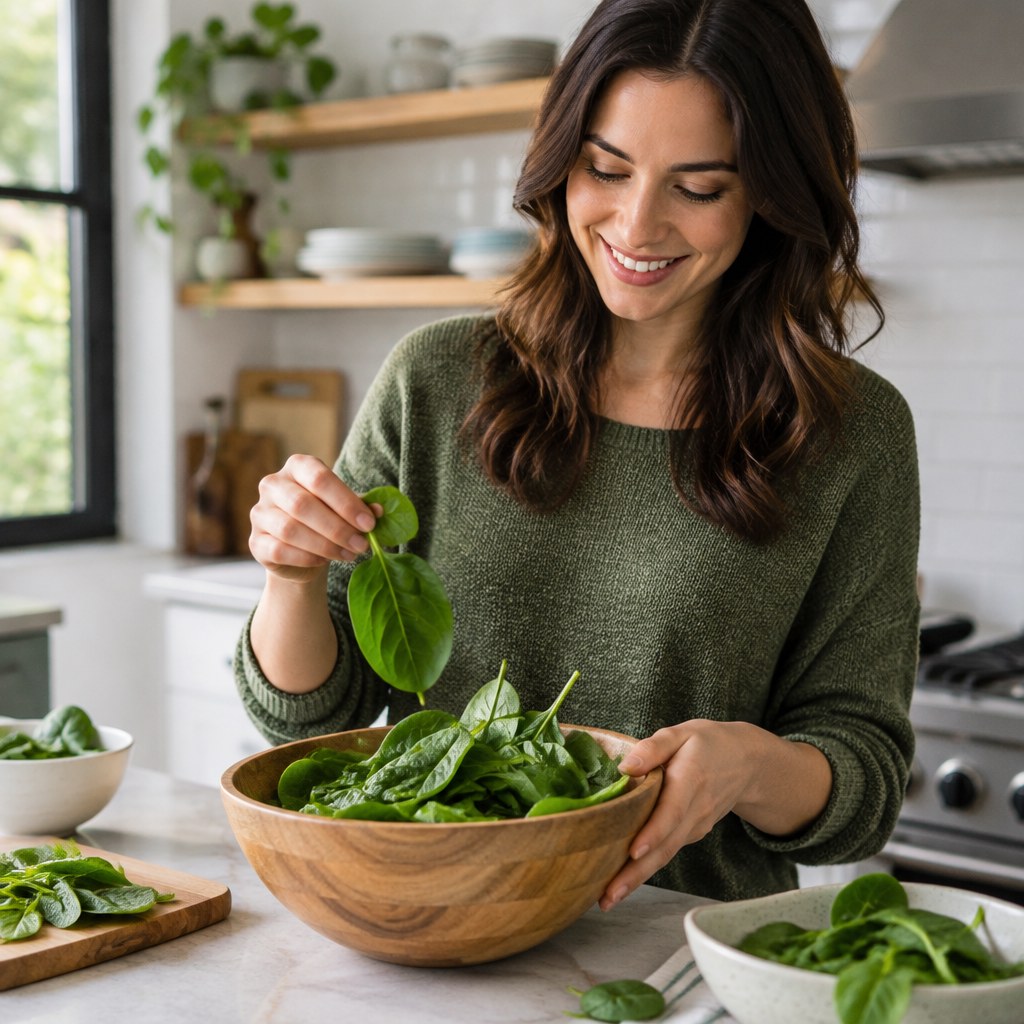
Updated October 1, 2026. Spinach is a versatile leafy green that provides folate, vitamin K, carotenoids, and nonheme iron. Fresh, frozen, and cooked spinach can all contribute to a varied diet. It cannot treat hemophilia, cure anemia, prevent cancer, or replace folic-acid guidance before pregnancy.
Raw and cooked spinach differ mainly in volume, texture, and concentration per household measure. A cup of cooked spinach contains far more leaves than a cup of raw spinach because the leaves collapse during cooking, so serving-based comparisons need context.
Folate and pregnancy
Folate is needed for cell division and normal red-blood-cell formation. Spinach contributes food folate, which makes it a useful part of meals before and during pregnancy.
Food folate is not the same as a guarantee of adequate folic acid at the critical time. The CDC recommends 400 micrograms of folic acid daily before and during early pregnancy to help prevent neural-tube defects. Because the neural tube develops very early, advice begins before pregnancy is recognized. Some people need different clinical guidance based on medicines or pregnancy history, so discuss the appropriate supplement with a clinician.
Iron: useful, but not an anemia cure
Spinach contains nonheme iron, the form found in plant foods. It can contribute to iron intake, but the body generally absorbs nonheme iron less efficiently than heme iron. The NIH Office of Dietary Supplements notes that vitamin C helps improve absorption of iron from plant foods.
Pair spinach with bell pepper, tomato, citrus, or another vitamin-C-rich food. This improves the meal; it does not establish that spinach alone will correct an iron deficiency.
Anemia has multiple causes, including iron deficiency, vitamin deficiency, chronic disease, inherited conditions, and blood loss. Diagnosis requires appropriate assessment, and confirmed iron deficiency often needs a planned amount of iron. Do not stop an iron supplement because an article says spinach is enough.
Vitamin K and blood clotting
Vitamin K is involved in normal clotting and bone-related proteins, and spinach is rich in it. This does not mean spinach treats hemophilia. Hemophilia A and B involve deficiencies of specific clotting factors and require specialist care. The CDC describes factor replacement and other medical treatments; food is not a substitute.
Vitamin K is especially important for people taking warfarin. The NIH advises keeping vitamin K intake consistent because sudden changes can alter warfarin’s effect. Do not abruptly avoid all greens or suddenly begin large daily spinach smoothies; ask the anticoagulation team how to keep intake steady.
Carotenoids and eye health
Spinach contains lutein, zeaxanthin, and beta-carotene. These compounds are involved in normal eye biology and are studied in relation to age-related eye disease. Eating spinach is not a treatment for cataracts or macular degeneration, and it does not replace eye examinations.
A little dietary fat can help absorb carotenoids. Try spinach with olive oil, seeds, nuts, eggs, or another suitable ingredient rather than assuming it must be eaten raw and plain.
Blood pressure and dietary nitrate
Spinach contains nitrate, and small controlled studies have examined short-term effects of nitrate-rich vegetables on blood-vessel function and blood pressure. These findings do not prove that spinach “controls hypertension.”
A broader pattern that includes vegetables, fruits, whole grains, appropriate protein sources, and limited excess sodium is more important than any single green. Continue prescribed blood-pressure treatment and monitoring.
Cancer, ulcers, and “anti-aging” claims
Compounds isolated from spinach may affect cells or animals in experiments. That does not establish that a serving prevents breast, prostate, or cervical cancer, shrinks tumors, or treats a stomach ulcer. The National Cancer Institute explains that no food or supplement has been proved to cure cancer.
Similarly, the presence of antioxidants does not mean spinach slows the body’s aging process or prevents wrinkles. Antioxidants have normal roles in food and biology, but broad “anti-aging” claims turn a laboratory concept into a promise that human studies have not established.
Kidney stones and oxalate
Spinach is high in oxalate. Most people do not need to avoid it, but someone who has had calcium oxalate stones may receive tailored advice about oxalate, sodium, calcium, and fluid. The NIDDK lists spinach among foods to discuss when calcium oxalate stones are relevant.
Do not remove dietary calcium on your own; depending on the stone type, adequate calcium with meals can be part of prevention. Ask for advice based on your stone analysis and health history.
Raw, cooked, and frozen spinach
- Raw: use in salads or add at the end of a sandwich. The volume is high and texture is crisp.
- Sautéed: cook briefly with garlic and a little oil until wilted.
- Steamed: cook until tender, then squeeze out excess water if adding to fillings.
- Frozen: convenient for soup, curry, pasta sauce, omelets, and casseroles. Thaw and drain when a recipe needs less moisture.
Cooking changes some nutrients in different directions and greatly reduces volume. There is no universally superior form. Rotate preparations and combine spinach with other greens and vegetables.
Food-safety basics
Keep spinach refrigerated and discard slimy or spoiled leaves. For loose or unwashed spinach, separate the leaves and rinse under running water; do not use soap or bleach. The FDA says produce labeled pre-washed or ready-to-eat can be used without washing again. Keep leaves away from raw meat and seafood and use clean hands and utensils.
A balanced conclusion
Spinach is a useful source of folate, vitamin K, carotenoids, and nonheme iron. Its value comes from contributing to varied meals—not from curing blood disorders, anemia, ulcers, cancer, or aging. A few clear cautions about warfarin, pregnancy, iron deficiency, and kidney stones make it easier to use spinach sensibly.