How to Cook Fluffy Couscous for Weeknight Meals
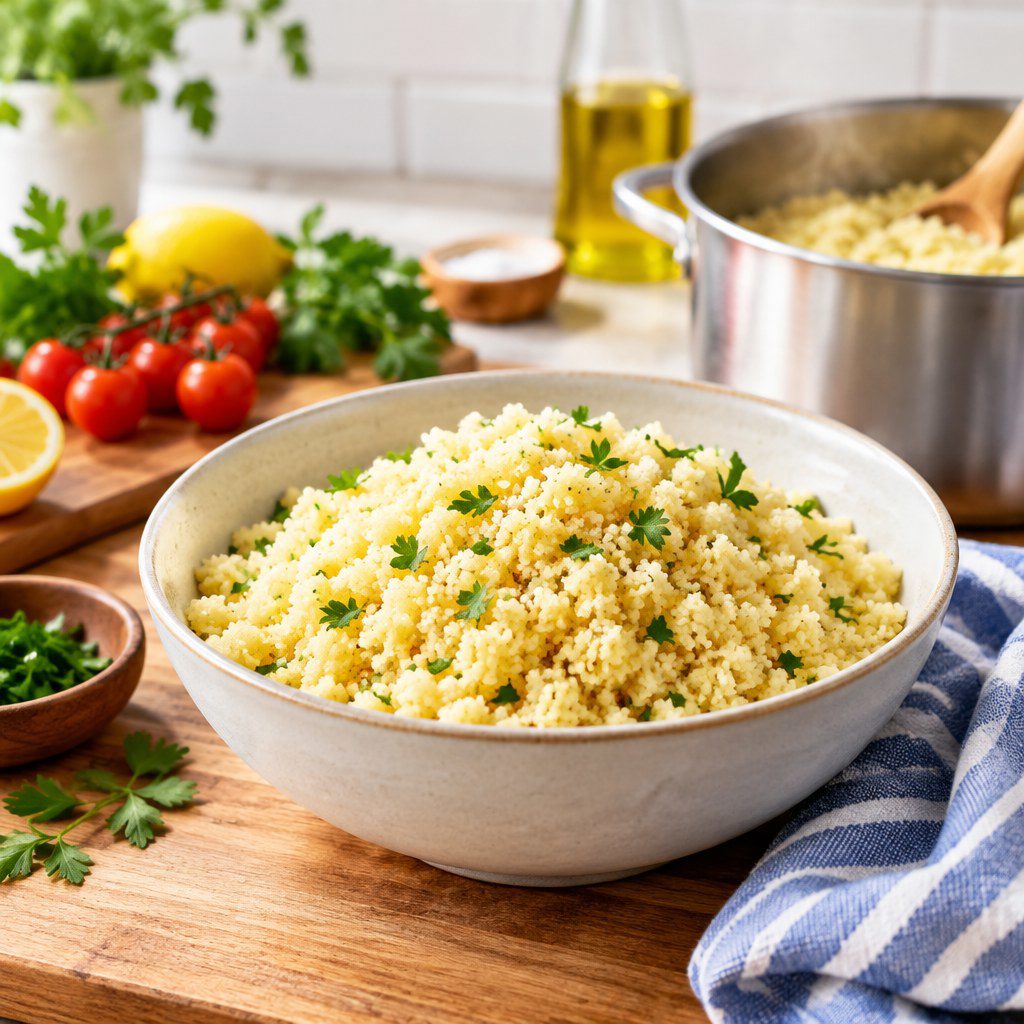
Fluffy couscous is a reliable weeknight staple when you use the right liquid ratio, keep it covered while it steams, and fluff it gently before serving. For most quick-cooking couscous, the practical method is simple: pour hot liquid over the grains, cover, rest, then separate the grains with a fork.
It cooks faster than many grains, works with vegetables, beans, chicken, fish, and leftovers, and can be seasoned to match almost any meal. The key is treating couscous as steamed pasta rather than boiling it like rice: too much agitation or liquid can make it heavy and clumped.
Choose the right type of couscous
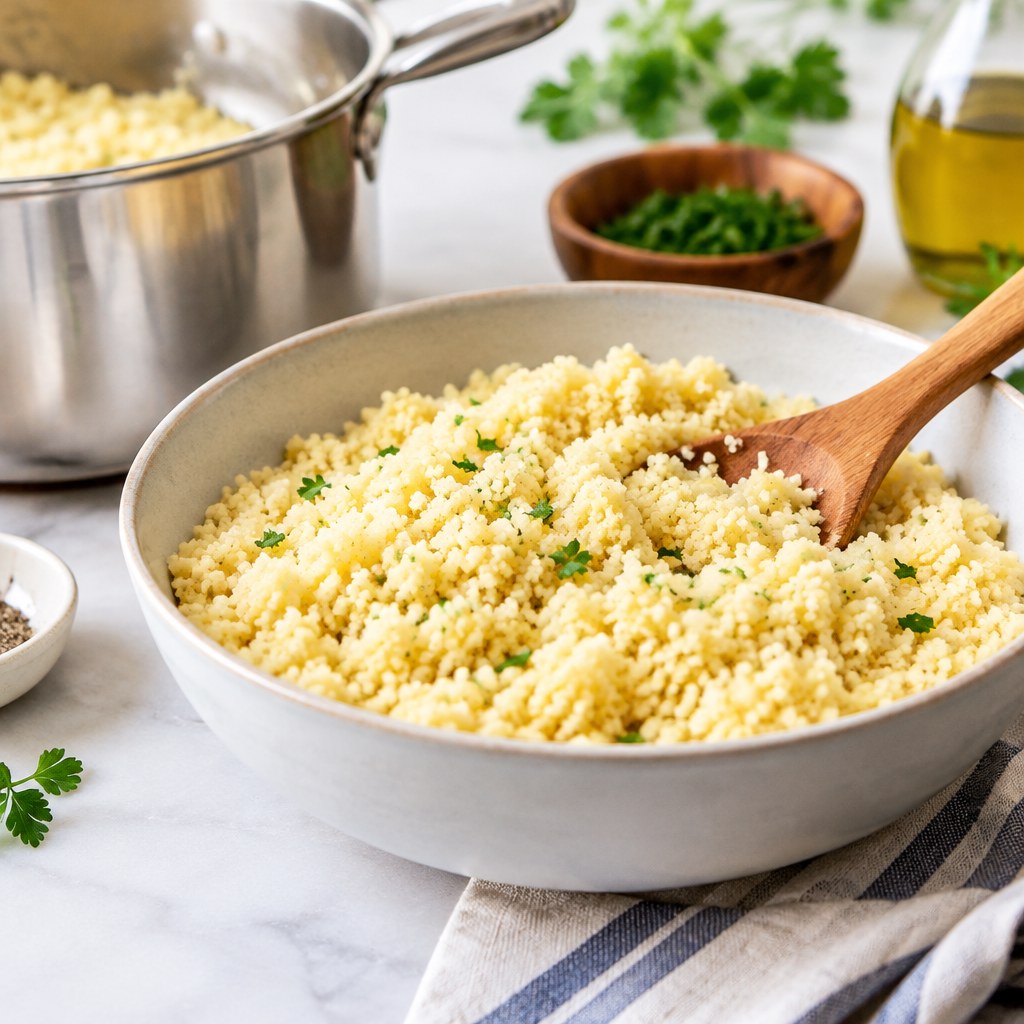
Before you start, check what is in the packet. “Couscous” can describe several products with very different cooking methods. The quick version commonly sold in grocery stores is usually fine or medium semolina couscous. It needs only hot liquid and a short covered rest. This is the best choice when dinner needs to come together quickly.
Israeli couscous, also called pearl couscous, consists of larger toasted pasta pearls. It is usually simmered in a saucepan and has a chewier texture. Lebanese couscous is larger again and normally takes longer. These varieties can be excellent, but they should not be substituted into a no-cook steaming method without changing the process.
💡 Tip: Read the package first. Brands can differ in grain size and recommended liquid, so the packet directions should take priority if they conflict with a general ratio.
What you need for quick-cooking couscous
- Dry quick-cooking couscous
- Water, stock, or a mixture of both
- Salt, if your liquid is unsalted
- A small amount of olive oil, butter, or another fat
- A heatproof bowl or saucepan with a tight-fitting lid
- A fork for fluffing
For a straightforward side dish, start with a 1:1 volume ratio: 1 cup couscous to 1 cup hot liquid. This generally produces tender, separate grains with standard quick-cooking couscous. If your package specifies a different ratio, follow that instruction. Measuring the first few times is worthwhile; it removes guesswork and makes results repeatable.
The dependable fluffy couscous method
The method below makes enough couscous for several side-dish portions or a modest base for a larger one-pan meal. Scale it up only if your bowl or pan has enough room for the grains to expand without packing tightly together.
- Measure the couscous. Put 1 cup of dry quick-cooking couscous in a heatproof bowl or a saucepan that has a lid.
- Season the grains. Add a pinch of salt if needed and 1 teaspoon of olive oil or a small piece of butter. The fat lightly coats the grains and helps them separate.
- Heat the liquid. Bring 1 cup water, stock, or a combination to a full boil. Taste stock before adding additional salt because prepared stock can already be salty.
- Pour, cover, and leave it alone. Immediately pour the boiling liquid over the couscous and cover tightly. Do not stir repeatedly. Let it stand for about 5 minutes, or for the resting time stated on the package.
- Fluff with a fork. Remove the lid and use a fork to lift, rake, and separate the grains. Work around the bowl rather than pressing the couscous down.
- Rest briefly, then serve. Give it another minute if it seems damp, then taste and adjust salt, acidity, herbs, or seasoning.
Using a bowl is convenient when you are also cooking vegetables or protein on the stovetop. Using a saucepan is helpful if you want to bloom spices in oil first. In either case, a snug lid matters. Steam finishes the cooking; losing that steam can leave parts of the couscous firmer than others.
Why this method stays light
Couscous absorbs hot liquid quickly. Covering the vessel holds heat and steam around every grain, while the short rest gives moisture time to distribute. Fluffing after the grains have absorbed the liquid breaks up small clusters without mashing them. A spoon can work in a pinch, but a fork is better at creating the loose texture most people want.
Build flavor for weeknight meals
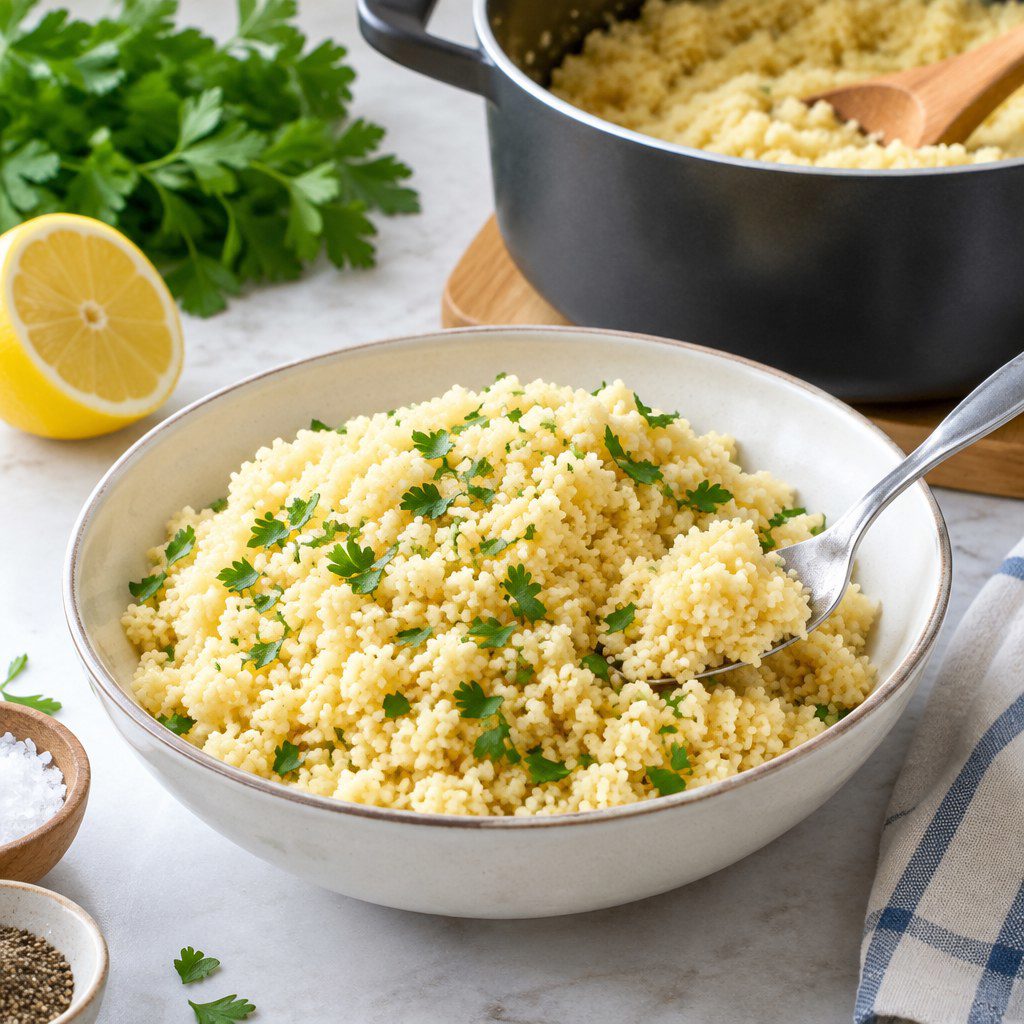
Plain couscous is useful, but a few deliberate choices can make it feel like part of the meal rather than an afterthought. Start by deciding whether you want the couscous to carry the main flavor or act as a neutral base for a strongly seasoned topping.
Use flavorful liquid
Vegetable or chicken stock adds depth before the grains begin cooking. If you use water, add salt and finish with lemon, herbs, or a dressing.
Toast spices first
Warm cumin, paprika, coriander, or curry powder briefly in oil before adding the liquid. Keep the heat moderate so the spices do not scorch.
Add fresh contrast
Fold in lemon juice, chopped herbs, scallions, toasted nuts, or roasted vegetables after fluffing to keep flavors clear and textures varied.
For example, you can pair lemon-herb couscous with roasted salmon and green beans. For a vegetarian bowl, use vegetable stock, add cumin and smoked paprika, then fold in chickpeas, roasted peppers, cucumber, and a squeeze of lemon. If you are using leftovers, keep the couscous lightly seasoned so it supports rather than competes with the main dish.
Be cautious with wet additions. Tomatoes, sautéed mushrooms, and saucy beans can release liquid into the grains. Add them just before serving, or drain them well, to protect the fluffy texture you worked to create.
Avoid common mistakes and recover quickly
Most couscous problems are fixable, especially when you catch them before serving. The table below separates likely causes from practical responses.
Do not boil it continuously
Quick couscous does not benefit from prolonged boiling. That approach can cause uneven absorption and a soft, pasty result. Bring the liquid to a boil first, then remove it from the heat once it meets the couscous. The covered resting period is the essential cooking stage.
Do not season only at the end
Salt and stock are absorbed with the liquid, so they provide more even seasoning than a final sprinkle alone. Still, always taste before serving. A small amount of lemon juice or vinegar can brighten a bland batch without requiring more salt.
Use couscous in a practical meal plan
Couscous is most useful when you treat it as a flexible component rather than a recipe that requires a separate shopping trip. Keep a packet in the pantry and combine it with whatever needs using: roasted vegetables, canned beans, rotisserie chicken, cooked lentils, or a fried egg.
- Fast side dish: Serve plain or herbed couscous beside grilled protein and a green vegetable.
- Warm grain bowl: Add chickpeas, roasted vegetables, greens, and a simple lemon-olive oil dressing.
- Leftover extender: Fold in small pieces of cooked chicken or vegetables to turn a limited amount of leftovers into a fuller meal.
- Lunch preparation: Cool couscous promptly, store it covered in the refrigerator, and add crisp herbs or nuts when you are ready to eat.
If you are preparing several meals at once, make couscous slightly less wet than you prefer for immediate serving, because refrigerated grains can soften as they sit. When reheating, add a small splash of water, cover loosely, and fluff again after warming. Food storage times and reheating methods vary by the other ingredients in your dish, so handle cooked food according to your usual food-safety guidance.
Frequently asked questions
Can you cook couscous with cold water?
Quick couscous needs hot liquid to hydrate properly in its short resting time. Cold water will not produce the same tender texture without a much longer soak, and results can be uneven.
Should you rinse couscous before cooking?
Usually, no. Quick-cooking couscous is generally prepared directly from the package. Rinsing adds unnecessary moisture and can interfere with the measured liquid ratio.
How do you keep leftover couscous from clumping?
Fluff it before cooling, add a small amount of oil if it seems dry, and store it in a covered container. Break it apart with a fork before reheating or using it cold in a salad.
Make couscous your weeknight default
Use quick-cooking couscous when you need a dependable base: measure equal parts couscous and hot liquid, cover for the package-recommended rest, fluff with a fork, and finish with flavors that match the rest of dinner.