Why Rabbits Need Space to Explore
Why space matters for rabbits
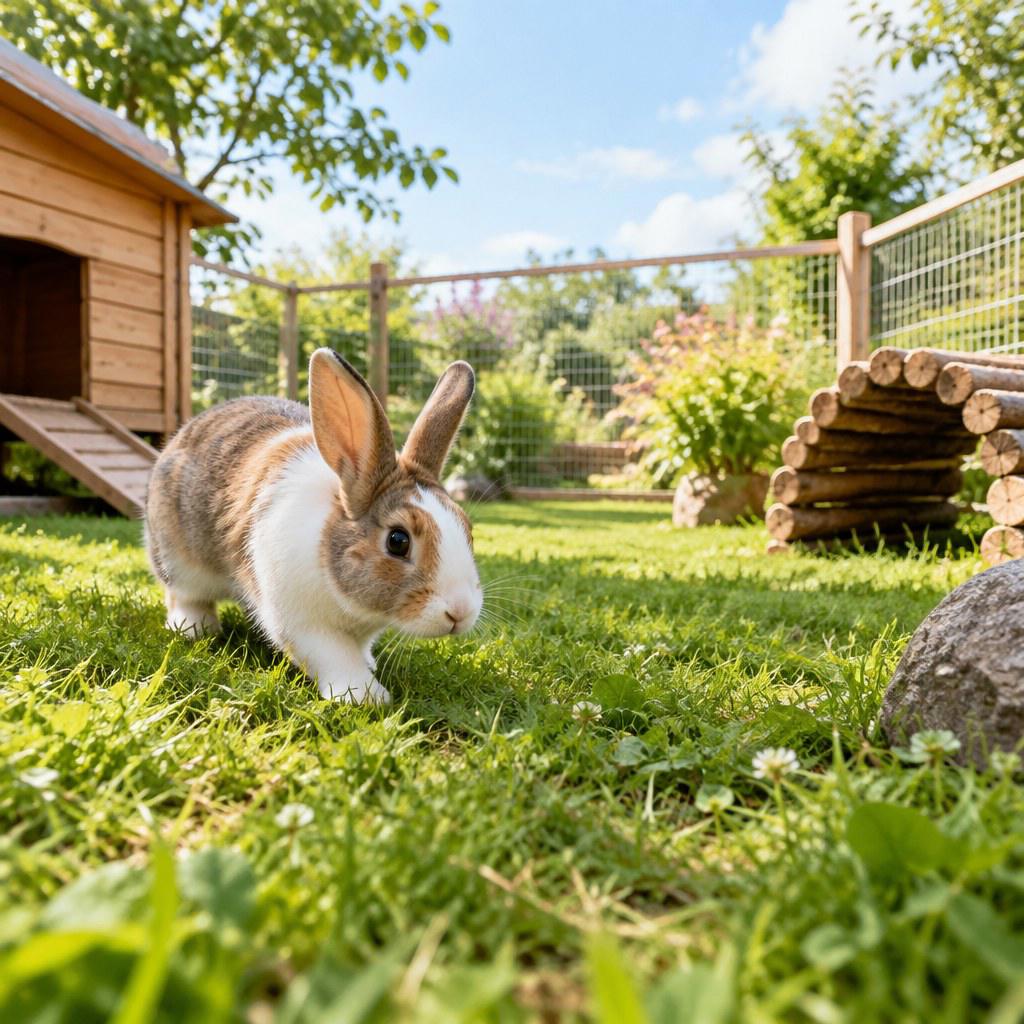
Rabbits need space to explore because movement, investigation, hiding, digging, and choosing where to rest are normal parts of rabbit behaviour. A larger, well-planned living area helps you support those needs safely, while making daily care, cleaning, and observation more manageable.
A small enclosure may appear convenient, especially in a home, rescue setting, or pet-care business, but it can limit how naturally a rabbit moves through its day. The better goal is not simply a bigger cage. It is a secure environment with room for activity, quiet recovery, and supervised exploration.
What rabbits do when they have room
Exploration is not an optional extra for rabbits. It is how they use their senses, make choices, and interact with their surroundings. A rabbit with access to a safe area can move at its own pace, investigate changes, and return to a familiar resting spot when it wants to feel secure.
Space also lets you see your rabbit’s normal routine. You can notice where it prefers to eat hay, whether it uses a litter tray consistently, how it responds to enrichment, and whether its energy or mobility has changed. These everyday observations can be harder when an animal has only enough room to sit, turn, and sleep.
Movement and play
Rabbits often run, hop, stretch, change direction, and make quick bursts of movement. An open area gives them a chance to move without repeatedly hitting a barrier.
Curiosity and choice
New cardboard, a tunnel, a hay-filled box, or a rearranged hide can encourage investigation. Choice matters: your rabbit should be able to approach or ignore an item.
Retreat and recovery
Exploration only works when a rabbit can retreat. A hideaway, covered area, or familiar pen gives it a protected place to pause after activity.
For bonded rabbits, space has another purpose: it gives each rabbit room to move away, rest separately, and access resources without unnecessary crowding. You should still provide more than one resting location and avoid creating a layout where one rabbit can block another from hay, water, or a safe exit.
Plan for a living area, not a holding area
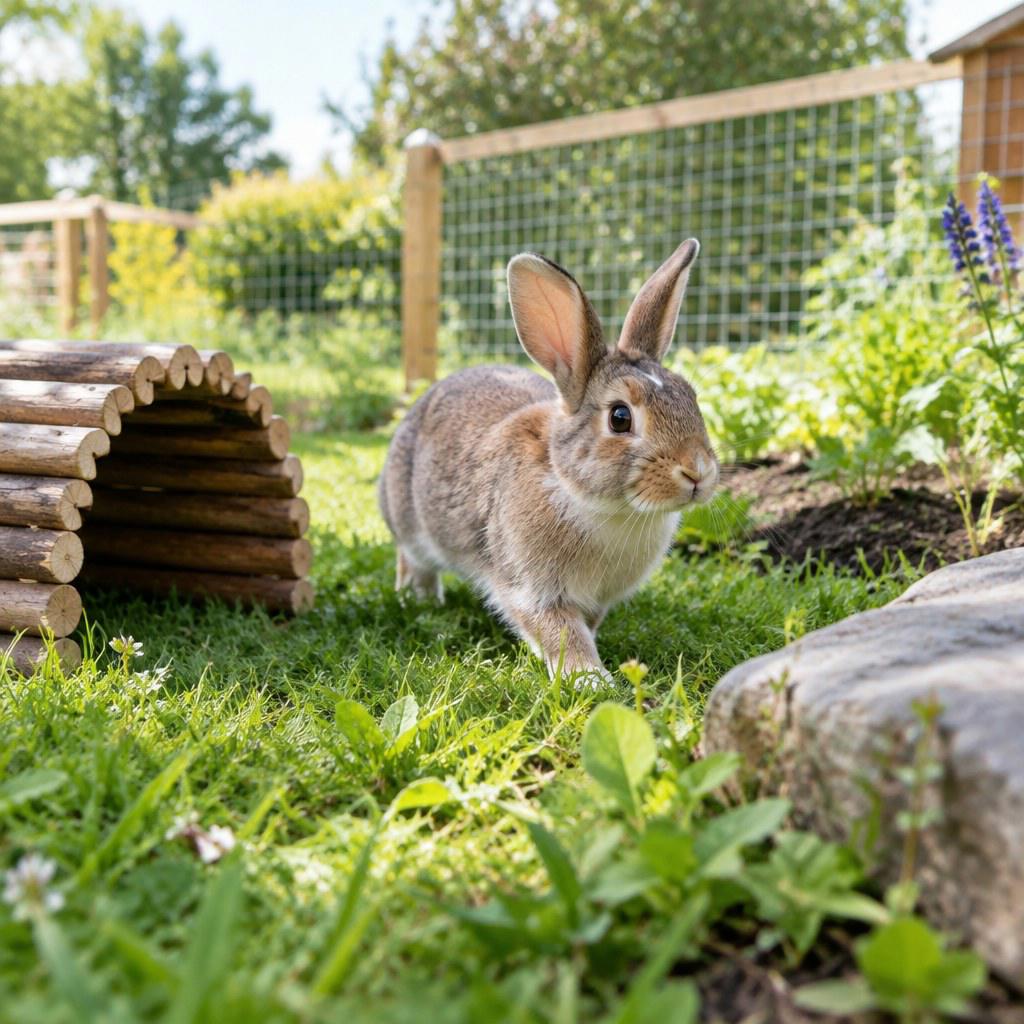
A useful rabbit space combines a home base with access to a larger exercise area. The home base holds essentials such as hay, water, a litter tray, and a sheltered resting place. The exercise area gives your rabbit opportunities to travel, investigate, and interact with safe objects. Depending on your household, this might be a rabbit-proofed room, a sectioned-off area, a large pen, or a secure outdoor run used under suitable conditions.
There is no single layout that fits every rabbit or property. Age, confidence, mobility, social grouping, indoor or outdoor housing, and supervision all affect the best choice. Rather than relying on a minimal footprint, assess whether your rabbit can move freely, stretch fully, stand upright, make several hops in a row, and choose between active and quiet zones.
Build distinct zones
Dividing the space into simple zones makes it easier to meet several needs at once. Keep the food and toilet area stable so it remains familiar. Place hiding spaces away from busy walkways. Put tunnels, paper bags without handles, untreated cardboard, and chew-safe items in the activity zone. If you offer digging material, use a stable dig box that is difficult to tip.
You do not need to fill every open area with toys. Rabbits benefit from clear pathways. A crowded pen can prevent natural movement just as effectively as a small one. Leave enough uninterrupted floor space for turning, hopping, and short runs.
Choose a surface that supports safe movement
Slippery floors can make rabbits hesitant to move. Use secure, non-slip coverings that are kept dry and cannot easily be pulled apart or swallowed. Check edges regularly, particularly where a rabbit may chew. In an outdoor setup, protect against escape, predators, toxic plants, extreme temperatures, and wet ground. Outdoor time should never mean leaving a rabbit without appropriate oversight and shelter.
💡 Tip: Change only 1 or 2 features at a time when improving a rabbit area. This lets your rabbit adjust without turning a familiar home into an uncertain environment.
A practical setup checklist
Start with the space you can consistently maintain. A well-managed area that is used every day is more valuable than an ambitious setup that remains closed, cluttered, or difficult to clean. Work through the following steps before allowing unsupervised access.
- Map the boundary. Identify doors, gaps behind furniture, stairs, cables, houseplants, and objects that could fall or trap a rabbit.
- Rabbit-proof the room. Cover or remove electrical cords, block tight spaces, protect skirting boards if needed, and remove substances or materials that should not be chewed.
- Create a reliable base. Include fresh water, plentiful hay, a litter tray, a hide, and a comfortable resting area. Keep these resources easy to reach.
- Add exploration materials. Use tunnels, boxes with entry and exit holes, paper packaging without hazardous coatings, hay-filled containers, and suitable chew items.
- Provide more than one route. Avoid dead ends, especially for a pair or group. A tunnel, hide, or pen should allow a rabbit to leave without being cornered.
- Supervise the first sessions. Watch what your rabbit investigates, chews, climbs, and avoids. Use those observations to improve the layout.
- Inspect daily. Remove soiled material, check barriers and flooring, refresh hay and water, and replace damaged enrichment before it becomes a hazard.
For example, if you are converting part of a living room, begin with a small protected area around the rabbit’s home base. Once you know which furniture, corners, and cables attract attention, expand access gradually. This is usually easier than giving full-room access immediately and discovering hazards after the fact.
Risks and mistakes to avoid
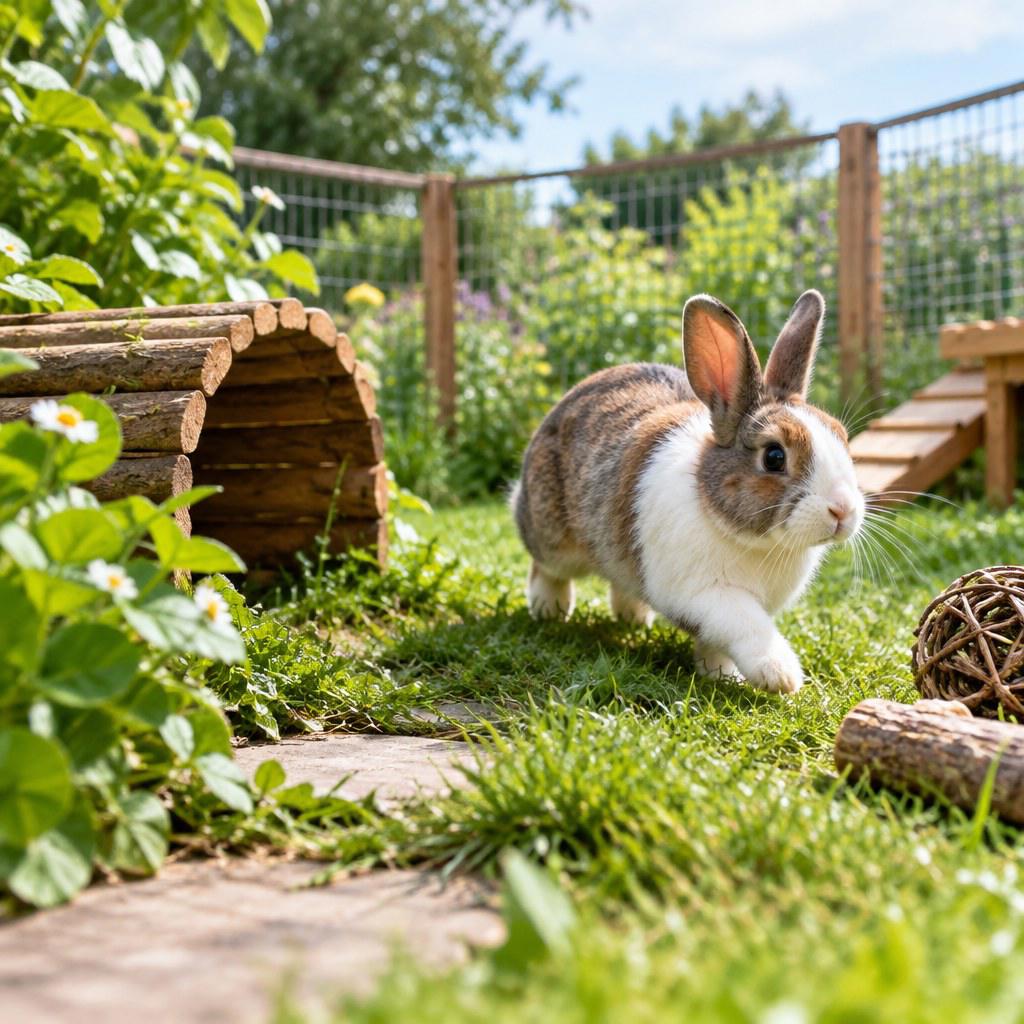
The main challenge is balancing freedom with safety. More space is not automatically better if the area contains hazards, lacks shelter, or cannot be monitored. Good exploration space is planned, regularly checked, and adjusted to the rabbit in front of you.
Using space that is too bare
An empty area may allow movement but offer little reason to explore. Add a small number of safe objects with different uses: a place to hide, a place to chew, a place to forage, and a place to travel through. Rotate items rather than continually buying more. If an object causes chewing that seems unsafe or creates stress, remove it and try a different option.
Adding enrichment without checking materials
Not every household object is rabbit-safe. Avoid access to wires, treated wood, adhesives, loose fabric threads, small plastic pieces, and plants unless you have confirmed their suitability. Inspect cardboard boxes for tape, staples, labels, and weakened sections before use. If you are unsure about an item, do not place it in the rabbit area until you have checked with a rabbit-savvy veterinary professional or a reliable animal welfare resource.
Forcing interaction
Do not chase a rabbit around its play area or repeatedly pull it from a hide to make it “social.” A rabbit may explore most confidently when it controls the pace. Sit quietly nearby, offer a familiar forage item, and allow it to approach. If your rabbit consistently avoids an area, review noise, flooring, lighting, scent, and access routes rather than assuming it needs more encouragement.
Ignoring changes in behaviour
A rabbit that suddenly stops moving around a familiar area, hides more than usual, or changes eating or toileting habits may need closer attention. Environmental changes can be a factor, but behaviour can also reflect an underlying health concern. Contact an appropriate veterinary professional promptly if you are worried, particularly when changes are sudden or accompanied by reduced appetite.
Use a simple decision framework
When deciding whether a rabbit has enough room to explore, assess the environment through 4 questions. Can your rabbit move naturally? Can it choose between activity and rest? Can it access food, water, shelter, and a litter area without being blocked? Can you keep the entire area safe and clean every day?
If the answer to any question is no, improve the layout before increasing access. You may need to clear a route, add a non-slip surface, provide another hide, secure a cable, or reduce clutter. Small practical changes often make an existing area much more usable.
Make space part of everyday rabbit care
Choose a safe, maintainable area where your rabbit can move, investigate, retreat, and repeat those choices every day.