How to Create a Practical Entryway in a Small Flat
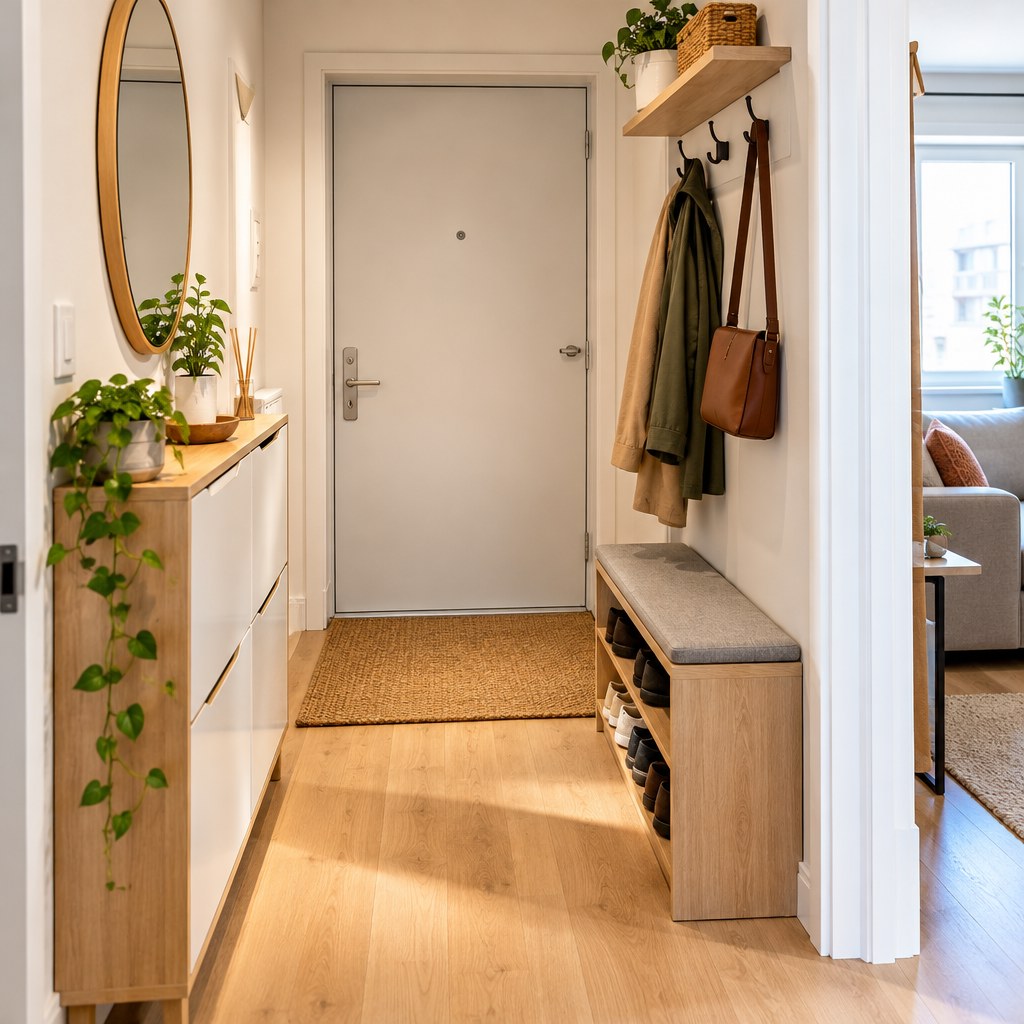
A practical entryway in a small flat is created by giving every arriving and leaving item a clear home without narrowing the route through the door. With a compact landing zone, vertical storage and a simple reset routine, you can make even a narrow hall easier to use, cleaner to look at and safer to move through.
The aim is not to reproduce a large hallway. It is to support the actions that happen there: unlocking the door, taking off shoes and outerwear, putting down keys, sorting post, and leaving again without a last-minute search.
Start with movement, not furniture
Small entryways become frustrating when storage is chosen before the walking route is understood. A bench may look useful, for example, but it can make a tight entrance harder to pass through when someone carries bags, opens the door or shares the flat with another person.
First, stand outside your front door and repeat the real arrival sequence. Open the door fully, step inside, close it, remove your shoes and place the items you normally carry. Notice where your hands naturally reach and where objects are currently dropped. Those habitual stopping points reveal where storage will work.
Map the non-negotiable clear path
Keep the route from the door to the next room unobstructed. Check door swings, radiator controls, electrical panels, cupboards and any shared circulation area. If an item forces you to turn sideways, step around it or move it every time the door opens, it is probably too deep for that wall.
Measure the usable wall surface as well as the floor. In a compact flat, shallow wall-mounted pieces are often more practical than a freestanding console. A narrow ledge for keys, hooks above it and a vertical shoe solution can perform the work of a larger hall unit while preserving floor space.
💡 Tip: Mark the proposed footprint of a bench, shoe rack or cabinet with masking tape before buying it. Live with the outline for a few days and test the door, bags and daily traffic around it.
Choose storage that earns its space
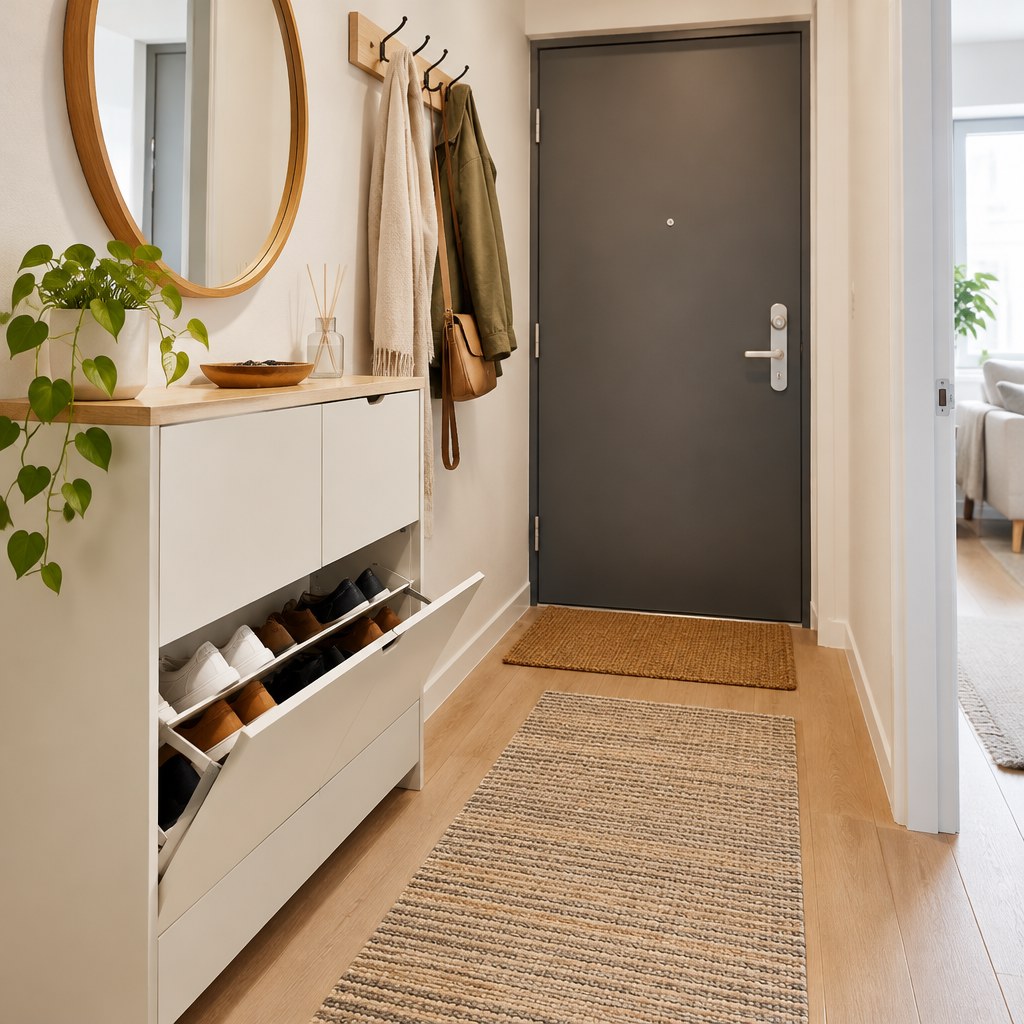
Every item in a small entryway should solve a specific problem. Start with the objects that regularly collect there, then choose the smallest storage method that contains them. This prevents the common mistake of installing a large organiser that becomes another place to pile things.
A landing place for small items
Use a shallow tray, bowl or wall-mounted pocket for keys, access cards and headphones. Keep it near the handle side of the door, where you naturally reach when arriving.
A limit for shoes
Store only the pairs currently in use. A low rack, upright organiser or closed cabinet works best when it has a clear capacity rather than room for every shoe you own.
Outerwear within reach
Hooks are efficient for daily coats and bags. Use a limited number so the wall does not become permanent storage for seasonal layers and rarely used accessories.
Use height before adding depth
Walls can hold hooks, rails, slim shelves, a mirror and a message board without consuming the floor. Position frequently used hooks at a reachable height for the people who live in the flat. Place less-used bags or seasonal accessories higher up, ideally in labelled boxes or baskets that are easy to remove.
Closed storage gives a calmer appearance, but open storage can be faster for wet umbrellas, everyday bags and shoes that need to air. A mixed approach is usually practical: keep a few visible items available, and conceal paperwork, cleaning supplies or visual clutter behind a door or in a lidded container.
Build useful entryway zones
A well-organised small entryway works because it separates tasks, even when the whole area is only one wall. Think in zones rather than in furniture categories. You may only need a hook rail, a tray and a mat, but each should have a distinct job.
The arrival zone
Place this closest to the door. It should receive keys, post, sunglasses, reusable bags and anything you carry in. A small tray stops these loose objects migrating onto nearby tables. If post enters the flat here, add one upright file or letter holder and decide what happens next: recycle, action, file or hand to someone else.
The transition zone
This is where shoes, umbrellas, coats and bags change hands. A washable mat protects the interior floor and establishes a visual boundary. If you need seating to put on shoes, choose a narrow perch or a fold-down option only after confirming it does not obstruct the route.
The departure zone
Keep the things you check before leaving together: keys, wallet, transport pass, work bag, dog lead or shopping bags. A mirror is useful here because it supports a final appearance check while reflecting light into an otherwise dim hall. If you use a mirror above a shelf, leave enough clearance so items cannot knock against it.
Set up your entryway step by step
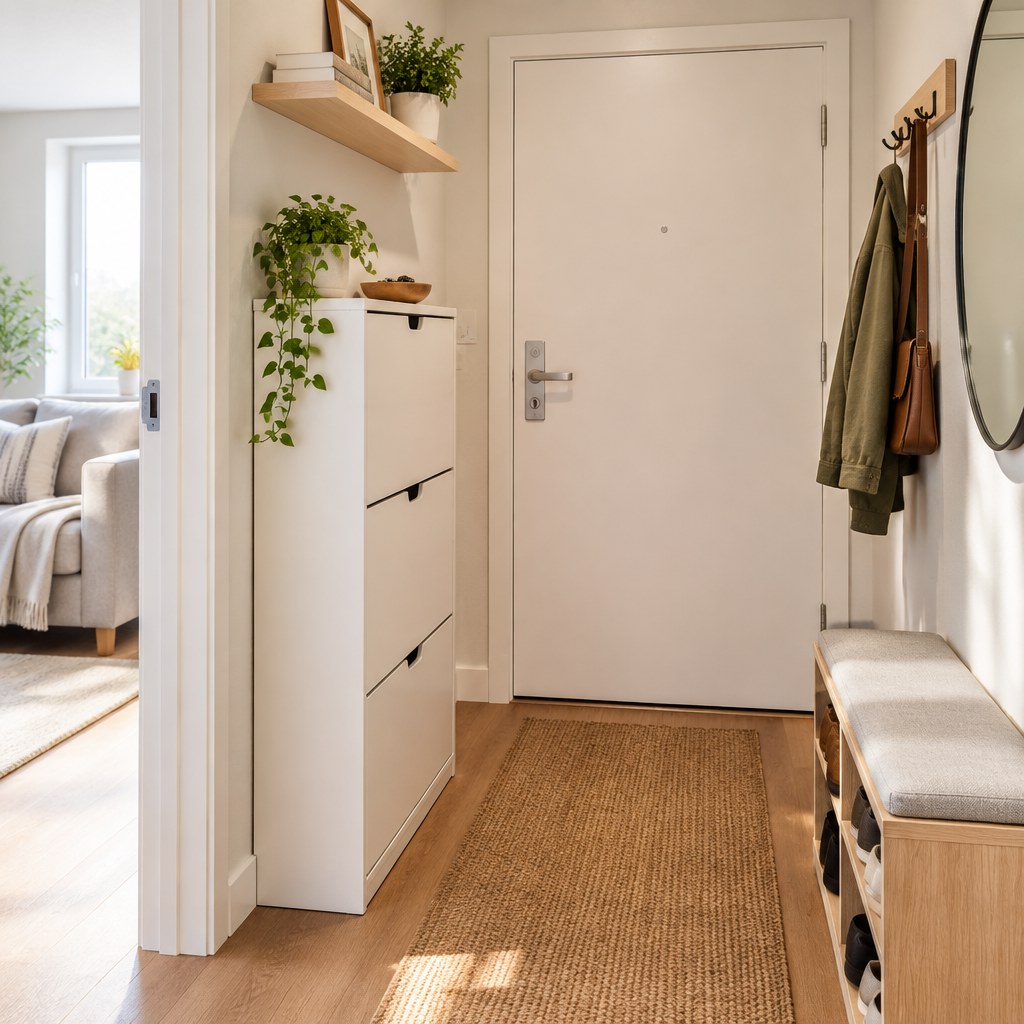
You do not need to buy everything at once. Build the system around current habits, test it, then add only what is still missing. This approach is especially useful in rented flats, where drilling and large built-ins may not be an option.
- Empty the area completely. Remove shoes, bags, parcels, post and decorative pieces. Clean the floor and wall so you can see the actual amount of usable space.
- Sort entryway items by frequency. Keep daily essentials nearby, move occasional items to another storage area, and discard or donate what no longer serves you.
- Define a maximum capacity. Decide how many shoes, coats and bags the entryway can hold while remaining easy to pass through. The limit should fit the space, not your total possessions.
- Install the essential drop points. Begin with hooks, a key tray and shoe containment. These three features solve many day-to-day problems without requiring a major redesign.
- Add lighting and a mirror if needed. Good illumination helps you find items and makes departures more comfortable. Check whether an existing light source is sufficient before adding lamps.
- Test the setup for a week. Pay attention to what still lands on the floor or migrates into other rooms. Add a basket, hook or paper slot only when a repeated behaviour shows a genuine need.
If you rent, check your tenancy agreement or ask the property owner before drilling into walls. Adhesive hooks and freestanding organisers may be suitable for lighter loads, but follow the manufacturer’s instructions and avoid relying on them for heavy bags or bulky coats.
Avoid common small-space mistakes
The biggest mistake is treating the entryway as a temporary holding area. Temporary piles tend to become permanent because there is no decision point for them. Give each category a destination, and make that destination quick enough to use when you are tired or in a hurry.
Buying a storage unit before measuring
A cabinet that looks slim in a product image can still interfere with a door swing or leave too little turning space. Measure the open door, skirting boards and nearby switches. If you already own a piece that is too deep, consider moving it to another room and using shallower wall storage instead.
Keeping every season at the front door
Heavy coats, boots, scarves and sports gear can overwhelm a small hall. Keep the current season and daily essentials accessible; store the rest elsewhere. Rotate items when weather or routines change rather than trying to make the entryway hold everything year-round.
Making open storage visually demanding
Open hooks and shelves are convenient, but they show every mismatched bag and loose item. Use matching containers where possible, set a limit on what can remain visible and reserve one basket for objects that need to be returned elsewhere in the flat.
⚠️ Check: Do not block fire exits, shared building access, electrical equipment or required clearances with furniture or stored belongings. If you are unsure about a building rule, confirm it with the relevant property manager or landlord.
Use a simple decision framework
When deciding whether an item belongs in your entryway, ask 3 questions: Do you use it when entering or leaving? Can it be stored vertically or in a shallower form? Does it still leave the walking route clear? If the answer is no, give it a home elsewhere.
Prioritise function in this order: safe movement, daily access, contained clutter, then appearance. Once the essential zones work, a mat, mirror, artwork or plant can make the area feel more welcoming without making it harder to use.
Start with one clear landing zone
This week, clear the floor by the door, assign a home for keys and shoes, and test the result during your normal routine. Add storage only after you know what the space still needs.