Planning a Rainy-Day Itinerary in Amsterdam
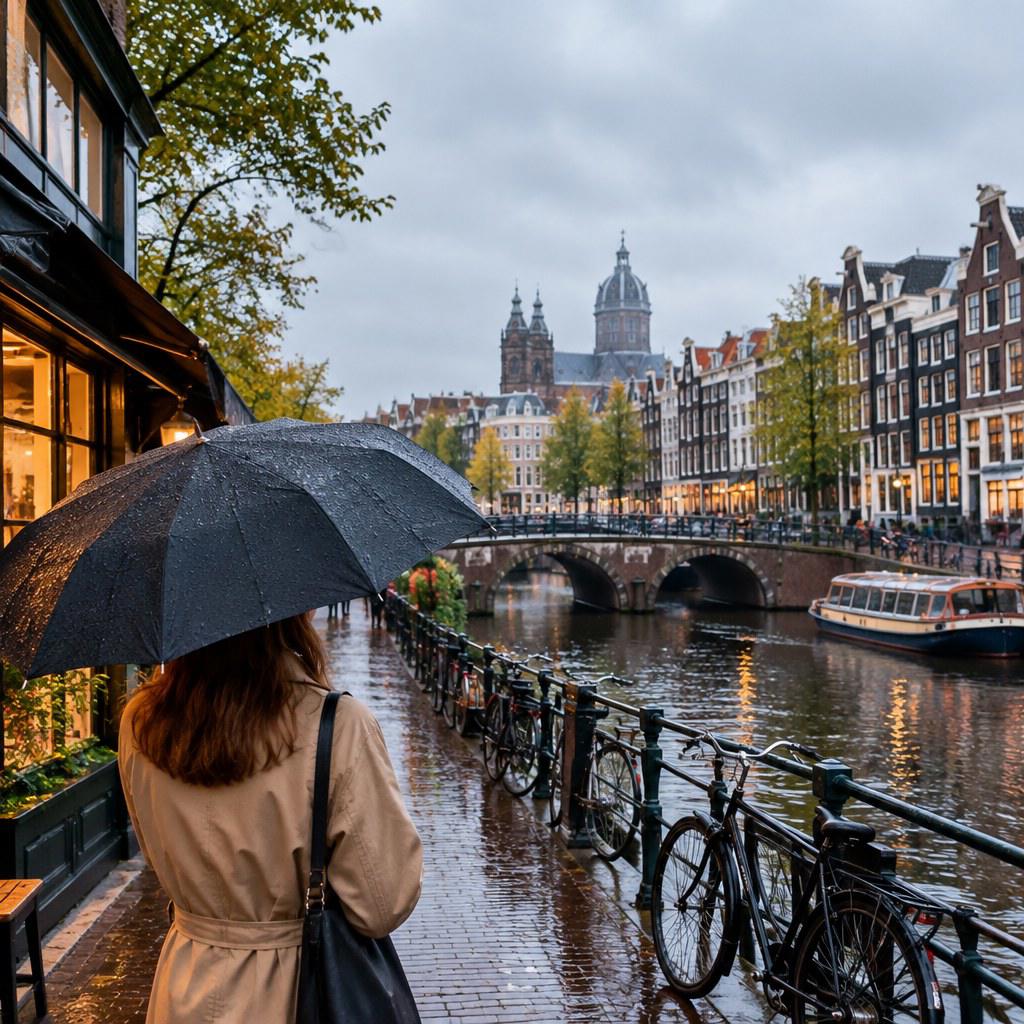
A rainy day does not need to reduce Amsterdam to a series of rushed museum visits. You can build a practical itinerary around short walking distances, timed indoor stops, reliable places to pause, and one or two weather-tolerant outdoor moments. The result is a day that still feels like Amsterdam rather than a backup plan.
The key is to avoid crossing the city repeatedly. Choose one neighbourhood as your base, book only the indoor stops that need advance timing, and leave enough flexibility for wet streets, crowded entrances, and a longer lunch. This approach works whether you are visiting for leisure, fitting culture around meetings, or planning a low-stress day for colleagues or clients.
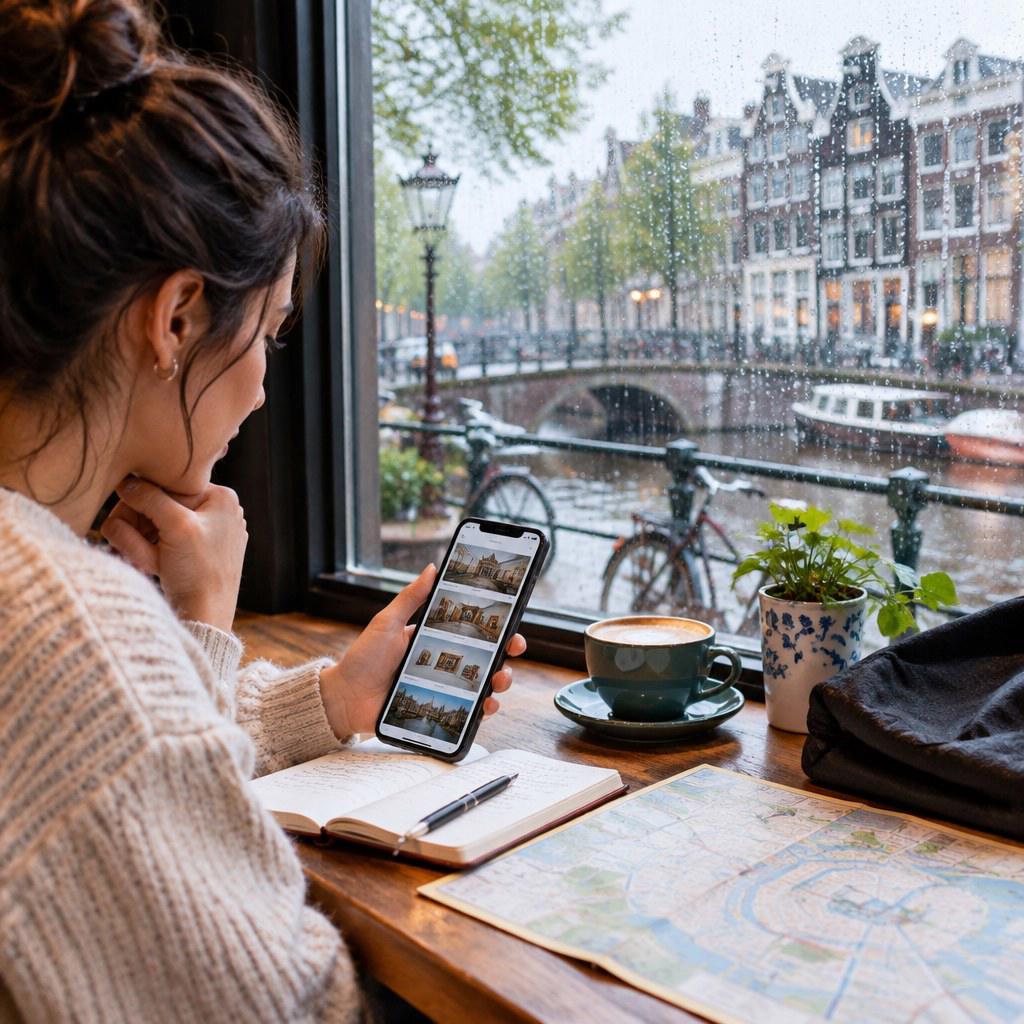
Why rain changes the plan
Amsterdam is easy to explore on foot when conditions are mild, but rain changes the cost of every decision. A route that looks close on a map can involve wet cycling lanes, narrow pavements, busy crossings, and queues outside popular attractions. If you arrive cold or soaked at a timed entry, the day can become unnecessarily rigid.
The issue is not simply rainfall. Wind can make umbrellas awkward beside canals, while intermittent showers tempt you to keep moving without a useful destination. Short daylight periods in some seasons can also make an unstructured afternoon feel less appealing. Treat weather as a planning constraint, not a reason to abandon the city.
Separate fixed commitments from flexible time
Start with anything that has a specified entry time: a museum, concert, meeting, workshop, or restaurant booking. These are your anchors. Then place flexible activities around them: browsing a bookshop, taking a canal-side walk, visiting a market hall, or stopping for coffee. Flexible time is what absorbs delayed transport, a heavy shower, or a queue.
A good rainy-day itinerary has fewer locations than a sunny-day route. That does not make it less interesting. It gives you time to notice an exhibition, have a proper meal, or take a sheltered tram rather than treating every journey as a sprint.
💡 Tip: Check opening hours, ticket conditions, accessibility information, and the day’s transport notices directly with each venue before you leave. These details can change, particularly around holidays, special exhibitions, and maintenance work.
Choose indoor anchors before choosing attractions
Rather than making a long wish list, choose 2 or 3 indoor anchors that suit your energy, interests, and location. Amsterdam offers major art museums, history museums, smaller specialist collections, cinemas, libraries, churches, food halls, independent shops, and cafés. The strongest combination usually mixes one substantial visit with lighter stops.
Use neighbourhood clusters
Pick a compact area and stay in it for several hours. Museumplein works well when you want art museums and a planned lunch nearby. The Canal Ring suits a slower combination of historic interiors, galleries, cafés, and canal views from sheltered spots. The eastern side of the centre can work for a more local-feeling mix of cultural venues, food, and browsing.
Do not assume that the most famous venue is automatically the best rainy-day choice. A major museum may be ideal if you have a confirmed slot and want to spend a large part of the day indoors. A smaller museum can be better if you need a shorter visit between appointments or prefer to avoid committing most of the day to one building.
Give each anchor a role
- Main anchor: your longest indoor activity, usually the one that benefits most from advance booking.
- Recovery stop: a café, lunch venue, library, or similar place where you can dry off and reassess.
- Optional anchor: a nearby activity you can add if rain continues or skip if the weather improves.
- End-of-day stop: dinner, a film, a performance, or a relaxed drink close to your final transport connection.
This structure is especially useful if you are hosting visitors. You can communicate a clear plan without making the whole day dependent on perfect timing.
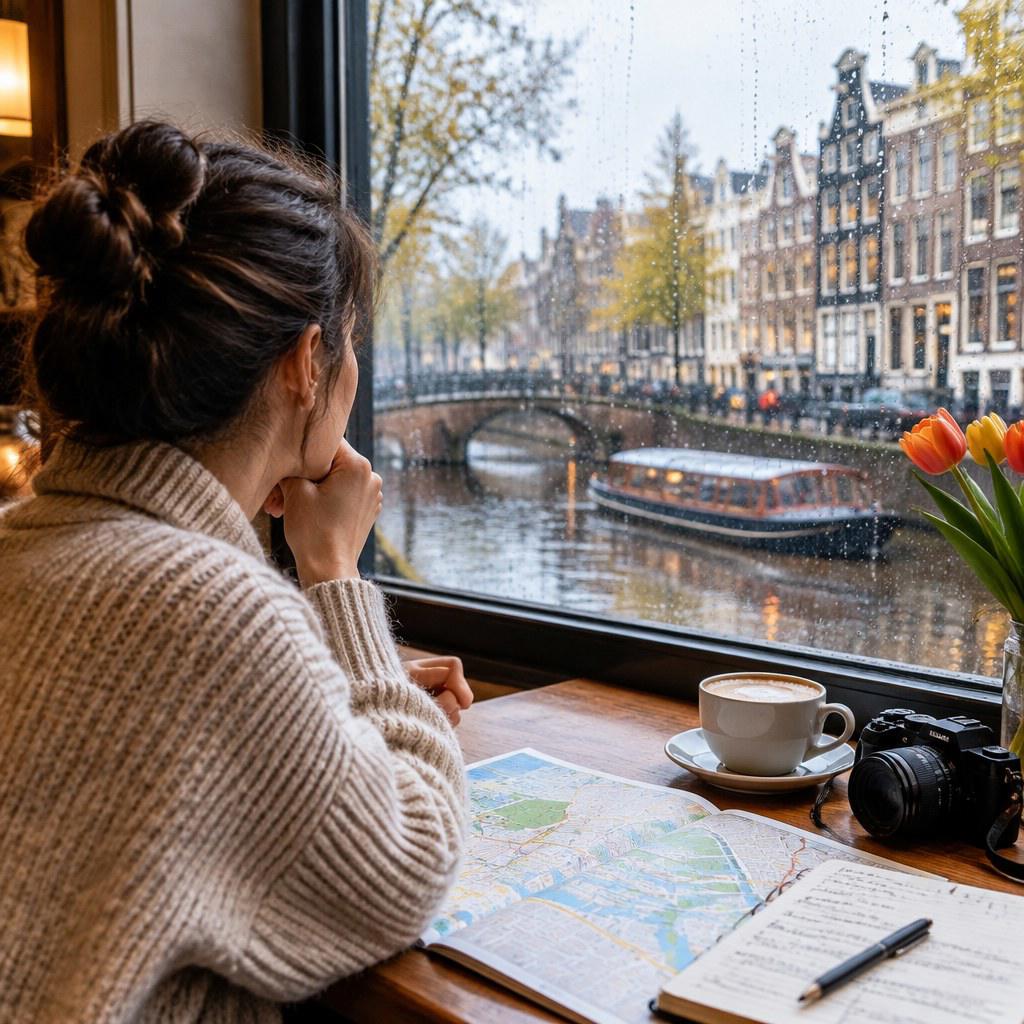
Build a route that stays manageable
The best route is not the one with the most stops. It is the one that gives you a useful experience even if you remove an activity. Plan a morning, afternoon, and evening block, then allow a buffer between each. A buffer can be as simple as time for a warm drink, a tram journey, or a slower walk under cover.
Option 1: Art-focused day near Museumplein
Begin with a pre-booked museum visit in the late morning, when you are less likely to feel pressured by an early start. Follow it with lunch nearby rather than crossing town immediately. In the afternoon, choose a second, shorter cultural stop or spend time in a café with room to sit. End with dinner in the same broader area or use public transport to reach an evening booking.
This option is effective when you want a clear structure and prefer substantial indoor time. Its trade-off is that popular museums can require advance planning, so always confirm ticket availability before treating this as your primary route.
Option 2: Canal Ring culture and café route
Start with breakfast or coffee close to your first planned visit. Choose one historic house, museum, gallery, or exhibition as the central activity. Afterward, take a deliberately short canal walk only if the rain is light; otherwise, move directly to lunch. Reserve the afternoon for bookshops, design shops, another small cultural venue, or a long café stop.
This route gives you more flexibility than a major-museum day. It also works well for mixed groups because people can engage with the city at a gentler pace. The trade-off is that the centre can be busy and pavements can feel crowded in wet weather, so avoid stacking too many stops.
Option 3: Work-friendly rainy day
If you need to combine sightseeing with work, choose a venue or café where you can sit comfortably for a defined period, then schedule one cultural activity before or after it. Keep your meeting location and your main activity close together. Pack a charging cable, a compact waterproof layer, and a plan for storing a wet umbrella without dripping on your work materials.
For example, you might schedule a morning meeting, allow time for lunch and note-taking indoors, then use the late afternoon for a museum or cinema. This protects your work commitments while still giving the day a distinct sense of place.
Execute the itinerary step by step
Once you have chosen a route, convert it into a short operational plan. Keep it on your phone, but write down any ticket references and venue addresses in a format you can access if your connection is unreliable.
- Check the forecast in the morning. Look for the timing and intensity of rain, not just the rain symbol. Use the information to decide whether a short outdoor segment is realistic.
- Confirm your fixed bookings. Review entry windows, bag rules, arrival guidance, and cancellation terms. Do not rely on a screenshot from weeks earlier.
- Map transitions, not only destinations. Identify the simplest route between each stop and note a nearby indoor fallback.
- Dress for repeated transitions. Choose waterproof outerwear and shoes that remain comfortable after several hours. An umbrella can help, but it is not a complete solution in wind or crowds.
- Leave space for food and warmth. Do not treat meals as an afterthought. A seated break can reset the pace of the day and prevent poor decisions made while tired or wet.
- Make one decision point after lunch. Ask whether to continue with the optional stop, stay longer where you are, or switch to an earlier evening activity.
For groups, share a single meeting point and a clear rule for delays. For example, agree that anyone separated by weather or crowds will go directly to the next indoor anchor rather than waiting outside. This is simpler and safer than trying to coordinate in a busy street.
Avoid common mistakes and recover quickly
Trying to preserve a sunny-day itinerary
The most common error is keeping every outdoor stop and hoping the rain will ease. This creates rushed journeys and makes indoor visits feel like brief shelter rather than meaningful activities. Recover by removing the least important destination and extending your best indoor stop.
Booking too many timed entries
Timed tickets reduce uncertainty, but too many can make a wet day fragile. A delayed tram, a long queue, or a slow walk can affect everything after the first booking. Limit fixed entries to the activities that genuinely need them, and avoid scheduling them back to back.
Underestimating wet-weather comfort
A fashionable but impractical outfit can turn a manageable shower into a miserable afternoon. If you are already wet, do not force another outdoor segment because it was on the plan. Find a dry stop, buy a warm drink or meal, and reassess after you are comfortable.
Using transport without a fallback
Public transport can make a rainy day far easier, but service changes and crowds are possible. Keep a walkable alternative between your most important stops, and avoid relying on a connection that leaves no margin before a timed entry.
Use a simple decision framework
Choose 1 main indoor anchor, 1 recovery stop, and 1 optional nearby activity. Keep transitions short, verify bookings on the day, and remove stops rather than rushing when conditions worsen.
Your next step is to select one neighbourhood, check the current weather and venue information, and build your day around the shortest practical route between indoor spaces.