Making a Simple Chickpea and Tomato Stew
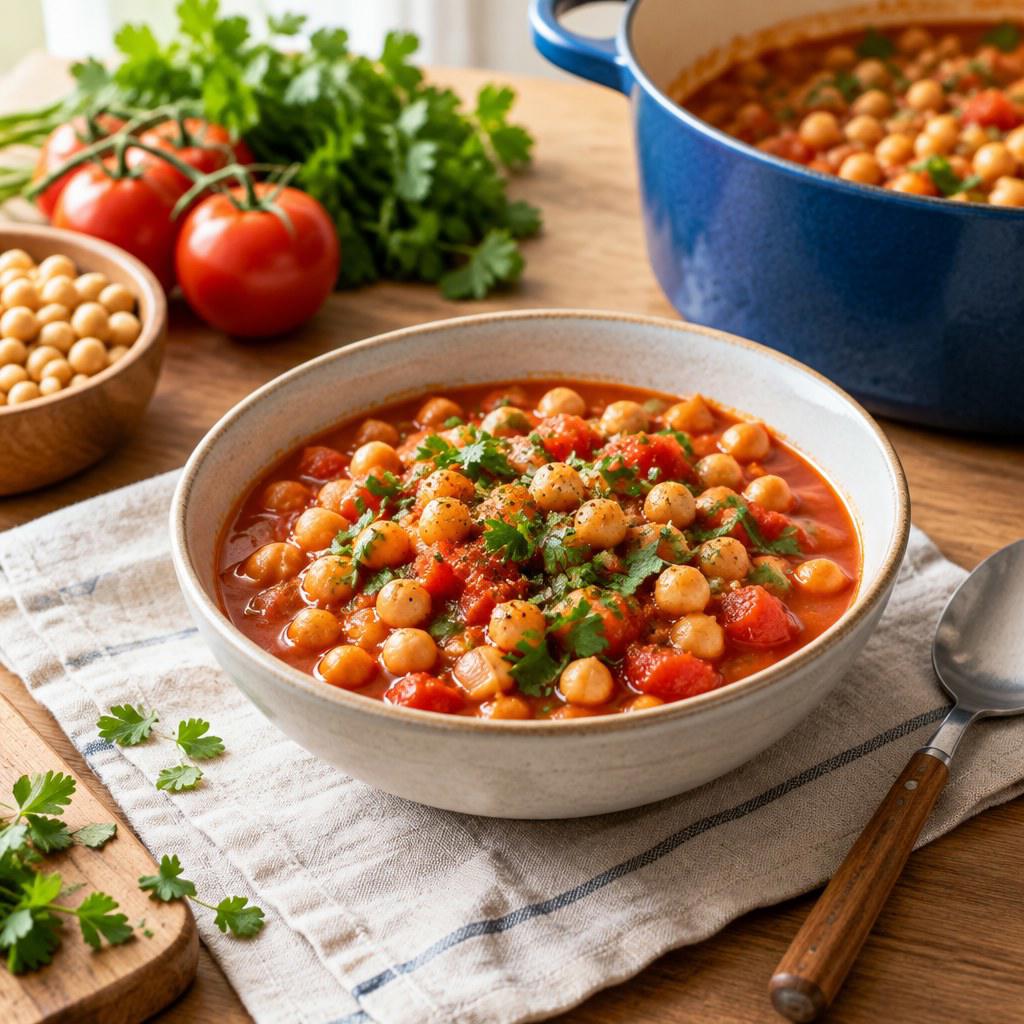
A simple chickpea and tomato stew is a reliable one-pot meal when you need something inexpensive, flexible, and satisfying without a long ingredient list. You can make it with canned chickpeas, tomatoes, aromatics, and a few pantry spices, then adjust the texture and seasoning to suit the meal you have planned.
The key is to build flavour in stages: soften the onion, briefly toast the spices, simmer the tomatoes until they taste rounded, and add chickpeas early enough to absorb the sauce. The result can be served as a quick weeknight dinner, packed for lunches, or used as a base for a larger shared meal.
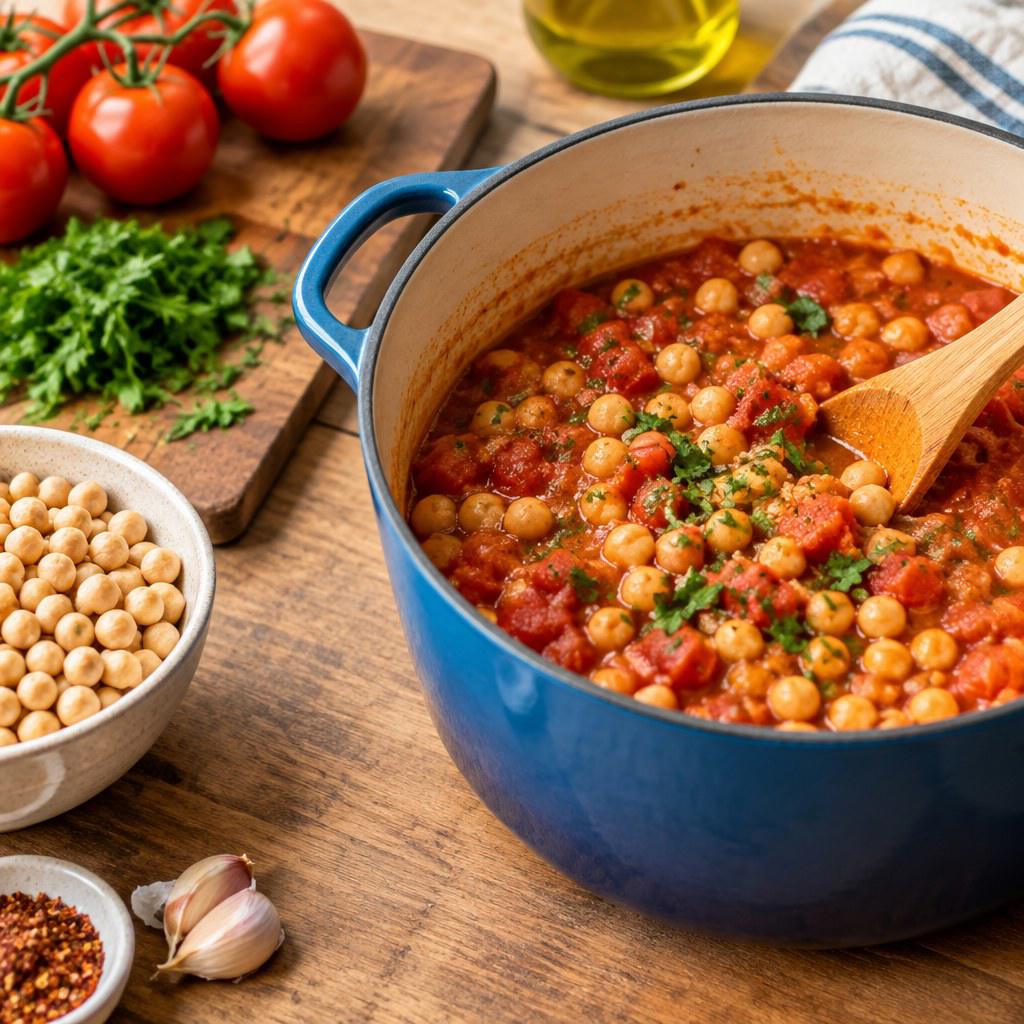
Why this stew works as a practical pantry meal
Chickpeas provide body, while tomatoes create a sauce that can carry spices, vegetables, and finishing ingredients such as herbs or lemon. Because the core ingredients are shelf-stable, you can keep most of what you need on hand and cook without a special shopping trip.
This is also a forgiving format. If you have spinach, kale, peppers, carrots, celery, or leftover roasted vegetables, you can add them at the appropriate point in the cooking process. If you only have onion, garlic, chickpeas, and tomatoes, the stew still works.
What creates a balanced flavour
- Sweetness: onion cooked slowly until soft helps offset tomato acidity.
- Warmth: cumin, smoked paprika, chilli flakes, or coriander add depth without requiring a complex spice blend.
- Acidity: tomatoes provide the main brightness; a small squeeze of lemon at the end can sharpen a flat-tasting pot.
- Richness: olive oil and a simmered tomato base prevent the stew from tasting thin.
- Freshness: parsley, coriander, basil, or greens added near the end give contrast.
💡 Tip: Drain and rinse canned chickpeas before using them. This removes the canning liquid and gives you more control over the final salt level and sauce consistency.
Ingredients and useful substitutions
For 4 generous portions, start with 2 cans of chickpeas, 1 can of chopped tomatoes, 1 onion, 2 garlic cloves, olive oil, salt, black pepper, and a small amount of stock or water. Add cumin and smoked paprika if you have them. This combination produces a full-flavoured stew without relying on hard-to-find ingredients.
Choose the tomato product for your preferred result
Chopped tomatoes make a rustic stew with visible pieces of tomato. Passata produces a smoother, more uniform sauce. Tomato paste is useful as an addition rather than a replacement: cook a spoonful with the spices to deepen the base, then add tomatoes and liquid. If your tomatoes taste especially sharp, simmer the sauce longer before deciding whether it needs anything else.
Step-by-step method for chickpea and tomato stew
Use a wide saucepan, Dutch oven, or deep frying pan with a lid. A wider pan gives moisture more surface area to evaporate, which is helpful when you want a thicker sauce. Keep the heat moderate rather than rushing the early stages.
- Prepare the ingredients. Dice 1 onion, finely chop 2 garlic cloves, drain and rinse 2 cans of chickpeas, and measure your spices. Have about 250 ml of stock or water ready, but do not assume you will need all of it.
- Soften the onion. Heat 1 to 2 tablespoons of olive oil over medium heat. Add the onion with a small pinch of salt and cook until soft and translucent. Stir regularly so it softens rather than browns too quickly.
- Add garlic and spices. Stir in the garlic, 1 teaspoon of ground cumin, and 1 teaspoon of smoked paprika. Add chilli flakes if you want heat. Cook for roughly 30 seconds, just until fragrant, to avoid scorching the garlic or spices.
- Build the sauce. Add the chopped tomatoes and about half the stock or water. Scrape the base of the pan with your spoon, then bring the mixture to a gentle simmer.
- Add the chickpeas. Stir in the chickpeas, cover loosely, and simmer until the tomatoes have softened and the flavours have combined. Stir occasionally, especially if the sauce becomes thick.
- Adjust the consistency. Add more liquid if the stew is sticking or seems overly dense. Leave the lid off for the final part of cooking if the sauce is too loose.
- Finish deliberately. Taste before adding more salt. Add black pepper, a squeeze of lemon, chopped herbs, or a handful of greens. Let greens wilt before serving.
You can gently crush some chickpeas against the side of the pan during the final simmer. This releases starch and makes the sauce feel thicker without flour, cream, or a separate thickener.
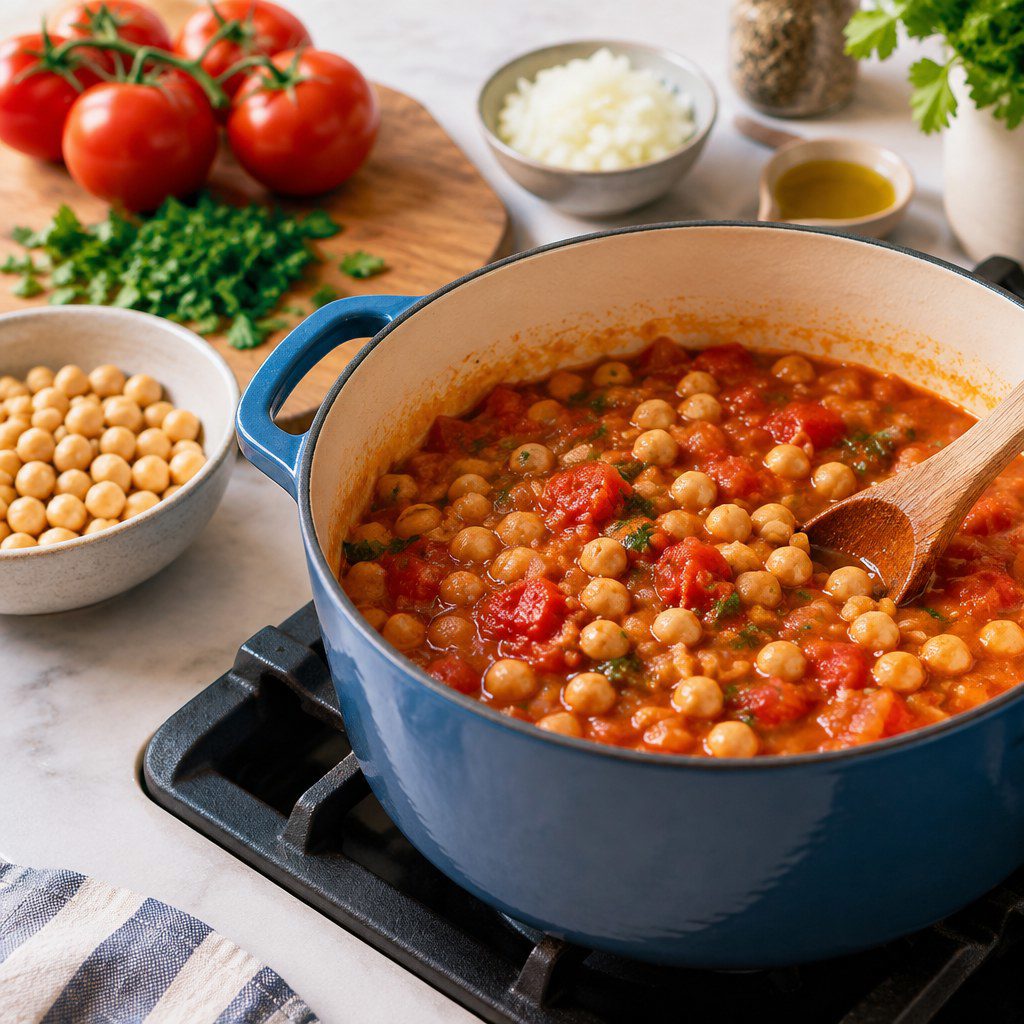
Choose the texture and serving format before you finish
Your serving plan should guide the final consistency. A thicker stew works well in a bowl with crusty bread, spooned over baked potatoes, or used as a filling for wraps. A looser version is better with rice, couscous, bulgur, or other grains that will absorb the sauce.
Easy ways to make the same pot feel different
- Serve it with toast and a simple green salad for a fast dinner.
- Stir in spinach or kale for the last few minutes to turn it into a more vegetable-forward meal.
- Add roasted peppers, courgette, or aubergine if you have cooked vegetables to use up.
- Top each portion with yogurt, chopped parsley, fresh coriander, or toasted seeds, depending on what you have available.
- Pair it with rice or couscous when you need the stew to stretch across more portions.
If you are cooking ahead, slightly under-thicken the stew. It will usually become denser after cooling as the chickpeas continue to absorb liquid. Reheat it gently with a splash of water or stock, then taste again before serving.
Common mistakes and how to recover
The most common problems are rarely serious. This recipe responds well to small corrections, provided you taste before making larger changes. Avoid adding every possible seasoning at once; that can hide the clean chickpea-and-tomato character you are trying to build.
The stew tastes bland
Add salt gradually, then reassess. If salt is already adequate, try black pepper, lemon juice, herbs, or a little more cumin. Blandness often comes from an under-seasoned sauce or from not simmering long enough for the tomatoes and spices to integrate.
The sauce is too acidic
Give it more time over a gentle simmer first. You can also add a small amount of olive oil or a few crushed chickpeas to soften the overall impression. Avoid immediately adding a large amount of sugar, as that can make the flavour one-dimensional.
The sauce is too thin
Simmer uncovered and stir occasionally. Crush a portion of the chickpeas, or remove a spoonful, mash it, and return it to the pan. These methods thicken the stew while preserving its ingredient list.
The pan is catching on the bottom
Lower the heat and add a small splash of water or stock. Scrape gently with a wooden spoon. If you notice a distinctly burnt flavour, transfer the unburnt stew to a clean pan without scraping the darkest residue from the bottom.
⚠️ Watch the heat: Tomato sauces can splatter as they reduce. Use a lid slightly ajar and stir carefully, particularly during the uncovered simmer.
A simple decision framework for your next pot
Start with the standard version if you want a dependable pantry meal: chickpeas, tomatoes, onion, garlic, cumin, and paprika. Choose a thicker finish when bread, potatoes, or wraps are on the menu. Choose a looser finish when you are serving grains or want leftovers that reheat easily.
Then make only 1 or 2 purposeful additions. Add greens for freshness, roasted vegetables for a more substantial bowl, or chilli for heat. This approach keeps the stew simple and helps you use what is already in your kitchen rather than buying ingredients for a single recipe.
Make your first batch simple
Set out your basic ingredients, make the tomato base slowly, and taste before every final adjustment. Once you know the base recipe, you can adapt it confidently to the vegetables and grains you already have.