Using Textiles to Soften a Room With Hard Surfaces
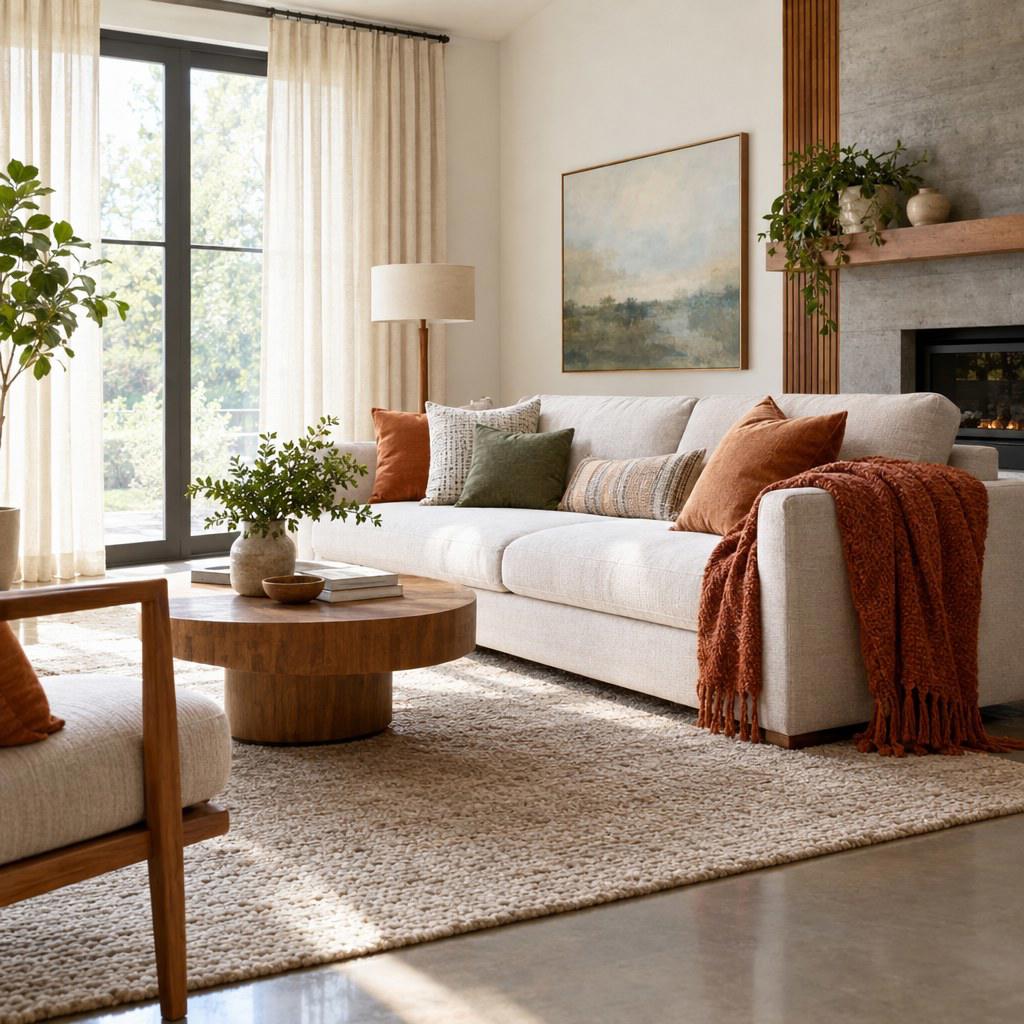
Textiles soften a room with hard surfaces by adding visual warmth, physical comfort, and sound absorption where glass, tile, concrete, metal, and bare wood can otherwise feel stark. A considered mix of rugs, curtains, upholstery, and smaller fabric layers can make a space more welcoming without concealing its practical finishes or making it difficult to maintain.
For a home office, retail area, hospitality setting, or shared workplace, the goal is not simply to add more fabric. You need to place the right textile in the areas where people walk, sit, speak, and spend time—while choosing materials that fit the room’s cleaning, durability, and safety requirements.
Why hard-surface rooms can feel harsh
Hard finishes are useful. They are often durable, easy to wipe down, and well suited to busy rooms. The trade-off is that they reflect both light and sound. When a room contains mostly hard planes—such as a polished floor, painted walls, exposed ceiling, glass partitions, and metal furniture—it can look unfinished and make ordinary conversation seem more noticeable.
Texture also affects how people read a space. Smooth, reflective materials tend to create crisp visual edges. Fabric breaks up those edges through weave, pile, folds, and matte surfaces. This does not mean a room needs to look rustic or heavily decorated. Even a low-pile rug, lined curtains, and a few upholstered seats can introduce enough contrast to make a modern interior feel intentional rather than empty.
Separate the three problems before buying
Start by identifying what “too hard” means in your particular room. The remedy depends on whether you are addressing noise, appearance, comfort, or all 3.
Sound reflection
Voices carry, chairs scrape loudly, and calls feel tiring. Prioritize floor coverage, curtains, upholstered seating, and purpose-made acoustic treatments where needed.
Visual severity
The room looks cold or overly bare. Use woven texture, curtains, cushions, and a restrained color palette to create depth without visual clutter.
Physical discomfort
Floors feel cold, seating feels rigid, or the space lacks a place to settle. Focus on underfoot softness and touchable fabrics near seating.
💡 Tip: Textiles can reduce some reflections inside a room, but they do not make a space soundproof. If privacy between rooms is the problem, inspect gaps, doors, walls, and building systems rather than relying on soft furnishings alone.
Choose textiles by function, not just color
Build the scheme from the largest and most functional surfaces first. A rug, window treatment, or upholstered seating piece has more influence than several decorative cushions. Once those major choices are working, smaller layers can reinforce the look and improve comfort.
Rugs: the highest-impact starting point
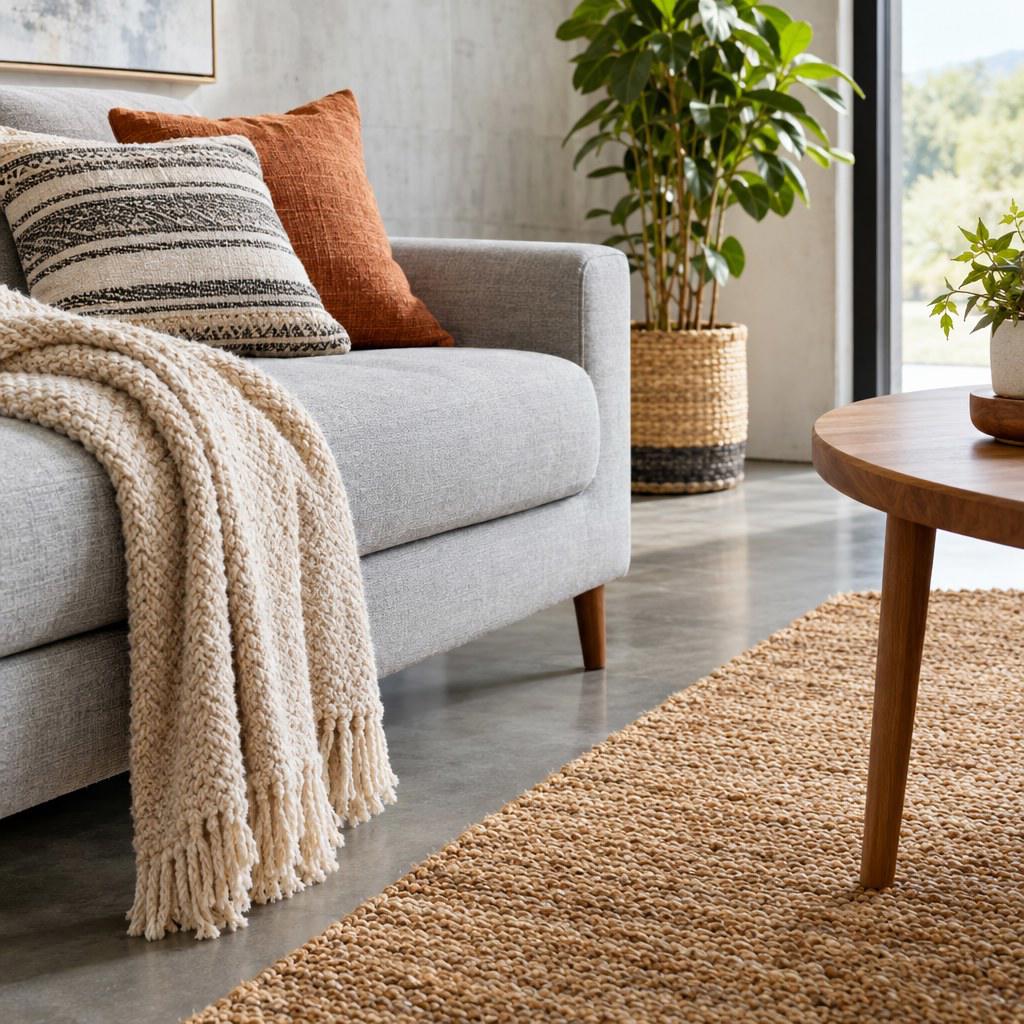
In many hard-floor rooms, a rug is the first textile to consider. It establishes a visual zone, reduces the harshness of footsteps, and protects flooring under chairs or tables. Choose a size that relates to the furniture rather than treating the rug as a small island in the middle of the room.
In a seating area, aim to place at least the front legs of major furniture on the rug. Under a dining table, leave enough coverage for chairs to remain on the rug when pulled back. In an office, use a low-pile option where rolling chairs are required, or keep the rug outside the chair’s movement zone.
Window treatments: softness at full height
Large windows and glass doors are common sources of visual and acoustic hardness. Curtains or drapes soften their vertical lines while also controlling glare and improving comfort near the glass. Mount the track or rod high enough to create a deliberate vertical frame, and allow panels to extend beyond the window edges when the wall layout permits.
For rooms that need regular cleaning or a more tailored appearance, washable curtains or simple fabric blinds may be more practical than heavy decorative drapery. Sample the material against the wall and window at different times of day before committing, because daylight can change how color and texture appear.
Upholstery, cushions, and throws: comfort where people pause
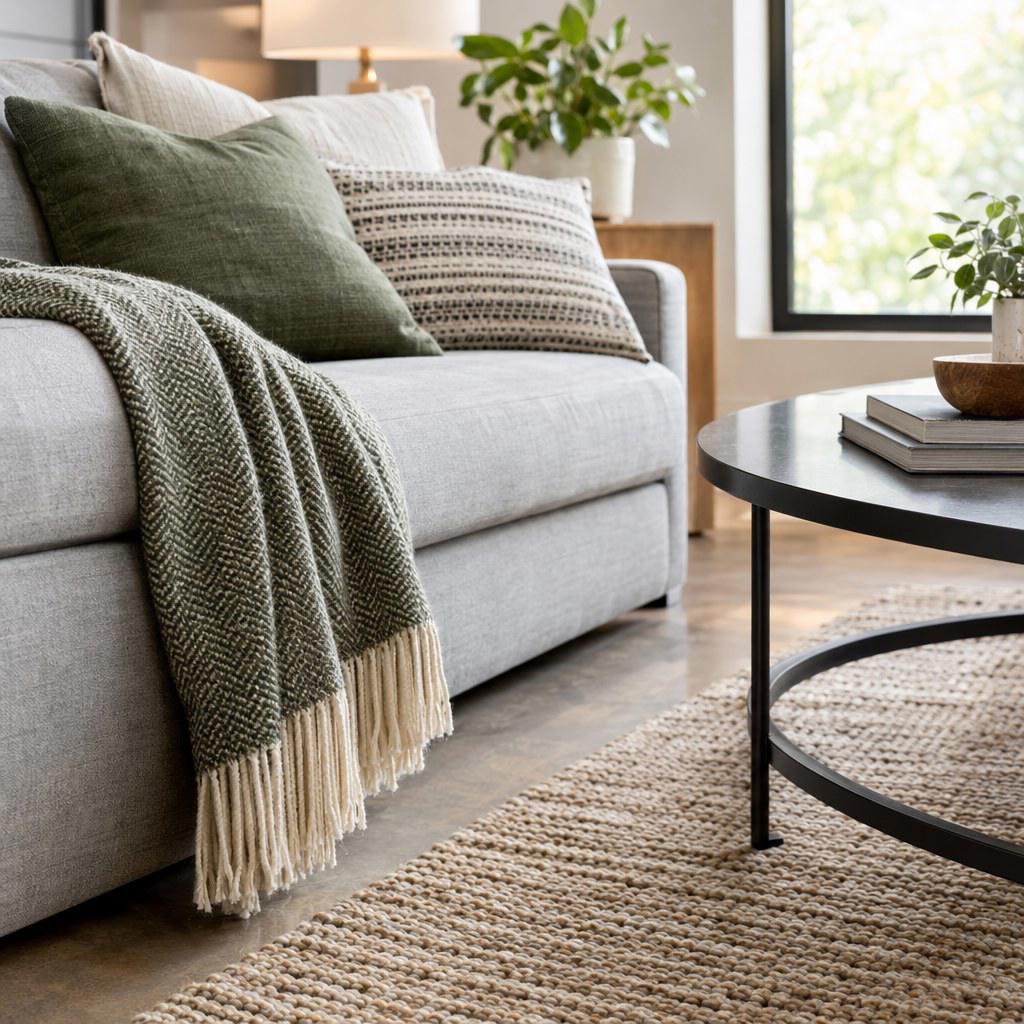
Upholstered chairs, bench pads, and cushions are useful in rooms where people wait, meet, eat, or work. They bring softness close to the body, which often matters more than adding a fabric item to an unused corner. Throws work well in residential lounges or hospitality spaces, but may be unsuitable in high-turnover or hygiene-sensitive environments unless you have a clear laundering routine.
Layer textiles with purpose
A successful room uses variation without turning every surface into a competing feature. Choose 1 dominant textile element, 1 or 2 supporting textures, and a small accent layer. For example, a neutral woven rug may be the foundation, linen-look curtains the supporting layer, and a few darker cushions the accent.
Repeat a color or material cue across the room to create cohesion. If a rug includes muted blue, you might echo it in a seat cushion or curtain trim. If your furniture is mostly wood and black metal, natural woven fibers or warm-toned upholstery can bridge the difference between those hard materials.
Use texture to create contrast
- Pair smooth flooring with a visibly woven, looped, or low-pile rug.
- Balance glossy glass with matte curtain fabric or textured blinds.
- Use structured upholstery in formal spaces and softer knits or throws in relaxed rooms.
- Keep patterns controlled when flooring, wall finishes, or furniture already have strong visual movement.
- Choose materials that suit the room’s actual traffic rather than selecting delicate fabrics for a busy route.
For a commercial or shared setting, operational needs should lead the decision. Ask who will clean each item, how often it can be removed or laundered, whether it will be exposed to spills, and whether accessibility or fire-safety requirements apply in your location. Confirm building-specific requirements with the relevant property manager or professional before installation.
Follow a practical installation plan
Measure and test before you buy. Textile decisions are easier to correct at the sample stage than after custom curtains are made or large rugs are delivered. Work from high-impact pieces to small finishing details.
- Map the hard surfaces. Note floor type, windows, bare walls, exposed ceilings, and metal or glass furniture.
- Identify priority zones. Focus on where people talk, sit, wait, walk, or make video calls.
- Set maintenance criteria. Decide what can be vacuumed, spot-cleaned, washed, or professionally cleaned.
- Choose the anchor textile. Usually this is the largest rug, the window treatment, or seating upholstery.
- Order samples where possible. Check color, texture, shedding, and compatibility with existing furnishings in the actual room.
- Install safely. Use appropriate rug pads, secure loose edges, and keep fabric clear of heat sources and door mechanisms.
- Review after normal use. Listen during a busy period, check traffic paths, and remove or adjust anything that creates a cleaning or tripping problem.
Mistakes to avoid and how to recover
Buying a rug that is too small
A small rug can make a large hard-floor room feel more fragmented. If replacement is not practical, reposition it to define a smaller reading, waiting, or conversation area instead of attempting to anchor the entire room.
Adding soft items only at the perimeter
Textiles placed solely in corners may improve appearance but do little for the central activity zone. Move at least one major soft element into the area where people gather, such as beneath a table or in front of seating.
Ignoring movement, spills, and cleaning
Deep pile, long fringe, and loosely placed throws can be unsuitable near doors, rolling chairs, food service, or frequent foot traffic. Recover by relocating decorative pieces to low-traffic zones and using lower-maintenance materials where wear is unavoidable.
Using too many unrelated patterns
When hard finishes already create strong lines, excessive pattern can make the room feel busier rather than softer. Keep one patterned textile as the focal point and choose solids or subtle textures for the supporting pieces.
A simple decision framework
Start with the room’s main problem. If sound reflection is the biggest concern, prioritize broad fabric surfaces near the active area. If the room looks cold, add texture at floor level and full-height softness at windows. If comfort is the issue, invest first in seating and underfoot layers.
Then test every choice against 3 questions: Does it improve the area people actually use? Can you maintain it realistically? Does it fit safely with the room’s movement and operational needs? If the answer is yes, you can add textiles gradually and evaluate the effect rather than attempting a complete redesign at once.
Start with one high-impact layer
Measure your main activity zone, choose the textile that solves its most pressing problem, and assess the room again after it has been used normally.