Why Penguins Gather in Large Colonies
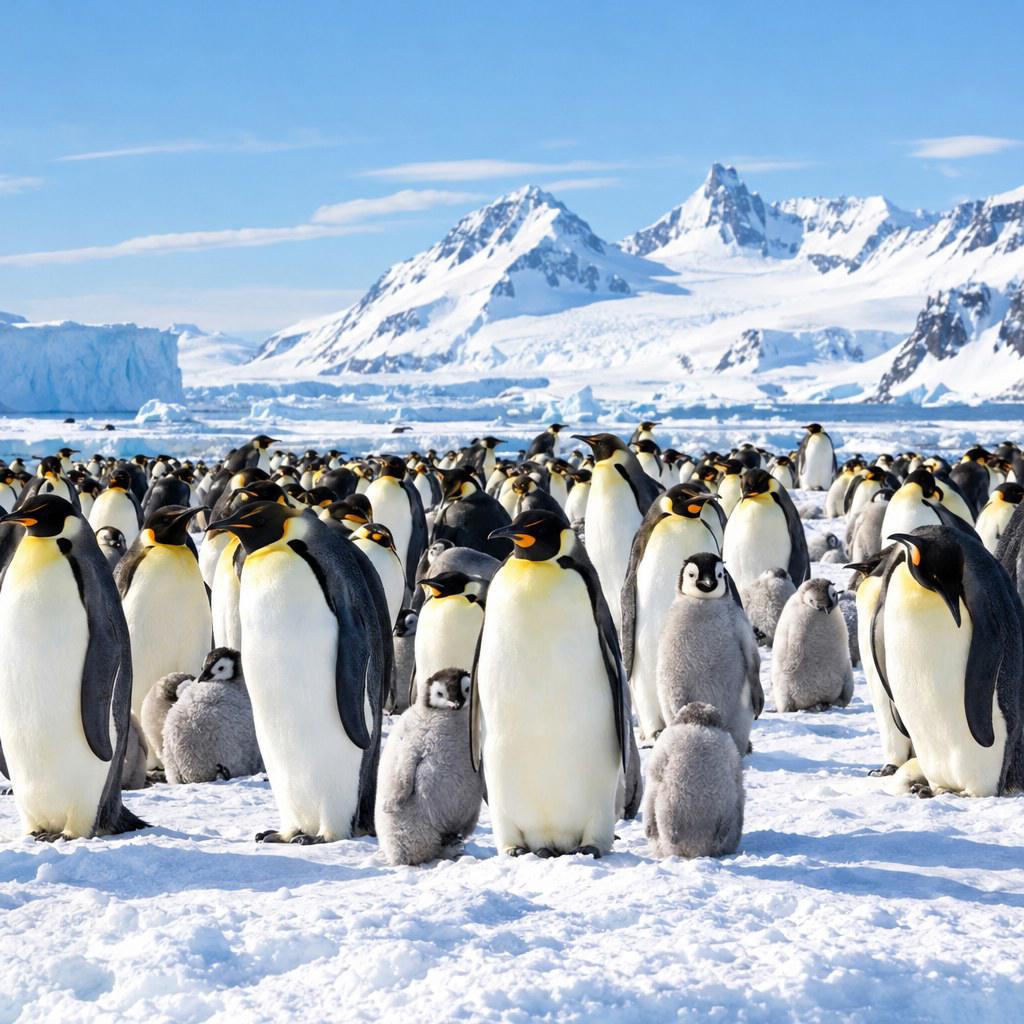
Penguins gather in large colonies because breeding, protection, navigation, and access to suitable nesting ground are easier when many birds use the same place at the same time. A colony is not simply a crowd: it is an organized survival strategy that helps penguins raise chicks in demanding environments, while also creating risks that wildlife managers, tour operators, and visitors need to respect.
Understanding why colonies form helps you interpret penguin behavior responsibly. Whether you are planning wildlife-focused travel, developing educational material, or making operational decisions near a breeding site, the practical goal is the same: support observation and access without disrupting the birds’ essential routines.
Why colonies offer major advantages
Penguins are seabirds, but most species must come ashore or onto sea ice to breed, molt, and rest. Suitable locations can be limited. A site needs the right surface for nesting or standing, reasonable access to feeding waters, and conditions that allow adults and chicks to survive the breeding season. When birds find such a place, returning to it together is often more reliable than spreading out across uncertain habitat.
Colonies also make social information easier to find. A penguin arriving at a breeding area can use the presence and activity of other birds as a clue that the site is suitable. Calls, movement, occupied nests, and established travel paths all provide signals. This does not mean every individual makes a perfect decision by following the group; rather, a shared site reduces some of the uncertainty of locating mates and breeding ground alone.
Reliable breeding ground
Known nesting areas reduce the need to search for safe ground during a short and energetically demanding breeding period.
Finding a mate
A concentrated population gives adults more opportunities to locate returning partners or form a breeding pair.
Shared vigilance
Many alert birds can increase the chance that a nearby threat is noticed, although protection is never guaranteed.
The exact value of a colony varies by species and location. Emperor penguins, for example, breed on sea ice and huddle in severe cold. Some other penguins build nests on rocky ground, soil, or vegetation. The common principle is that gathering can make difficult seasonal tasks more manageable.
How breeding shapes colony life
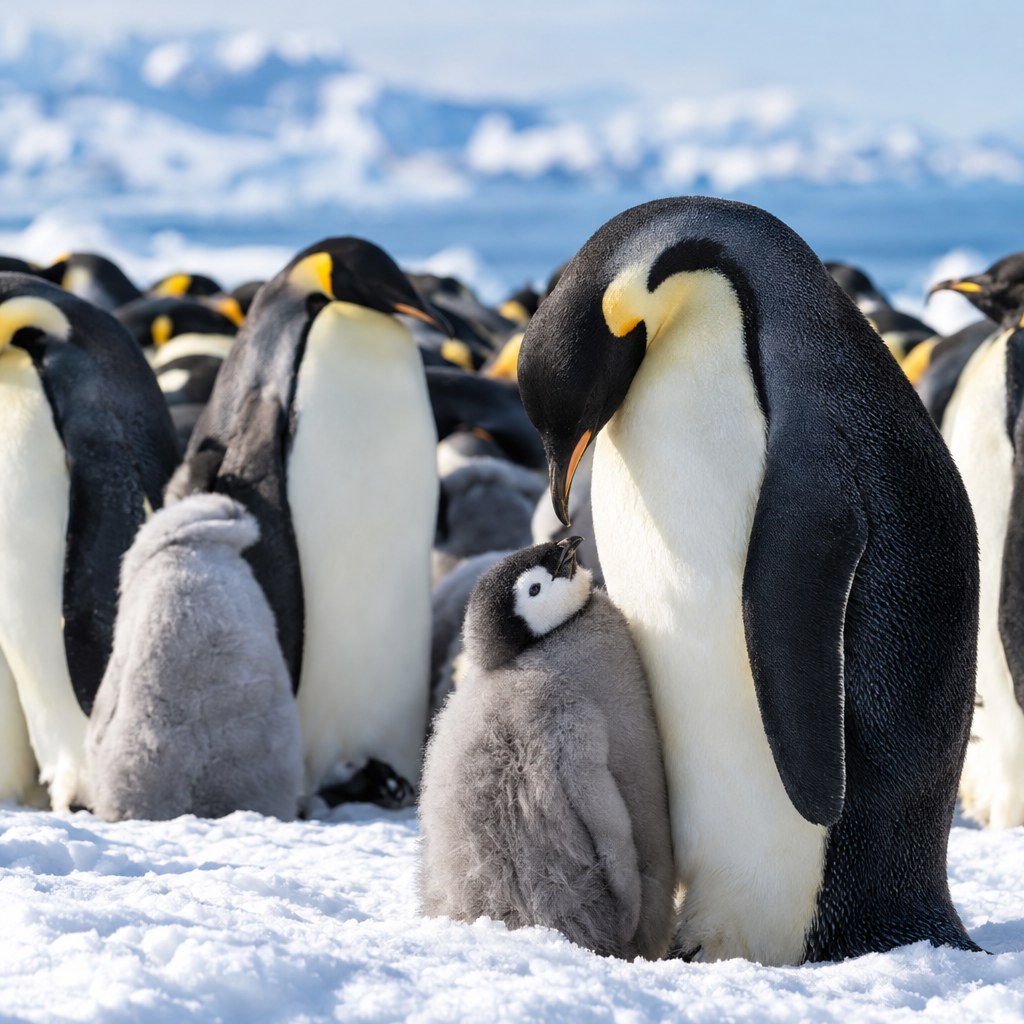
Breeding is the strongest reason many penguins assemble in large numbers. Adults need to meet, establish or reclaim a nest area where relevant, lay eggs, incubate them, and feed chicks. These stages require repeated trips between land and sea, often while one parent remains with the egg or chick. A colony provides a dependable meeting point for that handoff.
Pairs need a predictable return point
For species that share incubation and chick feeding, timing matters. One adult may travel to sea while the other protects the egg or chick. Returning to a familiar colony makes reunion more practical than trying to locate a partner across a broad coastline. Vocal recognition is important in many penguin species because birds must identify mates and offspring among many similar-looking neighbors.
Chicks benefit from group structure
As chicks grow, some species form groups commonly called crèches. Adults still feed their own young, but grouping can reduce the chance that a chick is isolated while parents forage. It can also help chicks occupy a location with other young birds rather than remaining exposed alone. This arrangement is not universal, and it does not eliminate danger from weather, predators, or food shortages.
💡 Practical point: If you observe penguins walking in repeated lines between a colony and the water, treat those routes as essential infrastructure. Avoid standing in, crossing, or blocking a path, even briefly.
Colony size can change across the season. Birds may arrive in waves, nests may become more active, and groups can loosen once chicks are more independent. You should therefore avoid interpreting a single visit as a complete picture of a colony’s annual pattern.
The costs of living close together
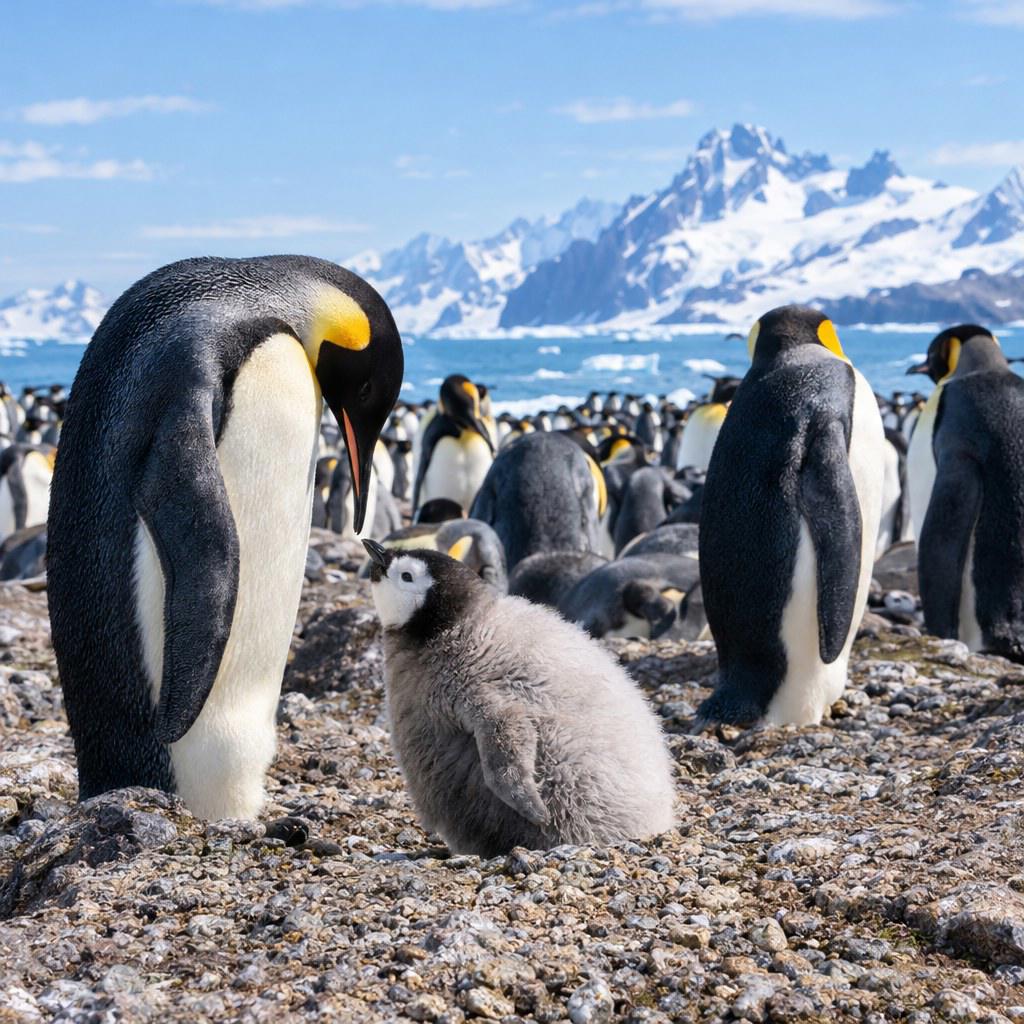
Large colonies have clear benefits, but they are not automatically safe or comfortable. Dense gatherings create competition for nest sites, increase noise, and make local ground conditions messy. Birds may dispute space or nesting materials. A colony can also be easier for predators to locate, even if a large group improves the odds for some individual birds.
Disease and parasites are another concern in any dense wildlife population. It is inaccurate to assume that every colony is unhealthy, but close contact can make transmission easier under certain conditions. Environmental changes can add pressure as well. If nearby food availability shifts, adults may need to travel farther or spend more time foraging, leaving eggs or chicks with fewer resources.
This balance explains why a colony is best understood as a response to constraints, not as proof that conditions are easy. Penguins gather because, in many settings, the combined benefits outweigh the costs.
How to observe colonies responsibly
If your work involves wildlife tourism, filming, research support, or visitor communication, build your plan around the penguins’ needs rather than the best photo angle. Regulations, access boundaries, and approved distances differ by location. Check requirements with the site manager, conservation authority, or licensed operator before arrival.
Use this field checklist
- Confirm whether the colony is in a breeding, chick-rearing, molting, or other sensitive period.
- Use designated boardwalks, viewing areas, and landing points where they exist.
- Identify obvious travel routes before choosing where to stand or place equipment.
- Keep voices, movement, drones, flash use, and equipment noise to the minimum allowed by local rules.
- Never touch, feed, crowd, surround, or try to redirect a penguin.
- Brief every group member on the same boundaries before approaching the site.
- Leave promptly if birds change direction, vocalize more intensely, stand unusually alert, or alter normal movement near you.
For a visitor-facing business, convert these points into a short pre-visit briefing and a visible on-site code of conduct. Clear instructions protect wildlife and reduce confusion for guests. They also help staff respond consistently when someone wants to move closer than the rules allow.
Mistakes to avoid near nesting sites
The most common mistake is treating a colony as a static attraction. Penguins are constantly making decisions about nesting, moving, feeding, and avoiding threats. A person who blocks a route, approaches a nest, or separates a bird from its group may create disruption even when the encounter appears calm.
- Do not chase a closer view. Use distance, patience, and permitted optics instead of moving toward birds.
- Do not assume empty-looking ground is unused. Birds may return to the same small areas or routes repeatedly.
- Do not rely on informal distance advice. Follow the rules for the specific reserve, shoreline, or expedition.
- Do not ignore early disturbance signs. If your presence changes behavior, quietly increase distance and reduce activity.
If your group accidentally obstructs a route, the recovery is simple: stop, create a clear exit path, and wait without urging birds to move. Tell others what happened so the same error is not repeated. Do not attempt to fix the situation by handling birds or entering restricted ground.
A simple decision framework
When you need to make a choice near a penguin colony, ask 3 questions: Is this activity necessary? Is it permitted at this place and season? Could it alter a bird’s route, nest, feeding exchange, or resting behavior? If any answer is uncertain, choose the lower-impact option or ask the responsible local authority.
Large colonies exist because penguins gain important advantages from gathering in the right habitat. Your role is not to make the colony more accessible at any cost. It is to recognize the purpose behind the gathering and keep human activity outside the birds’ essential space.
Make your next wildlife visit lower impact
Before visiting a penguin colony, check the local access rules, brief your group, and plan your viewing position around established penguin routes.