How Elephants Communicate Over Long Distances
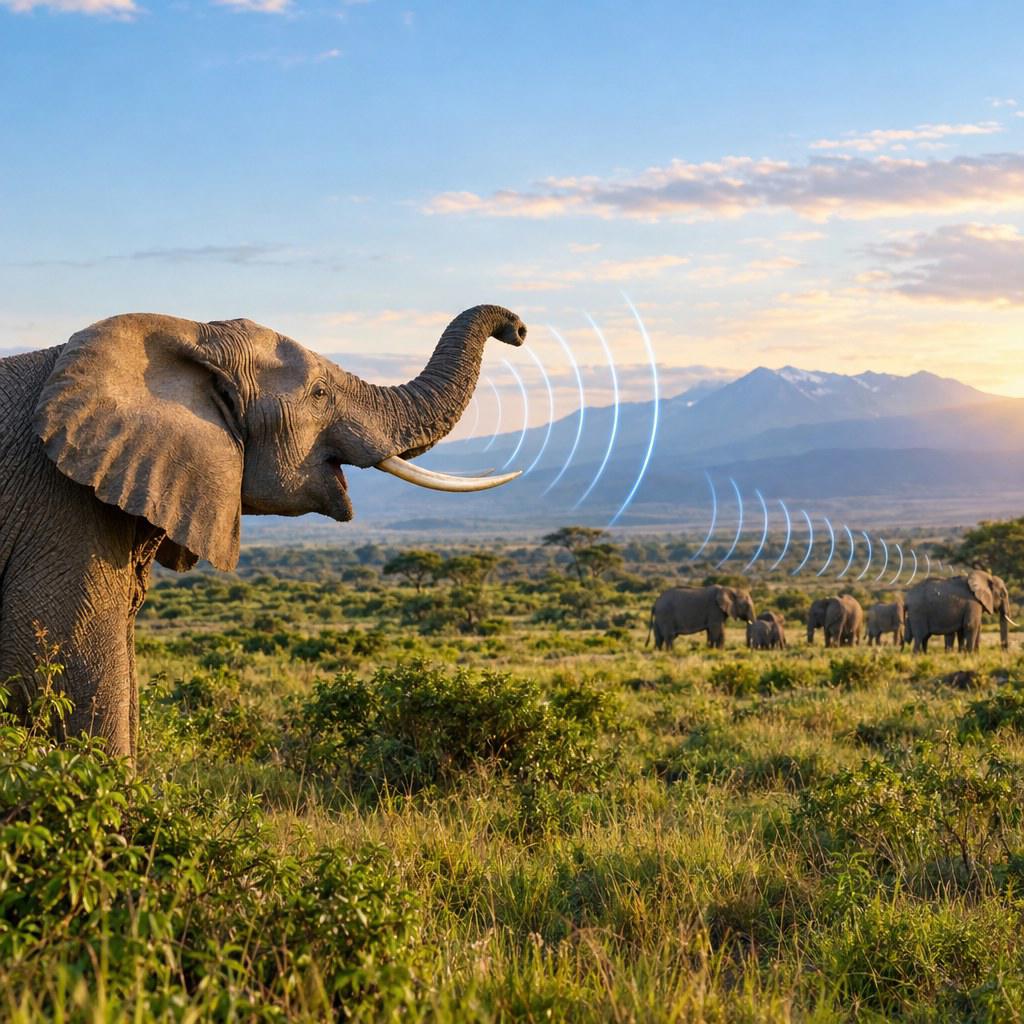
Elephants communicate across long distances by combining very low-frequency sounds, ground vibrations, scent signals, and visual cues. Their most remarkable tool is infrasonic calling: rumbles below the usual range of human hearing that can travel through air and, in some conditions, through the ground over considerable distances. Understanding this system helps you interpret elephant behavior more responsibly, whether you work in conservation, tourism, land management, or environmental education.
Long-distance communication is not a single “elephant language.” It is a flexible network shaped by landscape, weather, herd movement, social relationships, and immediate risk. The practical outcome is clear: if you need to observe or manage elephants safely, treat their behavior as connected across a wider area than you can see.
Why Distance Changes Elephant Communication
Elephants often live in landscapes where family groups spread out while feeding, traveling, or seeking water. Dense vegetation, darkness, uneven ground, and large home ranges can make direct visual contact unreliable. A calf, a separated adult, or a distant group cannot depend on sight alone to locate others.
Long-range signals help elephants maintain contact without gathering in one place. A low rumble may support coordination between related groups, signal reproductive condition, express social interest, or alert nearby elephants to disturbance. The meaning does not sit in one sound by itself. It depends on the caller, the pattern of the call, body posture, context, and the response of other elephants.
For people, this creates an important operational lesson: visible silence is not necessarily social silence. A herd may appear calm while exchanging information that you cannot hear. When planning a viewing route, a research survey, or work near elephant habitat, allow for communication beyond the immediate group.
💡 Practical point: Do not assume an elephant is alone because you see only one animal. It may be responding to calls, scents, or vibrations from elephants outside your field of view.
The Main Channels Elephants Use
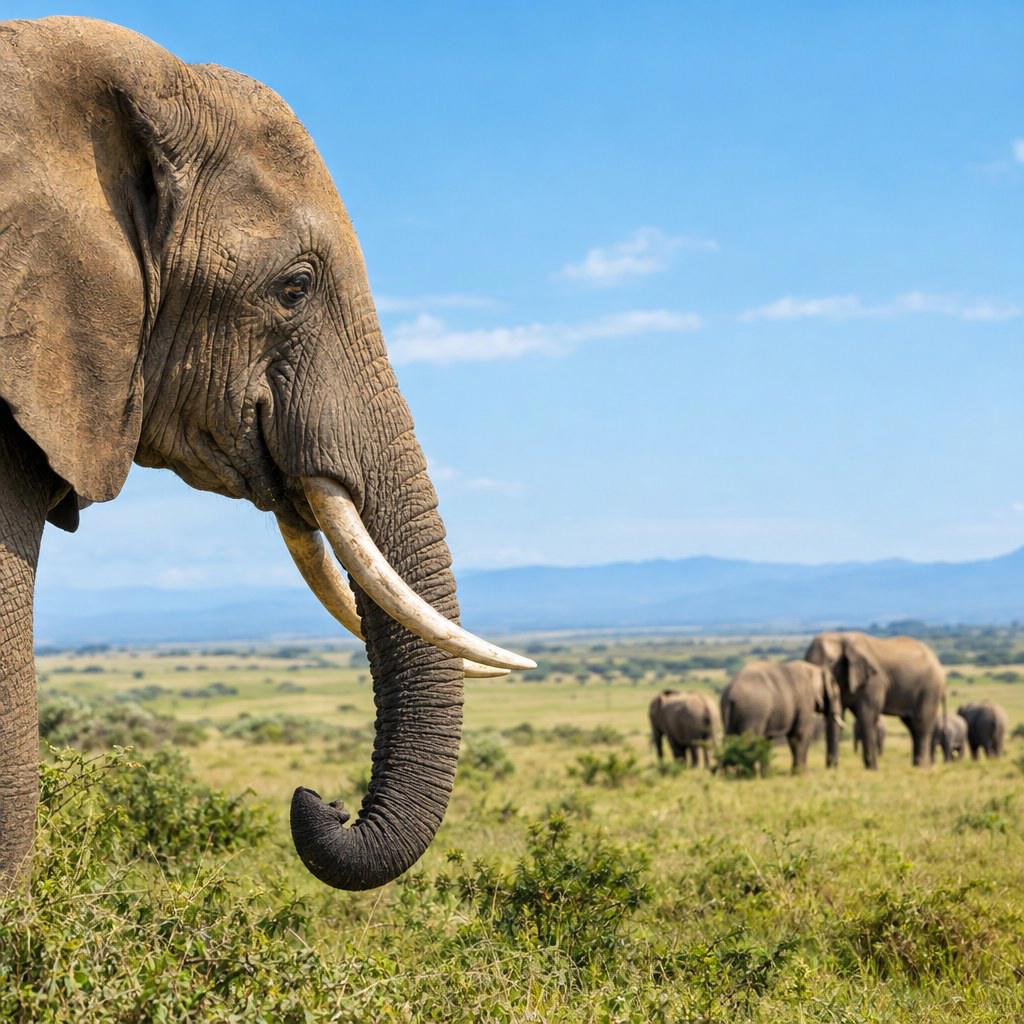
Elephants do not rely on one communication method. Each channel has strengths and limits, so a herd can switch or combine them as conditions change.
Infrasonic rumbles
Low-frequency vocalizations can travel farther than many higher-pitched sounds. Elephants may produce rumbles during contact, social coordination, mating-related communication, and responses to changing circumstances.
Ground vibrations
Some calls and movements create seismic vibrations. Elephants can detect these signals through their feet and trunks, adding another route for information when sound conditions are favorable.
Scent and chemical cues
Scent can persist after an animal has moved on. Urine, dung, secretions, and airborne odors can provide information about identity, reproductive status, presence, and recent movement.
Visual and tactile signals
Ear position, trunk movement, body orientation, touch, and group spacing are especially useful at close range. They reinforce messages that may begin as sound or scent.
Why low-frequency sound matters
Human hearing is a poor guide to elephant activity. Infrasound refers to sound below about 20 hertz, generally beneath the lower limit of human hearing. Not every elephant rumble is infrasonic, and not every low-frequency sound travels equally far. Still, low frequencies can be less affected by some obstacles than higher-frequency calls, making them valuable across broad habitat.
Researchers studying elephant acoustics use specialized recording equipment and careful context notes because recording a sound alone does not prove its meaning. If you are interpreting behavior in the field, use the same discipline: note who called, what happened immediately before and after, wind direction, group spacing, and any visible response.
What Determines How Far a Message Travels
A claim that elephants can communicate “for miles” is too simple for practical planning. Range varies. A signal may carry well in one location and poorly in another because the environment changes how sound, vibration, and scent move.
This is why local knowledge matters more than a universal distance estimate. If you manage land near elephant range, identify quiet corridors, seasonal water routes, and recurring movement areas. Reducing disruptive activity in those locations can be more meaningful than applying a generic rule across an entire property.
A Practical Observation and Planning Process
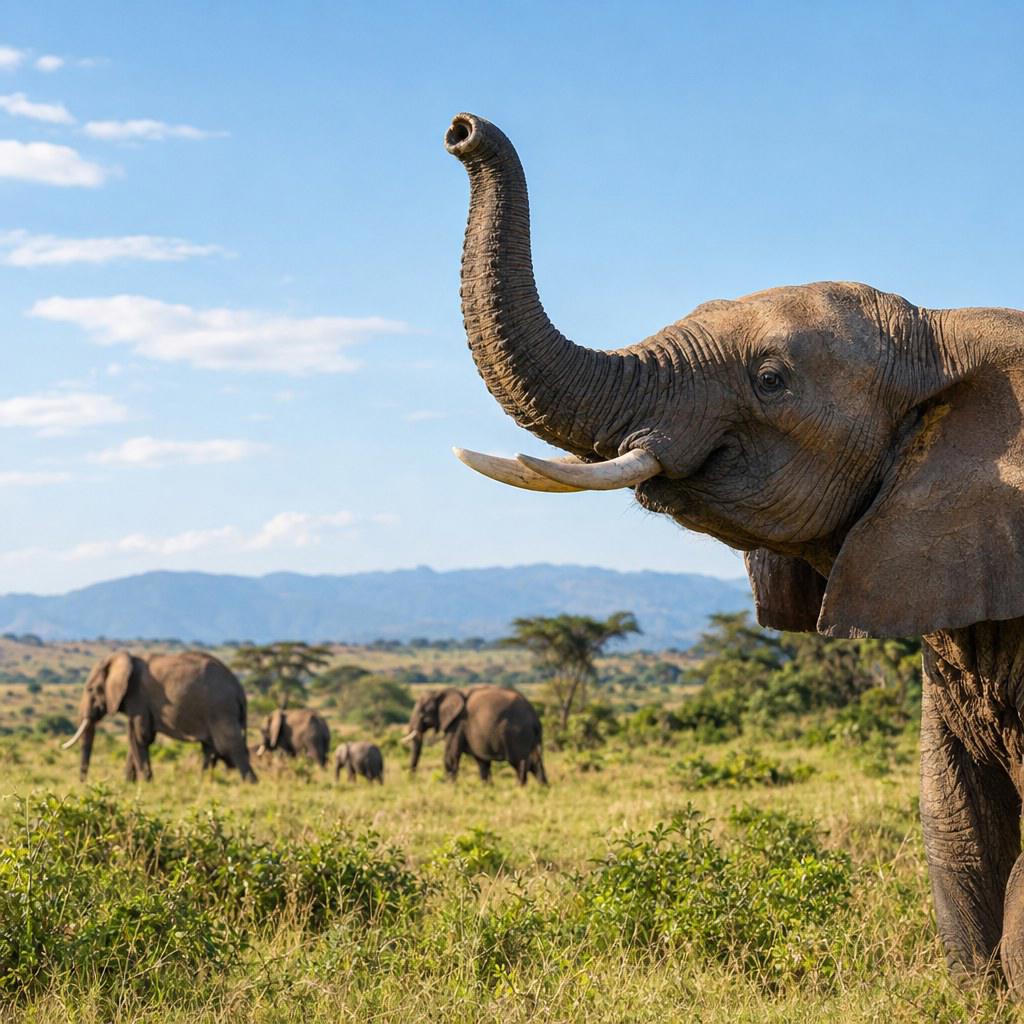
You do not need to decode every rumble to make better decisions. You need a repeatable process that respects uncertainty and avoids forcing an interpretation.
1. Start with distance and direction
Record where the elephants are, where they appear to be facing, and what terrain lies around them. Look for likely travel routes, water access, cover, and other groups. Do not approach to improve your view; use distance, binoculars, or approved monitoring methods.
2. Build a short context record
- Note the time, weather, wind, and level of human-made noise.
- Describe group composition without guessing individual identities.
- Record observable behavior: feeding, walking, bunching, listening, touching, or moving away.
- Mark calls you can hear, but also record apparent reactions when no audible call is present.
- Document changes in spacing between animals and groups.
3. Treat reactions as evidence, not proof
An elephant raising its head, pausing, or changing direction may be reacting to a distant signal, but it could also be responding to smell, movement, insects, or something you have not noticed. Write “possible response” rather than assigning a confident meaning without supporting observations.
4. Coordinate with qualified local teams
For protected areas, farms, tourism operations, or infrastructure projects, share observations with wildlife authorities, reserve managers, or experienced elephant specialists. They can relate your observations to known movement patterns and safety procedures. Never use playback recordings, drones, or sound equipment near elephants unless you have explicit authorization and appropriate expertise.
Risks, Mistakes, and How to Recover
The main mistake is treating elephant communication as a spectacle rather than a survival system. Playback, close pursuit, artificial lighting, and loud vehicles can alter behavior or increase stress. A call that sounds calm to you may still be part of a sensitive social exchange.
A second mistake is assuming a single signal has one fixed meaning. Elephant vocalizations are context-dependent. Avoid labels such as “alarm call” unless a qualified source and observed circumstances support that conclusion. A more reliable note is: “low rumble followed by group orientation toward the north.”
If you realize your presence has changed behavior, increase distance immediately and reduce noise. Stop trying to collect better footage or audio. Give the animals space to resume their own movement, and report the disturbance through the relevant local channel if you are operating in a managed area.
⚠️ Avoid: Using elephant sounds from videos or recordings to attract animals. This can interfere with real communication and creates unnecessary safety risks.
A Simple Decision Framework
Use 3 questions when you encounter elephants or make plans near their habitat. First, what signals might be present beyond what you can see or hear? Second, what local conditions could be carrying or masking those signals? Third, does your activity add noise, pressure, or obstruction to a likely communication and movement corridor?
If the answer to the final question is yes or uncertain, choose the lower-impact option: increase distance, reduce noise, shift timing, or seek local guidance. That approach is more defensible than relying on assumptions about whether elephants are aware of one another.
Make room for signals you cannot see
When your work or travel overlaps elephant habitat, plan for a connected social landscape—not just the animals visible in front of you. Observe from a respectful distance, record context carefully, and follow guidance from qualified local wildlife professionals.