A Beginner’s Guide to Pan-Frying Tofu
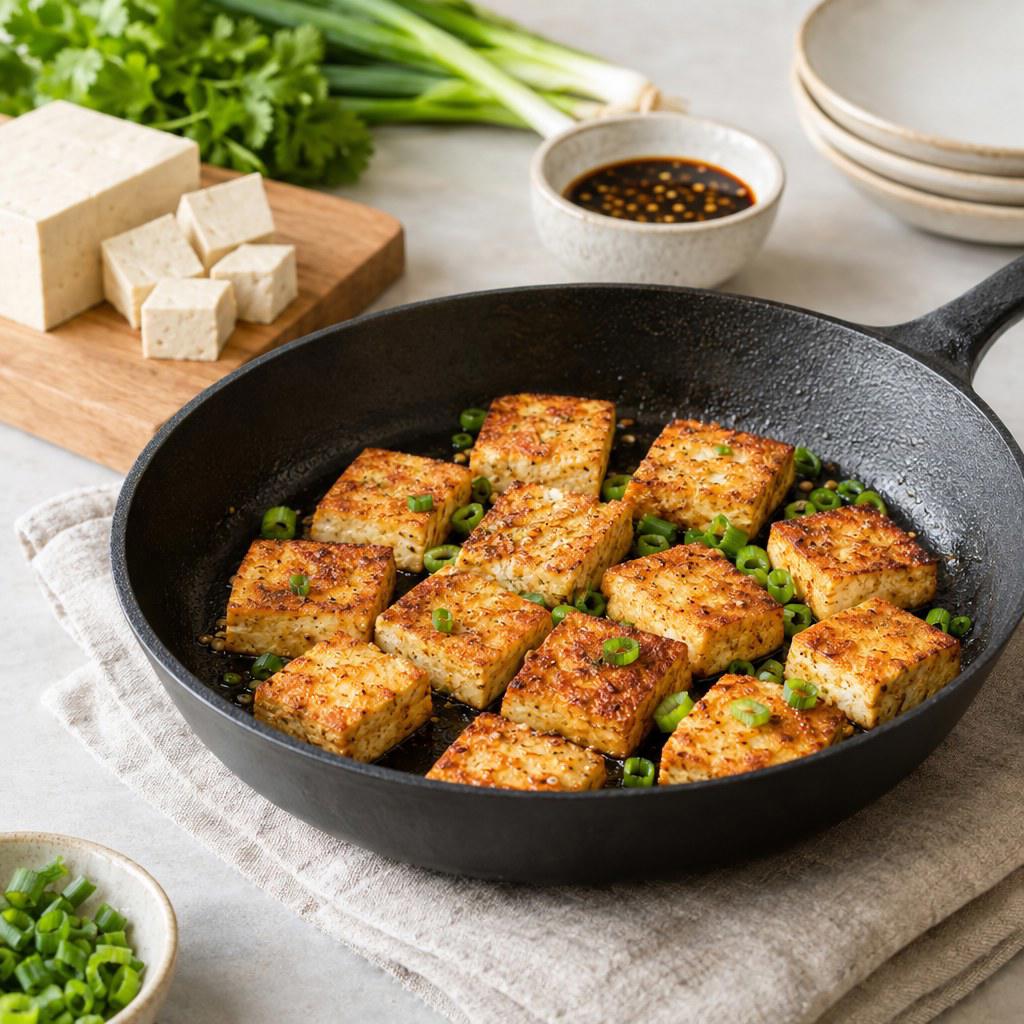
Pan-frying tofu is a simple way to turn a mild, soft ingredient into crisp, golden pieces with a tender center. The reliable method is to choose firm tofu, remove surface moisture, use a hot pan with enough oil, and leave the tofu undisturbed until a crust forms.
For a quick lunch, a weeknight stir-fry, or a plant-based addition to grain bowls, pan-fried tofu gives you a flexible base that takes on sauces and seasonings well. The details matter: small changes in tofu type, pan temperature, and timing determine whether it browns neatly or sticks, steams, and breaks apart.
Why Tofu Sticks or Stays Pale
Tofu has a high water content, and water is the main reason first attempts can be disappointing. When wet tofu reaches a pan that is not hot enough, it releases steam before it can brown. The pieces may look white, feel soft, and cling to the cooking surface rather than developing a crust.
A browned exterior needs 3 conditions: relatively dry tofu, a properly preheated pan, and contact with hot oil. The oil helps transfer heat across the tofu’s uneven surface and reduces sticking. You do not need to deep-fry it, but a lightly coated pan is often more dependable than a dry pan for beginners.
Heat, moisture, and patience work together
Medium to medium-high heat is usually a practical starting point. If the pan is too cool, the tofu steams. If it is excessively hot, the oil can smoke and the exterior may burn before the center is warm. Once a piece is in the pan, resist moving it immediately. A crust releases more easily after it has had time to set.
The pan itself also matters. A well-maintained nonstick skillet is the most forgiving option. A seasoned cast-iron or carbon-steel pan can produce excellent browning, but it benefits from careful preheating and enough oil. Stainless steel can work, though it demands more attention to temperature and technique.
Choose and Prepare the Right Tofu
For classic cubes or slabs with a crisp surface, buy firm or extra-firm tofu packed in water. These varieties hold their shape during turning and contain less water than silken tofu. Silken tofu is better suited to soups, sauces, and gentle preparations; it is not the easiest choice for a first pan-frying attempt.
Drain, press, and cut
Open the package, pour off the packing liquid, and place the tofu on a clean kitchen towel or layers of paper towel. Cover it with another towel and set a plate or small cutting board on top. Add a light weight, such as a can or a second plate, and leave it briefly while you prepare the rest of the meal. The aim is not to squeeze the tofu flat; it is to remove enough water to improve browning.
Cut tofu into pieces of a similar size so they cook at the same pace. Cubes are versatile, while rectangular slabs offer more browning surface and are easier to turn. Pat every exposed side dry after cutting. If the towel becomes saturated, use a dry section before moving on.
💡 Tip: If time is limited, thorough patting is still worthwhile. Pressing improves consistency, but dry surfaces and a hot pan are the more immediate priorities.
Step-by-Step Pan-Frying Method
This basic method is designed for one block of firm or extra-firm tofu. Adjust the batch size to your pan: overcrowding lowers the temperature and traps steam.
- Prepare the tofu. Drain, press or pat dry, then cut it into even cubes, triangles, or slabs.
- Season lightly before cooking. Add salt, pepper, garlic powder, or a small amount of your preferred dry seasoning. Avoid soaking the pieces in a watery marinade at this stage.
- Preheat the skillet. Set a nonstick, cast-iron, carbon-steel, or stainless-steel skillet over medium to medium-high heat. Let it warm before adding oil.
- Add oil and arrange the tofu. Use a neutral cooking oil with a suitable heat tolerance. Swirl enough oil to coat the pan, then add tofu in a single layer with space between pieces.
- Leave it alone. Let the first side cook without stirring until it looks golden at the edges and releases with gentle pressure from a spatula.
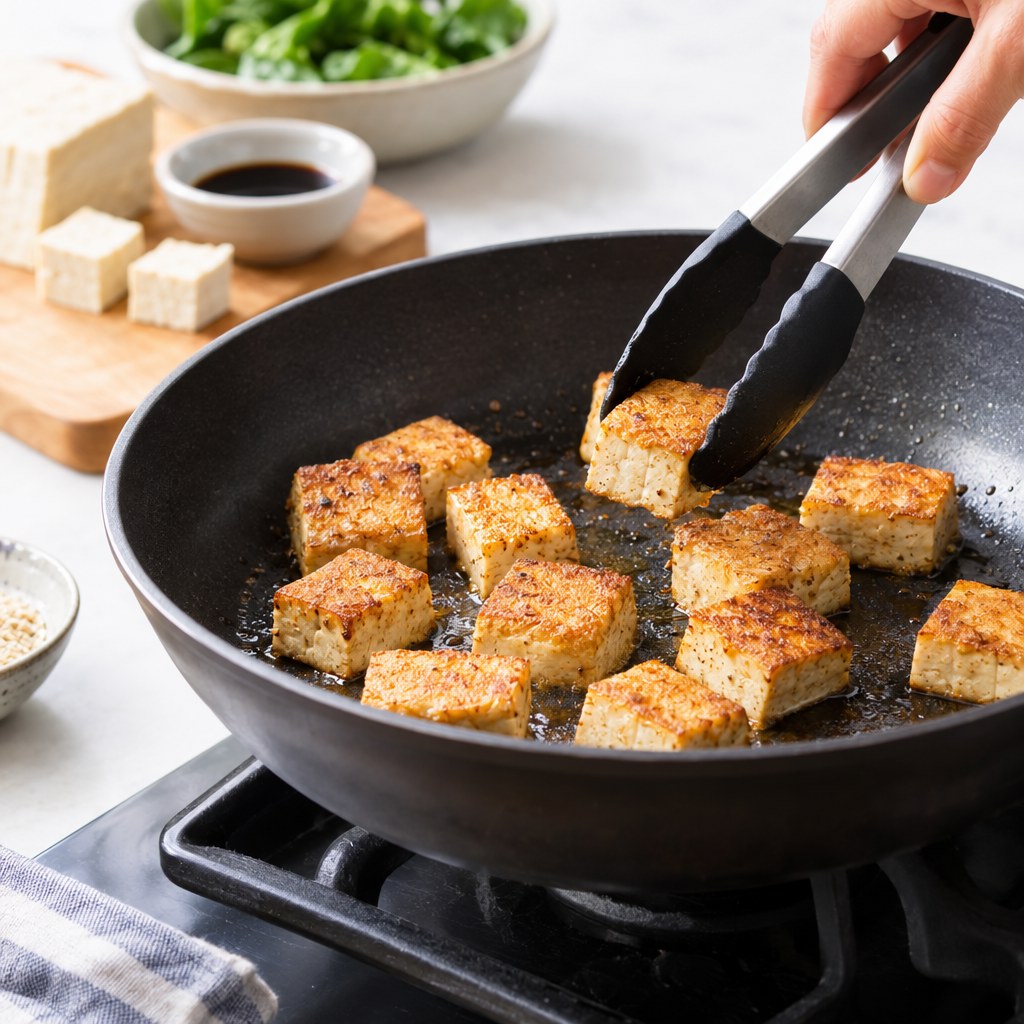
- Turn deliberately. Use a thin spatula or tongs to turn each piece. Brown 2 or more sides according to the shape and finish you want.
- Add sauce at the end. When the tofu is crisp, lower the heat and add a small amount of sauce. Toss briefly until it clings, then serve.
The exact cooking time varies with your pan, stove, tofu thickness, and desired color. Look for visual cues rather than relying only on a clock: the surface should be golden, feel firmer, and pull away from the pan without tearing.
Give the pan enough room
If you need more tofu than fits in one layer, cook in batches. This takes a little longer but avoids the watery, crowded-pan result. In a busy home kitchen, you can hold the first batch on a plate while the second batch cooks, then return everything to the skillet for a quick final toss with sauce.
Seasoning and Sauce Options
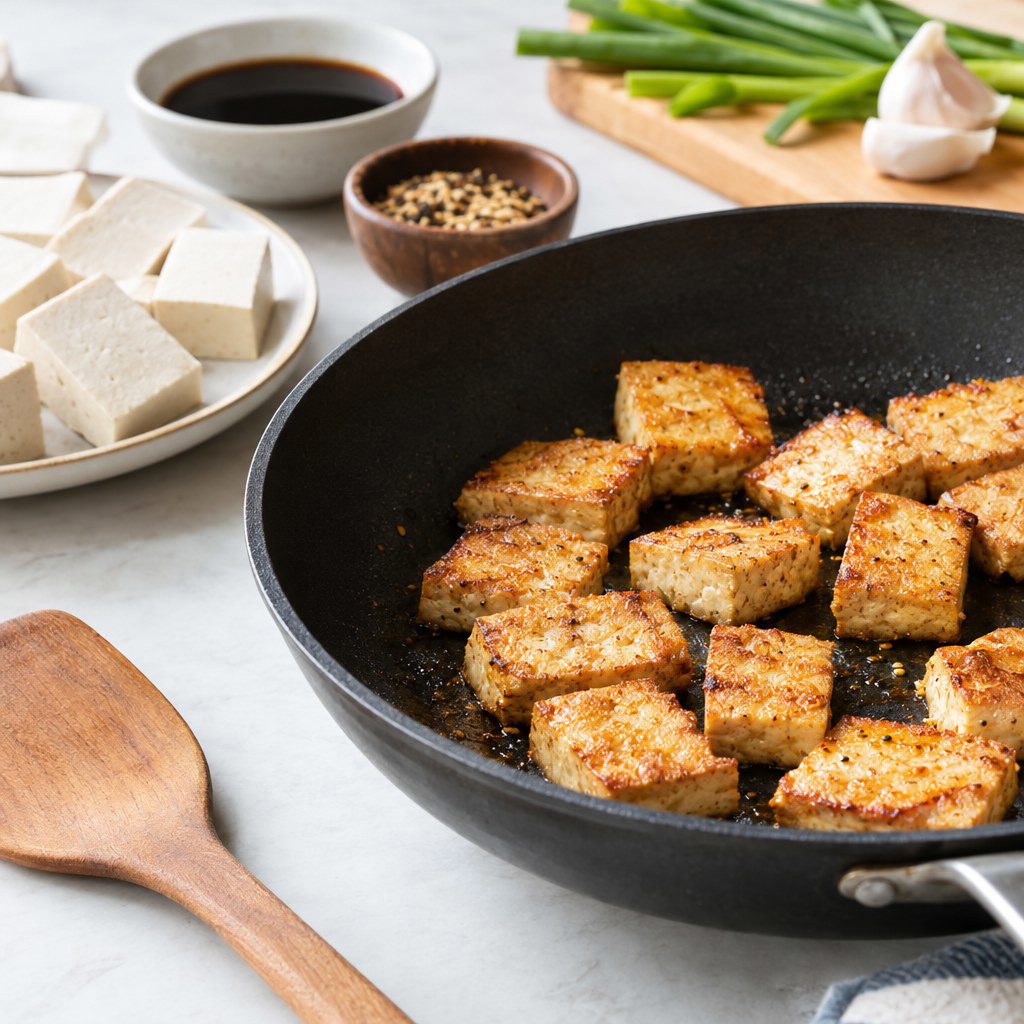
Tofu does not need a complicated marinade to taste good. Dry seasonings before frying are useful because they do not add much moisture. Try a simple mixture of salt, black pepper, garlic powder, and smoked paprika, or use a small amount of curry powder for a warm, savory direction.
For a sauced finish, add flavor after browning. A soy-based sauce, a ginger-garlic mixture, or a peanut-style sauce can work well, provided you use only enough to coat the tofu. Add it over lower heat and toss quickly. Too much liquid turns a crisp crust soft, which may be welcome in a braise but is not the goal of pan-frying.
Choose the finish based on the meal
- Keep tofu dry and crisp for salads, grain bowls, and wraps.
- Add a light savory glaze for rice, noodles, or roasted vegetables.
- Use larger slabs with a squeeze of citrus and herbs for a simple main dish.
- Season cubes boldly if they will be mixed into a mild vegetable stir-fry.
If you want a crisper coating, toss dry tofu lightly with cornstarch before it goes into the pan. Use a thin, even layer rather than a heavy dusting. This option creates a more pronounced shell, but it also requires gentle turning so the coating stays attached.
Common Mistakes and Recovery Fixes
The tofu sticks when you try to turn it
Do not force it. Give it more time, then slide a thin spatula under one edge. Sticking often means the crust has not formed yet, though insufficient oil or an improperly heated pan can also contribute. If it tears, keep cooking the pieces; broken tofu still tastes good in a bowl, scramble, or saucy dish.
The tofu is soft instead of crisp
The likely causes are excess moisture, a crowded pan, or heat that is too low. For the current batch, spread the pieces out if possible and continue cooking without adding sauce. Next time, press or pat more thoroughly and cook in separate batches.
The seasoning burns
Some spice blends and sugars darken quickly in hot oil. Scrape away any bitter burnt bits, lower the heat slightly, and add fresh flavor near the end. Keep sweet glazes for the final minute rather than adding them at the start.
The exterior browns before the center warms
Lower the heat and turn the tofu more frequently after the first crust forms. Smaller pieces also warm faster than thick slabs. There is no need for a raw-food safety concern with packaged tofu in this situation, but warming it through improves texture and makes the finished dish more cohesive.
A Quick Decision Framework
When you want dependable pan-fried tofu, make 4 decisions before you cook. Choose firm or extra-firm tofu. Remove moisture with a press or careful patting. Select a pan that matches your confidence level, with nonstick being the easiest starting point. Then decide whether crispness or sauce is the priority, because a generous sauce will soften the crust.
For your first batch, keep the method plain: extra-firm tofu, a nonstick skillet, neutral oil, simple seasoning, and no sauce until the end. Once you can consistently achieve golden sides, experiment with starch coatings, bolder spice blends, different shapes, and glazes.
Make Your Next Batch Simple
Start with dry extra-firm tofu, a hot lightly oiled pan, and the patience to let each side brown before turning.