Choosing a Coffee Table for Your Room Layout
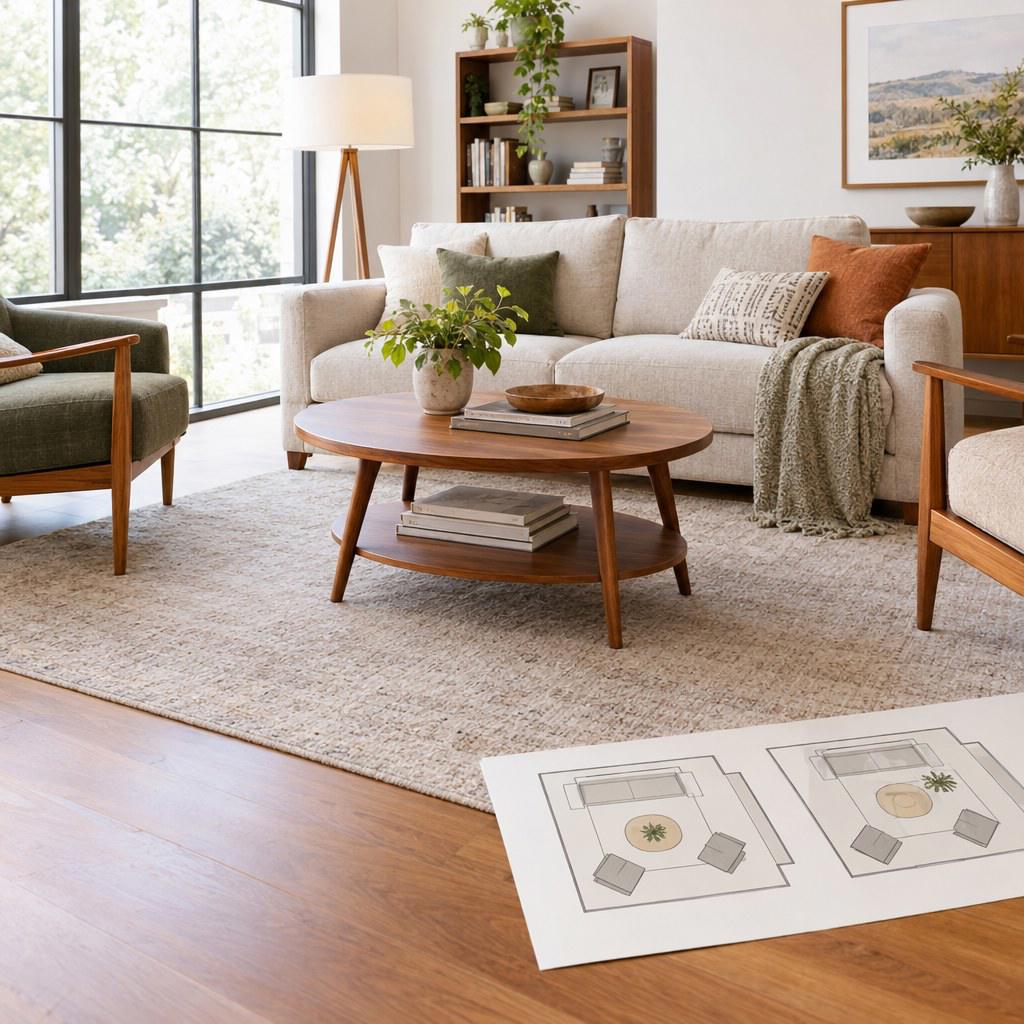
Start with the layout, not the table
The right coffee table supports how you move, sit, serve, and relax in a room. Choose it by measuring the usable space around your seating first, then match its shape, scale, height, and storage to the way the room actually works.
A coffee table can make a living room feel settled, but it can also become an obstacle if it is too large, too tall, or awkwardly shaped. This matters in homes, reception areas, furnished rentals, and informal meeting spaces alike: the table should give people a practical surface without interrupting circulation.
Begin by treating the seating area as a working zone. Your sofa, chairs, rug, walkways, doors, and any media unit all determine what table will fit. Once those constraints are clear, style choices become much easier.
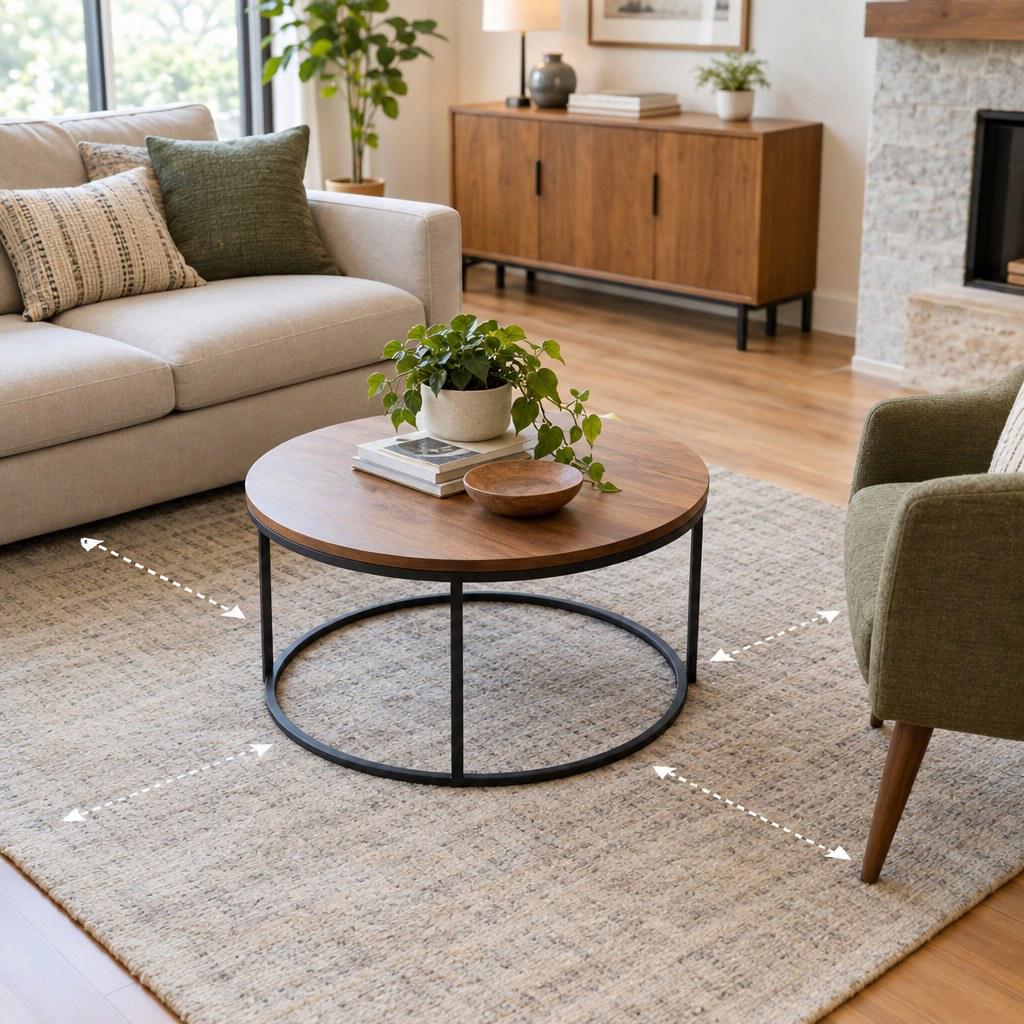
Measure clearances before shopping
Measure the open area between your seating pieces, not simply the overall room. A large room can still have a compact conversation area, while a smaller room may accommodate a generous table if the furniture is arranged efficiently.
Map the movement routes
Identify every route people use: the path from the door to the sofa, the route to a window, and the way someone reaches a chair. A coffee table should not force people to turn sideways, take an unnecessary detour, or bump their knees. If your room has several entry points, prioritize the busiest route.
As a practical starting point, leave roughly 16 to 18 inches between the edge of a sofa and the coffee table. This usually provides comfortable legroom while keeping drinks and books within reach. Leave more room, often around 30 inches or more, for a primary walkway. These are planning guidelines, not rigid rules: deeper sofas, recliners, and mobility needs may require additional space.
Use a simple floor plan
Sketch the room on paper or use painter’s tape to outline the proposed table on the floor. Tape is especially useful because it shows the real footprint immediately. Walk around it, sit down, open nearby drawers, and test doors. If the taped shape feels intrusive, a smaller size or softer shape is likely the better choice.
💡 Tip: Measure with any ottomans, footstools, side tables, and children’s play areas in place. A coffee table that fits an empty room can feel oversized once everyday items return.
Choose a shape that follows traffic flow
The table shape should echo the seating arrangement and reduce sharp corners where people pass. There is no universally best shape; the correct option depends on whether your seating is linear, grouped, compact, or spread across a large rug.
Rectangular tables suit long seating groups
A rectangular coffee table works naturally in front of a standard sofa or between a sofa and a pair of chairs. It provides a broad surface and reinforces the horizontal line of the sofa. It is often the most efficient option for a long, narrow room, provided there is enough clearance at both ends.
Choose a narrower rectangle when the seating area is tight. A bulky, wide rectangle may look balanced from one viewpoint but block the route around the sofa.
Round and oval tables soften compact rooms
Round tables make it easier to move through a room with active walkways because there are no corners to navigate. They are useful near doorways, in homes with young children, or when chairs are arranged at angles. An oval table offers a similar benefit while giving you more length for trays, books, or shared refreshments.
Square tables suit symmetrical arrangements
A square coffee table can work well when seating wraps around it on 3 sides, such as 2 facing sofas or a sectional paired with chairs. It creates an equal relationship with each seat. In a narrow room, however, its depth can consume too much open floor area.
Nested or modular tables add flexibility
Nested tables can be separated when you are hosting, then tucked together when more floor space is needed. This is useful in multipurpose rooms where the same area supports conversation, games, work, or occasional entertaining. Check that the smaller table is easy to pull out and that both pieces remain stable when used separately.
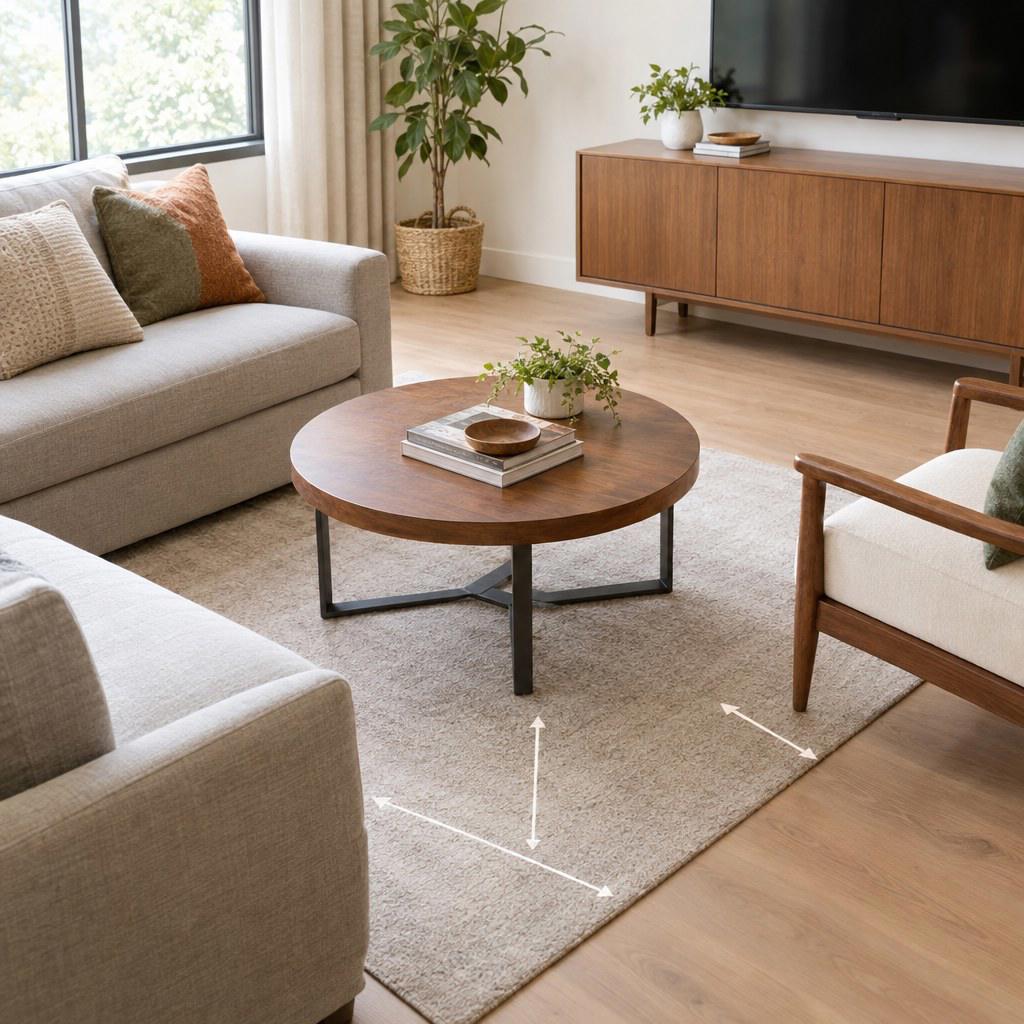
Set the right scale and height
Scale is the relationship between the coffee table and everything around it. A table can be attractive on its own and still appear undersized beneath a large sectional or visually heavy in front of a compact loveseat.
A useful rule of thumb is to select a table that is about two-thirds the length of the sofa it faces. This creates a deliberate visual connection without making the table dominate the seating. For a sectional, assess the length of the side where people will most often place drinks or use the surface.
Height is equally important. In most rooms, the tabletop should sit close to the height of the sofa seat cushions or slightly lower. A table that rises substantially above the seat can obstruct sightlines and feel awkward when reaching for a drink. A very low table may suit floor cushions or low modern seating, but test whether it remains convenient for daily use.
Select materials and storage for real life
Material affects both the visual weight of the table and the maintenance it demands. Before selecting a finish, consider who uses the room, how often the surface is used for food or work, and how visible everyday clutter tends to be.
- Wood: Warm and adaptable, with a solid visual presence. Look for a finish that suits the level of wear you expect, especially if cups, craft supplies, or meals often land on the surface.
- Glass: Helps a small room feel more open because it preserves sightlines. It also shows fingerprints and requires careful consideration around energetic children or heavy use.
- Metal: Can feel light and structured, particularly with an open base. Check edges, stability, and whether the finish will show scratches.
- Upholstered ottoman: Offers soft edges and extra seating or foot support. Add a firm tray if you need a dependable place for drinks, laptops, or decorative objects.
- Stone or concrete-look surfaces: Create visual weight and can anchor a large room. Confirm the table can be moved safely and that the floor can be protected from scratches.
Storage is helpful only when it solves a real behavior. A shelf can hold baskets, reading material, or remotes. Drawers conceal small items but may be inconvenient if they open into a tight walkway. If you rarely put things away, open storage may simply display clutter. In that case, choose a simpler table and assign storage to a nearby cabinet or basket.
Use this shopping checklist
Take this list with you when comparing options online or in person. It prevents a visually appealing table from winning before you have checked whether it supports the room.
- Measure the sofa, chairs, rug, and the open seating zone.
- Mark the proposed footprint with tape or paper on the floor.
- Check clearance to seating, doors, drawers, and main walking routes.
- Choose a shape that works with the flow of people through the room.
- Compare the tabletop height with the seat height of your primary sofa or chairs.
- Decide what the surface must hold: drinks, snacks, books, remote controls, games, or work materials.
- Assess sharp corners, wobble, weight, and finish durability for your household.
- Confirm delivery access, assembly requirements, and the ability to return the item if the proportions are wrong.
Avoid common layout mistakes
Buying for the empty space instead of the usable space
The gap in front of a sofa can look large until people sit down, stretch their legs, or walk past it. Recover by reducing the table depth, switching to an oval, or using a pair of smaller movable tables.
Matching every piece too closely
A coffee table does not need to be the same wood tone, leg style, or finish as every other item. Matching the room’s visual weight and general character is more important. A lighter table can balance a heavy sofa; a substantial wood table can ground streamlined seating.
Ignoring table edges and bases
The base matters as much as the top. Thick legs can interfere with feet, while an open base may make a large table feel less bulky. Look underneath the table and imagine where knees, feet, baskets, and vacuum cleaners need to go.
Using the coffee table as the only storage plan
When a table must hold everything, it quickly becomes crowded. Keep daily essentials limited to a tray or basket, and move larger categories—such as toys, paperwork, or electronics—to dedicated storage nearby.
Make the final decision with 4 questions
Does it preserve clear movement? Does its shape suit the seating arrangement? Is it proportionate to the sofa and rug? Will its surface, edges, and storage work for everyday use?
If you can answer yes to all 4, you have a table that supports the room rather than merely filling its center. Measure once more before ordering, especially when choosing a large, heavy, or difficult-to-return piece.