What Makes a Welcoming Community Space
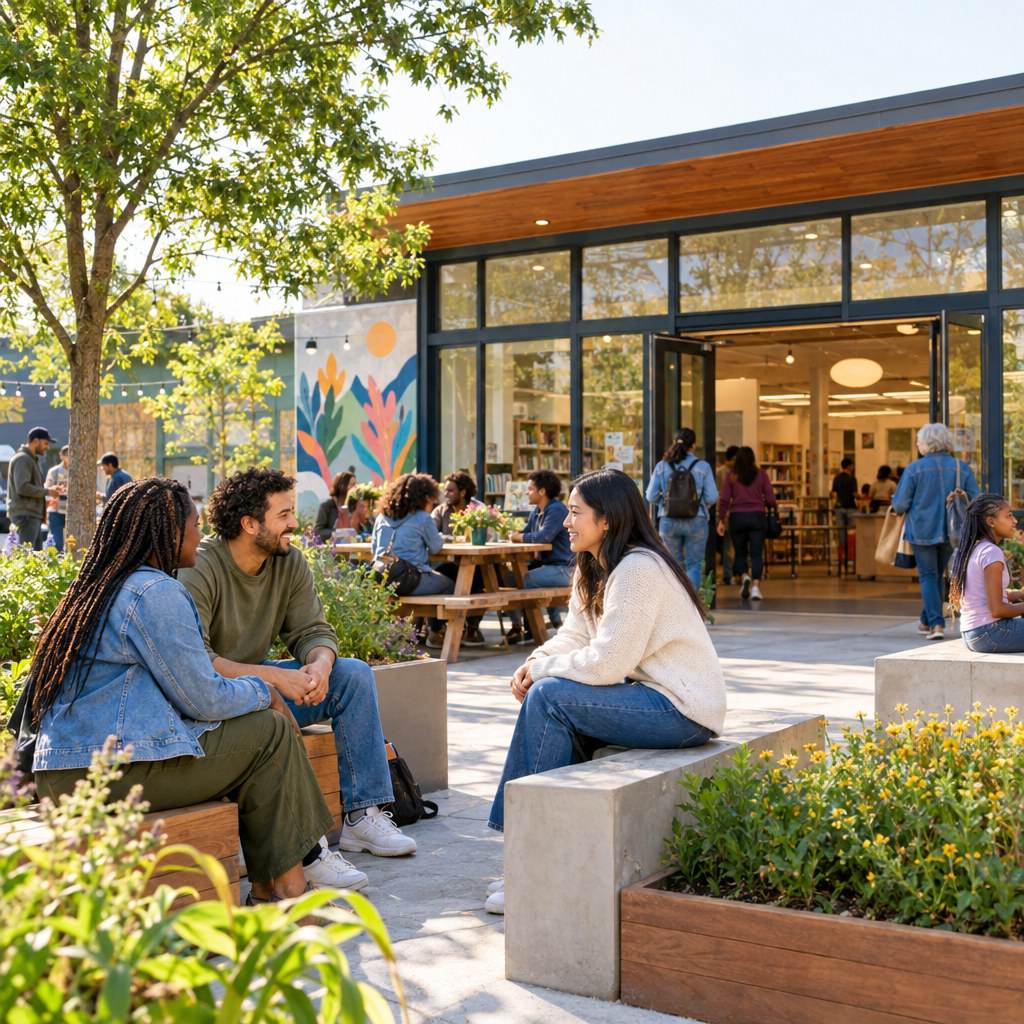
A welcoming community space makes it easy for different people to enter, understand what is available, participate comfortably, and return. It is not created by attractive furniture alone: welcome comes from practical access, clear expectations, thoughtful programming, and consistent care. If you manage a shared room, neighbourhood venue, library corner, studio, garden, or business-hosted gathering place, you can use these principles to turn a usable location into one people trust.
The goal is not to design for an imagined “average” visitor. Your space should reduce avoidable friction for people with different ages, abilities, cultures, confidence levels, schedules, and reasons for attending. Start by noticing where someone might hesitate, then make the next step obvious and respectful.

Welcome Starts Before Entry
People form an impression before they join an activity. They may be deciding whether they can find the entrance, whether they are expected, what it costs, who will be there, and whether they will feel out of place. A warm greeting at the door cannot fully fix confusing information beforehand.
Make the first visit predictable
Share the essentials wherever you promote the space: location, arrival route, opening or event times, how to enter, whether booking is needed, expected cost if any, and a contact method for questions. Use plain language. Replace vague directions such as “come by anytime” with useful guidance such as “drop in during the listed session; a host can help you choose a seat.”
On site, make the entrance visible and keep signs focused on immediate decisions. A visitor should be able to identify the correct door, check in without guessing, find key facilities, and understand where an activity is happening. Review signs from outside the building and from the perspective of someone who has never visited.
💡 Tip: Ask a person who is unfamiliar with the venue to arrive using only your public information. Note every question they need to ask and every point where they pause. This small test often reveals more than a planning meeting.
Signal who belongs
Your imagery, examples, language, staff behaviour, and house rules all communicate who the space is for. Avoid messaging that assumes everyone already knows local customs, speaks in the same way, or attends with a companion. Describe the purpose of the space broadly while being honest about its practical limits. For example, a quiet reading hour and an energetic family craft session can both be welcoming, but they serve different needs and should be presented clearly.
Design for Comfort and Choice
A welcoming layout gives people choices without making the room difficult to navigate. Visitors may want to talk, work quietly, watch before joining, bring children, use mobility equipment, take a break, or leave easily. You do not need a large budget to support these needs; you need to make intentional decisions about space, furniture, noise, and upkeep.
Clear movement
Keep routes open between the entrance, seating, activity areas, and facilities. Store bags, displays, and supplies where they do not create obstacles or uncertainty.
Different ways to stay
Offer a mix of seating, standing room, shared tables, and quieter edges. Choice lets visitors manage energy, privacy, and social contact for themselves.
Care that is visible
Clean shared surfaces, working lights, tidy restrooms, and stocked essentials show that people’s time and comfort matter here.
Consider sensory conditions too. Harsh lighting, constant background noise, strong fragrances, or an overcrowded noticeboard can make a space tiring. Observe the room during its busiest and quietest periods. Then make modest changes: move noisy activities away from conversation areas, reduce clutter, provide a lower-stimulation seat, or schedule quieter sessions.

Make Participation Clear, Safe, and Low Pressure
Many people do not avoid community spaces because they dislike the purpose. They avoid them because joining feels socially risky. They may not know where to sit, whether they may touch materials, how long they should stay, or whether they will be questioned. Design participation so that a visitor can observe first and contribute at a pace that feels right.
Use hosts, not gatekeepers
Assign a visible person to welcome newcomers during busier periods and events. Their role is simple: acknowledge arrivals, explain the immediate choices, introduce people only with permission, and check in without hovering. A good host says what is happening now and what someone can do next. They do not pressure anyone to disclose personal details or join a group activity.
State shared expectations
Clear norms protect welcome. Keep them short, specific, and easy to find. Cover respectful conduct, how to ask for help, how to report a concern, and any rules about food, children, photography, noise, equipment, or closing time. Apply expectations consistently. If a rule is necessary for safety or smooth operations, explain it calmly rather than assuming visitors will understand the reason.
Programs should include more than one entry point. Alongside a structured workshop, offer a drop-in task, a display that prompts conversation, or a way to contribute anonymously. For example, at a neighbourhood planning session, people could speak in a small group, add a note to a board, or take information home and respond later. Different participation routes produce better input and reduce pressure.
Build a Reliable Operating System
Welcome is sustained by operations. A beautiful room that is unexpectedly closed, poorly stocked, or difficult to contact can lose trust quickly. Give someone clear responsibility for the basics, and create routines that make those basics repeatable even when volunteers, staff, or schedules change.
Decide in advance how you will handle disruptions. This includes a host not arriving, an activity being cancelled, conflict between visitors, an unavailable room, or a maintenance issue. You do not need an elaborate manual, but you do need a simple escalation path: who decides, who communicates with visitors, and how the issue is recorded for follow-up.
Put the Plan Into Practice
Start with a focused review rather than a full redesign. Walk through the visitor journey, collect observations, choose a few changes with clear owners, and test them during normal use. Small improvements delivered consistently are more valuable than a long wish list that never becomes operational.
- Define the purpose. Write one plain sentence about what the space enables and who you want to support. Use it to guide layout, programming, and rules.
- Map the journey. Review discovery, arrival, entry, orientation, participation, facilities, departure, and follow-up. Identify points where a first-time visitor could be confused or excluded.
- Ask for practical feedback. Invite regulars and newer visitors to comment on what is easy, awkward, unclear, or missing. Ask open questions rather than seeking approval for a fixed plan.
- Prioritise barriers. Address safety, access, clarity, and cleanliness before decorative upgrades. Assign a person and a due date to each selected action.
- Train for consistent welcome. Give staff and volunteers a short arrival script, information sheet, and clear boundaries for handling concerns.
- Review after use. Check whether the change worked in practice. Keep what reduces friction, adapt what causes confusion, and explain major changes to regular users.
💡 Tip: Separate observations from assumptions. “Three people asked where to check in” is useful evidence. “Nobody reads signs” is an assumption that needs testing.
Risks and Recovery
A common mistake is treating welcome as a branding exercise. Friendly words and colourful posters do not overcome inaccessible routes, inconsistent opening times, unclear boundaries, or dismissive behaviour. Another mistake is trying to meet every need in one room at the same time. When competing needs arise, offer choices through time slots, zones, or separate activities rather than allowing the loudest preference to define the whole space.
What to avoid
- Rules that are hidden, overly broad, or enforced differently depending on who is present.
- Volunteer expectations that are unclear or too demanding to sustain.
- Feedback collection with no visible response or follow-up.
- Assuming a digital announcement reaches people who do not use that channel.
- Making newcomers introduce themselves publicly before they can participate.
If something goes wrong, respond directly. Acknowledge the disruption, explain the practical next step, and avoid promises you cannot keep. For a recurring problem, record what happened, identify the process gap, and change the routine rather than relying on one person to remember next time. Reliable recovery can strengthen trust because visitors see that concerns are taken seriously.
A Simple Decision Framework
When deciding whether an improvement is worth making, use 4 questions: Does it make arrival easier? Does it increase comfort or choice? Does it clarify how people can participate? Can your team maintain it reliably? Prioritise changes that answer “yes” to several questions and do not create an unreasonable burden for the people running the space.
The best welcoming community spaces are clear without being cold, flexible without becoming chaotic, and cared for without feeling controlled. They give people enough information to act independently while ensuring help is available when it is needed.
Choose One Improvement for This Week
Walk the route as a first-time visitor, identify one avoidable barrier, assign an owner, and check the result during your next opening or event.