Planning a Dinner Around Seasonal Root Vegetables
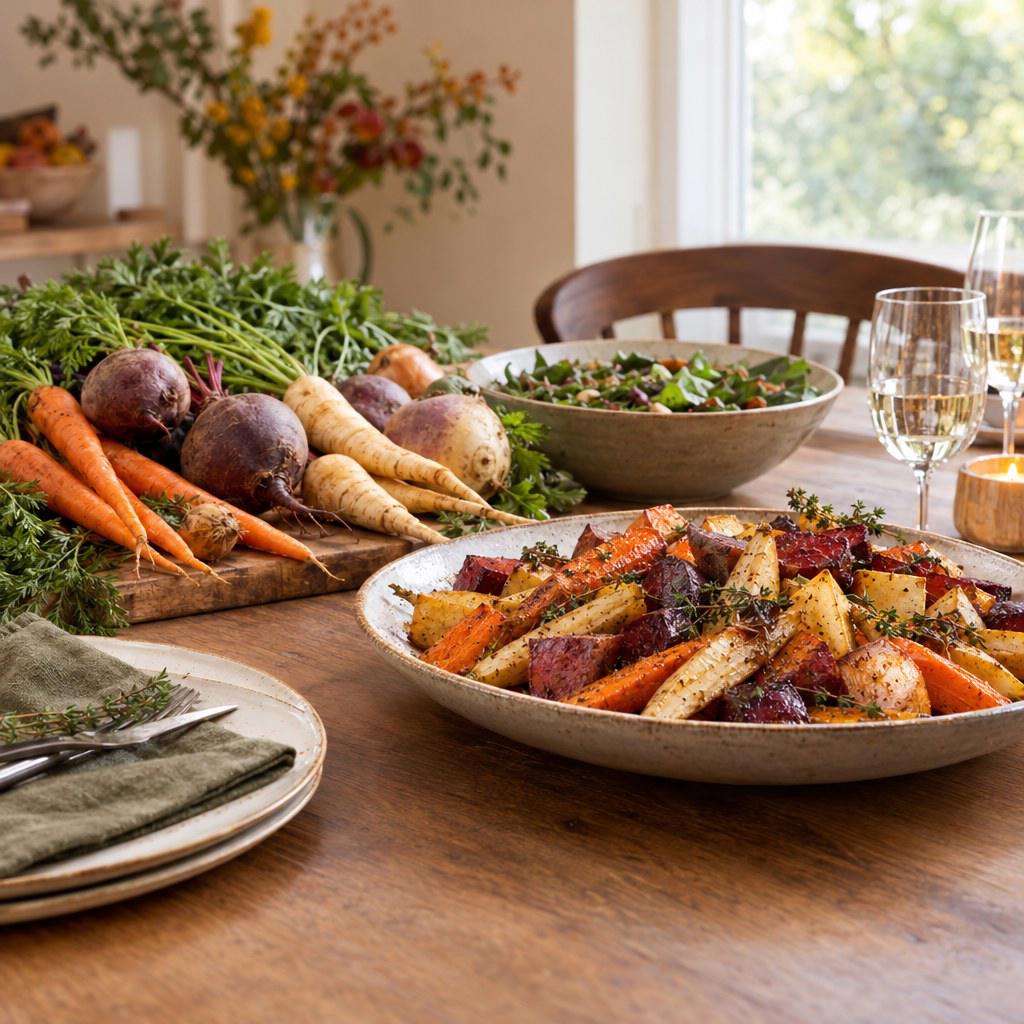
Planning a dinner around seasonal root vegetables works best when you give each vegetable a clear role: one provides sweetness, one brings earthiness, one adds texture, and a fresh or acidic element keeps the plate balanced. With a simple menu structure and coordinated cooking methods, you can turn inexpensive, sturdy produce into a dinner that feels deliberate rather than repetitive.
Root vegetables are especially useful when you need a flexible meal plan. They store well, handle roasting and braising reliably, and can support vegetarian, meat-based, or mixed menus. The key decision is not which vegetable looks most impressive; it is choosing a combination that cooks at a similar pace and offers contrast at the table.
Why root vegetables need a menu plan
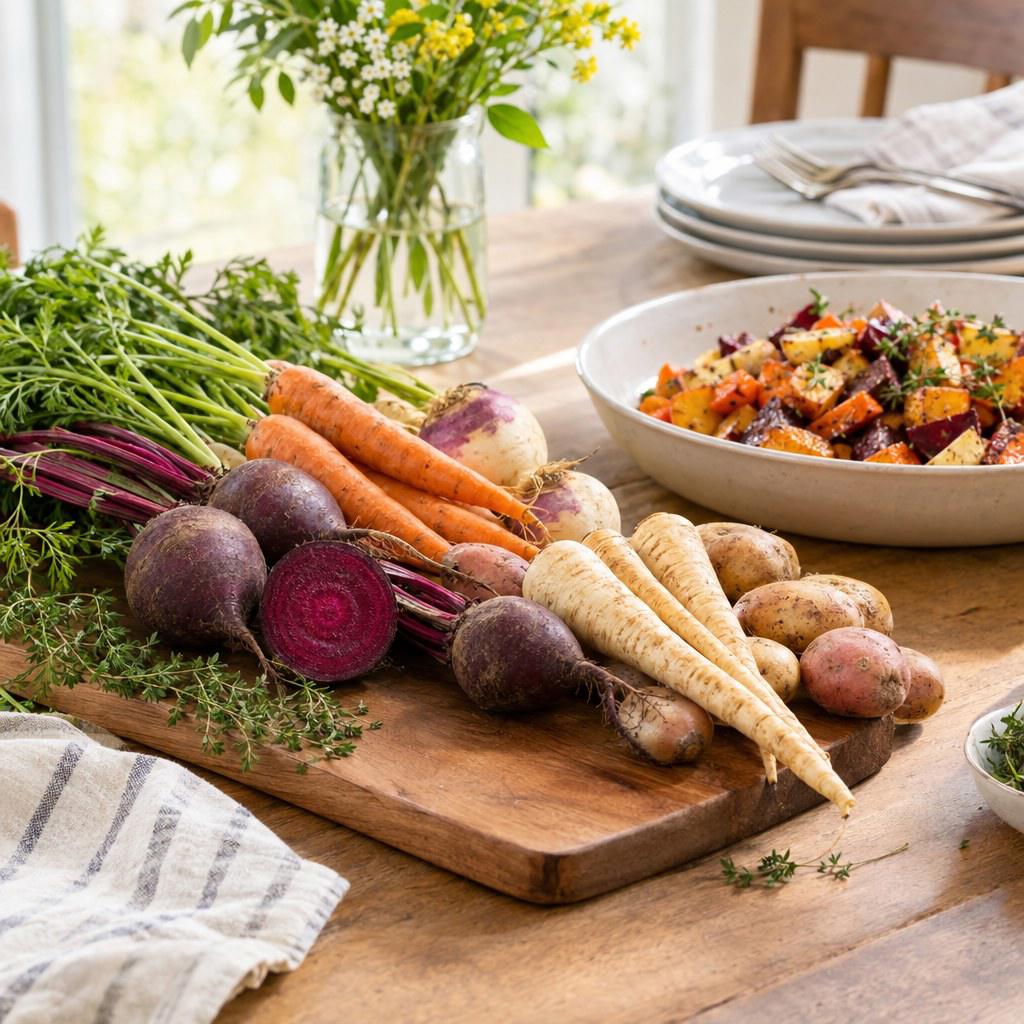
Carrots, parsnips, beets, turnips, rutabagas, celeriac, potatoes, sweet potatoes, radishes, and winter squash-like roots all have different levels of moisture, sweetness, density, and cooking time. Treating them as interchangeable is the main reason a tray of roasted vegetables can turn out uneven, bland, or overly soft.
A good dinner plan solves 3 practical issues. First, it prevents too many sweet vegetables from appearing on the same plate. Second, it helps you avoid asking delicate ingredients to cook beside dense potatoes or large beet wedges. Third, it creates enough contrast that the meal does not feel heavy.
Pick an anchor
Choose 1 vegetable to carry the meal, such as potatoes for comfort or beets for color. Let the others support it instead of competing for attention.
Group by cooking behavior
Dense roots benefit from longer heat, while small carrots, radishes, and thin slices need more attention to avoid drying out.
Plan a contrast
Include something sharp, crisp, creamy, or herbaceous. A lemon dressing, yogurt sauce, salad, or pickled element can change the whole meal.
For example, a menu of roasted carrots, parsnips, and sweet potatoes may taste pleasant but uniformly sweet. Add peppery radishes, bitter greens, tangy feta, or a mustard vinaigrette, and the same ingredients become more balanced. You are designing the whole plate, not just roasting a vegetable assortment.
Build balance with flavor and texture
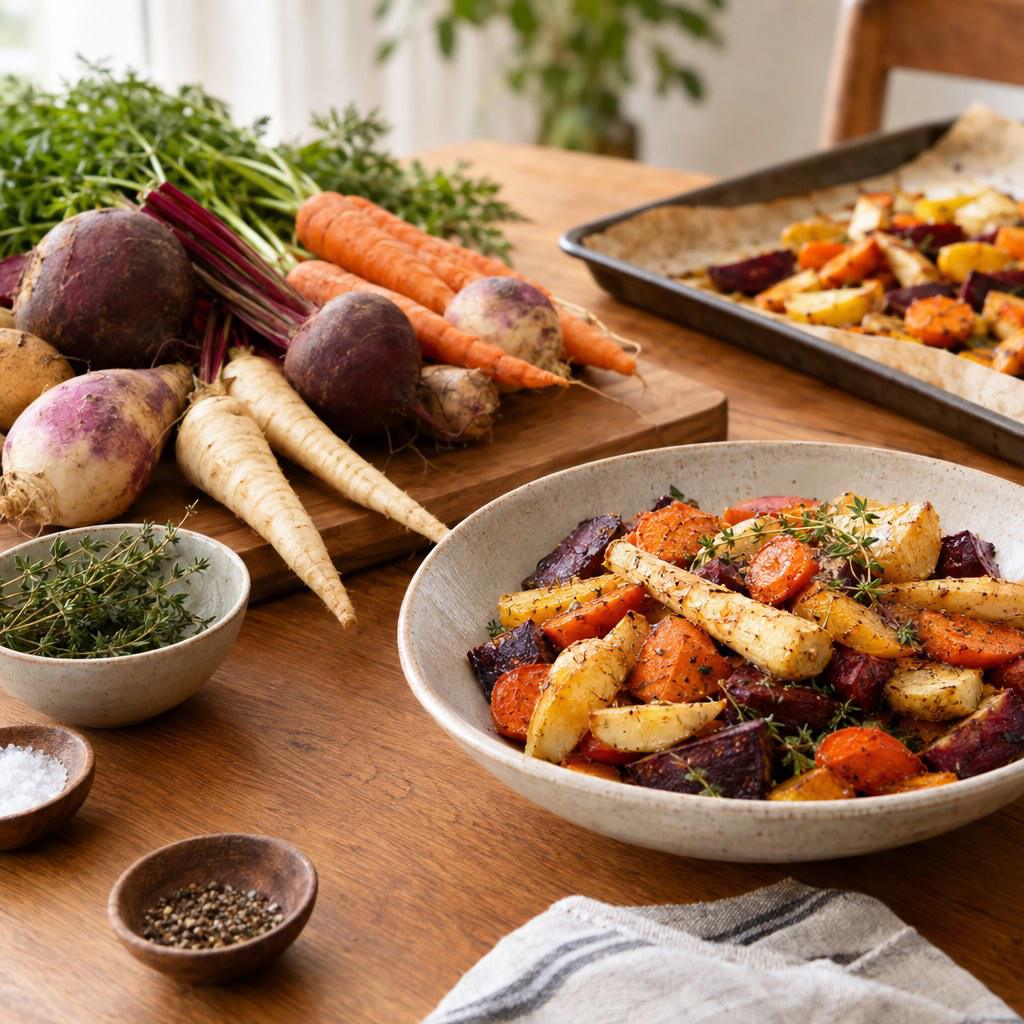
Root vegetables become sweeter as they roast because surface moisture evaporates and natural sugars brown. That makes acidity, salt, bitterness, and freshness important. You do not need a complicated sauce; you need an element that wakes up the flavors.
Keep the seasoning direction focused. Earthy roots pair naturally with warm spices, woody herbs, garlic, and browned butter, but using all of them at once can obscure the vegetables. Select 1 flavor family. A cumin-and-lemon menu feels different from a rosemary-and-garlic menu, even when both use carrots and potatoes.
💡 Tip: Taste the dinner after adding your finishing element, not only when the vegetables leave the oven. A small amount of acid and salt at the end often reveals flavors that seemed muted during cooking.
Use a practical cooking sequence
Most root-vegetable dinners become easier when you separate planning from active cooking. Do the chopping and flavor decisions before the oven is hot, then let the cooking sequence guide the rest of the meal.
- Choose your anchor vegetable. Decide whether potatoes, beets, carrots, sweet potatoes, or another root will provide the bulk of the plate.
- Add 1 contrasting vegetable. Pair a sweet root with a more savory, peppery, or earthy one. Carrots with turnips, or potatoes with celeriac, are useful starting points.
- Cut for timing, not appearance alone. Larger pieces cook more slowly. Cut dense vegetables smaller than tender ones if you want them to finish together.
- Decide what cooks first. Start the densest vegetables, then add faster-cooking items later. Use a second tray if crowding would trap steam.
- Prepare the finishing element while vegetables roast. Mix dressing, wash herbs, toast nuts, or prepare a protein before the vegetables are done.
- Rest and assemble. Give roasted vegetables a short rest before dressing them. Then taste, adjust seasoning, and serve while edges are still crisp.
If you are feeding a group, plan for variation at the table rather than trying to make every component suit everyone. Serve spicy oil, cheese, nuts, herbs, or a creamy sauce separately. This keeps the base vegetables broadly appealing and lets people customize their plates.
Avoid common planning mistakes
Overcrowding the pan
Too many vegetables in one layer release steam faster than it can escape, so they soften instead of browning. Recover by dividing the vegetables between trays, cooking in batches, or raising the oven temperature slightly only if your recipe and cookware allow it. Do not keep stirring in search of color; give the vegetables contact time with the hot pan.
Using uneven cuts
Mixed sizes create a tray where some pieces are hard and others are collapsing. If you notice the problem during cooking, remove the tender pieces first and return the larger ones to the oven. Next time, use the smallest cuts for the densest roots and aim for consistent shapes within each vegetable.
Making every component soft
Mash, roasted roots, soft beans, and creamy sauce can make a dinner feel monotonous. Recover with a crisp salad, toasted topping, raw shaved vegetable, or a bright pickle. Texture is not an optional garnish; it is part of how the meal feels satisfying.
Forgetting the final seasoning
Salt applied before cooking is necessary, but it rarely finishes the job. Taste after roasting or simmering, then add salt, acid, herbs, or a small amount of fat as needed. Make adjustments gradually so you improve the dish rather than masking its natural flavor.
Use a simple decision framework
When you are planning dinner, make 4 decisions in order: choose 1 anchor root, choose 1 contrast, choose a cooking format, and choose 1 bright finishing element. This framework is enough to create a coherent meal without relying on a detailed recipe.
For a quick dinner, use potatoes or sweet potatoes, carrots or radishes, a sheet pan, and lemony yogurt. For a more relaxed meal, use beets and celeriac, roast them separately, add greens and toasted walnuts, then finish with a sharp vinaigrette. For a soup, use carrots, turnips, and potatoes with beans and herbs, then serve something crisp alongside.
Seasonal root vegetables reward practical planning: use what is firm, fresh-looking, and available; match the cuts to the cooking method; and build contrast into the final plate. Start with the vegetables you already have, then choose the one finishing element that will make them feel complete.
Plan your next root-vegetable dinner
Open your produce drawer, choose an anchor vegetable, and build the meal around contrast in flavor, texture, and cooking time.