Why Ducks Have Waterproof Feathers
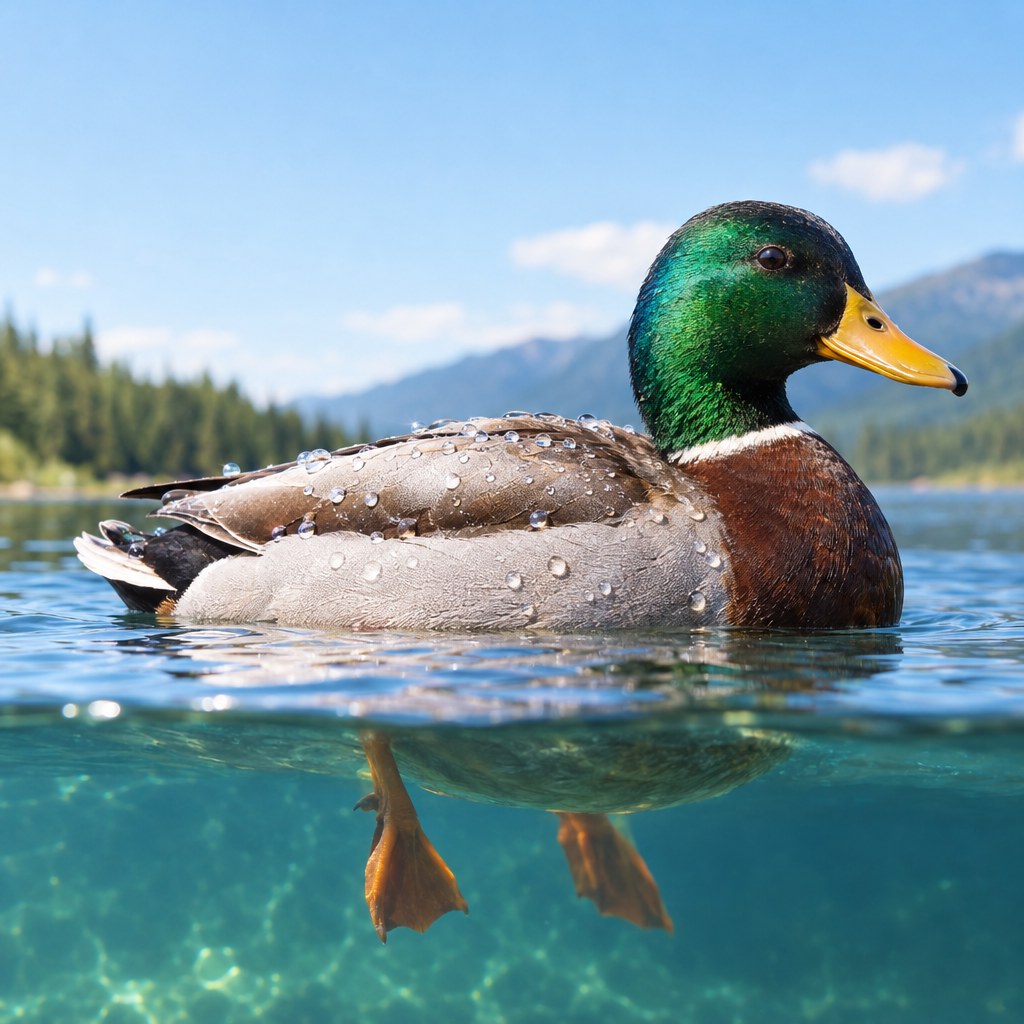
Why Ducks’ Feathers Repel Water
Ducks have waterproof feathers because their survival depends on staying buoyant, warm, and able to fly after swimming. Their protection comes from feather structure, careful preening, and oil produced near the base of the tail, which together create a water-resistant outer coat while trapping insulating air underneath.
If you keep ducks, manage a pond, photograph waterfowl, or simply want to understand what you see on the water, knowing how this system works helps you spot normal behavior and recognize when a bird may need attention. Waterproofing is not a single coating applied once; it is a maintenance system that ducks renew throughout the day.
The Feather Design Behind Waterproofing
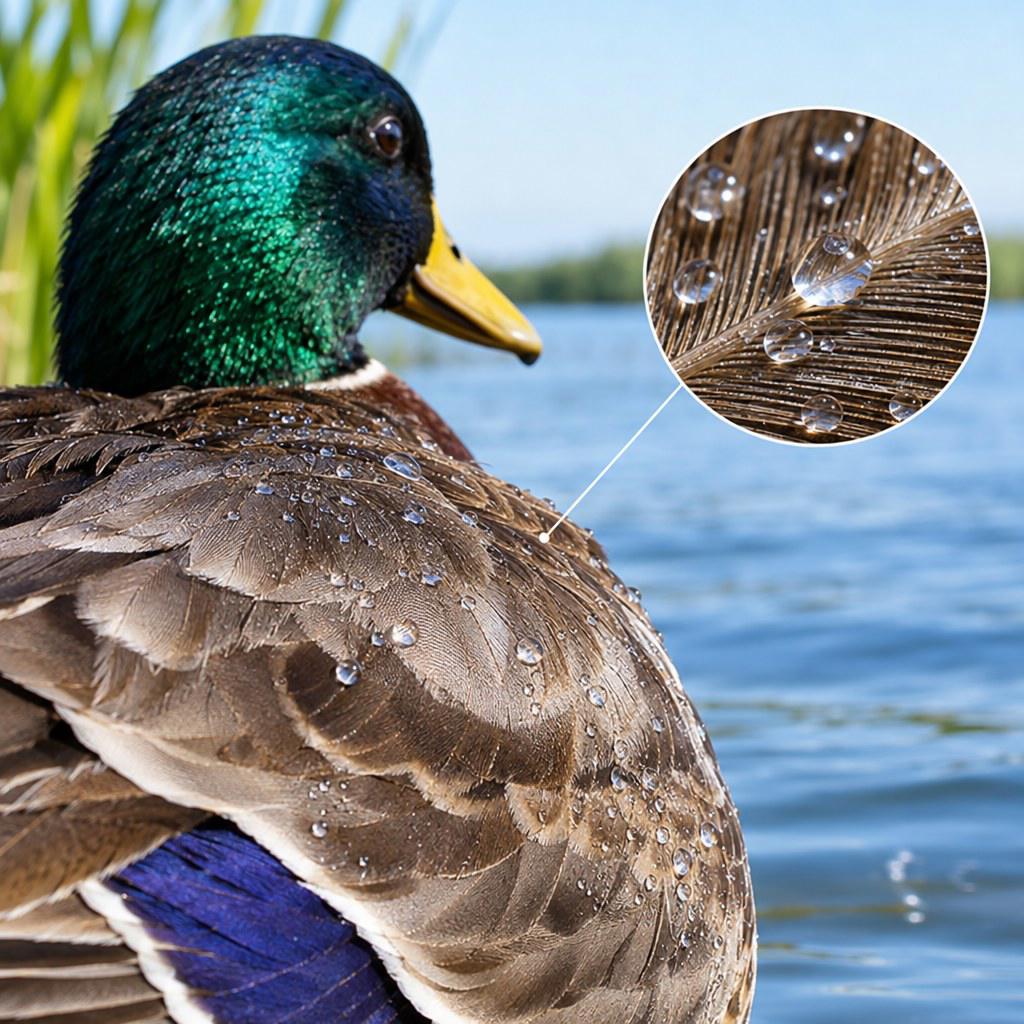
A duck’s visible body feathers are not smooth, solid plates. They are layered structures made of a central shaft with branches called barbs. Smaller hooks, known as barbules, help neighboring barbs connect. When the feather is properly aligned, those tiny connections create a flexible surface that sheds water rather than letting it travel easily toward the skin.
Different feather types do different jobs. Firm outer contour feathers form the weather-facing layer. Softer down feathers sit closer to the body and hold still air. This combination matters: the outer layer limits wetting, while the inner layer reduces heat loss. A duck can float in chilly water because it carries an insulating pocket of air within its plumage.
Interlocking outer feathers
Barbs and barbules help create a continuous surface. When feathers become separated, ducks use their bills to realign them.
Air held near the body
Fine down traps air beneath the outer plumage. That air improves insulation and contributes to the duck’s natural buoyancy.
Flexible, renewable protection
Feathers wear, break, and are replaced during molts. Daily grooming keeps the existing coat functional between molts.
You can often see this design at work. Water may sit in rounded beads on a healthy duck’s back, then roll away as the bird shifts position. The result is not perfect dryness on every feather tip. Instead, the important outcome is that water does not soak through deeply enough to collapse the air layer next to the skin.
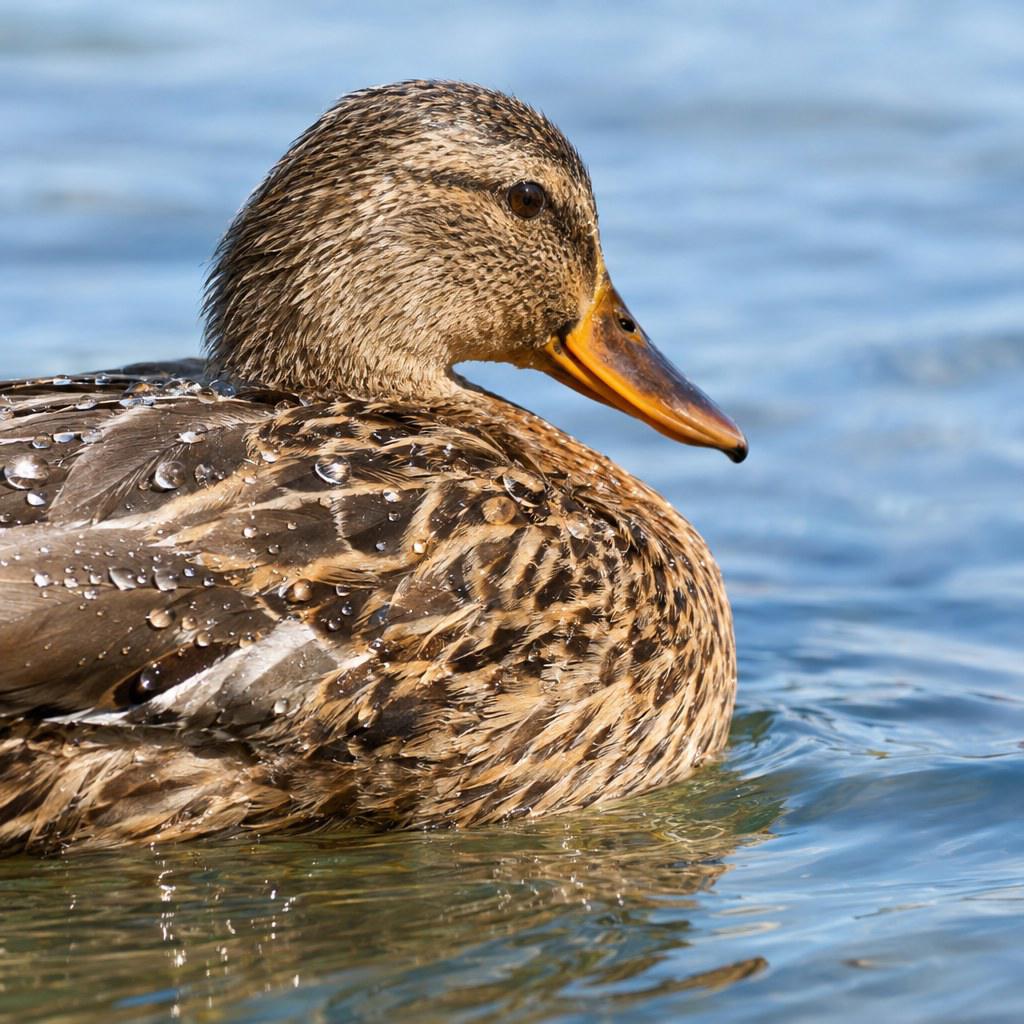
How Preening and Oil Work Together
Most ducks have a uropygial gland, often called the preen gland, positioned on the back near the tail. The gland produces an oily substance that the duck collects with its bill and spreads across its feathers during preening. This oil supports water resistance, but it works best alongside the physical alignment of the feather barbs.
Preening is therefore more than a cleaning routine. A duck turns its head, works through feathers methodically, and uses its bill to remove debris, redistribute oil, and reconnect disordered feather parts. You may also see a duck reach toward the tail area before grooming its body. That movement can be part of collecting material from the preen gland.
Species, age, season, diet, feather condition, and environment can all influence how a duck looks after time in water. A duck that has just bathed vigorously may appear wet on the surface, especially around the head or breast. What matters is whether it regains its normal fluffed, buoyant appearance after grooming and drying.
💡 Practical point: Do not assume that any visible dampness means waterproofing has failed. Look for repeated soaking through, shivering, reluctance to enter water, loss of buoyancy, or feathers that remain waterlogged after normal grooming.
Why “oil” is only part of the explanation
It is common to describe ducks as waterproof because they are “covered in oil.” That shortcut misses an important detail. Oil alone cannot replace a well-formed feather coat. The feather’s branching structure, its overlap with surrounding feathers, and the air held below it are all necessary. If feathers are damaged or badly misaligned, extra preening oil cannot fully restore the original barrier.
Why Dry Feathers Matter to Ducks
Waterproof feathers support several practical functions at once. The first is thermal protection. Water carries heat away from a body faster than trapped air does, so a soaked duck can lose warmth quickly. The second is buoyancy. Air held in the plumage helps the bird float with less effort. The third is mobility: a duck needs feathers that can dry and settle correctly to remain capable of flying, escaping danger, and finding food.
For wild ducks, this system helps them use ponds, marshes, rivers, and coastal water without paying a high energy cost each time they swim. For domestic ducks, it means the quality of their water access, shelter, diet, and living conditions can affect comfort and feather performance. You do not need to make feathers artificially waterproof; you need to avoid disrupting the duck’s own maintenance process.
How to Check Ducks and Support Healthy Plumage
If you care for domestic ducks, use observation before intervention. A duck that spends time bathing, preening, resting, and moving normally is usually managing its feathers as intended. Your role is to provide conditions that make those behaviors possible and to notice changes early.
A practical plumage checklist
- Watch the waterline. After swimming, look for normal floating posture rather than a low, heavy position in the water.
- Observe preening. Regular grooming is expected. Sudden lack of preening, frantic grooming, or difficulty reaching areas of the body deserves closer attention.
- Check for visible contamination. Mud, sticky residue, food waste, and oily pollutants can interfere with feather alignment and water shedding.
- Provide clean bathing water. Ducks need enough depth to dip and rinse their heads, but water should be refreshed often enough to limit heavy fouling.
- Offer dry shelter. A clean, dry resting area lets ducks recover after bathing and protects feathers from prolonged contact with wet bedding.
- Review the flock environment. Crowding, pecking, parasites, and rough surfaces can damage feathers or make grooming difficult.
Handle ducks only when needed. Excessive handling can disturb feather alignment and causes avoidable stress. If you must inspect a bird, use clean, dry hands and keep the check brief. Look for bare patches, broken feathers, crusted material, unusual odor, skin irritation, or feathers that appear persistently saturated.
Common Problems, Mistakes, and Recovery
The biggest mistake is trying to solve a feather problem with household products. Soaps, detergents, sprays, and oils can strip natural protective material, leave residue, or make a bird ingest something unsafe during grooming. Unless a qualified avian veterinarian or licensed wildlife rehabilitator directs you otherwise, do not wash a duck simply because it looks wet after swimming.
Problems that can affect waterproofing
- Contaminated water: Surface pollutants and greasy residues can defeat the normal feather barrier.
- Damaged plumage: Molting, feather breakage, aggressive flock mates, or predator encounters can leave gaps in the outer layer.
- Poor grooming ability: Injury, illness, body condition, or restricted movement may prevent effective preening.
- Unsanitary housing: Persistently wet, dirty bedding can soil feathers and increase the workload of maintaining them.
- Overreaction by caretakers: Repeated bathing or applying substances can worsen a manageable issue.
If a domestic duck repeatedly becomes soaked through, isolate it from cold exposure, provide a warm dry area without overheating it, and assess water quality and flock behavior. Contact an avian veterinarian if the problem persists, if the duck seems weak or chilled, or if you see wounds, parasites, discharge, or marked changes in appetite and activity. For a wild duck affected by oil or another pollutant, keep your distance and contact an authorized wildlife rescue organization rather than attempting home cleaning.
A Simple Decision Framework
Start with the pattern, not a single moment. A duck briefly looking wet after a bath is usually normal. A duck that repeatedly sinks low, remains soaked, avoids water, shivers, or cannot restore its feather shape needs closer assessment.
- Normal behavior and dry recovery: Maintain clean water, dry shelter, and minimal interference.
- Dirty or disordered feathers but normal behavior: Check the environment for contaminated water, muddy bedding, and flock conflict.
- Persistent wetting or signs of illness: Move the bird to safe dry conditions and seek professional veterinary guidance.
- Wild bird contamination: Do not handle unless instructed by professionals; report the concern to wildlife responders.
The central lesson is straightforward: ducks are waterproof because their feathers, natural oils, and grooming behavior operate as one system. Support that system by keeping their environment clean and by responding to persistent changes rather than treating every damp feather as a problem.
Your Next Step: Observe Before You Intervene
During your next visit to a pond or duck enclosure, watch how ducks preen, float, and dry after bathing. Use those normal behaviors as your baseline for recognizing a genuine feather-care concern.