A Beginner’s Guide to Making Vegetable Stock
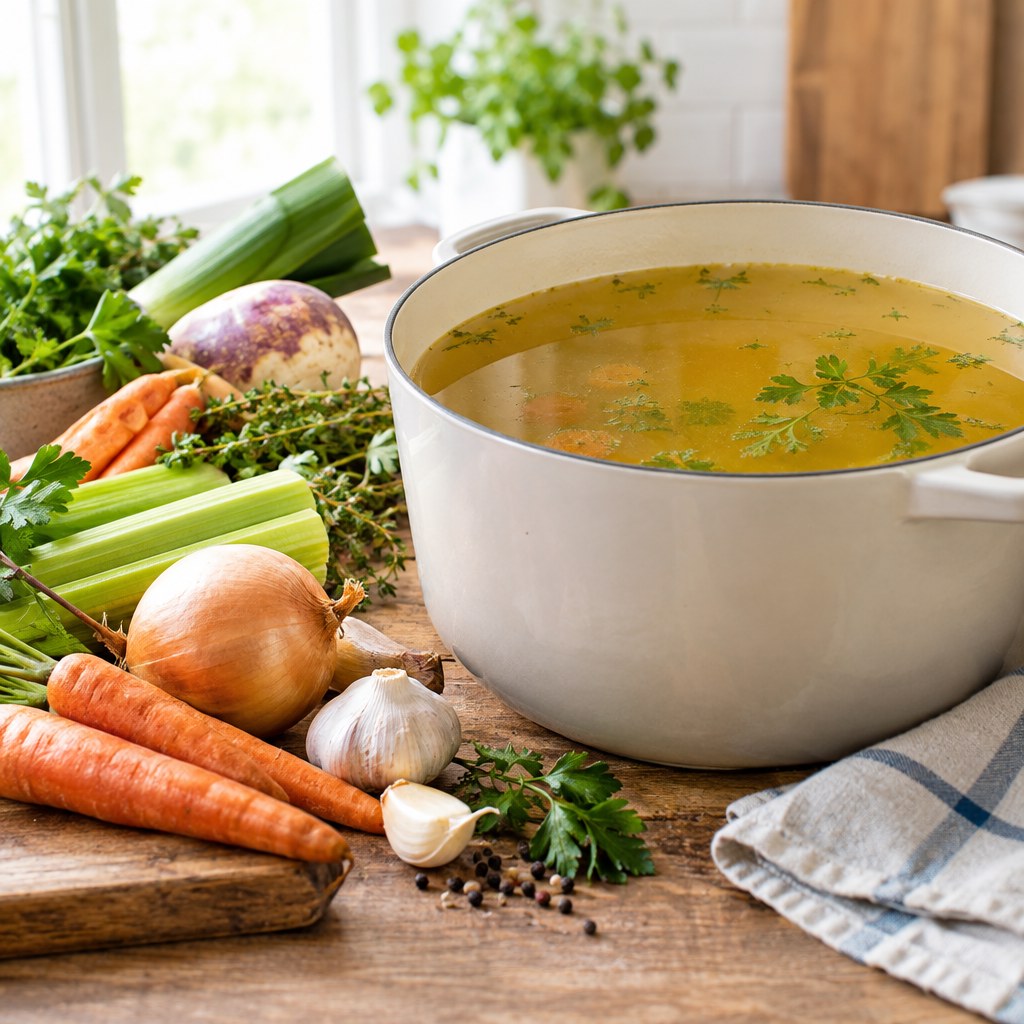
Vegetable stock is a simple, flexible base made by gently simmering vegetables, herbs, and water until their flavor transfers to the liquid. Once you know which scraps to save, which ingredients to limit, and how long to simmer, you can make a clean, useful stock for soups, sauces, grains, and braises while reducing kitchen waste.
You do not need a precise recipe or specialist equipment. A large pot, a strainer, and a freezer-safe container are enough to produce a reliable batch that suits your cooking habits.
Why make vegetable stock?
Store-bought stock is convenient, but homemade vegetable stock gives you more control over salt, flavor, and ingredients. It is especially helpful when you need a mild base for a soup, risotto, lentils, gravy, or pan sauce and do not want a strong meat flavor to lead the dish.
For a home cook, the practical advantage is consistency. You can save clean trimmings from everyday preparation, turn them into stock when your container is full, and portion the finished liquid for later. This can make routine meals easier without requiring extra planning every day.
Vegetable stock is also forgiving. Unlike many recipes, it does not depend on exact weights. The goal is balance: enough sweet vegetables for body, enough aromatic vegetables for depth, and enough water to cover everything without making the result unnecessarily weak.
💡 Tip: Treat vegetable stock as an ingredient rather than a finished soup. Keep it lightly seasoned so you can adjust salt, acidity, and spices to suit the final dish.
Ingredients that build good flavor
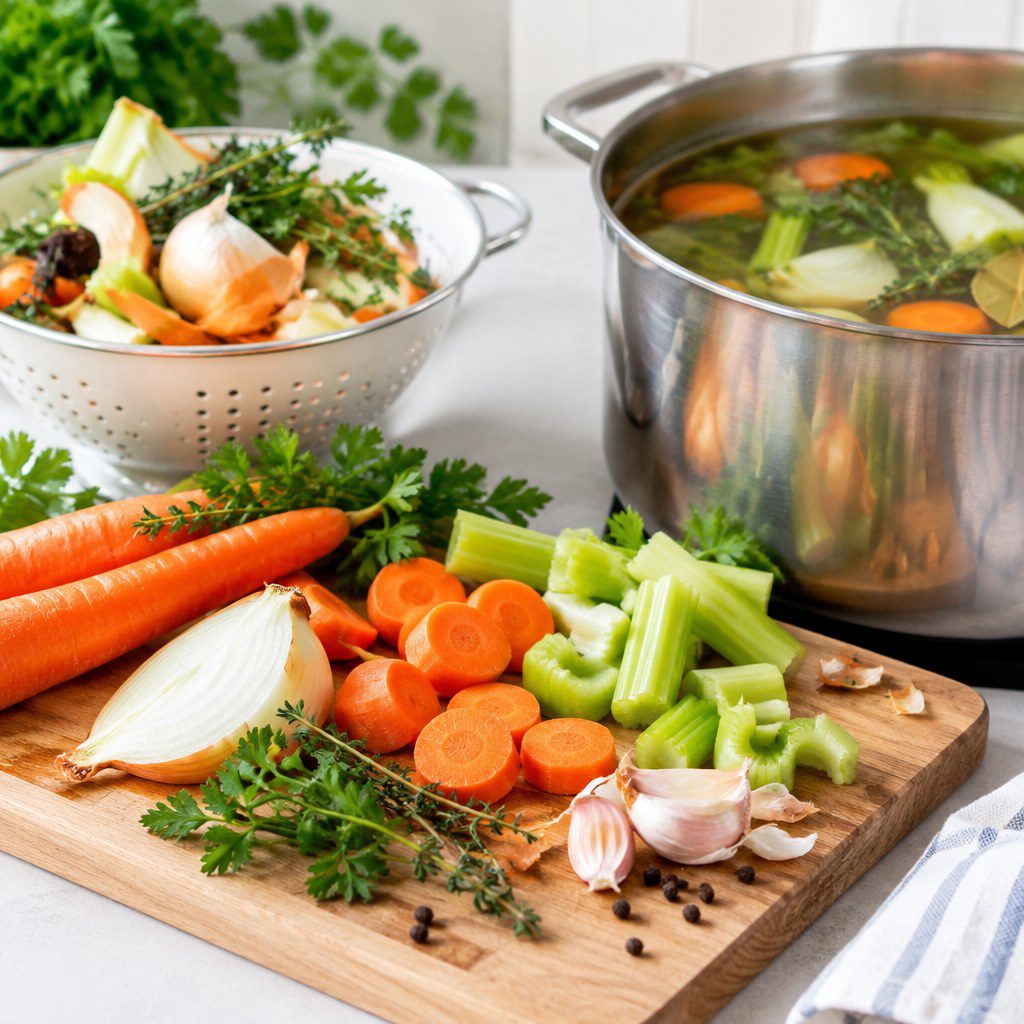
A well-balanced vegetable stock usually begins with onion, carrot, and celery. These ingredients contribute sweetness, savoriness, and an aromatic foundation. Leeks, garlic, mushrooms, fennel trimmings, parsley stems, and herb stalks can add useful complexity.
Use fresh vegetables and clean trimmings
Save trimmings only if they are clean and in good condition. Onion ends, carrot peels, celery leaves, leek greens, mushroom stems, and herb stems are all useful. Store them in a labeled freezer container until you have enough for a batch.
Wash produce before peeling or trimming it. Avoid adding scraps that are slimy, moldy, heavily bruised, or past their usable condition. Freezing preserves scraps for stock-making, but it does not improve ingredients that were already spoiled.
Useful staples
Onion, carrot, celery, leek, garlic, mushroom stems, parsley, thyme, and bay leaves provide a dependable starting point.
Use sparingly
Cabbage, broccoli, cauliflower, kale, and turnip can become dominant. Add only a small amount if you enjoy their flavor.
Leave these out
Beetroot can stain and sweeten the stock. Potatoes can make it cloudy, while bitter or spoiled scraps can affect the whole batch.
Tomato trimmings can work well in a stock intended for tomato-based soup, pasta sauce, or beans, but they will change the color and acidity. Keep them out when you want a neutral stock for delicate dishes.
Equipment and preparation
Use the largest pot you can safely manage, but do not overfill it. A stockpot is helpful, though any roomy saucepan with a lid will work for a smaller batch. You also need a fine-mesh strainer or colander, a ladle, and containers for cooling and storage.
Cut whole vegetables into rough, even pieces so they release flavor at a similar pace. There is no need for fine knife work; pieces that fit comfortably in the pot are sufficient. If you are using frozen scraps, add them directly from the freezer.
Step-by-step vegetable stock method
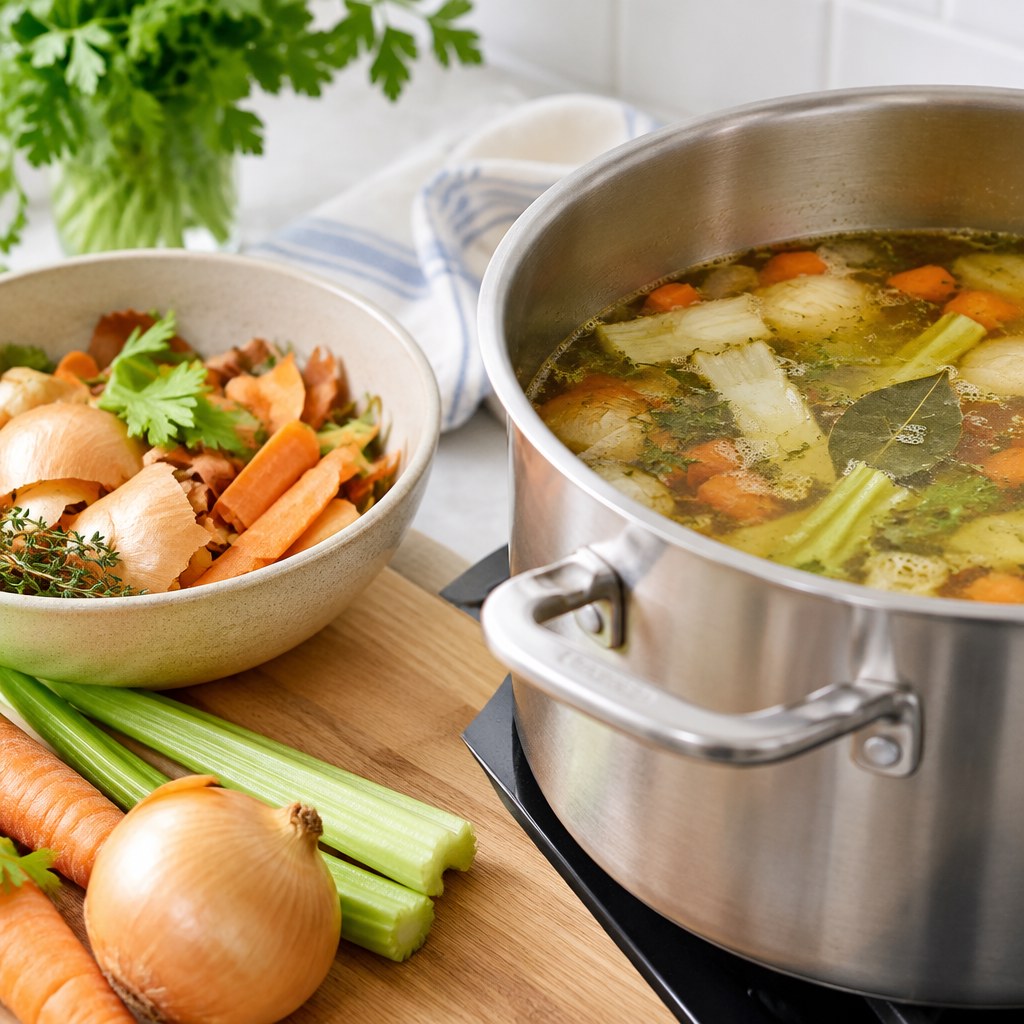
This method produces a versatile, unsalted stock. Adjust the amount to suit your pot, but keep the vegetables covered by water with a little room for simmering.
- Gather your vegetables. Start with onion, carrot, and celery if possible. Add compatible scraps, a few herb stems, and optional mushrooms for extra savory depth.
- Choose whether to sauté. For a lighter, cleaner stock, place vegetables straight in the pot. For a deeper flavor, cook them in a small amount of oil over medium heat until softened but not browned heavily.
- Add cold water. Pour in enough water to cover the vegetables. Starting with cold water allows flavors to develop gradually as the pot heats.
- Add restrained seasoning. Include a bay leaf, a few peppercorns, or thyme if you like. Do not add salt yet; the stock may later be reduced in a sauce or added to a salty dish.
- Bring the pot close to a boil. Once bubbles begin to rise steadily, reduce the heat. Keep the liquid at a gentle simmer rather than a vigorous boil.
- Simmer until flavorful. Taste after about 30 minutes. Many batches are ready within 45 to 60 minutes, though the exact timing depends on the vegetables and pot size.
- Strain without pressing. Pour the stock through a strainer into a clean container. Let the vegetables drain naturally instead of pressing them, which can push cloudy pulp into the liquid.
- Cool and portion. Divide the stock into smaller containers so it cools more efficiently and is easier to use later.
If the stock tastes weak after straining, return it to the pot and simmer it uncovered for a short period to concentrate it. Taste frequently. Reducing is easier to control than trying to fix an overly strong or bitter stock.
Common mistakes and recovery options
Boiling too hard
A rolling boil can agitate vegetables and create a murkier stock. It may still taste good, so do not discard it. Strain it through a finer sieve and use it in soups, sauces, or dishes where appearance is less important.
Adding too many strong scraps
Large amounts of cruciferous vegetables, bitter greens, or onion skins can overwhelm the batch. If the stock is only mildly bitter, dilute it with water and balance it in the final recipe with sweeter vegetables, herbs, or acidity. If it is unpleasantly bitter, it is usually better to start again.
Overseasoning early
Salt, soy sauce, miso, and commercial seasoning blends can make stock less flexible. If you have already salted a batch, label it clearly and use it in recipes that need less additional seasoning. Avoid reducing a salty stock without tasting carefully.
Keeping stock too long
Cool stock promptly, refrigerate it in clean covered containers, and use it within a short period. Freeze portions if you will not use them soon. When in doubt about smell, appearance, or storage history, discard the stock rather than trying to rescue it.
Storage and everyday uses
Portioning is what makes homemade stock practical. Freeze some in larger containers for soup and some in smaller amounts for grains, sauces, or deglazing a pan. Leave space at the top of containers because liquids expand as they freeze.
Label each container with the date and whether it is unsalted, mushroom-rich, tomato-based, or otherwise distinctive. This small habit prevents surprises when you are cooking quickly.
- Cook rice, couscous, quinoa, or lentils in stock instead of water.
- Use it as the liquid for vegetable soup, noodle soup, or bean dishes.
- Add a splash to a sauté pan to loosen browned bits after cooking vegetables.
- Use it in a simple gravy, sauce, or risotto.
- Warm it with ginger, garlic, or herbs as a light savory drink when that suits your preferences.
A simple decision framework
Make vegetable stock when you have a useful collection of clean scraps, a meal plan that can use it, or room in your freezer for portions. Use fresh vegetables when you want a particularly clean, intentional flavor. Choose store-bought stock when time is limited, but check the label if salt level or specific ingredients matter for your recipe.
For your first batch, keep the ingredient list short: onion, carrot, celery, a bay leaf, and water. Once you can recognize that basic flavor, experiment with mushrooms, leeks, herbs, or a small amount of tomato according to the dish you plan to cook.
Start with one freezer container
Save clean onion, carrot, celery, and herb trimmings this week. When the container is full, make a simple unsalted batch and portion it for your next few meals.