A Practical Guide to Visiting Ghent
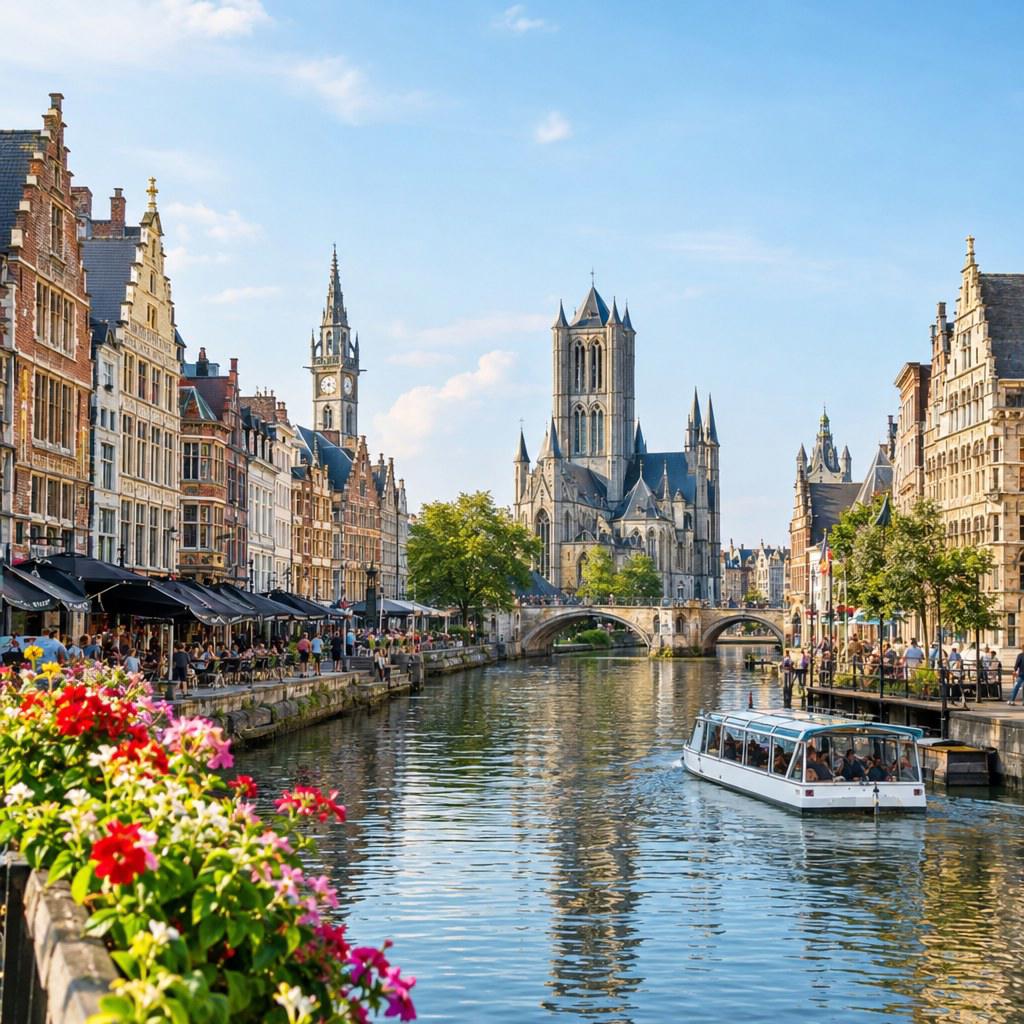
Ghent is a compact Belgian city where medieval streets, canals, museums, food culture and a working university city atmosphere sit close together. You can see its essentials in 1 full day, but 2 or 3 nights give you the flexibility to explore without treating the city as a checklist.
The practical challenge is not finding things to do; it is sequencing them well. This guide helps you choose where to stay, arrive efficiently, move around with minimal friction, reserve the right activities, and avoid common timing mistakes.
Choose the right trip shape before booking
Start by deciding what role Ghent plays in your wider Belgium itinerary. It works very well as a standalone city break, an overnight stop between Brussels and Bruges, or a quieter base from which to make regional day trips. The best choice depends on how much unstructured time you want.
For a first visit, an overnight stay is usually more practical than a rushed day trip. The historic centre is especially pleasant early in the morning and after day visitors leave, when you can walk the canals and squares at a slower pace. A day trip can still work if your accommodation and transport connections are already in Brussels or another nearby city.
Pick an area that matches your priorities
- Historic centre: Choose this if walkability, landmark access and evening atmosphere matter most. Expect busy streets around the main squares and popular canal-side routes.
- Near Gent-Sint-Pieters station: Choose this if you are arriving late, leaving early, or taking several rail trips. You will likely use local public transport or walk longer distances to reach the core sights.
- Patershol and surrounding central streets: Consider this area if you value restaurants, character and a more residential feel while staying close to the centre.
💡 Booking tip: Check the exact walking route from your accommodation to your first planned activity, not just the neighbourhood label. Cobblestones, pedestrian areas and luggage can make a short map distance feel longer.
When comparing hotels, apartments or guesthouses, prioritize cancellation terms, late-arrival arrangements, luggage storage and heating or cooling information over decorative amenities. These details are more likely to affect a short city break than a marginal difference in room size.
Arrive with a transport plan, not assumptions
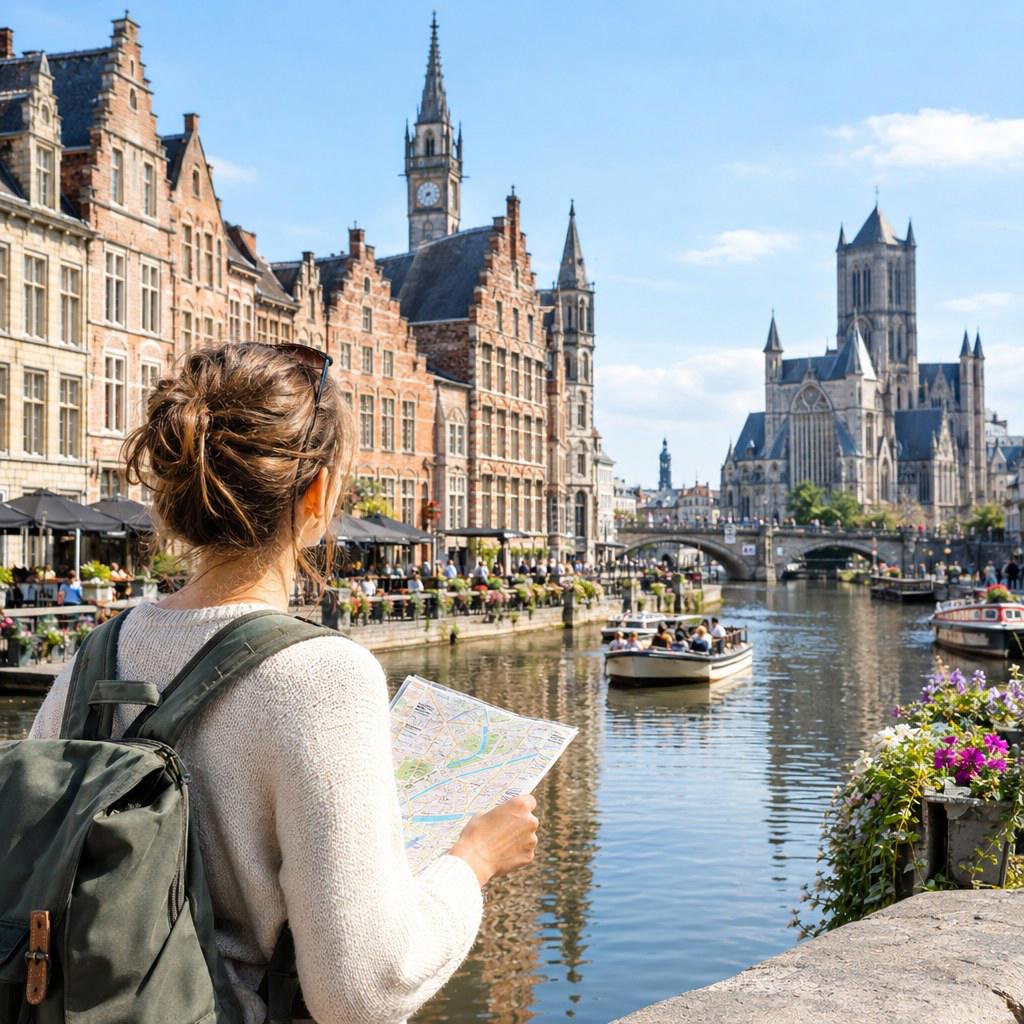
Ghent is well connected by rail, but its main station is not beside the medieval core. Gent-Sint-Pieters is the principal station for many intercity arrivals, and you then need to continue by tram, bus, taxi, bicycle or on foot. Build that final leg into your arrival plan, particularly if you are carrying bags or reaching the city after dark.
If you are flying into Belgium, compare the complete journey rather than the airport-to-city headline time. Include the transfer to the rail network, possible connection time, and the final trip from station to accommodation. Before departure, check the current operator information for train platforms, service changes and local ticket conditions.
Use the right mode for each part of the day
- Walking: Best for the central sights, shopping streets, canal areas and restaurants. Wear shoes with grip; uneven paving and wet stones deserve attention.
- Public transport: Useful between the station, outer neighbourhoods and the centre. Confirm the current route and ticket validation rules before boarding.
- Bicycle: Efficient if you are comfortable riding in urban traffic and parking responsibly. It is less appealing in persistent rain or if you are only visiting core landmarks.
- Taxi or ride service: Most useful for late arrivals, mobility constraints, heavy bags or a group splitting the cost. Confirm pickup instructions at the station or accommodation.
Do not rely on a car for central sightseeing. Historic streets, limited-access areas, parking restrictions and the ease of walking usually make driving an unnecessary complication. If you must arrive by car, ask your accommodation where legal parking is available and whether local access rules affect your route.
Build a Ghent itinerary around clusters, not a long list
The central area is dense with landmarks, but you will enjoy it more by grouping nearby places. Reserve fixed-time activities first, then place walks, churches, viewpoints, shops and cafés around them. Leave space for weather, queues and the fact that many of Ghent’s best moments happen between named attractions.
A balanced 1-day outline
Begin around the historic core, where the towers of Saint Nicholas’ Church, the Belfry and Saint Bavo’s Cathedral create a natural orientation point. If you want to see the Ghent Altarpiece, check visitor access and booking requirements in advance; it is a major draw and deserves unhurried time.
Continue through the streets around Graslei and Korenlei, then choose 1 substantial attraction rather than trying to enter everything. Gravensteen, the medieval castle, is a logical choice if you want a clear historical anchor. Alternatively, use the time for a museum, a canal activity if available, or an extended walk through Patershol.
In the late afternoon, move toward a neighbourhood with restaurants rather than crossing the city repeatedly. A simple rule helps: schedule no more than 2 indoor attractions requiring entry, then let the rest of the day remain flexible.
What 2 or 3 days add
With more time, you can separate the big sights from neighbourhood exploration. Add the Museum of Fine Arts or STAM if their current exhibitions suit your interests, visit the old port area, browse independent shops, and take a slower canal-side route. You also have room to include a day trip without sacrificing Ghent’s evening atmosphere.
Plan food and evenings with realistic timing
Ghent has plenty of places to eat, but availability changes quickly at popular dinner hours and on weekends. If a particular restaurant matters to you, reserve it. If flexibility matters more, eat earlier, choose a less tourist-focused street, or keep several options within the same area.
Belgian classics can be part of the trip, but you do not need to chase a rigid food checklist. Balance one traditional meal with a bakery stop, casual lunch or market-style snack. For beer, ask staff for a style recommendation rather than ordering by reputation alone; Belgian beer can vary substantially in strength and serving format.
Keep evening plans simple
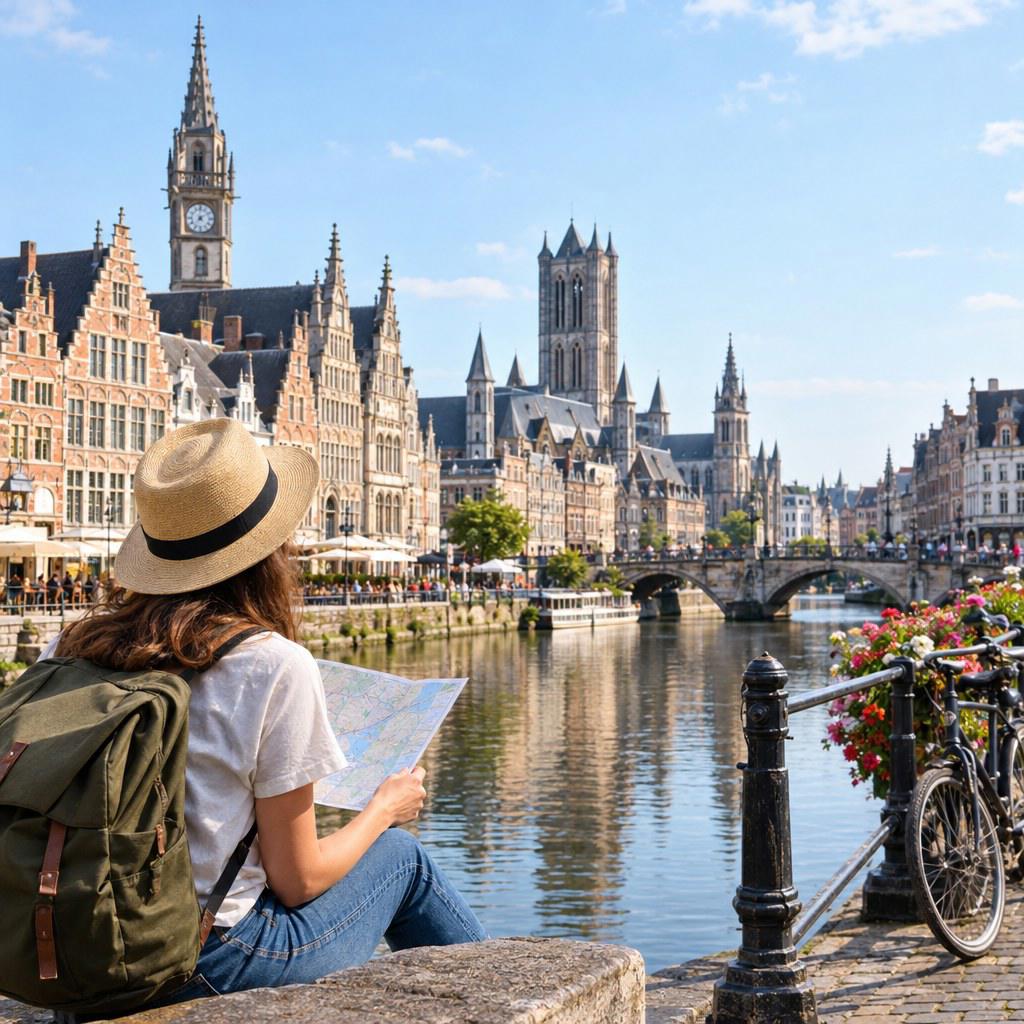
After dinner, the central canals and illuminated historic buildings make for an easy walk. This is also when staying centrally pays off: you can enjoy the city without calculating the last connection back to a distant hotel. Keep your valuables secure in crowded areas, stay aware around bicycles and trams, and choose well-lit routes when walking late.
Use this practical pre-departure checklist
- Choose whether Ghent is a day trip, 1-night stop or 2-night base.
- Book accommodation based on your arrival point and tolerance for walking with luggage.
- Check current rail, airport-transfer and local-transport information shortly before travel.
- Reserve any must-see attraction, guided experience or restaurant with fixed demand.
- Save your accommodation address, check-in details and an offline map on your phone.
- Pack a rain layer and shoes suitable for long walks on uneven streets.
- Keep the first and last parts of each day light so delays do not disrupt the whole plan.
If you are travelling for work or combining a meeting with leisure, schedule your non-negotiable commitments first. Then use the historic centre for a low-stakes evening walk or meal rather than promising yourself a tightly timed sightseeing programme.
Common mistakes and how to recover
Trying to copy a Bruges-style itinerary
Ghent has grand architecture, but it is also a lived-in city with distinct neighbourhoods, student life and contemporary culture. Treating it as a quick photo stop can make the visit feel rushed. Recover by dropping 1 attraction and spending an hour walking without a destination beyond the central canals and side streets.
Underestimating the station-to-centre transfer
Arriving at the main station does not mean you are already beside the historic core. If you are delayed, prioritize reaching your accommodation, storing bags and having a nearby meal. Move your sightseeing to the next morning rather than forcing a poor first evening.
Overbooking weather-dependent plans
Rain can change the comfort of a canal walk, cycling route or long outdoor lunch. Build an indoor alternative into each day, such as a museum, church, gallery or café. Check same-day conditions and swap activities rather than cancelling the day’s plan entirely.
⚠️ Check before you go: Opening hours, ticket arrangements, transport routes and public events can change. Confirm the current details directly through the relevant venue, accommodation provider or transport operator.
Make your final decision
Choose a day trip if you are already based nearby and only need an introduction to Ghent. Choose 1 night if you want the historic centre in the quieter morning and evening hours. Choose 2 or more nights if you care about museums, neighbourhoods, food and a less scheduled pace.
Your strongest plan is usually simple: stay within practical reach of the centre, pre-book only high-priority items, group activities by location, and preserve time to wander. Ghent does not require an exhaustive itinerary; it rewards a plan with enough room to notice the city.
Take the next step: build your 3-part plan
Write down your arrival method, accommodation area and 1 must-do experience. Once those are fixed, leave the remaining hours open for Ghent’s streets, food and canals.