A Simple Weekly Laundry Routine

A Simple Weekly Laundry Routine That Stays Manageable
A simple weekly laundry routine prevents the familiar cycle of overflowing hampers, missing work clothes, and a long weekend spent sorting piles. The practical goal is not to wash everything every day; it is to give each step a regular place so laundry moves from hamper to drawer with fewer decisions.
For a household, shared workspace, short-term rental, or small business that handles linens, the same principle applies: separate what needs different care, choose realistic wash days, and finish each load before starting another. You can adjust the volume, but the workflow remains useful.
Why Laundry Becomes Difficult
Laundry usually feels unmanageable because several small tasks are treated as one large task. Sorting, stain treatment, washing, drying, folding, putting away, and cleaning the equipment all compete for attention. If clean items stay in a basket, the cycle is not complete, and the basket soon becomes a second hamper.
Inconsistent categories create another problem. A load of towels behaves differently from a load of lightweight shirts, while uniforms, bedding, and cleaning cloths may need separate handling. When every item enters the same basket, you must make all those decisions at the moment you are already short on time.
Capacity also matters. A routine designed around a large washer and dryer may not work in a building with shared machines, limited drying space, or several users. Rather than copying someone else’s calendar, build around the amount you actually produce and the time your equipment is available.
💡 Tip: Treat “put away” as part of the wash cycle. Starting fewer loads and finishing them is more useful than washing a large backlog that remains in baskets.
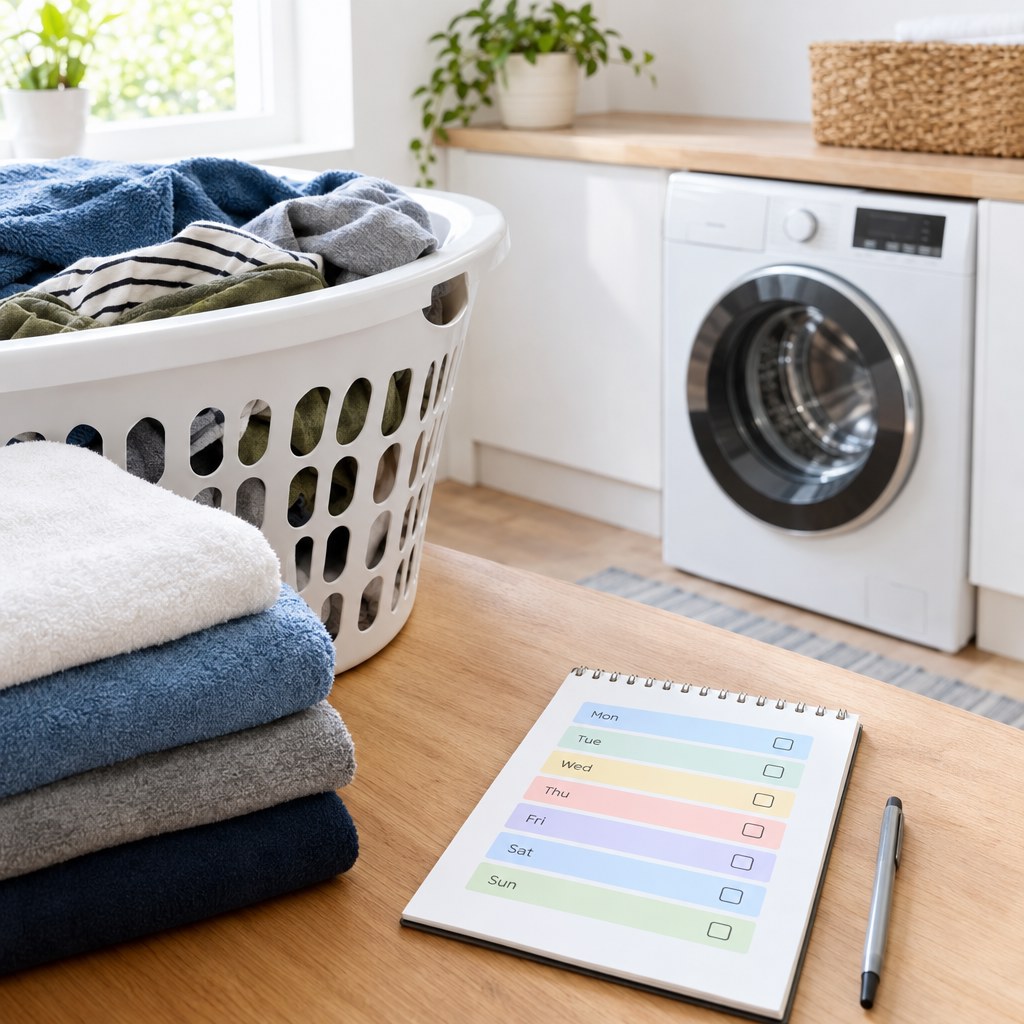
Build a System That Fits Your Week
Start with a small number of categories you can maintain. More sorting can protect fabrics, but an elaborate system is not helpful if everyone ignores it. For many homes, 3 hamper categories are enough: everyday clothing, towels and bedding, and delicate or special-care items. Add a separate container for work uniforms or business linens only when those items need a distinct process.
Sort at the source
Place labelled hampers where clothing is removed. A simple choice at the start avoids a large sorting session later.
Give each category a day
Assign a repeatable day or trigger to each category, rather than waiting until every hamper is full.
Create a finish point
Keep hangers, a folding surface, and baskets close by so clean laundry has an immediate route to storage.
Choose your laundry triggers
A fixed weekly day is useful, but triggers can be more reliable for busy periods. For example, wash towels when the designated hamper is nearly full, bedding on the day sheets are changed, and uniforms after the final scheduled shift of the week. If you run a small operation, use a simple written handoff: one person checks supply, another starts the load, and a named person returns clean stock to its storage area.
Keep detergent, stain remover, mesh bags, and spare hampers in one visible location. Read garment and linen care labels before choosing water temperature, cycle, bleach, or drying method. Labels and machine instructions should take priority over a generic routine, especially for branded workwear, flame-resistant items, or delicate fabrics.
A Practical Weekly Schedule
The schedule below is a starting model, not a rule. It assumes a typical household with access to a washer and dryer. If you have fewer machines, air-dry most items, or manage high linen turnover, split the same categories into shorter sessions across more days.
If one person needs particular clothing for a workday, move that load earlier rather than adding an emergency wash late at night. For example, wash uniforms or essential shirts on the day before they are needed, then hang them promptly. This small planning step reduces rushed drying, which can lead to wrinkles, shrinkage, or overlooked care instructions.
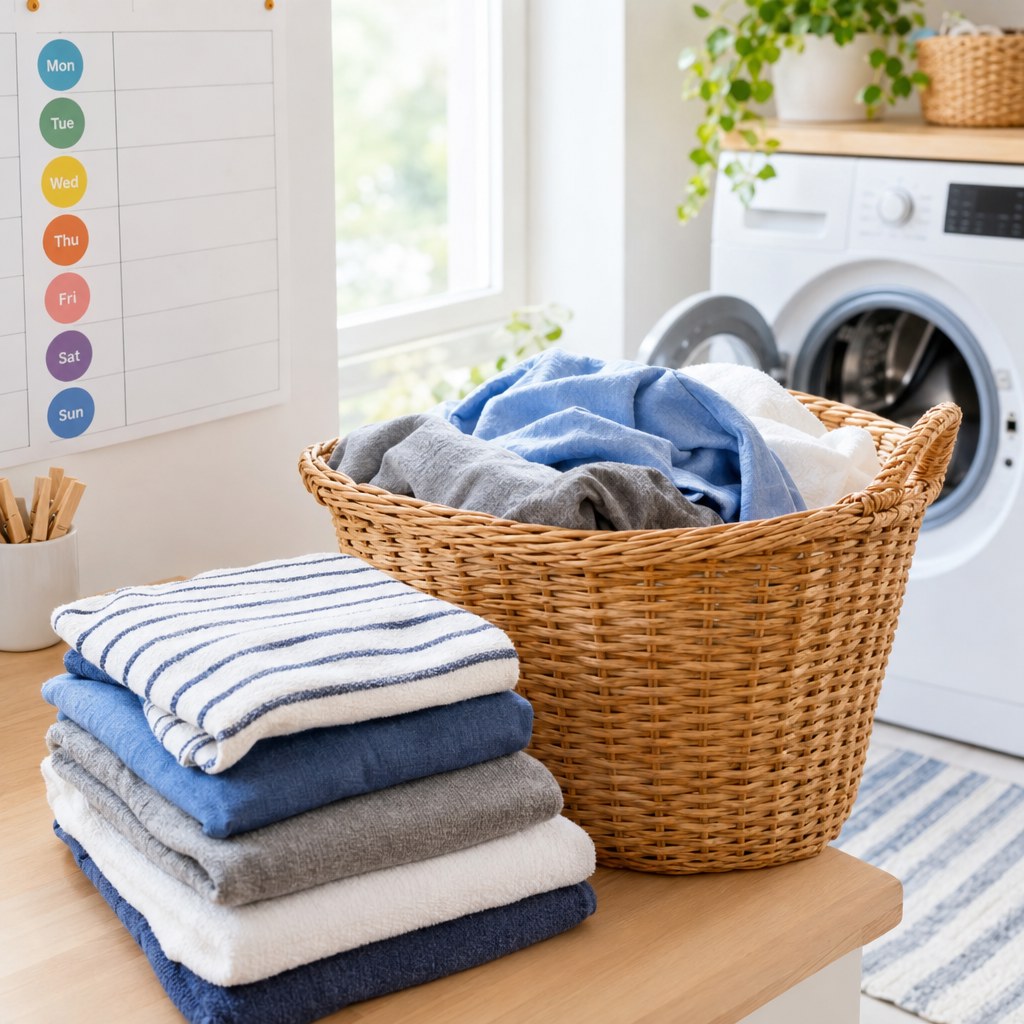
The Load-to-Drawer Checklist
Use the same sequence for every load. Repetition lowers the chance of colour transfer, missed stains, or damp laundry sitting in the machine.
- Check pockets and fasten closures. Remove tissues, pens, receipts, and loose objects. Zip zippers and turn items inside out when their care label recommends it.
- Separate by care needs. Follow the categories in your system, then pull out anything with a special label, visible stain, or fragile trim.
- Treat stains before washing. Follow the stain product directions and test an inconspicuous area if the fabric is colour-sensitive. Do not machine-dry an item until you have checked whether the stain remains.
- Use the correct cycle and amount of detergent. Check the machine manual and detergent label. More detergent is not automatically better; excess residue can require additional rinsing.
- Move laundry promptly. Transfer items when the wash ends, choosing air drying or the dryer setting indicated by the care label.
- Finish immediately. Fold or hang clothing while it is still easy to handle, then return it to drawers, closets, shelves, or labelled linen storage.
- Reset the area. Leave hampers ready, wipe spills, and note any item that needs repair, replacement, or a follow-up wash.
Mistakes to Avoid and How to Recover
Trying to clear every backlog at once
A large catch-up day can create more clean piles than you can finish. Instead, choose 1 priority category, complete it from wash to storage, and schedule the next category for the following available session. This restores usable clothing and linens sooner.
Overloading the machine
When a machine is packed too tightly, items may not move or rinse as intended. Follow your appliance guidance and divide a dense load when needed. If a load comes out with detergent residue or unevenly wet items, rewash or rinse according to the machine instructions before drying.
Leaving damp items too long
If laundry has been left damp in the washer, check it for odour before proceeding. Rewash it when necessary, using the fabric care label and detergent directions. Set a timer or calendar reminder at the start of a load, particularly when laundry is only one part of a busy workday.
Ignoring equipment maintenance
A weekly routine works better when the equipment is ready. Empty the dryer lint filter after each use, and follow the manufacturer’s instructions for cleaning the washer, hoses, dispensers, and dryer venting. If you notice a fault, unusual noise, leak, or poor drying performance, pause and consult the appliance documentation or an appropriate service professional.
Choose Consistency Over Complexity
Use 3 questions to shape your routine: What categories need separate care? When are your machines available? Who finishes each load? If you can answer those clearly, you can create a schedule that is easy to repeat.
This week, label your hampers, select your 2 or 3 laundry triggers, and complete just 1 load all the way to its storage place. Adjust next week based on what actually caused delays.