Building a Balanced Dinner From Canned Beans
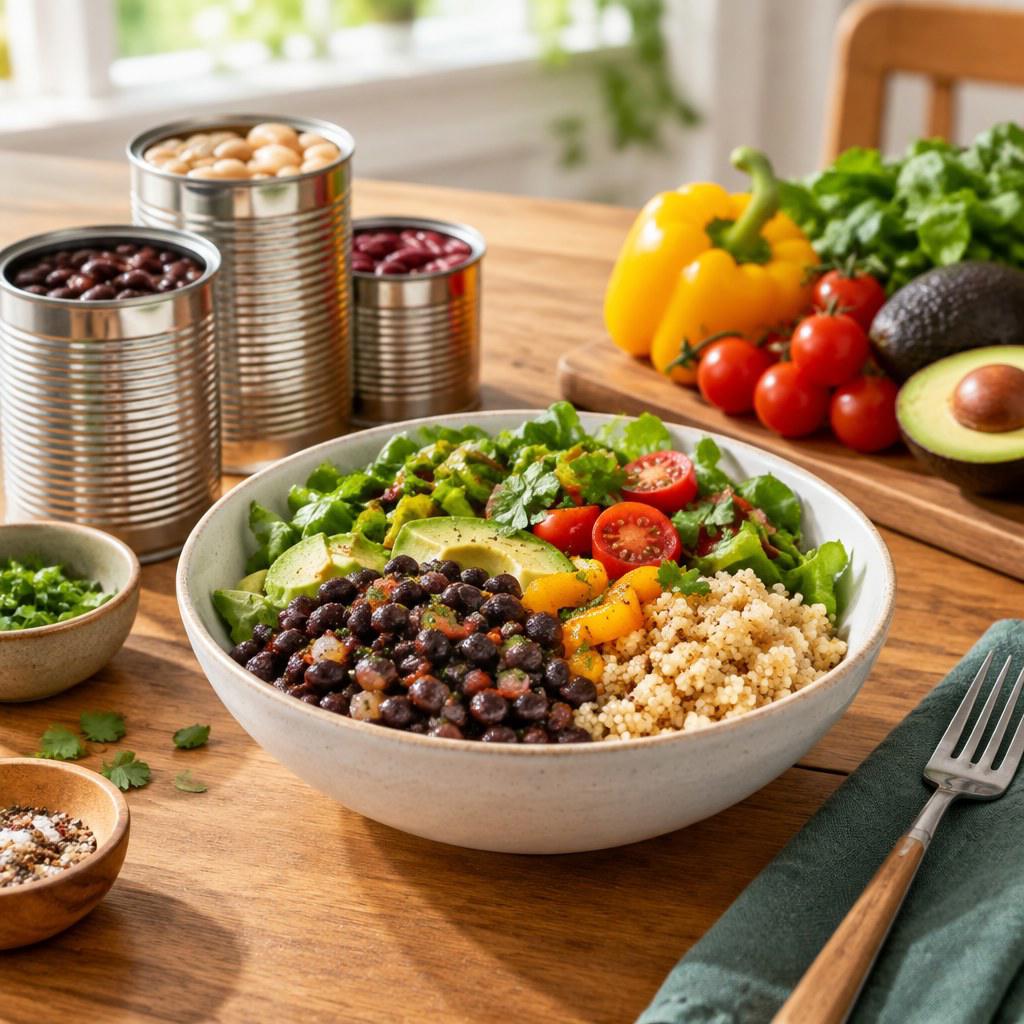
A balanced canned-bean dinner is built by pairing beans with vegetables, a satisfying carbohydrate, a flavourful fat, and an acid or fresh garnish. With a few shelf-stable basics and a repeatable method, you can turn a tin of beans into a practical meal that feels complete rather than improvised.
Canned beans solve the “what can I make quickly?” problem, but they can also lead to one-note meals: beans warmed with sauce, little contrast, and not enough volume or freshness. The answer is not a complicated recipe. It is a simple structure you can adapt to what is in your cupboard, fridge, or freezer.
Why canned-bean dinners sometimes fall short
Beans provide a useful base because they are filling, versatile, and easy to keep on hand. However, a meal built from beans alone can feel heavy, dry, or repetitive. The common issue is not the ingredient; it is the missing supporting elements.
First, beans need contrast. Their soft texture benefits from crisp vegetables, toasted breadcrumbs, roasted seeds, or a fresh salad. Second, they need a clear flavour direction. A tin of cannellini beans can work in a lemony herb bowl, a tomato-based stew, or a smoky taco filling, but trying to combine every seasoning at once often makes the result muddy.
Finally, consider the meal’s overall shape. If you are serving beans as the main element, add at least 1 substantial vegetable component and decide whether you also want a starch. A potato, grain, tortilla, or piece of toast can make the dinner more satisfying, particularly when you are feeding more than 1 person or want leftovers for lunch.
💡 Tip: Think in components, not recipes. If you have beans, a vegetable, a starch, a flavour base, and a finishing element, you can make dinner without following a precise formula.
The 5-part method for a balanced plate
Use this structure as a flexible planning tool. You do not need a separate ingredient for every part; for example, a bean-and-vegetable soup may cover several categories at once. The goal is to make intentional choices instead of opening a tin and hoping the meal comes together.
1. Beans
Choose chickpeas for roasting or curries, black beans for tacos, and white beans for soups, salads, or creamy skillet dishes.
2. Vegetables
Use fresh, frozen, or tinned vegetables. Aim for colour, volume, and a texture that differs from the beans.
3. A satisfying base
Rice, pasta, potatoes, couscous, bread, or tortillas can turn a side-style bean dish into a full dinner.
4. Flavour and fat
Olive oil, tahini, cheese, yoghurt, avocado, or a nut-free seed topping can add richness and carry seasoning.
5. A bright finish
Lemon, lime, vinegar, herbs, pickled onions, or a fresh salsa can lift the whole dish just before serving.
Rinsing canned beans is often worthwhile. It removes the packing liquid and lets you control the final seasoning more easily. If you use beans in a saucy stew or soup, reserve a small amount of the liquid only if you like its thickening effect, then taste before adding more salt.
Choose a format that fits the evening
The best bean dinner format depends on your time, equipment, and the ingredients that need using first. Pick 1 format, then use the 5-part method to fill the gaps.
Warm grain bowl
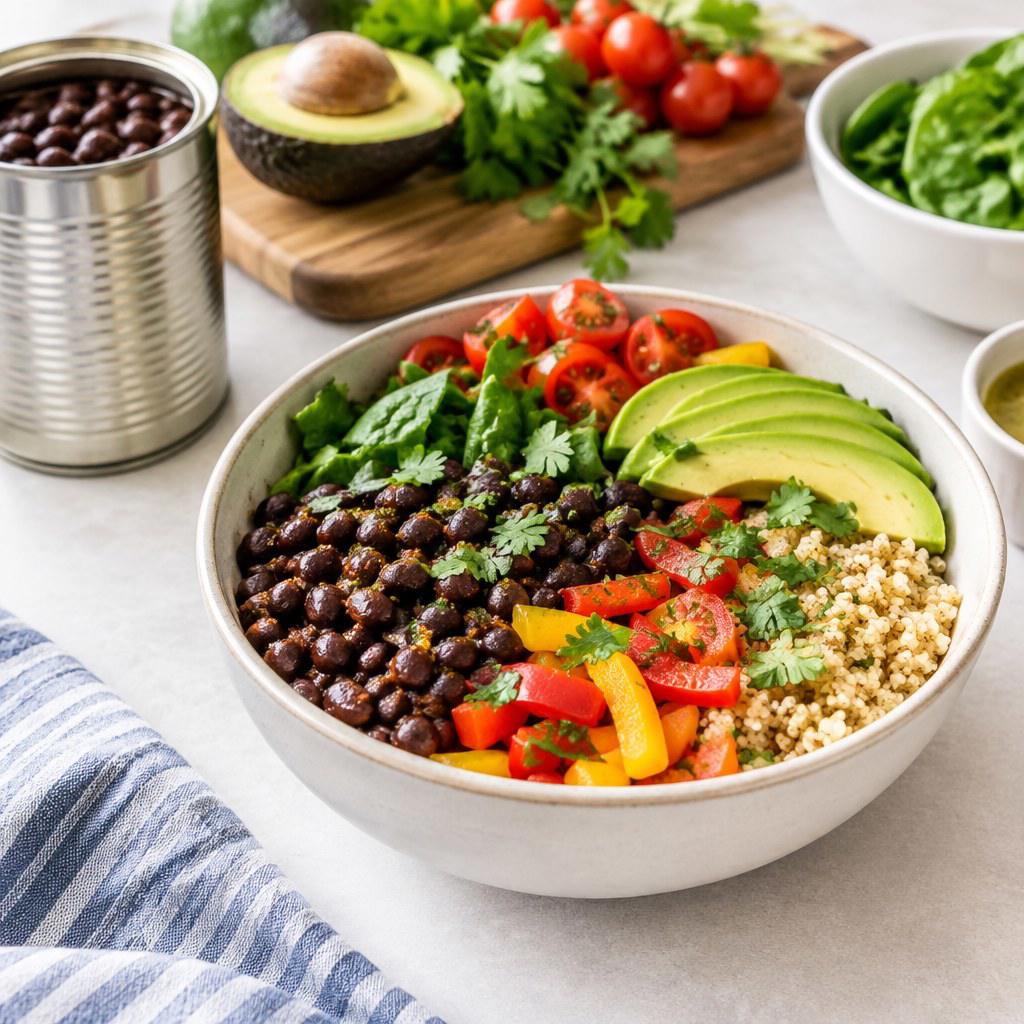
Start with cooked rice, quinoa, couscous, or another grain. Add warm beans seasoned with garlic, cumin, paprika, or herbs. Finish with roasted or sautéed vegetables, a sauce, and something sharp such as lemon juice. This format works well when you have leftover grains and want each person to assemble their own bowl.
Tomato bean skillet
Cook onion or garlic if available, add tinned tomatoes or a spoonful of tomato paste with water, then fold in beans and vegetables. Serve with bread, pasta, or baked potatoes. This is useful when you want a comforting meal with minimal chopping and only 1 pan to wash.
Crisp bean tacos or wraps
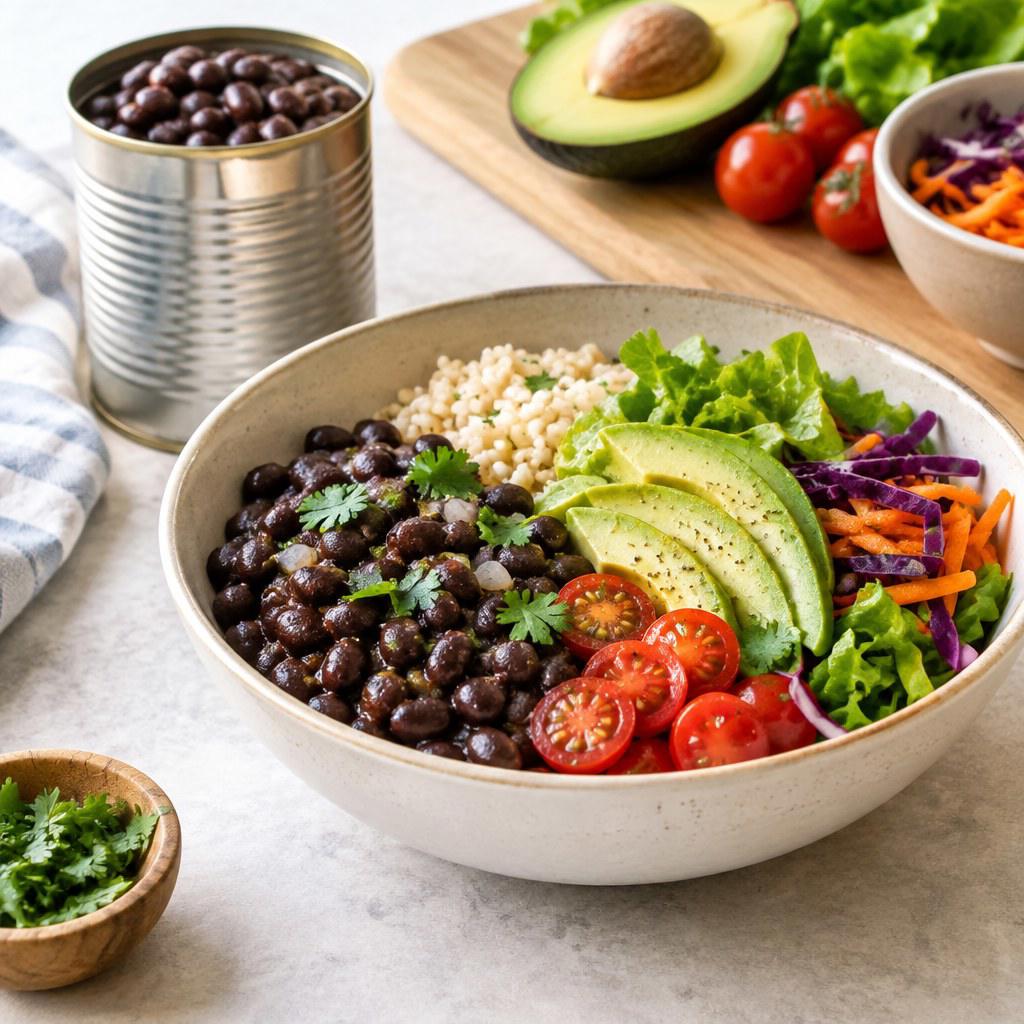
Mash black beans or pinto beans lightly with spices and a splash of water. Layer into tortillas with shredded cabbage, lettuce, grated carrot, corn, salsa, or yoghurt. The raw vegetables provide the crunch that a soft bean filling needs.
Roasted tray meal
Drain and dry chickpeas, then roast them with chopped vegetables and oil until the edges brown. Serve over couscous or with a simple dressing. Keep an eye on the tray near the end: canned beans are already cooked, so the goal is crisp edges and concentrated flavour, not a long cooking time.
Step-by-step: build dinner from 1 tin of beans
This process is designed for an ordinary weeknight. Adjust quantities to the number of people eating and to the size of your tin. If you are serving several people, add another tin of beans or expand the meal with extra vegetables and a larger starch component.
- Choose the direction. Decide whether you want Mediterranean-style flavours, a tomato-based skillet, tacos, a curry-inspired bowl, or a soup. Select seasonings that support that single direction.
- Prepare the base first. Put rice, pasta, potatoes, or bread in motion before working on the beans. Fast-cooking couscous is useful when time is tight.
- Sort the vegetables by cooking time. Start with onions, carrots, peppers, or broccoli. Add tender greens, peas, spinach, or herbs near the end so they stay bright.
- Drain, rinse, and dry the beans. Add them after the vegetables have begun to soften. Warm them through gently; aggressive stirring can break softer varieties.
- Build a sauce or coating. Use tomatoes, stock, coconut milk, tahini, yoghurt, or a simple olive-oil-and-lemon dressing. Add small amounts, then taste.
- Finish with contrast. Add acid, herbs, chilli, cheese, toasted seeds, or crisp vegetables immediately before serving.
For example, you could make a simple white bean dinner by warming white beans with garlic, spinach, and tomatoes, serving them over toast, then adding lemon zest and a little olive oil. Or make black bean tacos with corn, cabbage, lime, and a yoghurt-based sauce. The ingredients differ, but the structure remains the same.
Mistakes to avoid and how to recover
Adding salt before tasting
Beans, stock cubes, sauces, cheese, and pickles can all bring salt to the dish. Taste after the components meet, then season gradually. If the meal becomes too salty, increase the unsalted parts: add more vegetables, a plain starch, extra tomatoes, or a small splash of water.
Making everything soft
Beans plus overcooked vegetables plus a soft starch can create an unappealing texture. Recover the plate with something crisp: sliced radish, cabbage, toasted breadcrumbs, seeds, chopped herbs, or a quick salad dressed with vinegar.
Using too much liquid
A tin of beans can release moisture, especially if added directly from its liquid. If a skillet meal looks thin, simmer it uncovered rather than immediately adding thickener. You can also mash a spoonful of beans into the sauce to give it more body.
Forgetting acidity
Rich bean dishes can taste flat even when the seasoning is adequate. Add lemon juice, lime, wine vinegar, or a little pickled vegetable at the end. Start with a small amount, stir, and taste again rather than making the dish sharply sour.
⚠️ Storage note: Transfer unused canned beans to a covered food-safe container, refrigerate them promptly, and follow local food-safety guidance for storage time. Do not store leftovers in an opened can.
A simple decision framework for bean dinners
When you are deciding what to cook, ask 4 questions: Which bean do I have? Which vegetables need using? What starch will make this feel like dinner? What final element will add freshness or crunch?
This approach makes your pantry more useful because the decision is based on interchangeable roles, not a long list of exact ingredients. Keep a few seasonings, a flexible starch, tinned tomatoes, and frozen vegetables available, and canned beans become a dependable starting point rather than an emergency option.
Make your next bean dinner easier
Choose 1 tin of beans, 1 vegetable you need to use, and 1 finishing ingredient before dinner time. That small plan is enough to create a balanced, adaptable meal with less waste and less last-minute decision-making.