Choosing Between Neighbourhoods for a Stay in Berlin

Choose your Berlin neighbourhood by matching your daily routine to the city’s scale, transport links and evening atmosphere. The best area is rarely the one with the most famous sights; it is the one that makes your work, meetings, meals and downtime feel straightforward from the moment you arrive.
Berlin is spread out, and each neighbourhood has a distinct pace. A stay near a client, event venue or rail connection can save meaningful time, while the wrong location can turn ordinary plans into repeated cross-city journeys. Use the framework below to compare areas based on purpose rather than reputation.
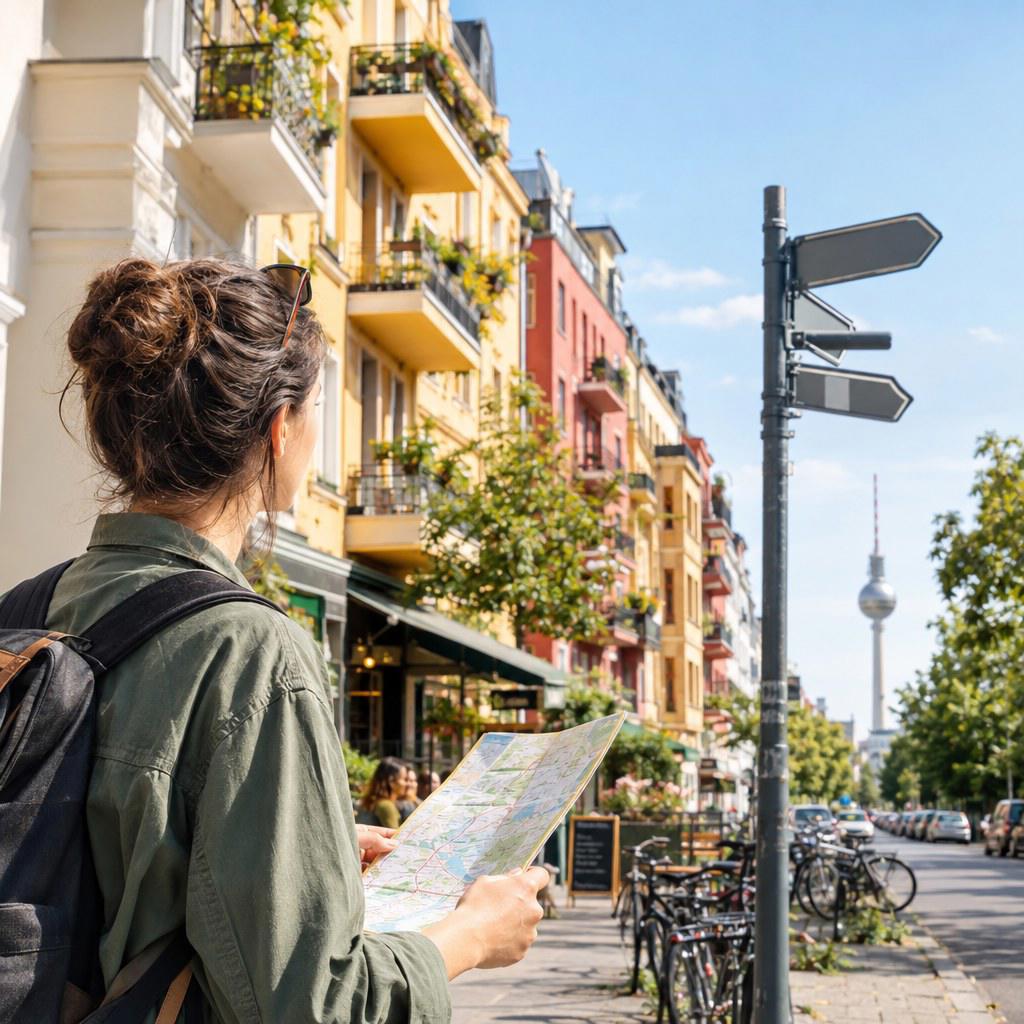
Start with the purpose of your stay
Before comparing neighbourhood names, identify what you need to do most days. A business trip, a first leisure visit, a long remote-working stay and a family break can lead to very different choices. Berlin’s public transport is extensive, but a convenient map connection does not always mean a convenient door-to-door journey.
Business meetings and short working visits
If your schedule includes appointments, prioritise proximity to your first and last meeting of the day. Mitte works well when you need central access, formal meeting spaces and direct routes to several parts of the city. City West, around Kurfürstendamm and Zoologischer Garten, can be a practical alternative for meetings in western Berlin and for access to larger hotels.
For a stay with a full workday, check the route from the accommodation to the nearest U-Bahn, S-Bahn or tram stop. Also consider whether you will need a quiet place to take calls, work early or return late. A lively street may be appealing in listings but less useful when you need consistent rest.
First-time leisure stays
If you want to see major museums, historic sites and central districts without constant planning, Mitte provides an efficient base. It can feel more visitor-oriented than other areas, but that trade-off may be worthwhile for a short first visit. You can reach many central sights on foot or by short public-transport trips.
Longer stays and everyday living
For stays of a week or more, choose an area where ordinary tasks are easy. Look for food shops, cafés, laundries, parks and transport within a comfortable walk. Prenzlauer Berg, Friedrichshain, Kreuzberg and Neukölln are often considered for this type of stay because they offer strong local life, though the experience varies street by street.
💡 Tip: Put your fixed commitments on a map before booking. If you have 2 meetings in one district and only 1 optional activity elsewhere, optimise for the meetings first.
Compare Berlin’s main stay areas
Neighbourhood labels are useful starting points, not guarantees of atmosphere. A quiet residential street can sit a few minutes from nightlife, and a property described as “Mitte” may be farther from central sights than expected. Review the exact address and nearby transport stop before deciding.
Mitte: central and efficient
Mitte is a sensible choice when time is limited and your priorities are central. It is particularly useful if you want a straightforward base for government-related appointments, cultural venues or first-time sightseeing. The compromise can be a less residential feel and more activity around popular locations.
Prenzlauer Berg: calm routines with local character
Prenzlauer Berg tends to suit travellers who value a neighbourhood rhythm over immediate access to every landmark. You may find it easier to settle into a morning coffee, grocery and park routine. It is a strong option when you do not need to be in the city centre several times every day.
Kreuzberg and Friedrichshain: energy and access
These neighbouring east-central areas can suit travellers who want restaurants, cultural activity and easy access to several central districts. They are not interchangeable: individual streets differ significantly. If sleep matters, read recent property reviews for comments about road noise, bars, courtyards and late arrivals.
Neukölln and City West: choose for a clear reason
Neukölln can work well when its local atmosphere and south-eastern location match your plans. City West can be the better operational choice when your work is west of the centre. Neither is automatically better; the useful question is whether the area removes journeys you would otherwise repeat.
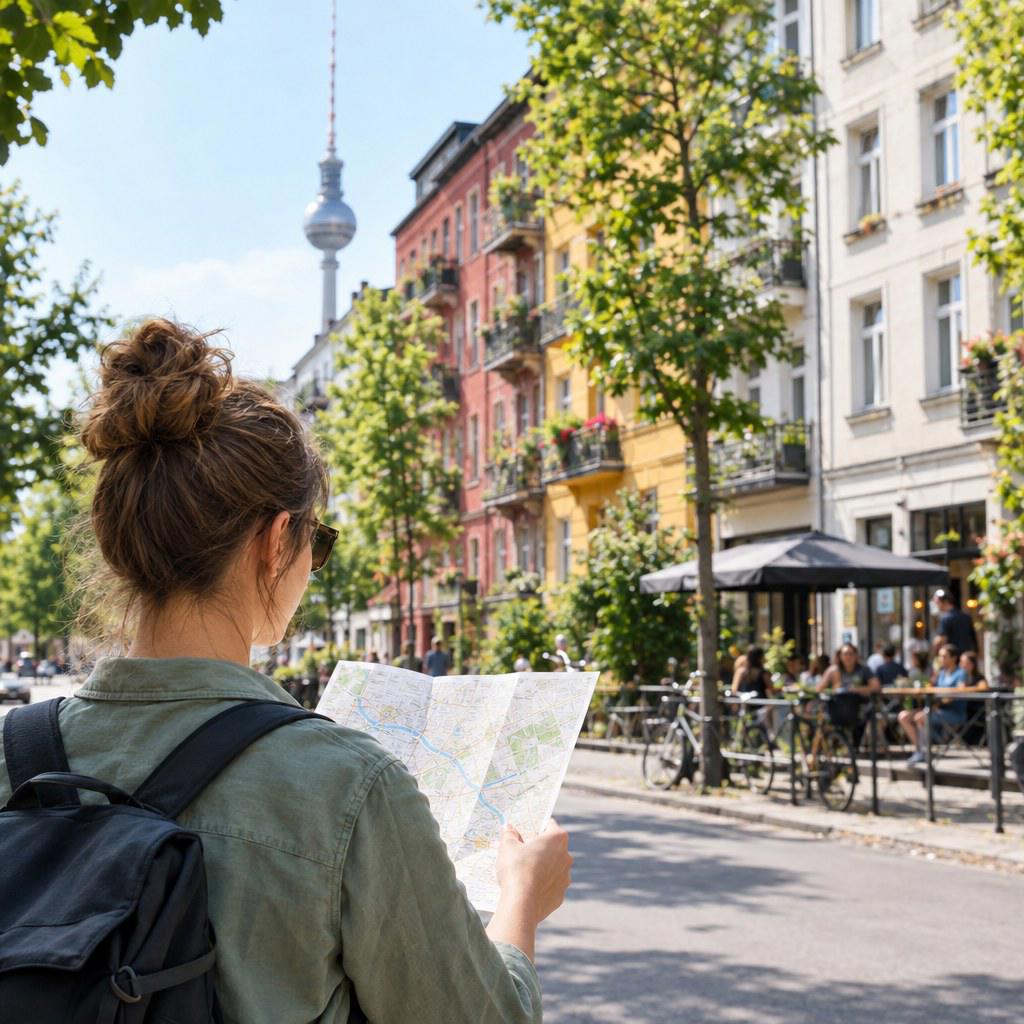
Use practical decision factors, not broad impressions
Once you have 2 or 3 candidate areas, compare them with the same criteria. This reduces the risk of choosing based on attractive photos or a vague idea of what feels “central.”
Journey pattern
Test morning, midday and evening routes. One direct line can be more useful than a location that looks closer on a map.
Property operations
Confirm check-in timing, lift access, workspace, Wi-Fi details and luggage arrangements before committing to a busy itinerary.
Evening needs
Decide whether you need quiet, late dining, easy returns after events or simply a nearby shop for everyday supplies.
For business travel, also distinguish between “near the centre” and “near the people you need to meet.” If your meetings are concentrated around one business campus, exhibition space or client office, staying close to that location often produces a better experience than staying in a headline district.
Follow a 5-step booking process
- List non-negotiable destinations. Include offices, event venues, stations, airports and any dinner or family commitments you cannot move.
- Choose a transport radius. Decide what journey length feels acceptable for your schedule, then test routes at the times you expect to travel.
- Shortlist 3 neighbourhoods. Do not compare every Berlin district. Restrict your search to areas that meet the location requirement.
- Inspect the exact property setting. Check the address area, nearest stops, recent reviews, access instructions and whether the accommodation supports your work or rest needs.
- Keep a backup option. If availability, cancellation terms or arrival logistics change, a second suitable area prevents rushed decisions.
Use the same process for group travel. A group may benefit from a slightly less central location with more practical space, but only if the transport arrangement remains simple for everyone. Agree whether convenience, quiet, dining or proximity to a specific venue has priority before one person books.
Avoid common mistakes and recover quickly
Choosing solely by trend or nightlife
Popular areas can be excellent, but popularity does not answer whether the property suits your schedule. If you are tempted by an active district, check reviews for sound insulation and consider a side street rather than a main road. If you discover noise after arrival, ask the host or hotel promptly about a quieter room or practical alternatives.
Assuming one district is uniform
Berlin neighbourhoods contain busy commercial corridors, residential streets and transport hubs within short distances. Do not rely on a district name alone. Review the immediate surroundings and plan the walk from the stop to the entrance, especially when you arrive late with luggage.
Underestimating arrival and departure logistics
A convenient stay can become difficult if you reach Berlin early, depart late or need to move equipment. Confirm luggage storage, check-in procedures and the route to your relevant rail station or airport before booking. If those arrangements are unclear, contact the property rather than assuming flexibility.
Trying to see all of Berlin from one trip
Berlin is best approached in clusters. Group activities by area instead of travelling across the city for every individual item. This lets you choose accommodation based on the most important commitments while still enjoying other districts deliberately.
Use a short decision framework
Choose Mitte when central access and a first-visit itinerary matter most. Choose Prenzlauer Berg when you want a calmer, neighbourhood-led base. Choose Kreuzberg or Friedrichshain when cultural energy and east-central access suit your plans. Choose Neukölln or City West when their specific location supports the way you will spend your days.
Then make the final decision at street level: compare travel routes, evening conditions, property operations and the needs of everyone staying. The strongest choice is the one that reduces friction repeatedly, not simply the one with the most recognisable postcode.
Make your shortlist before you book
Map your fixed commitments, test the journeys and compare the exact streets of your final 2 or 3 options. That small amount of planning will make your Berlin stay easier to manage.