Choosing Storage for Awkward Alcoves
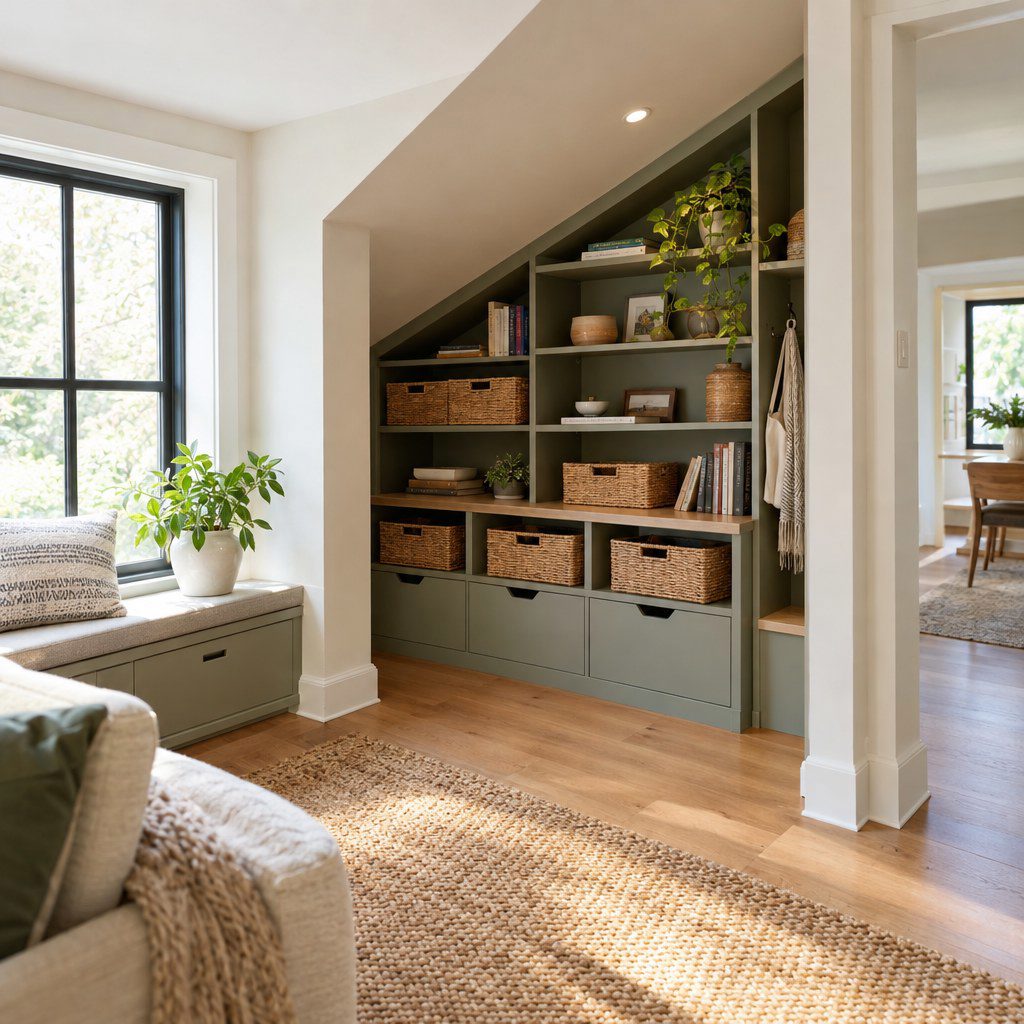
An awkward alcove becomes useful storage when you choose a solution based on its true dimensions, the items you need to store, and how often you need to reach them. The best option is not always fitted cabinetry: open shelves, freestanding units, drawers, hooks, or a mixed approach can turn a recess, chimney breast return, sloping corner, or narrow gap into practical space without making the room feel crowded.
For a business owner setting up a small office, a hospitality space, a studio, or a staff area, this matters because poorly planned storage quickly becomes visible clutter. A measured, purpose-led choice helps you use difficult areas efficiently while keeping access, cleaning, safety, and day-to-day maintenance manageable.
Why awkward alcoves are difficult to furnish
Alcoves look like unused floor area, but they rarely behave like a standard wall. Their width can change from front to back, their sides may not be square, and skirting boards, pipes, sockets, radiators, window ledges, or uneven plaster can limit what fits. A recess near a door also needs enough clearance for the door swing and for people passing through.
Function creates a second challenge. A deep recess can hide boxes at the back, but it can also make everyday items hard to retrieve. A shallow recess may suit files or display stock but not bulky equipment. Before selecting furniture, decide whether the alcove needs to hold supplies, records, tools, personal belongings, cleaning products, retail materials, or decorative items.
Visual weight matters too. A tall dark cabinet can make a narrow room feel tighter, while fully open shelves can look untidy if the stored items are mixed or frequently changing. The right choice balances capacity with the level of order you can realistically maintain.
Measure before choosing storage
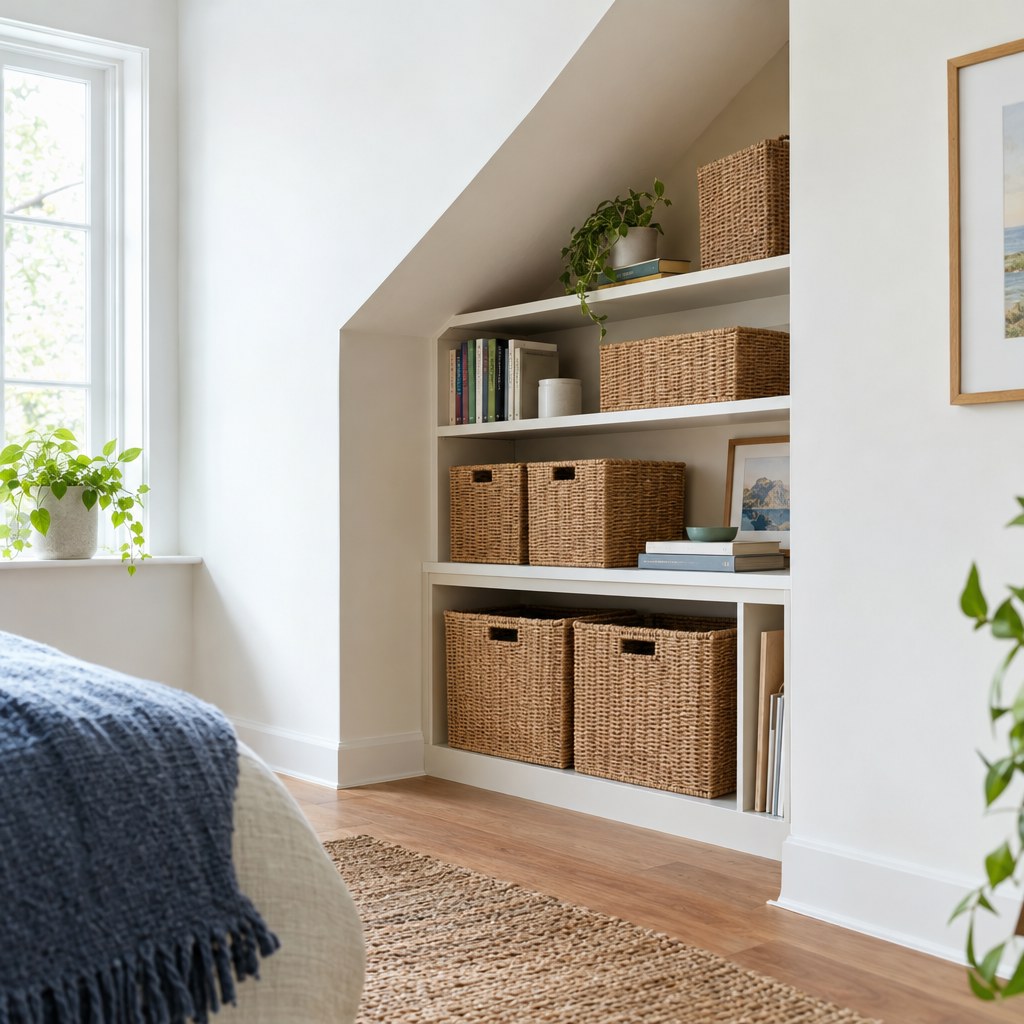
Do not buy an off-the-shelf unit from the width of the front opening alone. Measure the alcove at several points because older walls and finishes often vary. Record the details in a simple sketch, then compare that sketch with the manufacturer’s assembled dimensions rather than the size of the packaging.
Also check what sits behind the wall before drilling or fixing heavy furniture. If you are uncertain about concealed electrical wiring, plumbing, wall condition, or load-bearing capacity, ask a qualified professional to assess the location. This is particularly important in commercial premises, rented spaces, and older buildings.
💡 Tip: Make a paper or cardboard template of the unit’s footprint when access is tight. Place it on the floor and open nearby doors before ordering. This quickly exposes clearance problems that a measurement list can miss.
Storage options for different alcoves
There is no universally best alcove solution. Choose the level of permanence, concealment, and flexibility that suits the room’s role. A useful rule is to keep frequently handled items between easy reach and eye level, while less-used reserve stock can sit higher or lower.
Adjustable open shelving
Best for shallow recesses, books, labelled containers, and items that change often. Adjustable shelf positions give you room to alter the layout as stock or equipment changes.
Freestanding shelving or cabinets
Best when you need a lower-cost, movable option. Leave a small tolerance around the unit instead of forcing it into an uneven opening.
Closed base cabinets
Best for visual calm, heavier supplies, and items you do not need to see. Drawers are often more practical than deep cupboards for small objects.
Made-to-measure joinery
Best for heavily tapered, unusually deep, or highly visible alcoves. It can use more of the available volume, but you should define the contents before finalising the design.
When a hybrid layout works best
A combination often offers the most practical result: a closed cabinet at the bottom for visually messy items, one open shelf for regularly used materials, and higher storage for archived documents or seasonal supplies. For example, if you run a small studio, you might keep daily tools in labelled open bins, refill stock below, and occasional display materials above.
Match storage to the way you work
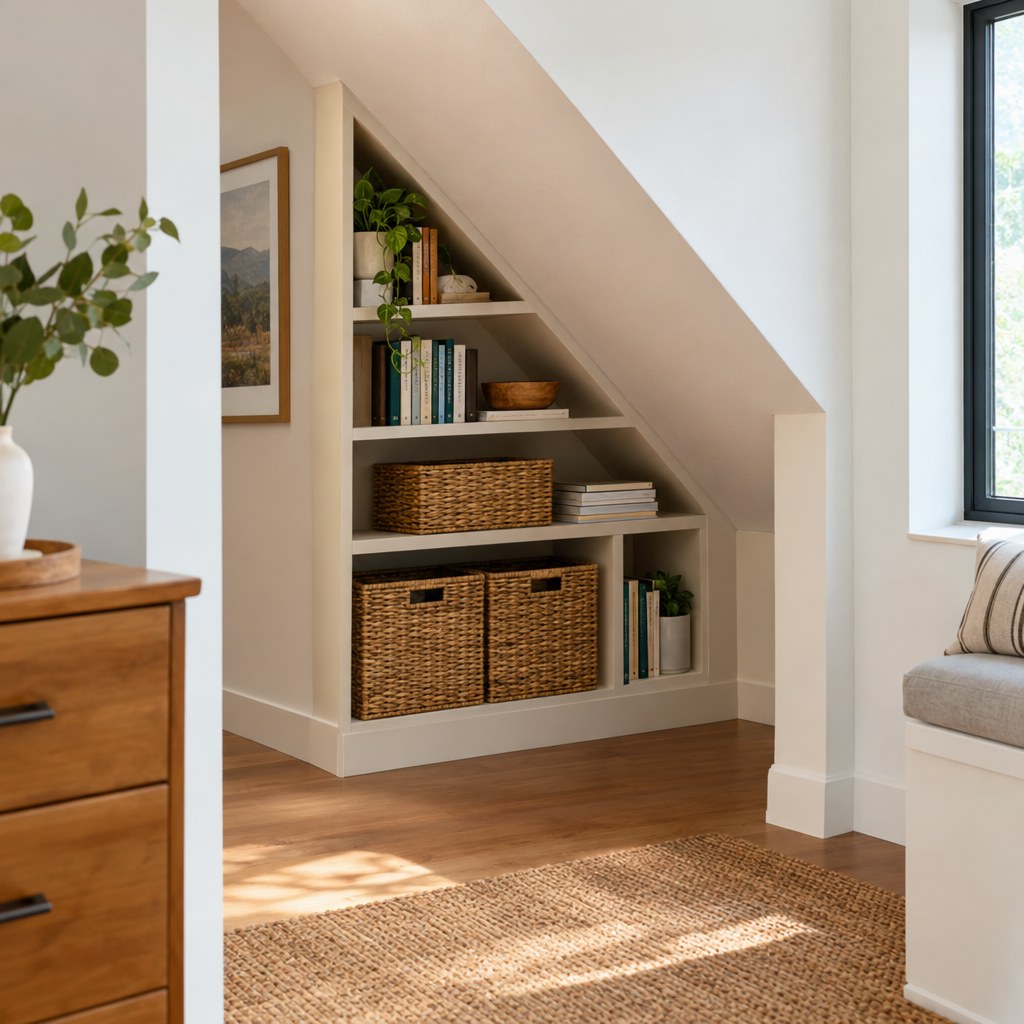
Start with the contents, not the furniture style. Group items by frequency of use, size, weight, and whether they need to be hidden, locked, ventilated, or protected from dust. This avoids installing attractive storage that does not support the routines of the people using the room.
- Use open shelves for items you identify quickly and handle regularly.
- Use drawers for small, mixed items that would disappear at the back of a cupboard.
- Use doors for supplies with untidy packaging, spare stock, cables, or cleaning equipment.
- Use pull-out trays or bins in deep spaces where fixed shelves would create inaccessible back areas.
- Use wall hooks or rails for lightweight items that need to be grabbed and returned quickly.
- Keep heavy items low, and avoid storing frequently used items where a ladder is required.
If several people use the storage, make the system obvious. Simple labels, consistent container types, and assigned zones reduce time spent searching and make restocking easier. Do not label a location until you have tested it for a short period; the first layout may reveal that an item is used more or less often than expected.
A practical installation checklist
- Empty and inspect the alcove. Remove old fixings where appropriate, clean the area, and identify damp, damage, heat sources, or access panels that must remain available.
- List the exact contents. Include quantities, approximate dimensions, and the heaviest item you expect to store.
- Sketch 2 layouts. Compare an open option with a closed or mixed option. Consider what the room looks like when storage is full, not just when it is newly organised.
- Confirm clearance. Test doors, drawers, walkways, cleaning access, and any ventilation or service requirements.
- Choose fixings for the wall and load. Follow the storage manufacturer’s instructions and get appropriate help for heavy or wall-mounted units.
- Install from the base upward. Level the first component carefully, then secure tall furniture against tipping where required by its instructions.
- Load and review. Put the heaviest items at the bottom, label zones, and revise shelf heights after real use.
Mistakes to avoid and how to recover
Buying to the widest measurement
An alcove that is wider at the front than the rear can trap a cabinet before it reaches the back wall. Recover by selecting a narrower modular unit, using adjustable shelves fixed to battens, or commissioning a solution that follows the uneven profile.
Filling every centimetre with fixed shelving
Maximum capacity is not the same as usable capacity. Deep fixed shelves encourage clutter at the rear. Recover by adding pull-out containers, limiting shelf depth, or reserving the back area for clearly labelled low-use items.
Ignoring heat, services, and maintenance access
Do not block radiators, vents, electrical outlets, shut-off valves, or inspection points. If storage has already obstructed an essential service, remove or alter the affected section and seek suitable professional advice before changing electrical or plumbing installations.
Choosing open storage for visually noisy contents
Open shelving works best when contents are consistent and maintained. If it becomes messy, add matching opaque bins, use doors on the lowest section, or move irregular supplies into closed storage while keeping only regularly used items visible.
A simple decision framework
Choose open adjustable shelves when the alcove is shallow and contents change frequently. Choose drawers or pull-outs when the space is deep and you need reliable access to small items. Choose closed cabinets when visual order, dust control, or secure storage matters. Choose freestanding furniture when flexibility and a simpler installation are priorities. Choose made-to-measure storage when the alcove is irregular, prominent, or valuable enough to justify a more permanent solution.
In every case, measure the narrowest point, plan around obstructions, and design for your actual routine rather than an idealised image of the room. A modest solution that stays easy to use is more valuable than a perfectly fitted unit that makes everyday access difficult.
Turn the awkward space into a working storage zone
Measure the alcove, sort what needs to live there, and test the access route before you commit to shelves, cabinets, or bespoke joinery.