Choosing Task Lighting for a Reading Chair
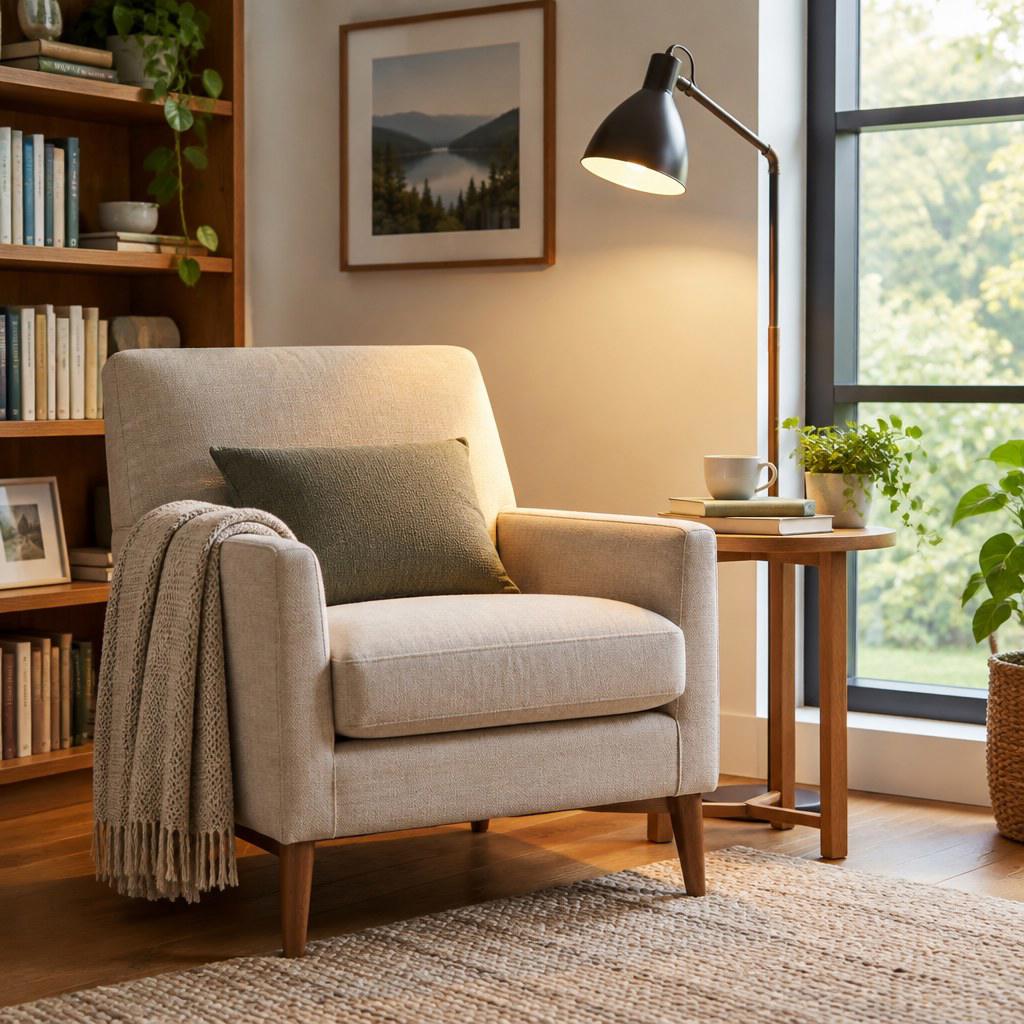
A good reading light puts clear, comfortable light on the page without shining into your eyes or forcing you to lean forward. Choose it by matching the fixture’s position, beam control, brightness, and switching method to the chair and how you read.
Whether for a home corner, guest lounge, or waiting area, task lighting should serve the reader at the chair rather than simply add general room light.
What reading-chair lighting needs to do
Reading is a close visual task. Ceiling lighting may make a room usable, but it can leave the page underlit or create shadows from your head, shoulders, or hands. A task light focuses illumination on books, tablets, journals, or documents.
A useful reading light reaches the page, stays out of your direct sightline, avoids harsh reflections from glossy paper or screens, and remains easy to control from the chair.
Start with the chair, not the lamp
Assess the reading position before shopping. Note open floor space, nearby tables, power access, and whether the chair reclines or has a high back. A fixed lamp suits one regular posture; an adjustable arm better serves changing positions or multiple users.
- Choose a light that reaches the book in your natural reading position.
- Allow room for a side table, drink, mobility aid, or footrest if needed.
- Check nearby sightlines so the bulb or shade does not glare for others.
- Plan controls that can be used without standing up.
Choose the right fixture type
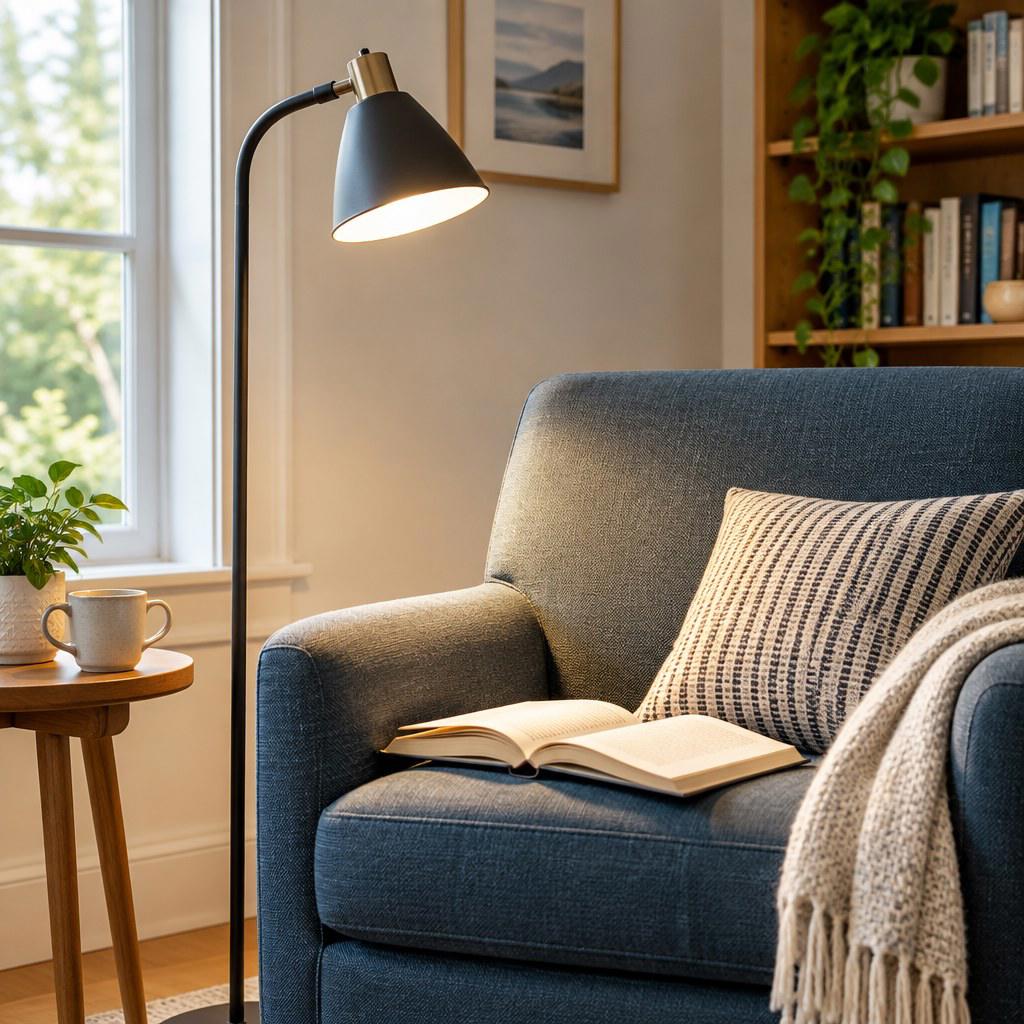
The right lamp depends on available space, chair shape, installation needs, and required directional control. Start with the fixture category, then compare models for adjustability and light quality.
Adjustable floor lamp
Useful when there is no side table. Choose a stable base and a head or arm that directs light down to the page.
Table lamp
Works with a substantial side table. Ensure the shade does not prevent light reaching the book.
Wall-mounted light
Keeps compact layouts clear. A swing arm or adjustable head suits different readers.
When an uplighter is not enough
Torchiere-style lamps improve atmosphere but rarely provide enough targeted light for small type or evening reading. If you prefer an uplighter’s softness, pair it with a focused reading lamp.
💡 Tip: In tight spaces, use a wall-mounted adjustable fixture or slim floor lamp behind the chair to preserve circulation space.
Specifications that matter more than appearance
Style and smart features matter less than comfort and control. You do not need laboratory measurements, but you should recognize the specifications that affect usable reading light.
For integrated LED fixtures, confirm whether dimming is built in or requires a compatible external control. For replaceable bulbs, check lamp instructions before adding a dimmable bulb. Not every LED works with every dimmer.
Color preference is personal. Warmer light often suits relaxed evening reading, while neutral white can make detail feel clearer. Choose a light that suits the room and does not feel too cool or yellow.
Position the light to reduce shadows and glare
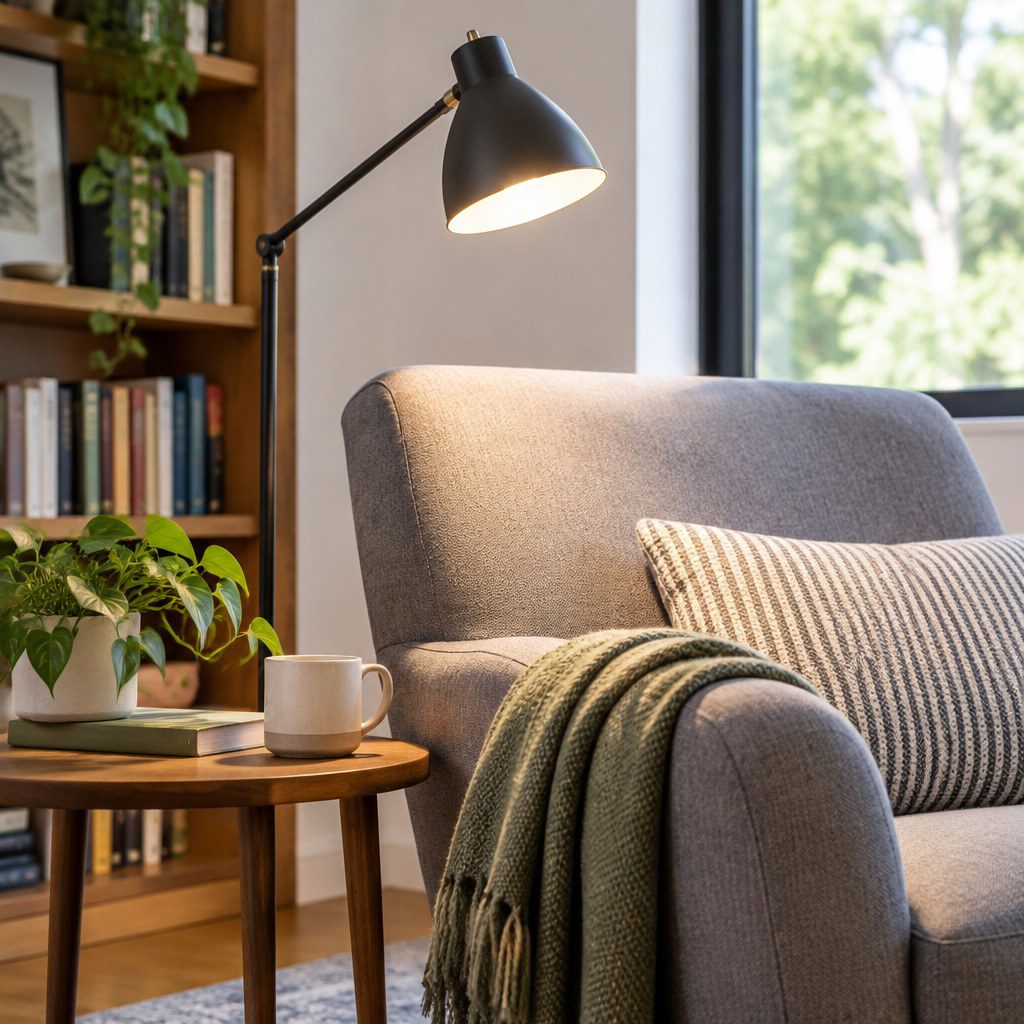
Placement often matters more than lamp power. Position the light slightly behind and to one side of the chair, aiming it at the open pages rather than your face. This lights the book while keeping the source outside your main view.
Use the writing-hand rule carefully
For paper reading, place the lamp opposite the hand that writes or turns pages most often. Right-handed readers may prefer light from the left, and left-handed readers from the right, to reduce hand shadows. Treat this as a starting point: the best position lights the page evenly without glare.
Keep the lamp head high enough to cover the reading area, but not so high that light spreads across the room. Sit normally and move the light instead of changing your posture.
⚠️ Check for glare: Look at the page, then around the room. If the bright bulb is visible from the chair, rotate, lower, shield, or move the fixture.
Set up the reading light step by step
- Place the chair first. Set it in its usual position, including recline angle and footrest.
- Identify the reading zone. Sit with a book or device and note where it naturally rests.
- Select the fixture location. Keep a clear route around the chair and avoid kickable floor-lamp bases.
- Install and secure the lamp. Follow assembly instructions and use a stable, level surface.
- Aim the light at the page. Direct the beam to the reading material, not across your face.
- Test the lowest useful setting. Start dim, then raise output until text is clear.
- Check the view from all seats. Ensure the lamp does not create glare elsewhere in shared rooms.
- Make controls easy to reach. Keep the switch, touch control, pull chain, or remote usable from the chair.
Test the setup in daylight and after dark. Daylight can hide weak coverage or glare that becomes obvious in the evening.
Mistakes to avoid and how to fix them
Choosing light based only on wattage or output claims
Brighter is not always better. Excess output can create glare, especially with visible sources or glossy pages. Choose dimming, add shielding, or redirect the head toward the page.
Relying on overhead lighting alone
Ceiling fixtures often leave the reader’s lap in shadow. Add task lighting rather than making the whole room brighter.
Ignoring cable management
Loose cords can create trip hazards near chairs, doorways, and passages. Route cords away from walking paths and avoid running them under rugs unless product guidance permits it.
Buying a lamp with an inaccessible switch
A switch on the floor, behind furniture, or high on a pole discourages use. Reposition the lamp where possible, or use a compatible plug-in control only after checking instructions and electrical suitability.
A simple decision framework
Choose a floor lamp for flexibility and clear floor space. Choose a table lamp when a stable side table exists. Choose a wall-mounted adjustable light for limited space or a permanent uncluttered arrangement.
Then ask 4 questions: Can you aim it at the page? Can you use it without glare? Can you adjust the output? Can you switch it from the chair? If all 4 answers are yes, it is likely a good fit.
Make the chair test your final check
Before calling the setup complete, sit down with your usual reading material after dark. Adjust the lamp until the page is clear, the bulb is out of sight, and controls are within reach.