Creating a Household Maintenance Calendar
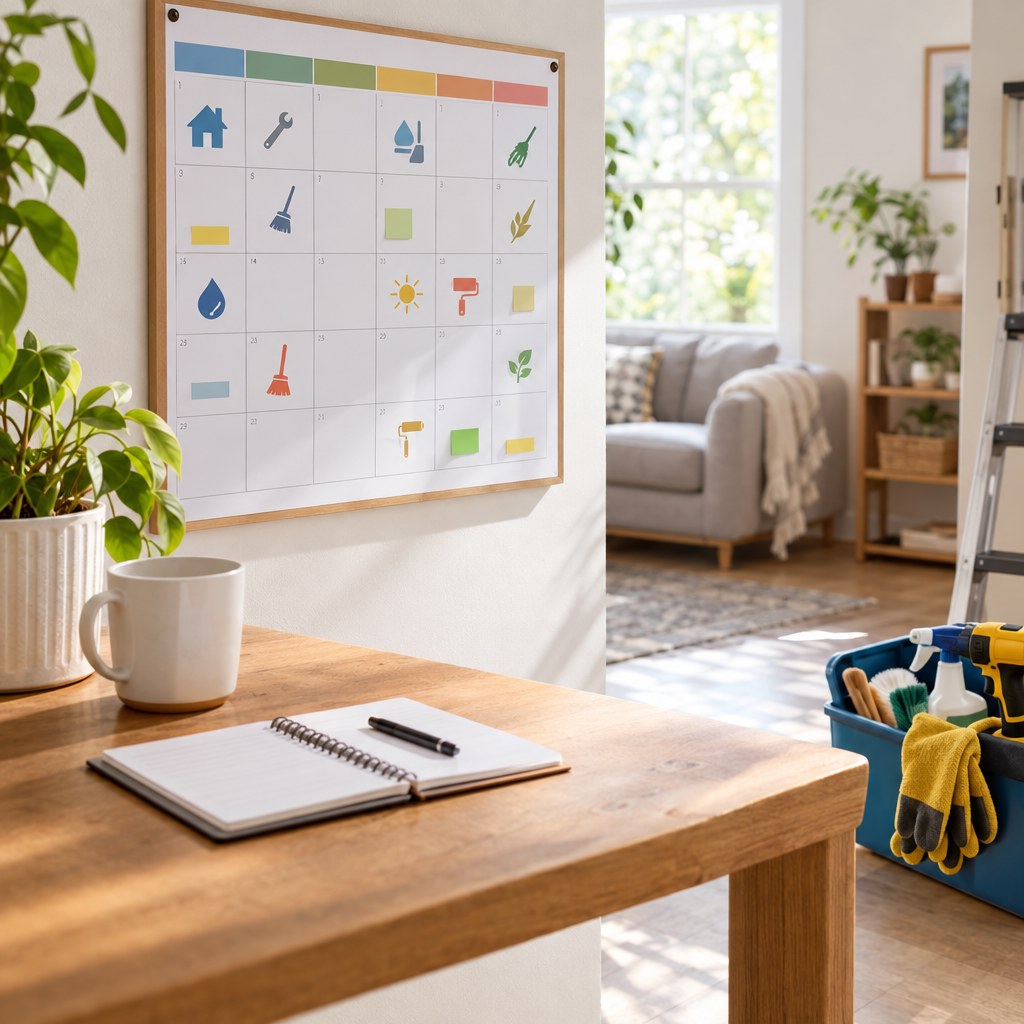
A household maintenance calendar turns scattered chores into a predictable system. By grouping tasks by frequency, season, and responsibility, you can protect your home’s condition, reduce last-minute repairs, and make it easier to plan time and spending.
The best calendar is not the longest checklist. It is a practical schedule that reflects your property, appliances, climate, and available capacity. Start with essential safety and prevention tasks, then add the jobs that preserve comfort, efficiency, and resale value.
Why a maintenance calendar matters
Household maintenance often fails for a simple reason: tasks are remembered only when something goes wrong. A dripping pipe, blocked gutter, malfunctioning smoke alarm, or neglected filter becomes urgent because no system prompted an earlier check.
A calendar creates that prompt. It separates recurring preventive work from occasional projects and gives each task a visible due date. This is useful whether you manage your own home, share responsibilities with a household, oversee a rental property, or support a busy family schedule.
Prevents avoidable damage
Regular checks help you notice minor leaks, wear, moisture, and drainage problems before they become larger repair projects.
Clarifies responsibility
A named owner and a due date reduce uncertainty when several people share the home or its upkeep.
Supports better decisions
A record of inspections and service dates helps you decide what can wait, what needs a professional, and what to budget for.
Think of the calendar as an operating plan, not a perfection test. A missed task is a signal to reschedule and understand why it slipped, rather than a reason to abandon the system.
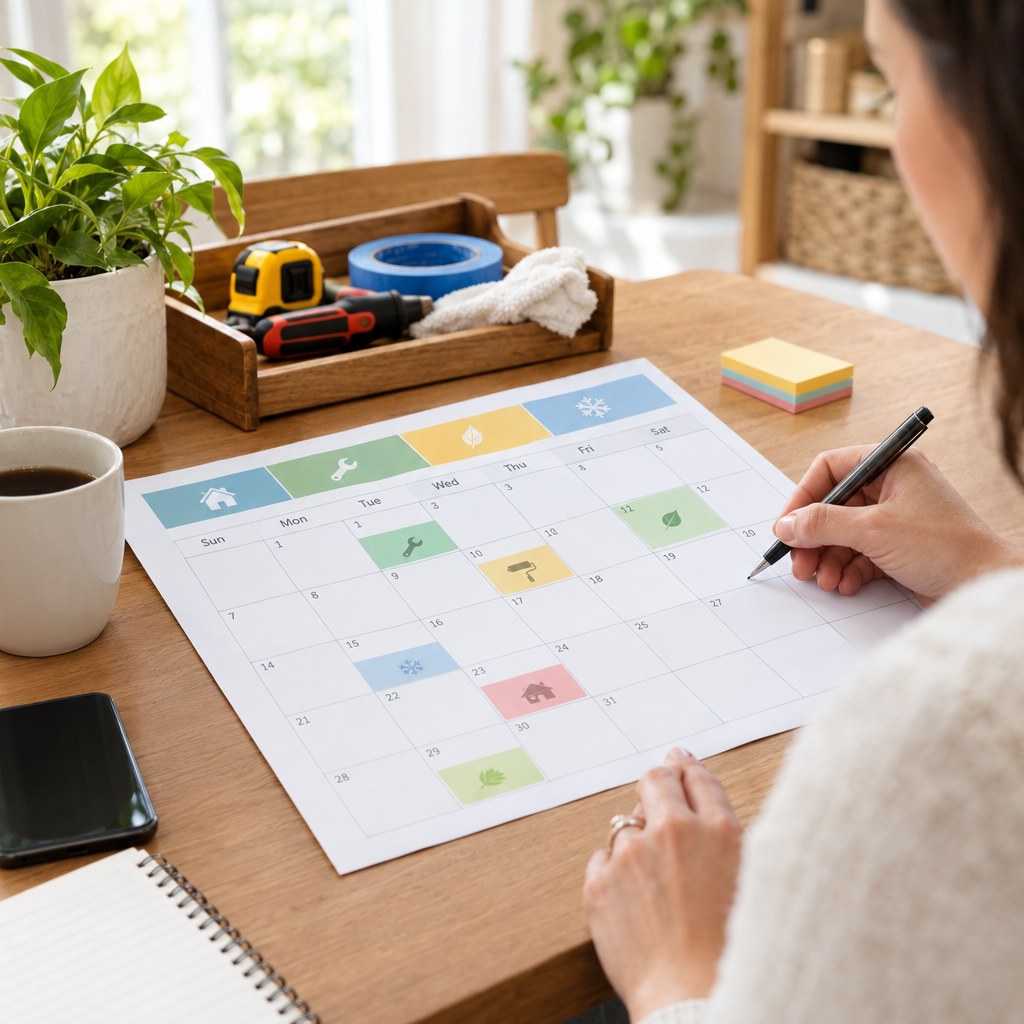
Build your home maintenance inventory
Before assigning dates, list the systems and areas you actually have. Generic online checklists can be useful prompts, but they may include equipment your household does not own or omit tasks that matter for your climate and building type.
Start with 6 practical categories
- Safety: smoke and carbon monoxide alarms, fire extinguishers, security lighting, locks, railings, and trip hazards.
- Water and plumbing: visible pipes, shutoff valves, drains, faucets, toilets, appliance hoses, and signs of moisture.
- Heating, cooling, and ventilation: filters, vents, outdoor units, thermostats, extractor fans, and service requirements.
- Exterior and drainage: rooflines, gutters, downspouts, foundations, walkways, exterior seals, and landscaping near the structure.
- Appliances: manufacturer-recommended cleaning, filters, hoses, vents, and routine inspections.
- Interior condition: caulk, grout, paint, window operation, doors, cabinets, and early signs of pests or dampness.
💡 Tip: Keep manuals, warranty information, service invoices, paint details, and appliance model numbers in the same digital folder as your calendar. When a task appears, you will have the instructions and history close at hand.
For each item, write down the task, location, method, required supplies, expected frequency, and whether it is suitable for you to do yourself. If a task involves gas, electrical systems, roofs, structural concerns, or anything beyond your experience, schedule an inspection or service visit with an appropriately qualified professional.
Choose the right frequency for each task
Frequency should come from the equipment instructions, local weather, household use, and observed condition. A home with pets, heavy cooking, mature trees, hard water, or frequent guests may need a different routine from a lightly used apartment.
Always give manufacturer instructions priority when they specify a maintenance interval. Where no interval is stated, use your calendar to set a reminder for inspection rather than assuming a repair is needed. An inspection gives you a chance to assess condition and decide the next action.
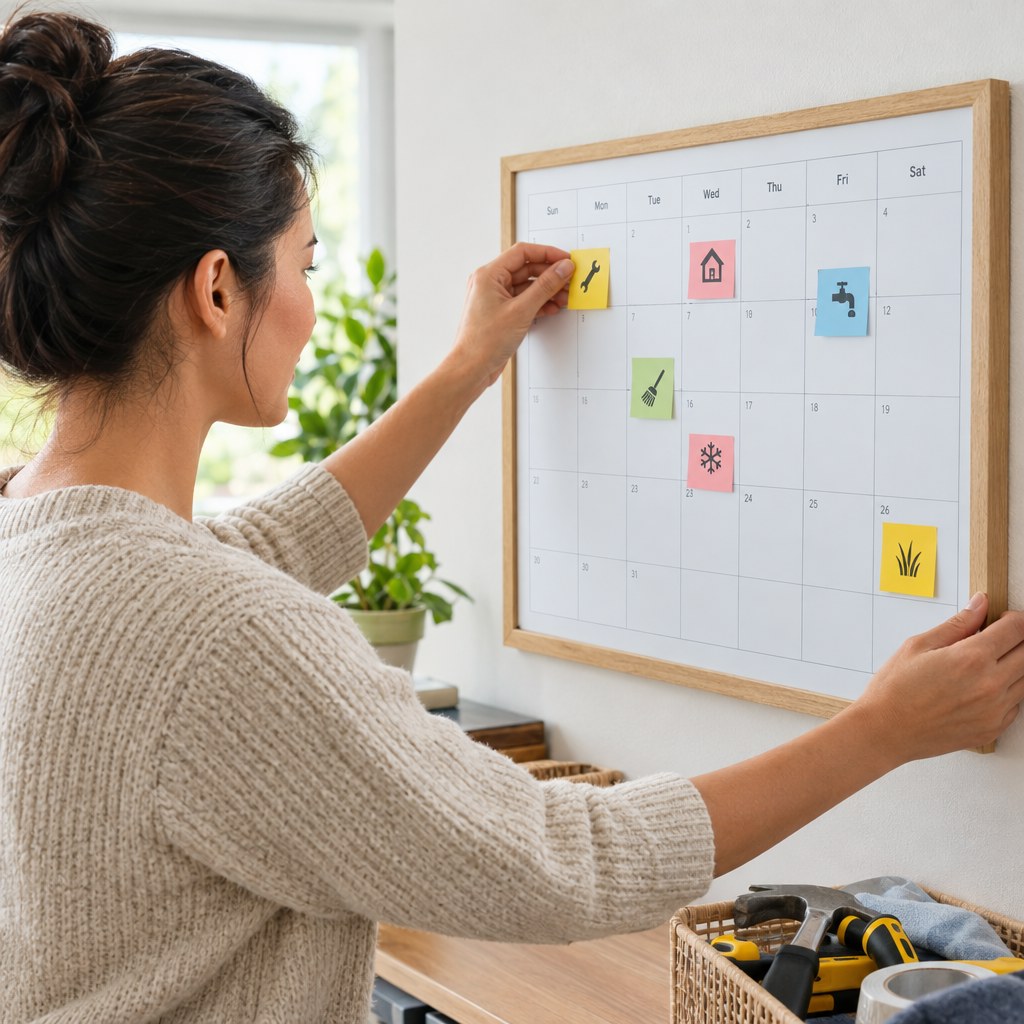
Create your household maintenance calendar step by step
1. Choose one calendar system
Use the tool you will reliably open: a shared digital calendar, task-management app, spreadsheet, printed planner, or household noticeboard. A shared system is usually best when tasks are divided among several people. Avoid spreading reminders across multiple apps, inboxes, and scraps of paper.
2. Enter non-negotiable tasks first
Start with safety checks, prescribed servicing, seasonal weather preparation, and tasks that prevent water damage. Then add appliance care and cosmetic upkeep. This order prevents lower-priority projects from crowding out work with more serious consequences.
3. Break projects into workable actions
“Maintain the exterior” is too vague to complete. Replace it with actions such as “inspect downspouts,” “check exterior sealant for gaps,” or “book an inspection if roof damage is visible.” Each entry should state what done looks like.
4. Add a time estimate and owner
Label each task as a quick check, a regular session, or a project that requires advance planning. Assign one owner, even if others will help. For service appointments, identify who will arrange access, keep records, and review the completed work.
5. Set reminders before the deadline
For tasks requiring supplies or professional scheduling, create an early reminder and a due-date reminder. For example, a seasonal service task may need one reminder to compare availability and another to confirm completion. This prevents the calendar from becoming a list of overdue intentions.
6. Record completion and findings
When you finish a task, note the date, what you observed, supplies used, and follow-up needed. A simple note such as “minor staining under sink; recheck next month” is more useful than a generic tick mark. Move unresolved work to a specific future date.
Avoid common maintenance mistakes
The most common failure is building a calendar that looks impressive but cannot fit real life. A detailed plan has value only when it supports action. Use these recovery tactics when the system begins to slip.
- Scheduling too much at once: spread work across the month. If a seasonal list is long, assign a few tasks to each weekend or available work block.
- Copying a generic checklist without adapting it: remove irrelevant jobs and add property-specific tasks. Your manufacturer instructions and past repair history are more useful than a broad template.
- Using vague entries: define the action, location, and completion standard. Clear tasks are easier to delegate and review.
- Ignoring repeat problems: if the same issue returns, do not keep adding another reminder. Investigate the cause and seek suitable professional advice when necessary.
- Failing to budget for planned work: mark tasks that may require materials or service. This lets you anticipate costs instead of treating every maintenance need as a surprise.
- Never reviewing the schedule: remove tasks that are unnecessary, adjust intervals after changes in use, and add lessons from repairs or inspections.
If you fall behind, do not try to clear every overdue item in one day. Triage by safety, water intrusion, heating or cooling reliability, and weather exposure. Reschedule lower-risk cosmetic tasks after urgent checks are complete.
A simple decision framework
For every maintenance item, ask 4 questions: What could happen if this is missed? How often does the manufacturer or condition of the home suggest checking it? Can you safely do it yourself? What reminder, budget, or professional support is needed to complete it?
Tasks with a high potential impact, a time-sensitive season, or a clear service requirement belong on the calendar first. Tasks with low consequences can be grouped into a monthly or quarterly home reset. This keeps your system focused on prevention rather than busywork.
Start with the next 30 days
List your home’s critical systems, schedule the next essential checks, and set one review date to refine the calendar. A simple plan you maintain is more valuable than an exhaustive plan you never use.