How Bats Navigate in the Dark
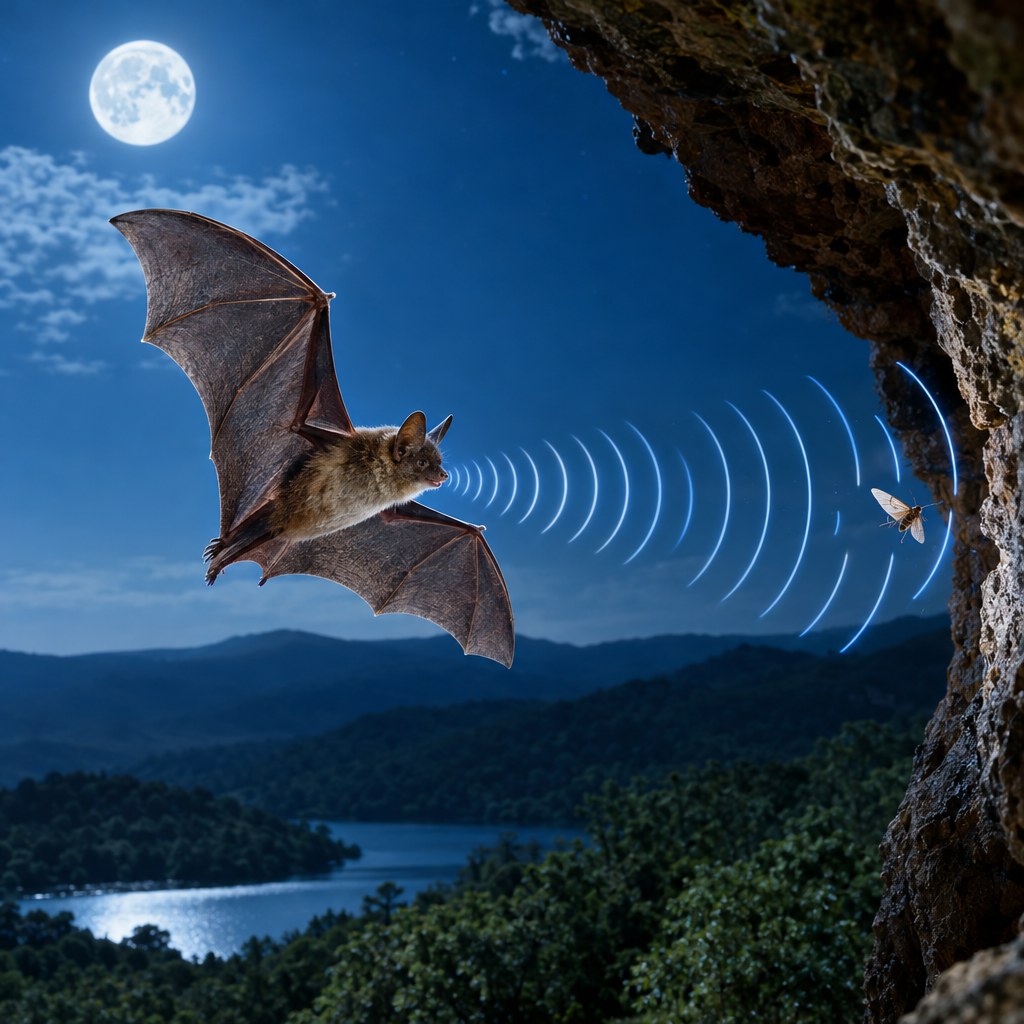
Bats navigate in darkness by combining sound, hearing, vision, memory, and other senses. Many species use echolocation: they produce high-frequency calls and interpret returning echoes to judge the location, size, texture, and movement of nearby objects. Understanding this system helps you make better decisions about outdoor lighting, building maintenance, wildlife-friendly spaces, and bat concerns around a property.
Contents
How echolocation works
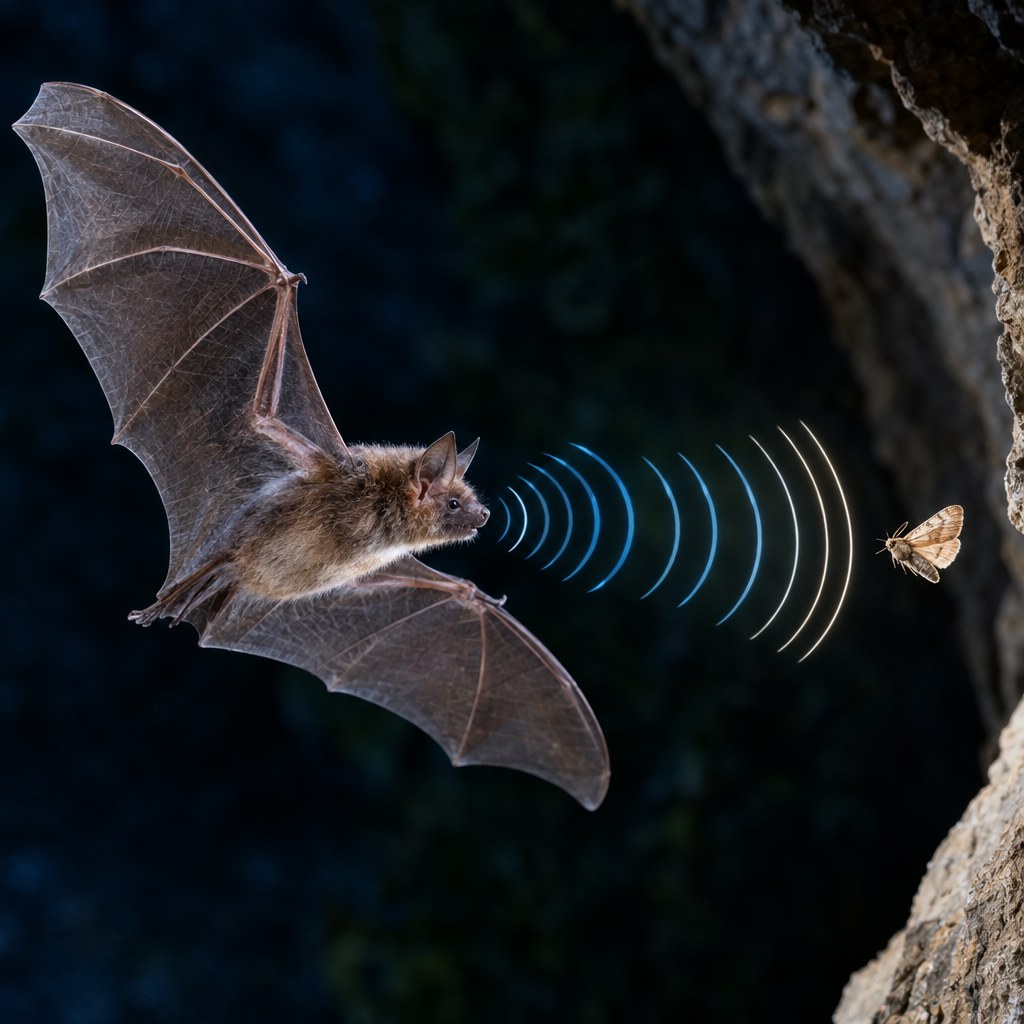
Echolocation is an active sensing method. A bat emits a brief sound, often through its mouth or nose, then listens for the sound waves that bounce back. The timing, strength, pitch, and pattern of those returning echoes provide useful information about what lies ahead.
The basic principle is straightforward: an echo that returns quickly came from a nearby object, while a later echo came from farther away. Changes in an echo can also help a bat distinguish a hard surface from leaves, a wall from open air, or a moving insect from a stationary branch.
Calls change with the task
Bats do not use one fixed call for every situation. In open space, a bat may make calls that travel farther and are spaced farther apart. As it approaches vegetation, a wall, prey, or a roost entrance, it can call more frequently. During a fast approach to an insect, calls may become extremely rapid in what researchers often call a feeding buzz.
This flexibility matters because cluttered areas create many overlapping echoes. A bat flying along a tree line needs enough detail to avoid branches while still detecting small insects. A bat crossing open water can prioritize broader awareness and efficient travel.
Send a signal
A bat produces a sound pulse suited to its surroundings, flight speed, and immediate task.
Read the echoes
Its hearing system compares the returning sound with the original call and extracts spatial detail.
Adjust in flight
The bat continuously updates its flight path as fresh echoes reveal changing obstacles or prey movement.
Not all bats echolocate in the same way, and not every bat relies on echolocation equally. Species differ in their calls, diets, habitats, and sensory strengths. It is therefore risky to assume that every bat will react identically to a light, building feature, or landscape change.
Why bats use more than echolocation
Bats are not blind. Many have functional vision that supports orientation at dusk and night, and they may use visual landmarks such as skylines, tree lines, water edges, and the outline of buildings. Vision can be especially useful for longer-distance travel, when echolocation alone would be less efficient for mapping a broad route.
Some fruit-eating bats rely heavily on vision and smell to find flowers and fruit. Other species may use scent cues, the sound of prey, and familiar route memories. Certain bats are also thought to use Earth’s magnetic field as one cue for orientation, although the importance of that cue can vary by species and context.
💡 Practical point: Darkness does not mean a bat is navigating by sound alone. If you are assessing bat activity around a site, consider lighting, vegetation, water, access gaps, insect activity, and the surrounding travel corridor together.
Memory makes navigation more efficient
Like other mobile animals, bats can learn repeat routes between roosts, feeding areas, and water. A familiar hedgerow, riparian corridor, or line of mature trees can function as a dependable guide. Once a bat knows a route, it does not need to rediscover every feature from scratch each night.
This is one reason abrupt changes can matter. Removing a linear row of vegetation, brightly illuminating a previously dark edge, or sealing an established roost access point can disrupt an animal’s familiar pattern even if the broader area appears unchanged to people.
What this means for your property
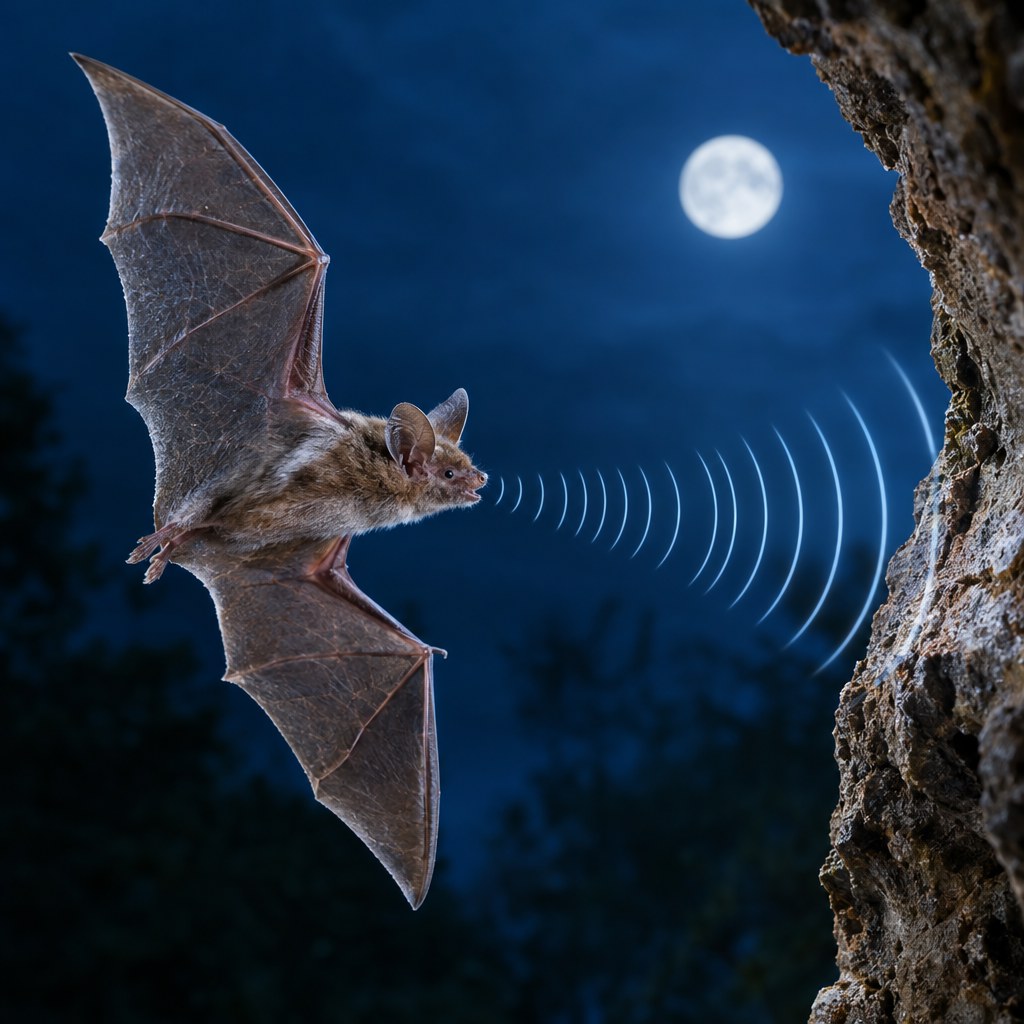
You do not need to identify every bat species to make sensible first decisions. The key is to recognize that bats may be using your building or landscape as part of a connected system: a roost, a travel route, a feeding area, or a temporary shelter.
If bats are emerging from, entering, or repeatedly circling a structure, do not treat the observation as a simple pest issue. Wildlife rules vary by location, and bats or their roosts may be protected. Before excluding bats or altering a suspected roost, check requirements with the relevant local wildlife authority or a qualified bat professional.
Practical checklist for responsible action
Use this sequence before you change a building feature or landscape element that may affect bat movement.
- Observe without disturbance. At dusk, note whether bats appear, where they fly, and whether activity is repeated over several evenings.
- Record site features. List roof gaps, vents, mature trees, water, hedges, security lights, and recent changes to the property.
- Identify the proposed work. Be specific: replacing soffits, trimming a hedge, installing floodlights, or sealing a gap all create different risks.
- Pause work if a roost is possible. Do not block entrances, remove animals, or use harmful control methods while you investigate.
- Seek local guidance. Contact an appropriately qualified wildlife specialist or the relevant authority when you suspect bats are using a structure.
- Document the decision. Keep notes, photographs, dates, and advice received so contractors and site managers follow the same plan.
Mistakes to avoid and how to recover
Assuming bats will simply fly somewhere else
Bats can adapt, but familiar routes and roost access points may be important. If you have already changed lighting or vegetation and notice reduced or altered activity, review what changed, reduce avoidable illumination, and get advice before making further alterations.
Sealing gaps without checking
Blocking an entry point while bats are inside can harm animals and create a more difficult situation. If work has started and bat use is suspected, stop the relevant work, avoid reopening or probing spaces unnecessarily, and seek specialist guidance on next steps.
Using ultrasonic gadgets as a substitute for inspection
Consumer devices are not a reliable substitute for understanding why bats are present. A sound device cannot tell you whether the issue is a roost, a feeding route, a one-time visit, or a gap that needs professionally managed exclusion.
Over-lighting the site
Lighting should serve a clear safety or operational purpose. Review placement, timing, direction, and brightness rather than assuming more light is always better. Shielded, targeted lighting is generally easier to manage than broad illumination spilling into trees, eaves, or water.
A simple decision framework
Start with the evidence. If you have no repeated signs of bats, plan routine work carefully and monitor the site. If you have recurring sightings near a building feature, tree line, or water source, treat the area as potentially important and avoid abrupt changes. If bats appear to be entering a structure, pause exclusion or repair work until you have received suitable local advice.
The practical lesson is not that bats can navigate any disruption without consequence. It is that their navigation depends on a layered system of echoes, light, memory, and landscape cues. Good property decisions preserve that context while still addressing legitimate maintenance and safety needs.
Make the next change carefully
Before changing roof access points, exterior lighting, mature vegetation, or water features, document what you see at dusk and check whether local bat-protection requirements apply to your site.