How Birds Build Different Types of Nests
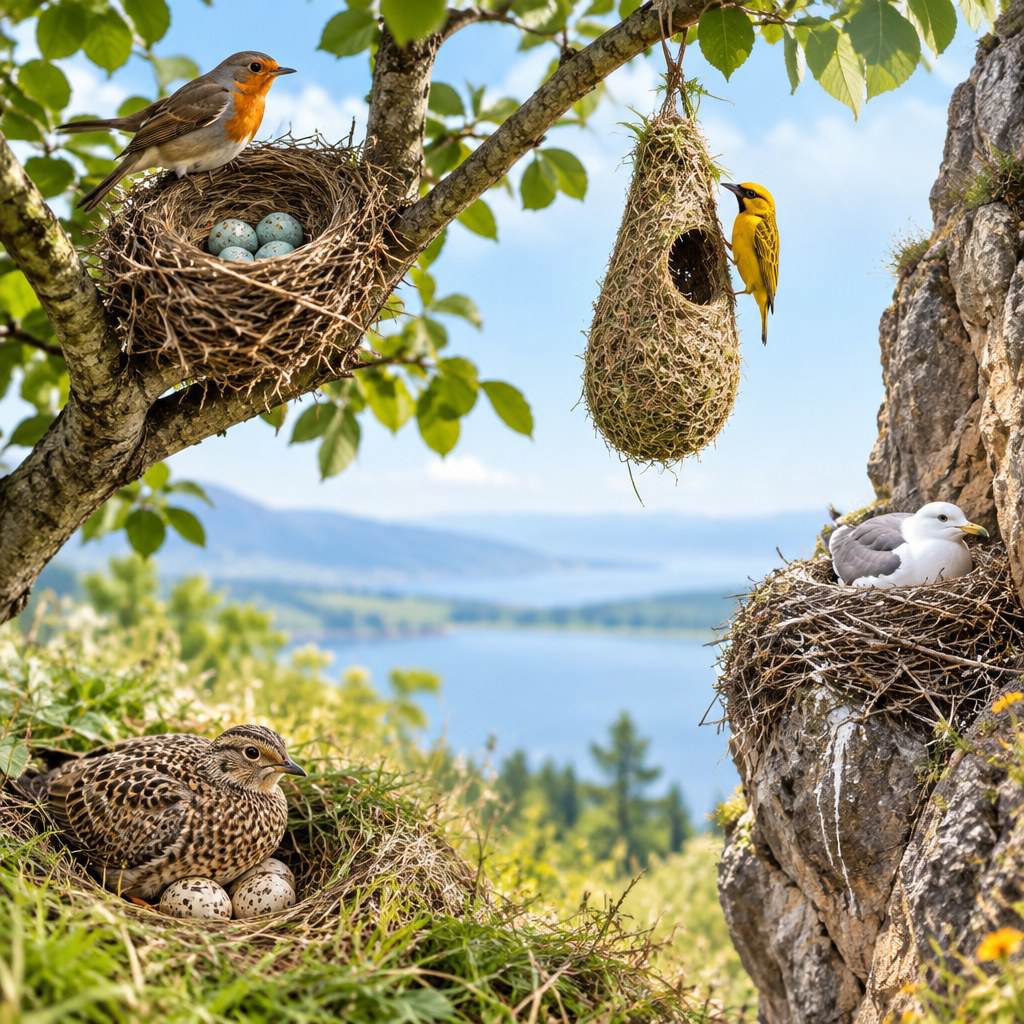
Birds build nests by matching a structure to a specific problem: keeping eggs stable, protecting young from weather and predators, and placing the brood close to food. By understanding the main nest types and the materials behind them, you can identify what you see outdoors and make informed choices when managing trees, gardens, buildings, or work sites.
Nest building is not one fixed skill. A robin, swallow, woodpecker, duck, and eagle may all breed in the same broad region, yet each uses a different construction method because their bodies, habitat, food sources, and risks are different.
Why Birds Build Different Nests
A nest is usually a breeding structure rather than a permanent home. Many birds sleep elsewhere for much of the year, then invest time and energy in a nest when they need to incubate eggs and care for nestlings. The final design reflects a series of practical trade-offs.
Location drives the design
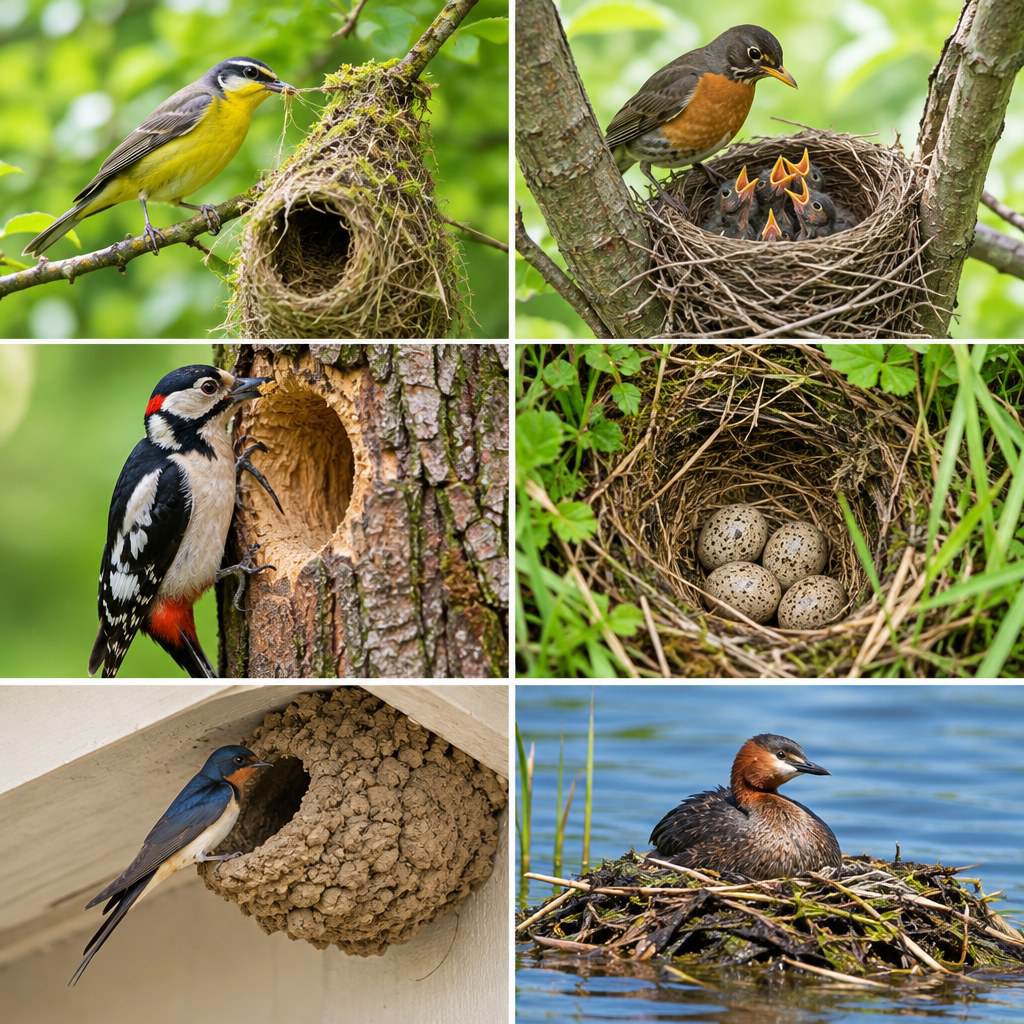
Ground-nesting birds need camouflage and a structure that does not stand out. Tree-nesting birds need a platform or cup that remains secure in wind and rain. Birds that use cliffs, walls, and bridges may exploit ledges or build mud structures that adhere to vertical surfaces. Cavity nesters reduce exposure by breeding inside holes in trees, banks, or other enclosed spaces.
Materials are chosen for function
Twigs provide a rigid frame, while grasses, rootlets, moss, feathers, fur, and plant down can create a softer lining. Mud can bind loose materials together and shape durable walls. Some birds use spider silk to secure lichen or plant fibers; its flexibility can allow a tiny nest to expand as chicks grow. What looks untidy from a distance may be a carefully layered structure.
Predation and climate matter
An open nest may offer a parent a clear view and quick access, but it can be exposed. A concealed nest can be harder to find, but it may be harder to enter and leave unnoticed. Drainage, shade, insulation, and wind protection also matter. Nest architecture is therefore an adaptation to local conditions, not a universal standard of neatness or strength.
Common Types of Bird Nests
Recognizing the broad nest category helps you interpret bird behavior without needing to identify every species. The categories below can overlap, because birds often adapt their approach to the available site.
Scrapes: minimal building, careful placement
Scrapes are among the simplest nests. A bird presses its body into soil, sand, gravel, or vegetation to create a shallow depression. The lack of walls is not a sign of neglect; many eggs laid in scrapes have colors and patterns that blend with the surrounding surface. A concealed location and an alert adult can be more useful than a bulky structure.
Cup nests: the familiar woven bowl
Cup nests are common in gardens and woodland. Birds weave or pack plant material into a bowl, then line it with finer materials to support eggs and retain warmth. A mud-reinforced cup can hold its shape after rain, while a grass cup may be designed to flex with a living branch.
Platforms: strong bases for large birds
Large birds often need a wide, stable base rather than a deep bowl. Stick platforms may be used repeatedly, repaired, and expanded over multiple breeding seasons. Wetland birds can build floating or semi-floating platforms from reeds and other vegetation, positioning them where water offers some separation from land-based threats.
Cavities, domes, and hanging nests
Cavities offer walls and a roof supplied by the site itself. Woodpeckers excavate many cavities, while other birds use natural hollows or abandoned holes. Dome and pendant nests add their own enclosure, creating a sheltered chamber from grasses, fibers, or leaves. These forms can reduce exposure to rain and sightlines, although no nest type is completely predator-proof.
How Birds Construct a Nest
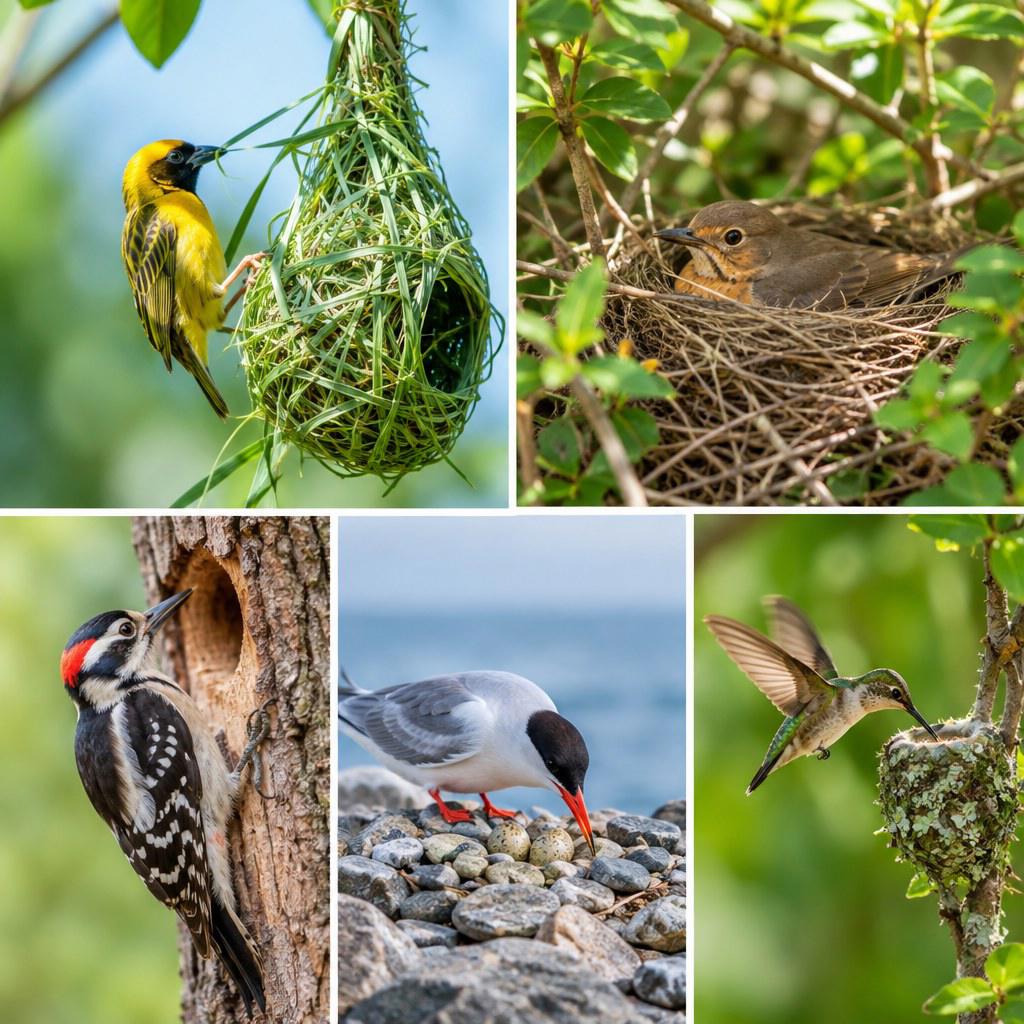
Most nest building follows a practical sequence, even though species differ greatly in speed and detail. Some birds build alone, others work as a pair, and some reuse a previous structure. You can use this sequence to understand activity around a suspected nest site.
- Choose a site. The bird assesses support, cover, access, and nearby food. A sheltered branch fork, dense hedge, cavity, or ledge can become the foundation.
- Create an anchor or hollow. Twigs may be wedged into a fork, mud may be pressed onto a wall, or a shallow depression may be formed in the ground.
- Build the outer structure. Coarse materials create the main frame. The structure must hold its form while the adult enters, exits, and later feeds growing young.
- Shape the interior. The bird turns, presses, and rearranges materials with its body, feet, and bill to form an egg-holding cup or chamber.
- Add a lining when needed. Soft or insulating materials can make the egg chamber more stable and comfortable. Not every species uses a substantial lining.
- Maintain or modify the nest. Adults may repair loose material, add insulation, or adjust the structure as weather and chick growth change the demands.
💡 Tip: Repeated trips carrying grass, twigs, mud, or feathers are a stronger sign of active construction than seeing a bird simply perched near a potential nest site.
How to Observe Nests Responsibly Around Property
For homeowners, facility managers, landscapers, and outdoor teams, the practical issue is often timing. A nest in a shrub, roofline, loading area, or building opening can affect planned maintenance. Your goal should be to confirm activity without drawing attention to the nest or creating avoidable disturbance.
Use a distance-first checklist
- Watch from a distance for adults carrying material, food, or nesting matter.
- Note the general location without touching, moving, or opening the nest.
- Pause pruning, clearing, pressure washing, or repairs immediately around an apparently active site.
- Check local wildlife rules and consult an appropriate local wildlife authority or qualified professional before any action that could affect eggs, chicks, or an occupied nest.
- Plan future maintenance outside the local nesting period where practical.
Avoid using a drone, ladder inspection, flash photography, or repeated close visits to obtain a better look. These actions can cause adults to stay away longer than usual or can reveal the nest location to other people and animals. If a nest presents an immediate safety or operational concern, document the issue from a safe distance and seek local guidance rather than attempting a quick removal.
Risks and Mistakes to Avoid
The most common mistake is treating every visible nest as abandoned. A parent may be away feeding, avoiding attention, or waiting nearby. Nest appearance alone does not reliably tell you whether it is active.
Do not “improve” a nest
Adding fabric, string, pet hair, food, nesting material, or a cover can create new hazards. Loose string and netting can entangle birds, while human additions can trap moisture, alter the structure, or make the site more conspicuous. Let birds select and place their own materials.
Do not use cleanup as a shortcut
Removing a nest to solve droppings, noise, blocked access, or perceived mess may be harmful and may also conflict with local protections. The safer response is to delay non-urgent work, create distance, and seek advice about lawful next steps. Once the nest is clearly inactive, clean the area carefully and use humane, preventive measures before the next breeding season.
Recover with prevention, not confrontation
If birds repeatedly choose an inconvenient location, address the site during a period when it is unoccupied. Repair gaps, screen suitable openings where appropriate, reduce sheltered ledges, or adjust vegetation management. Choose methods that do not trap wildlife and confirm local requirements before installing exclusions or deterrents.
A Simple Decision Framework
Start with 3 questions: What kind of nest is it? Does it appear active? Is there an immediate, genuine safety concern? A shallow scrape, mud cup, twig platform, cavity, or woven hanging nest each calls for observation rather than assumptions.
If activity is uncertain, give the area space and monitor from a distance. If activity is clear, postpone nearby disturbance and obtain local guidance before changing the site. If the nest is inactive, focus on careful cleanup and practical prevention so you are less likely to face the same conflict later.
Make Space for Wildlife-Smart Maintenance
Before pruning, repairing, or clearing outdoor areas, add a nest check to your site routine. A short pause at the right time can protect breeding birds and help you schedule work more responsibly.