How Octopuses Use Camouflage
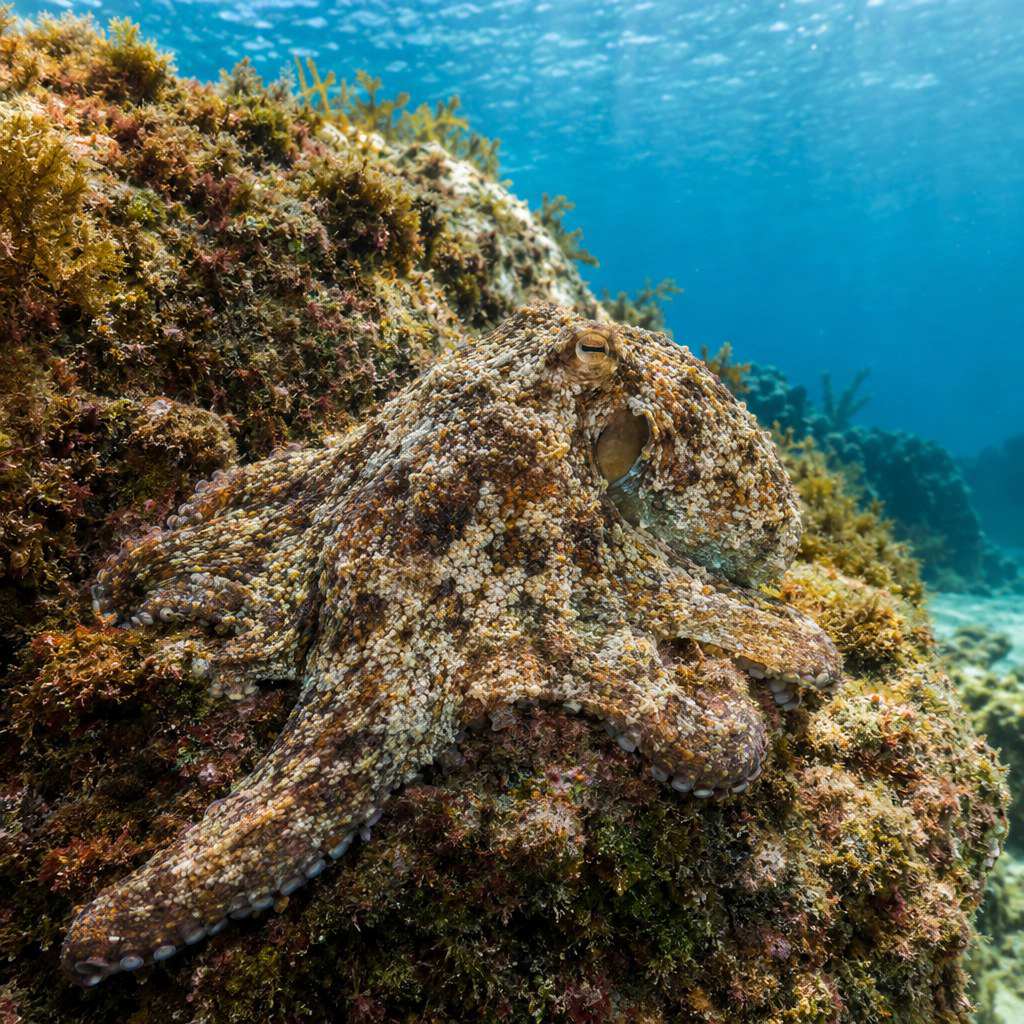
Octopuses use camouflage by rapidly changing their skin’s color, pattern, texture, and even body posture to match what is around them. This is not simply “hiding by color”: it is a coordinated survival system that helps an octopus avoid predators, approach prey, communicate with other octopuses, and make fast decisions in visually complex environments.
For anyone studying adaptation, design, or decision-making, octopus camouflage offers a useful lesson: the strongest response is rarely a single feature. It is a flexible system that senses conditions, selects an appropriate response, and adjusts quickly when circumstances change.
Why camouflage matters to octopuses
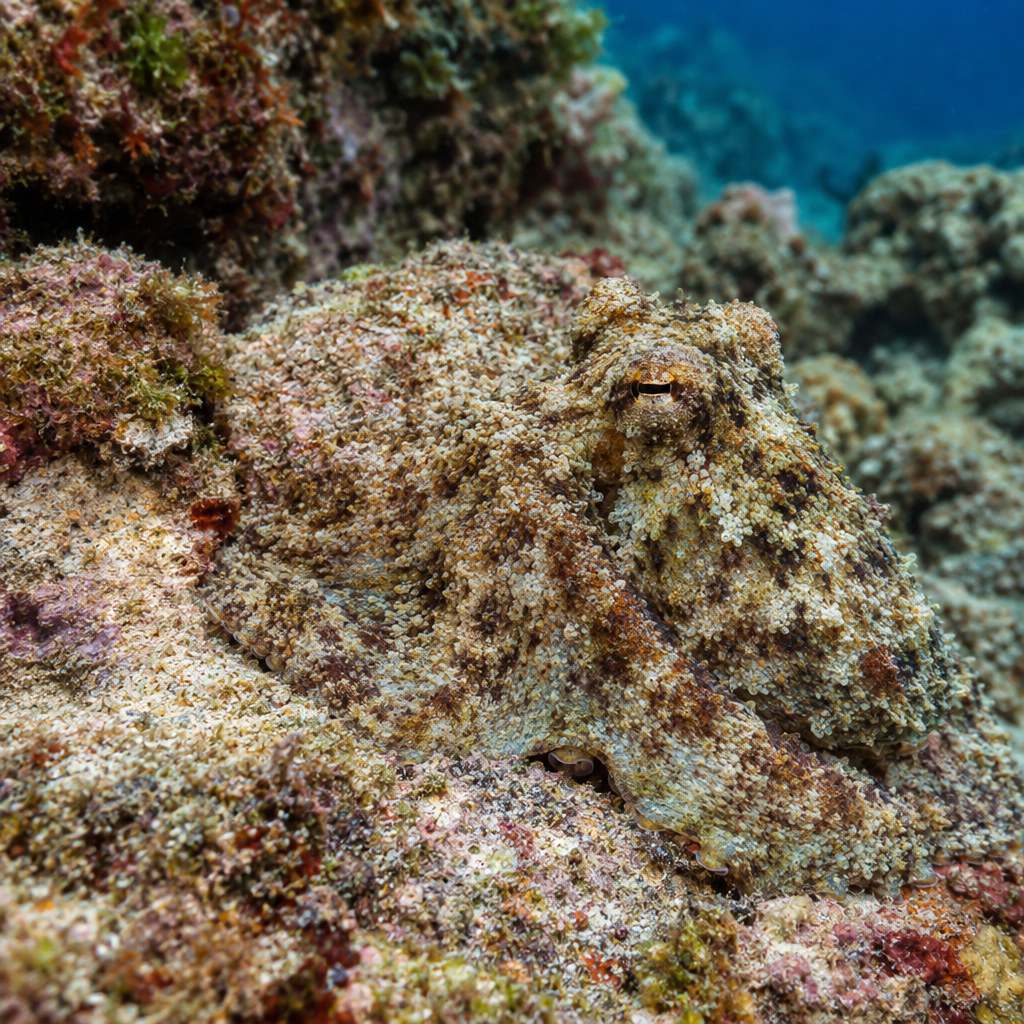
Most octopuses have soft bodies and lack the protective shell that many other marine animals use. Their vulnerability makes concealment valuable. Blending into a reef, sandy seabed, patch of algae, or rocky crevice can reduce the chance that a predator notices them before they can escape.
Camouflage also supports hunting. An octopus may remain visually inconspicuous while waiting near crabs, shrimp, mollusks, or fish. If prey does not recognize the threat, the octopus can move closer or strike with its arms. In this context, camouflage is not passive decoration; it is part of a feeding strategy.
Different settings call for different visual solutions. A pale, sandy bottom may require a light, speckled appearance. Dark rocks may call for deeper tones, high-contrast patches, and raised skin texture. An octopus in open water may use a different posture or movement pattern than one resting on the seafloor.
💡 Key point: Camouflage works best when it addresses the full visual environment: background color, surface pattern, texture, outline, movement, and viewing angle.
The octopus camouflage toolkit
Octopuses rely on several specialized skin structures and body-control systems. Each has a different role. Together, they allow an animal to create a convincing match rather than a rough approximation.
Chromatophores: adjustable color cells
Chromatophores are pigment-containing cells controlled by muscles. When the muscles expand a cell, its color becomes more visible; when they relax, the color is reduced. Groups of chromatophores help form spots, bands, and other patterns.
Reflective layers: brightness and shimmer
Skin layers beneath the chromatophores can reflect light and influence brightness or iridescence. These layers help an octopus adjust the overall appearance of its body, not only its visible pigment pattern.
Papillae: changing the skin surface
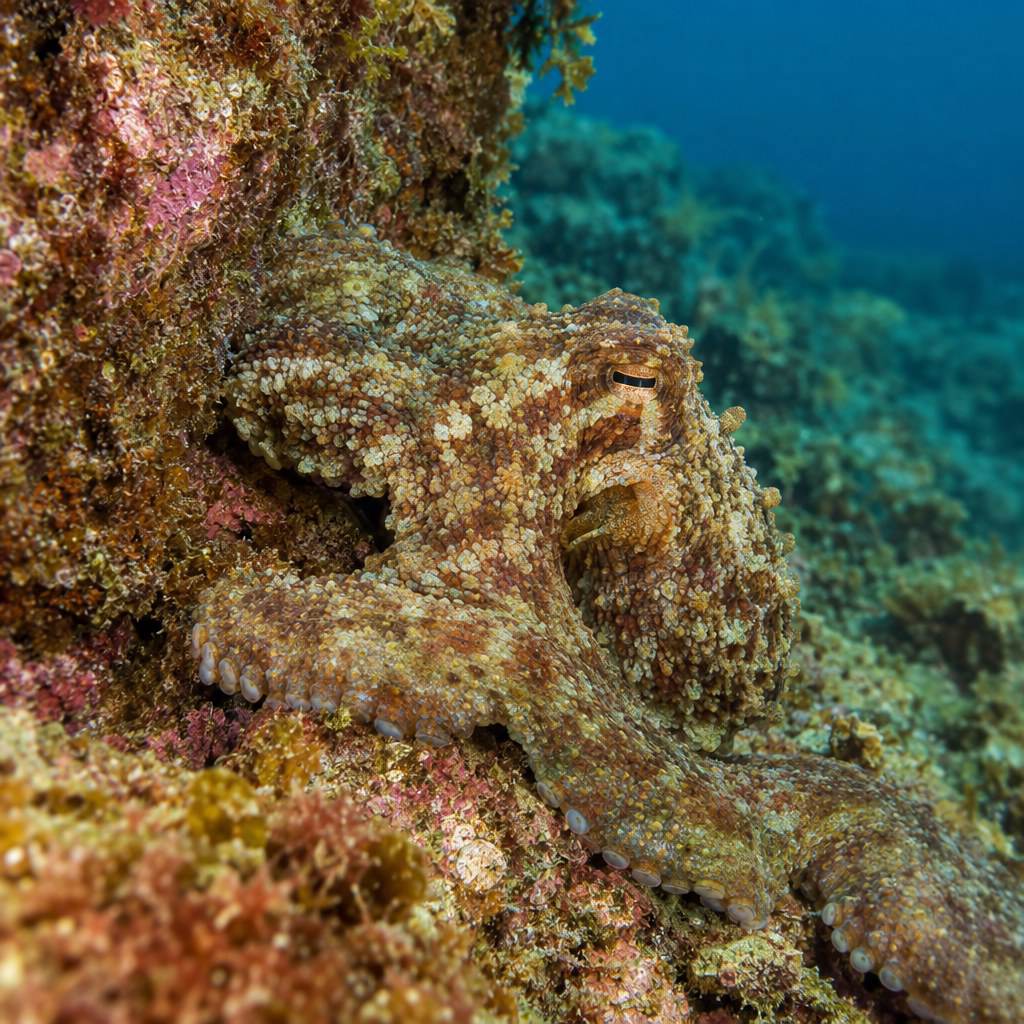
Papillae are muscular skin projections. By raising or flattening them, an octopus can make its surface look smoother, bumpier, or more like coral, algae, sand, or rough rock.
Shape and posture complete the disguise
Color alone may not hide a recognizable outline. Octopuses can tuck their arms, flatten their bodies, press into a depression, or arrange themselves around a rock. Some can imitate features of nearby objects by altering their body shape and how they move. The effect is strongest when the animal reduces visual cues that would reveal “octopus” to a predator or prey animal.
How an octopus decides what to display
An octopus does not need a perfect photographic copy of its surroundings to benefit from camouflage. It needs a response that disrupts detection enough to improve its odds. Researchers continue to study exactly how octopuses process visual information and control their displays, but the practical sequence is clear: perceive the environment, choose a pattern, activate the relevant skin structures, and update the display as conditions change.
1. Read the immediate environment
Visual information helps the octopus distinguish broad features such as contrast, texture, brightness, edges, and pattern scale. It also uses direct contact and body position to understand where it is resting. A complex reef, for example, presents different cues from a uniform sand flat.
2. Select a useful visual strategy
The chosen display depends on the immediate problem. If the priority is remaining unseen, the octopus may closely match the seabed. If it is threatened, it may use a sudden, bold display intended to startle an attacker before escaping. If it is interacting with another octopus, the pattern may carry a signaling role instead of serving only as concealment.
3. Coordinate color, texture, and movement
The nervous system sends signals to skin muscles and body muscles. Chromatophores open into a selected arrangement, papillae rise or flatten, and the arms reposition. Coordination matters because an otherwise convincing pattern can fail if movement is abrupt, the silhouette remains obvious, or the skin texture conflicts with the surface below.
4. Revise the display when the setting changes
Camouflage is dynamic. Moving from rock to sand, being exposed by a shifting current, or detecting a predator can require a different response. The ability to revise a display quickly is one reason octopus camouflage is often used as an example of biological adaptability.
Practical lessons from adaptive camouflage
You should not treat octopus camouflage as a literal business model. Its value is as a decision framework for environments where conditions shift and a fixed presentation can become ineffective. The central lesson is to match the response to the context without losing the core capability underneath.
Use environmental signals before choosing a response
Before changing a product message, workflow, customer experience, or physical environment, identify the signal that actually matters. For example, if customers abandon a process at one step, examine that step before redesigning everything. An octopus does not apply the same pattern to every surface; you should not apply the same solution to every problem.
Build modular capabilities rather than one rigid solution
Octopus skin works because several systems can be combined in different ways. In practical work, you can use the same principle by creating reusable components: clear templates, trained decision owners, documented options, and feedback loops. These components let you adapt without beginning from zero each time.
Test the whole impression, not one isolated feature
A matching color is not enough if shape, texture, or motion gives the octopus away. Similarly, a redesigned website headline may not solve a problem if pricing, navigation, response time, or customer support tells a different story. Review the complete experience from the other person’s point of view.
Use this step-by-step adaptation checklist
- Define the immediate objective: avoid a risk, attract attention, improve understanding, or reduce friction.
- Observe the context using direct evidence, such as customer questions, process delays, error patterns, or feedback.
- Identify the few cues most likely to influence the outcome rather than reacting to every available signal.
- Choose the smallest practical change that addresses those cues.
- Check whether related elements support the change instead of undermining it.
- Review the result and revise when the environment or evidence changes.
Risks, limits, and common misunderstandings
The most common mistake is thinking that octopus camouflage means invisibility. It does not. Camouflage reduces detectability under particular conditions, but predators may use movement, smell, vibration, contrast, or prior knowledge to locate an octopus. A disguise that works from one angle or against one background may fail in another setting.
Another mistake is reducing the system to color change. Texture, posture, silhouette, and timing are essential. An octopus that matches a rock’s color but remains smooth and elevated above it may still stand out. This distinction matters when you apply the metaphor to your own work: surface-level changes cannot compensate for a mismatch in the underlying experience.
⚠️ Avoid over-adapting: Changing direction with every new signal can create inconsistency. Set clear thresholds for when evidence justifies action, then evaluate outcomes before making another major adjustment.
Finally, do not assume every octopus species uses camouflage in exactly the same way or faces identical habitats. Behavior varies by species, age, location, available shelter, and threat. Treat broad descriptions as a useful foundation, then look for species-specific information when you need a more precise explanation.
A short decision framework
When you want to understand octopus camouflage, use 4 questions. What is the animal trying to do? What features of the environment matter most? Which tools—color, pattern, texture, shape, or movement—support that goal? How quickly must the response change if conditions shift?
This framework explains why octopus camouflage is so effective: it is layered, context-sensitive, and adjustable. The octopus does not rely on a single perfect look. It builds a response from multiple controllable elements and changes that response when it no longer fits.
Look beyond the color change
The next time you see an octopus blend into its surroundings, look for the full system: pattern, skin texture, silhouette, posture, and movement working together.