How Repair Cafes Share Practical Knowledge
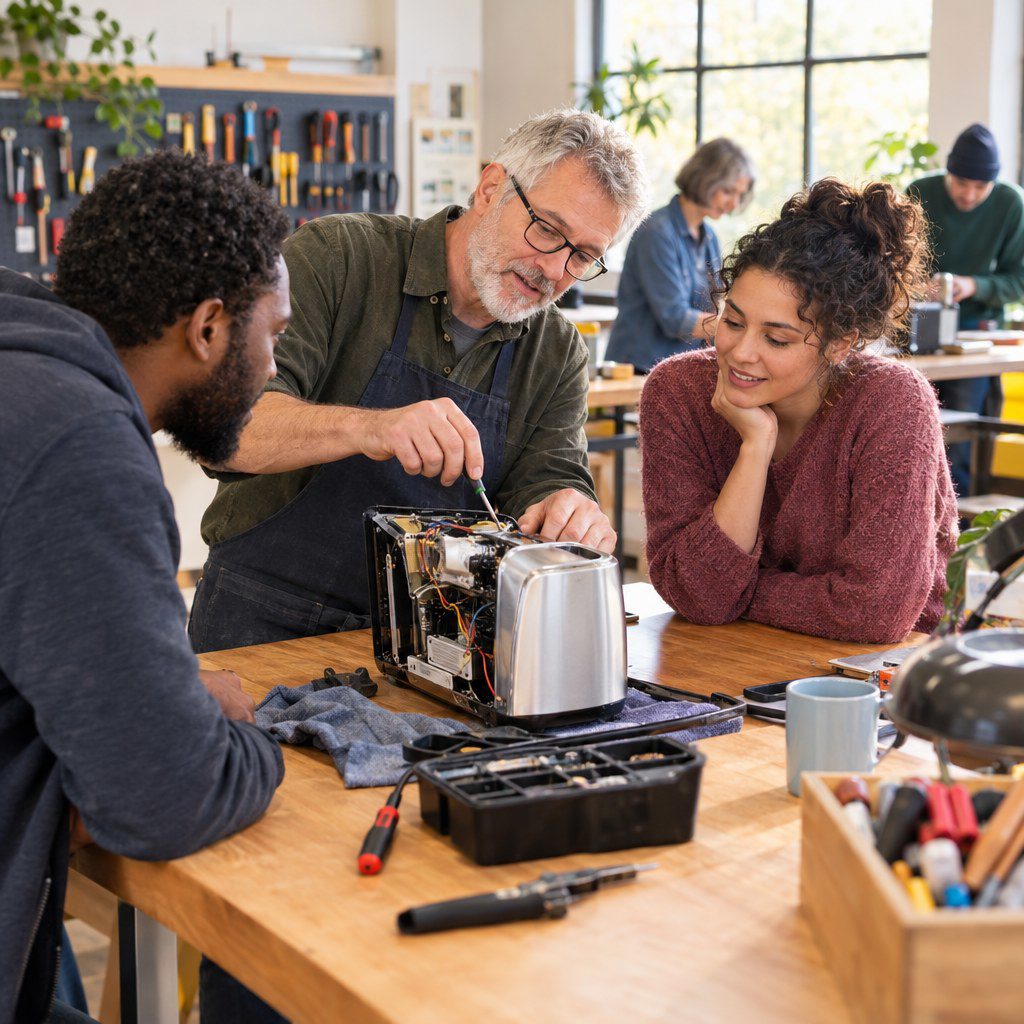
Repair Cafes share practical knowledge by turning repair into a guided conversation rather than a hand-off service. You bring a broken item, work alongside a volunteer or experienced helper, and leave with a clearer understanding of how the object works, what failed, and what you can safely do next time.
For community organisers, business owners, and sustainability practitioners, the value is not limited to keeping useful goods in circulation. A well-run Repair Cafe creates a repeatable setting for peer learning, better product care, and realistic decisions about repair, replacement, and specialist support.
Why practical knowledge gets lost
Many everyday products are designed, sold, and used as sealed objects. When something stops working, the usual choices appear to be disposal, replacement, or paid repair. That pattern can make basic maintenance feel inaccessible even when the problem is small: a loose connection, worn switch, blocked mechanism, damaged cable, missing screw, or misaligned part.
The problem is partly technical, but it is also social. Repair knowledge often sits with people who learned through trades, hobbies, family practice, or repeated troubleshooting. Without a place to observe that work, people may never learn the vocabulary to describe a fault, the sequence for opening an item, or the difference between a safe fix and a risky one.
Knowledge is more than instructions
A written guide can explain a task, but practical repair also involves judgement. You learn how to inspect before disassembling, how to notice a worn component, how much force is appropriate, and when to stop. These are difficult lessons to absorb from a checklist alone because they depend on seeing decisions made in context.
Repair Cafes address this gap by making the process visible. The visitor remains present while the repair is assessed. Instead of receiving an item back with little explanation, you can ask why a particular tool is used, what caused the fault, and what maintenance might prevent the same issue.
💡 Tip: Treat every repair as two outcomes: the condition of the item and the confidence of the person who brought it. Even when an item cannot be repaired, a clear explanation can still teach useful diagnostic habits.
How Repair Cafes make learning possible
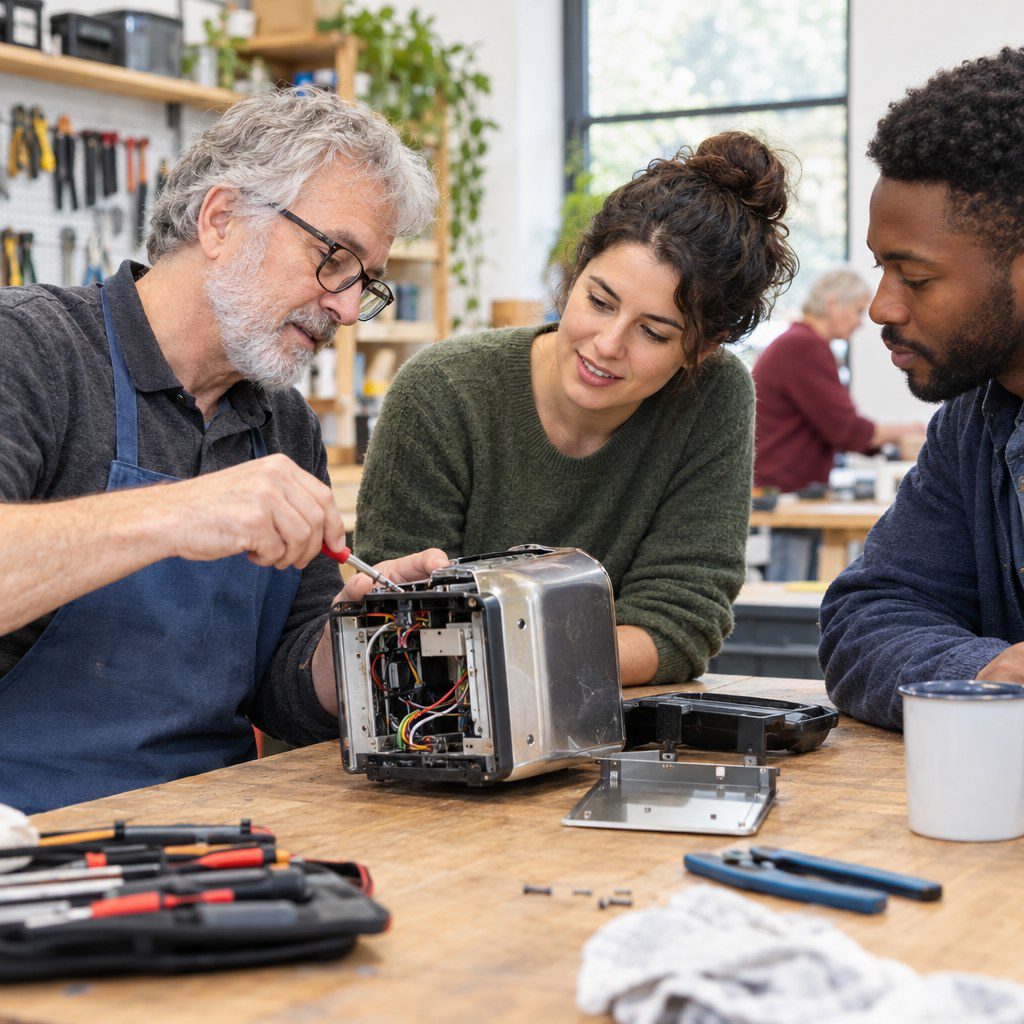
A Repair Cafe is most useful as a learning environment when it avoids the “drop it off and collect it later” model. The helper may have more experience, but the visitor should remain involved in diagnosis, disassembly, testing, and reassembly where it is safe to do so.
This changes the relationship from provider and customer to collaborator and learner. It also makes the limits of a repair clearer. A volunteer can explain that a part is unavailable, a repair is uneconomical, or an electrical fault requires qualified professional attention without leaving the visitor with a vague sense that the item simply “could not be fixed.”
Visible diagnosis
You see how a helper narrows down a fault: checking symptoms, looking for physical damage, and testing simple causes before taking an item apart.
Shared language
Plain explanations introduce useful terms for parts, materials, tools, and common faults, making future research and professional conversations easier.
Confidence through practice
You can perform simple, low-risk actions yourself, such as removing screws, cleaning accessible parts, or checking a fitting under guidance.
What visitors tend to learn
Learning often starts with small habits rather than advanced repairs. Visitors may learn to keep screws in labelled groups, photograph a device before opening it, check batteries and cables first, clean lint from accessible filters, or read a model label before seeking a spare part. These habits reduce avoidable mistakes and make later repair attempts more organised.
For organisers, this is an important distinction. The aim is not to make every visitor an expert. It is to help people become more observant, more capable of routine care, and better able to decide when specialist help is needed.
Designing a learning-focused Repair Cafe
If you run a community venue, workplace programme, library, makerspace, or local initiative, design the session around participation from the beginning. A repair table with skilled people is not automatically a knowledge-sharing event. The format needs prompts, boundaries, tools, and roles that encourage explanation.
Start with a clear scope
Choose categories your volunteers can support safely and consistently. Common examples include clothing alterations, bicycles, small household objects, basic electronics, furniture, and simple appliances. State what you do not accept as clearly as what you do accept. Hazardous items, severe electrical damage, gas-related equipment, and work requiring regulated competence should be referred elsewhere.
Use an intake conversation
Before work begins, ask the visitor what happened, when the fault started, what they have already tried, and whether any part became hot, wet, noisy, or damaged. This models structured diagnosis. It can also identify risks before an item reaches the workbench.
Make the repair process speakable
Encourage volunteers to explain actions as they take them: “I am checking the cable before opening the case because external faults are simpler to identify,” or “I am taking a photo so we can restore the wire routing later.” Avoid unexplained expert shorthand. The goal is not a lecture; it is a clear running commentary at the moments where a decision is made.
Capture reusable lessons
Keep a simple record of recurring faults, tools used, repair outcomes, and questions visitors ask. Do not record personal information unless you have a valid reason and suitable process for doing so. A shared, non-identifying notes sheet can become the basis for future demonstrations, volunteer briefings, or maintenance handouts.
Run each session as a practical lesson
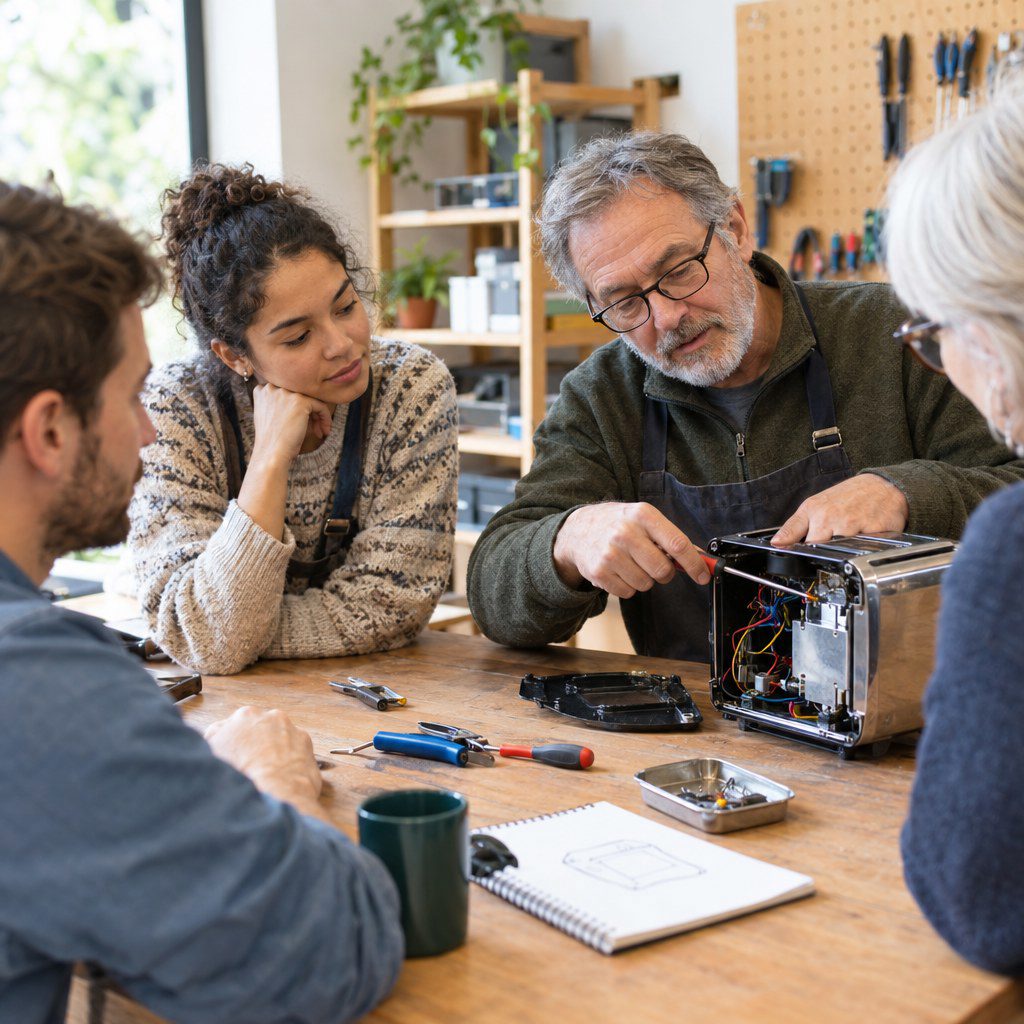
Consistency helps volunteers and visitors know what to expect. You do not need a complex curriculum, but you do need a repeatable flow that protects safety and gives learning a place alongside the repair itself.
- Welcome and assess. Ask what the item does, what changed, and whether there are any obvious safety concerns.
- Set expectations. Explain that repair may not be possible and that the visitor will be invited to participate where appropriate.
- Inspect before acting. Check simple external causes and document the item’s condition with notes or photographs if needed.
- Explain the plan. Describe the next safe diagnostic step, required tools, and possible outcomes before disassembly.
- Work together. Give the visitor a suitable task, such as sorting fasteners, holding a light, cleaning a component, or testing a non-hazardous mechanism.
- Test and review. Confirm whether the original issue has changed, then explain what was repaired, what remains uncertain, and what care is advisable.
- Record the lesson. Note the fault and approach in a shared log, especially if it may help at a future session.
For a business or organisation hosting these events, assign one person to manage flow and visitor communication. Skilled repairers should not have to choose between focused technical work and managing queues, consent questions, tool access, and safety conversations. Separating those responsibilities makes the learning experience calmer and clearer.
Risks, boundaries, and common mistakes
The biggest mistake is treating an open community session as a place to attempt every possible repair. A positive learning culture includes restraint. If the item presents a risk, needs specialist testing, or requires competence your team does not have, explain the limit and stop.
Avoid these problems
- Volunteer-only repairs: visitors learn little if they are excluded from the work without a safety reason.
- Overpromising outcomes: say that you will assess and attempt suitable repairs, not that every item will be restored.
- Unmanaged tool access: keep sharp, powered, and specialist tools under clear supervision.
- Skipping documentation: a quick photo or parts tray can prevent confusion during reassembly.
- Giving advice beyond competence: refer visitors to an appropriate professional when the task falls outside your team’s capability.
When a repair fails, recover the learning value. Explain what was tested, what evidence led to the conclusion, whether a replacement part may be worth investigating, and why further work is not advisable. This is more useful than a vague apology or an unsuccessful attempt that leaves the item in pieces.
A short decision framework
Use Repair Cafes when you want to build practical capability as well as extend the life of everyday items. They work best when repairs are visible, volunteers explain their reasoning, visitors take part safely, and organisers maintain clear limits.
Before launching or supporting a session, ask 3 questions: Can you define a safe repair scope? Can you create time for explanation rather than rushing through jobs? Can you preserve useful lessons for the next visitor and volunteer? If the answer is yes, the event can become a durable local source of practical knowledge rather than a one-off fixing service.
Make repair knowledge visible
Start with one clearly scoped session, invite visitors to work alongside helpers, and record the practical lessons that emerge. Small, repeatable learning moments are what make a Repair Cafe useful long after a single item leaves the bench.