How to Arrange Artwork Above a Sofa
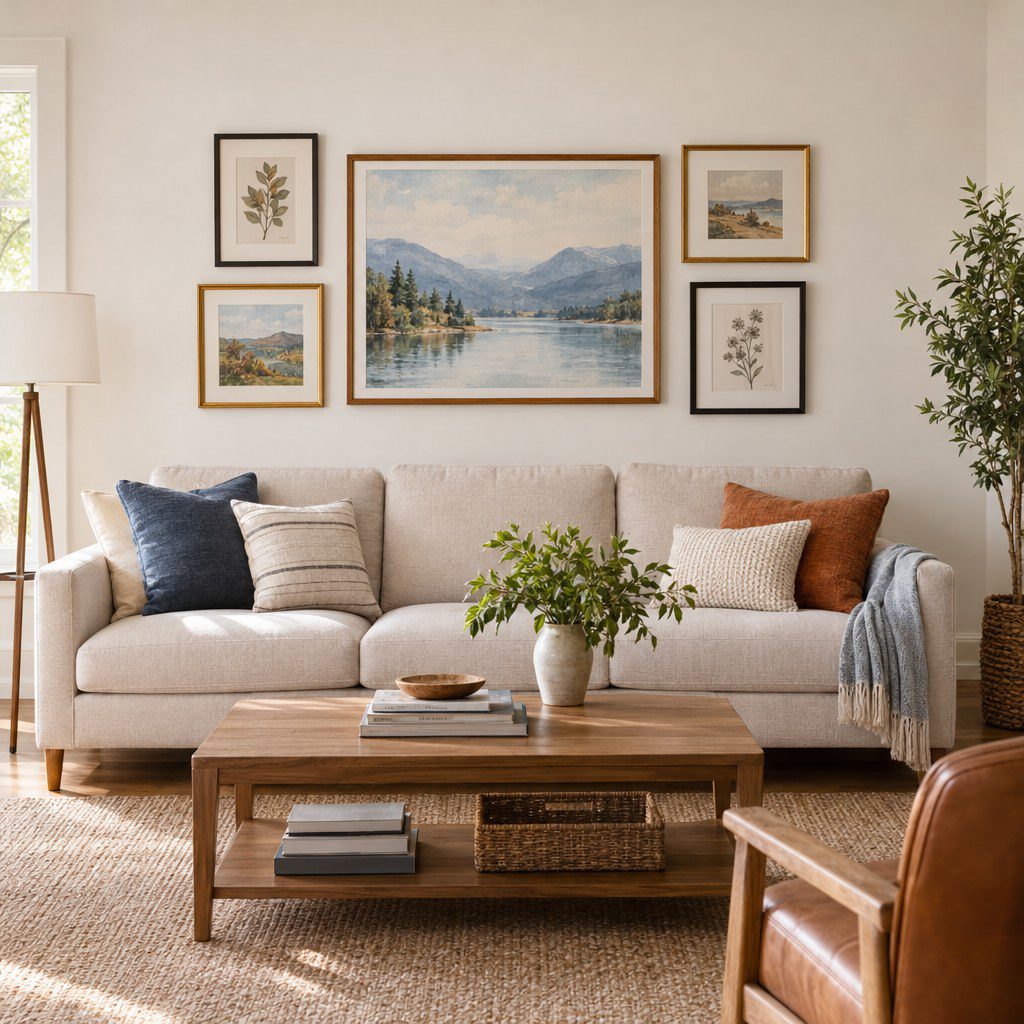
Artwork above a sofa should feel connected to the seating area, not stranded on a large blank wall. You can create that connection by choosing artwork with enough visual width, hanging it at a comfortable viewing height, and treating multiple pieces as one balanced composition.
The goal is not perfect symmetry in every room. It is a deliberate arrangement that suits the sofa, wall, ceiling height, and how the space is used. With a few measurements and a paper template test, you can make confident choices before putting holes in the wall.
Start with scale and placement
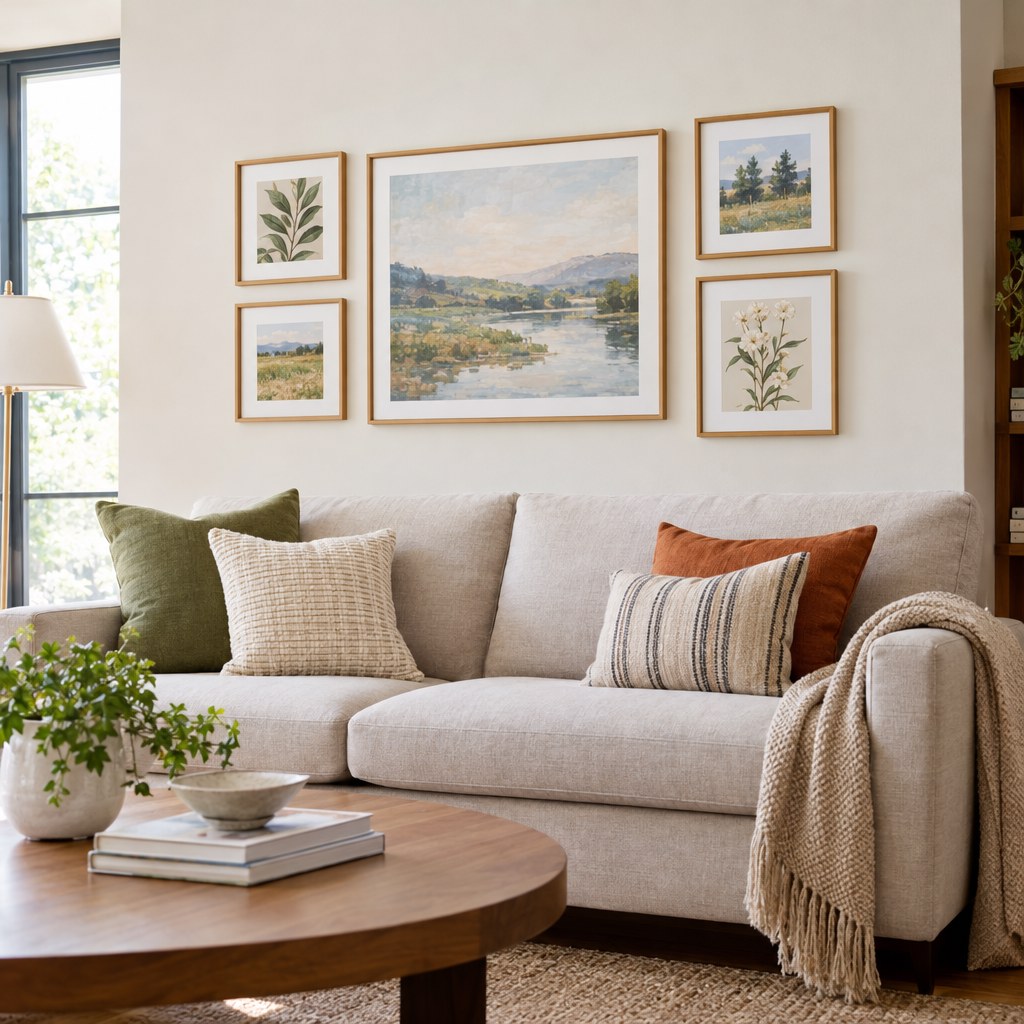
The most common problem is undersized art. A small framed print centered over a long sofa can make both the wall and the artwork look accidental. Think of the sofa and art as one visual unit: the artwork should occupy a substantial portion of the sofa’s width without extending beyond its outer edges.
A useful starting point is to make the overall art arrangement roughly two-thirds to three-quarters as wide as the sofa. This is a guideline, not a strict rule. A sofa with broad arms, a heavy silhouette, or a wall-mounted lamp nearby may call for a slightly wider composition. A narrow sofa in a compact room may look best with a more restrained grouping.
Find the right vertical zone
Leave a visible but modest gap between the top of the sofa and the bottom of the lowest frame. In many rooms, a gap of about 6 to 10 inches looks connected without making the artwork feel crowded. If your sofa has a tall back or oversized cushions, use the top of the upholstery as your reference rather than the wall behind it.
Do not rely only on the usual “eye level” rule. Artwork over furniture needs to relate to the furniture first. When you are seated, the composition should sit comfortably in your field of view rather than hovering close to the ceiling.
💡 Tip: Use painter’s tape to mark the outside dimensions of your proposed arrangement. Step back, sit on the sofa, and view the outline from the main entrance before hanging anything.
Choose an arrangement that fits the room
There is no single “correct” format for art above a sofa. The best choice depends on whether you need one calm focal point, a flexible display for a large wall, or a composition that works around architectural features such as windows, sconces, and built-in shelving.
One oversized piece
Choose this for a calm, decisive look. A single landscape, abstract work, or large photograph can anchor a sofa without adding visual clutter.
Diptych or triptych
Use matching frames and even gaps to create rhythm. This approach works especially well over a long sofa where one frame might feel too narrow.
Gallery-style grouping
Combine different sizes for a collected look. Plan the complete outer shape first so the group reads as one intentional arrangement.
When one large piece is the better choice
Choose one large artwork when the room already contains patterned textiles, open shelving, or several decorative objects. It gives the eye a place to rest. It is also a practical option when you want a low-maintenance arrangement that will not need frequent editing.
When a set or gallery wall works better
Use a pair, trio, or gallery grouping when the wall is broad, the sofa is long, or you have several related pieces that deserve to be seen together. Repeated frame finishes, a shared color palette, or a common subject can make varied art feel cohesive. In a gallery wall, consistent spacing matters more than making every frame identical.
Measure and plan before hanging
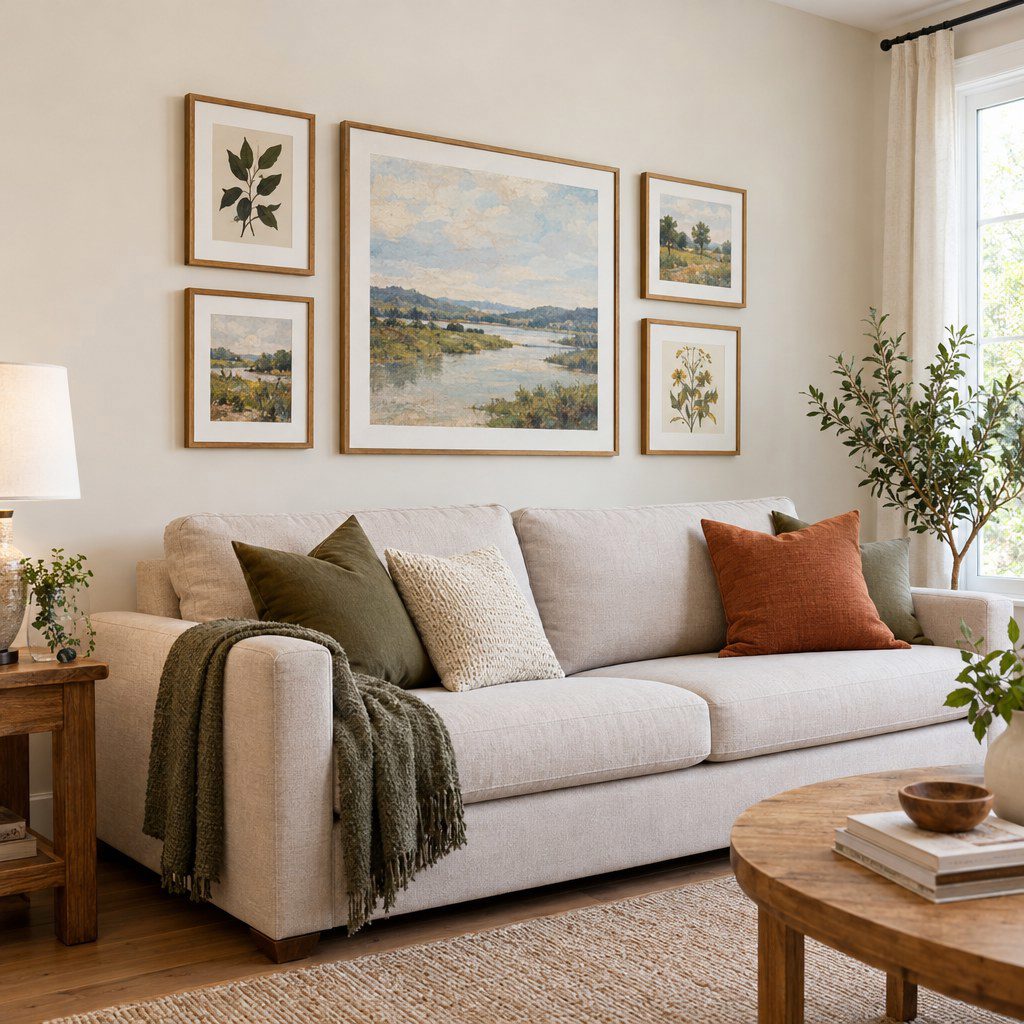
Planning on the floor or with paper templates prevents most placement regrets. It also lets you see whether frame proportions, gaps, and overall width work together before you commit to hardware. Measure the sofa width, the usable wall area, and the artwork itself.
Use this step-by-step process
- Measure the full sofa width, including arms, and note the center point.
- Measure each frame from edge to edge. Include the frame, not just the visible image.
- Decide the total width of the arrangement before deciding individual gaps.
- Lay frames on the floor in front of the sofa, using the same spacing you intend to use on the wall.
- Trace each frame onto kraft paper, newspaper, or spare wrapping paper and cut out the templates.
- Tape the templates to the wall, checking the layout from standing and seated positions.
- Mark hardware locations only after you have approved the full composition.
Keep gaps consistent
For a pair, trio, or grid, equal spacing gives the arrangement order. A small, consistent gap often works well, but the exact amount should suit the frame size and room scale. Larger frames can handle a little more air between them; small frames often need tighter spacing to read as a group.
Hang artwork securely and neatly
A good arrangement can still fail if a frame is hung from unsuitable hardware or drifts out of level. Check the weight of each piece and use hardware rated for that load and appropriate for your wall type. Drywall, plaster, masonry, and wood studs require different anchors and techniques.
Make the hanging point predictable
Do not mark the wall based only on the top edge of the frame. First measure the distance from the top of the frame to its hanging wire or D-rings when pulled taut. Subtract that distance from your desired top-frame line to find the actual hook position.
For wide or heavy frames, use 2 hanging points when the frame hardware allows it. This helps the frame stay level and reduces side-to-side movement. Use a spirit level after hanging each piece, then review the complete arrangement again; a straight individual frame can still look wrong if the group is misaligned.
⚠️ Before you drill: If you rent, have uncertain wall construction, or are hanging heavy art, check your lease terms and choose hardware suited to the surface. When in doubt, ask a qualified installer or hardware professional for advice.
Common mistakes and practical fixes
Hanging art too high
This is the most frequent issue above sofas. If the art seems detached from the seating area, lower it rather than adding extra decorative items beneath it. A closer relationship between the sofa and artwork usually solves the problem immediately.
Choosing art that is too small
If your existing art is underscaled, do not assume you must replace it. Add companion pieces, place it in a larger matted frame, or build a balanced gallery arrangement around it. The important measurement is the overall composition, not the size of one print alone.
Creating a gallery wall without an outer shape
Randomly adding frames can make a wall look unfinished. Decide whether the group will form a rectangle, a loose square, a long horizontal band, or a vertical cluster. Then position the largest pieces first and fill smaller spaces deliberately.
Ignoring other visual weight in the room
Artwork does not need to match the sofa fabric exactly, but it should acknowledge the room. Repeat one or 2 colors found in cushions, a rug, curtains, or nearby furniture. If the sofa is visually heavy, choose art with enough contrast or scale to hold its own.
A simple decision framework
Start by looking at the wall as a whole, then make each choice in order: scale, format, height, spacing, and hardware. This sequence keeps you from falling in love with an arrangement that does not suit the sofa or room.
- Choose a composition wide enough to visually anchor the sofa.
- Place it low enough to relate to the furniture rather than the ceiling.
- Use one large piece for simplicity or several pieces for rhythm and flexibility.
- Test paper templates before drilling.
- Match the hanging method to the artwork’s weight and wall material.
If you are unsure between 2 layouts, choose the quieter one first. A simple arrangement is easier to expand later, while a crowded composition is harder to edit once the wall is full of holes.
Take the tape-template test
Measure your sofa, mark your preferred arrangement with paper or painter’s tape, and live with the outline for a day before you hang the final pieces.