How to Bake Potatoes With Fluffy Centres
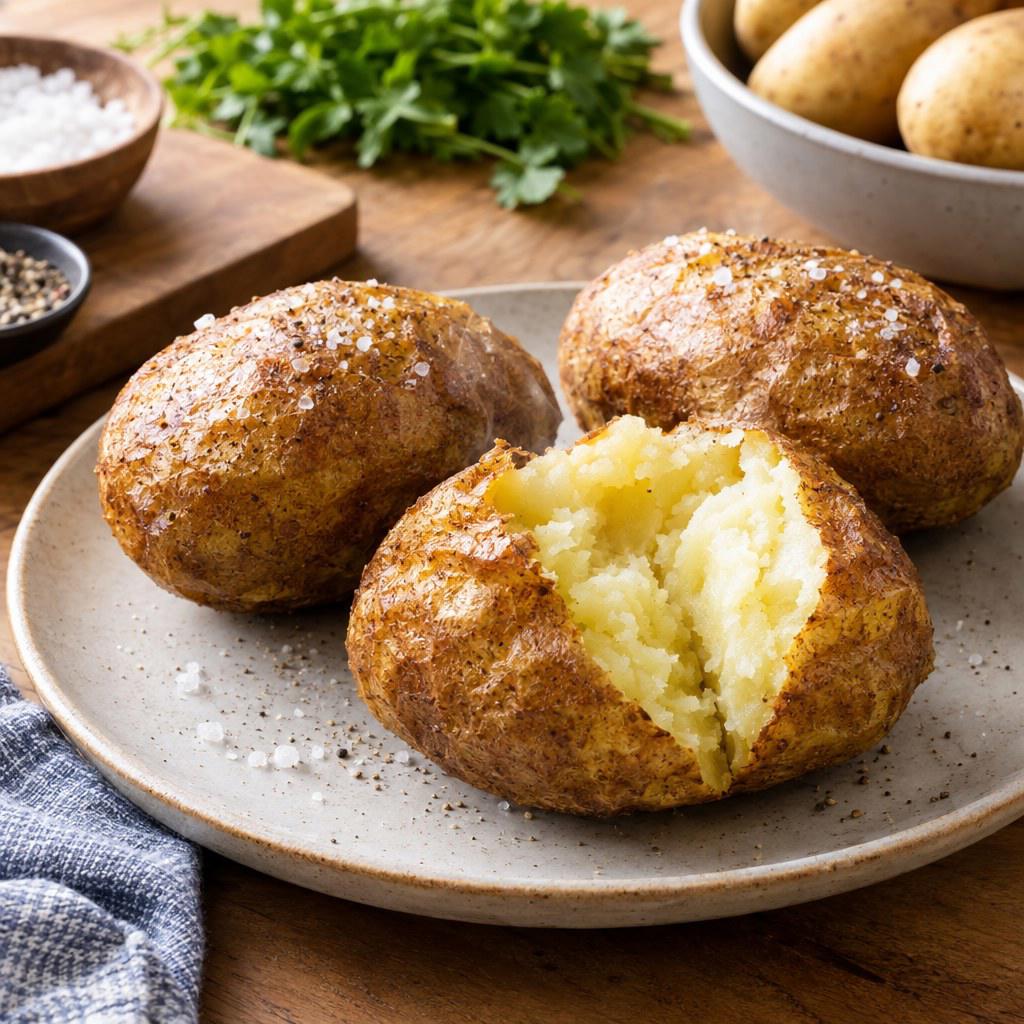
A fluffy baked potato comes from dry heat, the right potato, and enough time for the centre to steam and separate into soft flakes. Choose a starchy variety, bake it unwrapped at a high oven temperature, and open it promptly so trapped steam does not turn the interior dense or wet.
The method is simple, but small choices matter. Washing, drying, oiling, piercing, timing, and the way you split the potato all affect the final texture. Once you understand what each step does, you can produce crisp skins and light centres consistently for a weeknight meal, a buffet, or a larger batch.
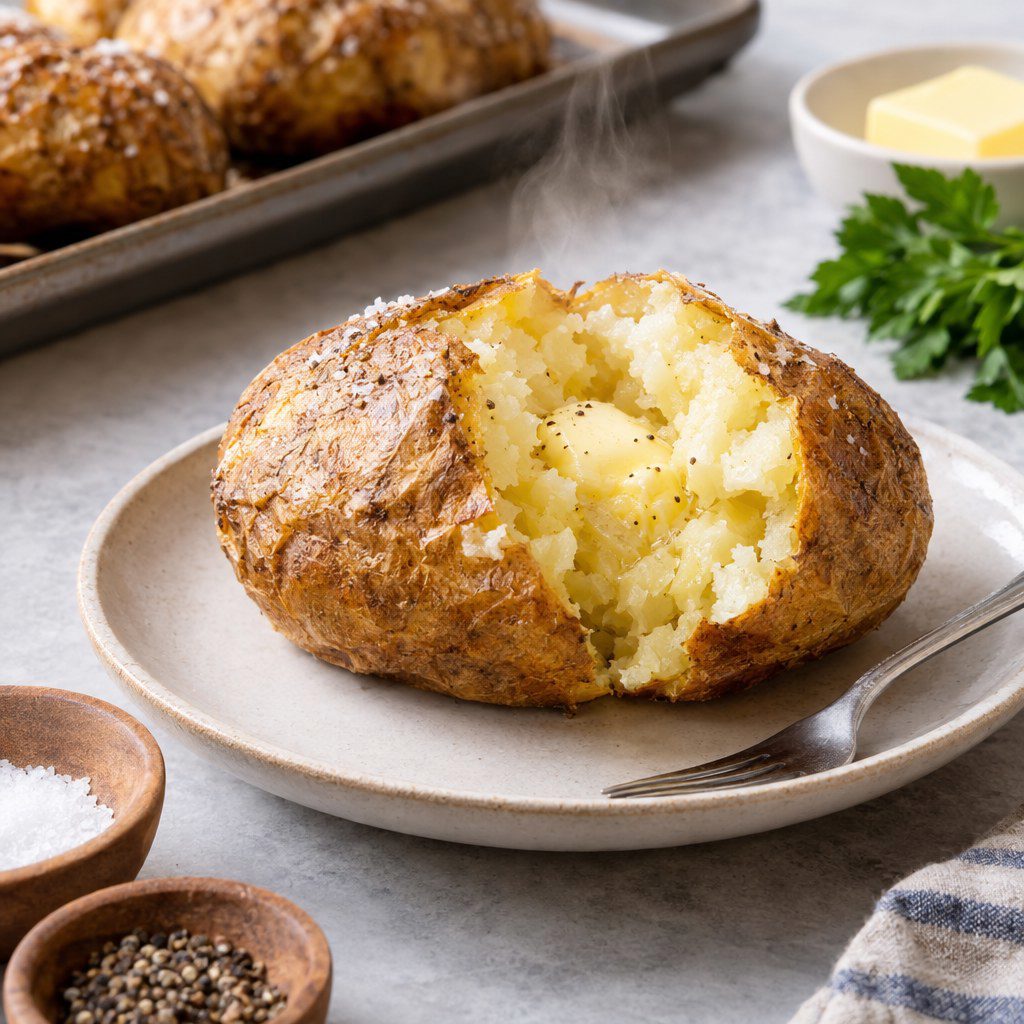
What makes a baked potato fluffy?
Fluffiness is mainly about starch and moisture management. As the potato cooks, its starch granules soften and the water inside turns to steam. A starchy potato develops a more open, crumbly structure than a waxy potato, which tends to stay firm and creamy. Dry oven heat also concentrates the flavour and helps the skin become pleasantly crisp.
The key is to cook the potato fully without sealing in excess moisture. Foil may seem convenient, but it traps steam around the skin. That produces a softer, damp jacket and can make the interior feel heavier. For the classic baked-potato result, place potatoes directly on the oven rack or on a preheated baking tray without foil.
Three conditions to control
- Potato type: Choose a floury, high-starch baking potato where available. Varieties vary by country and retailer, so look for potatoes labelled baking, russet, or floury rather than salad potatoes.
- Surface dryness: Water left on the skin delays crisping. Dry potatoes thoroughly before oiling them.
- Steam release: A few fork holes reduce the chance of splitting and let some steam escape. Splitting the potato after baking releases the rest before condensation settles inside.
💡 Tip: A potato can feel soft before its centre is truly fluffy. Test the thickest part with a thin skewer or knife: it should slide in with almost no resistance.
Choose and prepare the potatoes
Buy potatoes of similar size so they finish at roughly the same time. Medium to large potatoes work well because they provide enough interior volume for a light centre while still cooking evenly. Avoid potatoes with green patches, extensive sprouting, deep cuts, or noticeably soft areas.
For planning purposes, allow 1 substantial potato per person when it is the main part of a meal, or use smaller potatoes as a side. Exact cooking time depends more on thickness than weight, so grouping similar potatoes is more useful than trying to match every potato precisely.
Preparation checklist
- Heat the oven to 220°C / 425°F, or 200°C / 400°F for a fan oven. Give it time to reach temperature.
- Scrub each potato under cool running water to remove soil. Do not soak it unnecessarily.
- Dry every potato thoroughly with a clean kitchen towel or paper towel.
- Prick each potato several times with a fork, concentrating on different sides rather than one small area.
- Rub lightly with oil, then season the skin with salt. The oil supports browning; salt makes the skin more enjoyable to eat.
You do not need to cut the potatoes before baking. Leaving them whole limits moisture loss during cooking and gives the centre time to steam through. If a potato is unusually large, it may take longer than the rest; bake it separately or choose a more evenly sized batch.
Step-by-step method for crisp skins and light centres
Use an oven rack for the driest skin, placing a tray on the rack below if you want to catch any drips. If you prefer to use a baking tray, preheat it with the oven and leave space between potatoes. Crowding reduces airflow and creates uneven browning.
1. Bake uncovered
Put the prepared potatoes into the hot oven. Bake them uncovered until the skins look dry and lightly crisp, and the flesh is tender all the way through. Start checking medium potatoes after about 45 minutes, but treat that as a check-in point rather than a guaranteed finish time. Large potatoes commonly need longer.
2. Test the centre, not just the skin
Use an oven glove to gently squeeze a potato. It should yield easily. Then insert a skewer or thin knife into the centre. If it meets a firm core, return the potato to the oven and test again later. A thermometer can also help: a very tender baked potato usually reaches a high internal temperature, but the skewer test is practical and avoids relying on one exact reading.
3. Open and fluff immediately
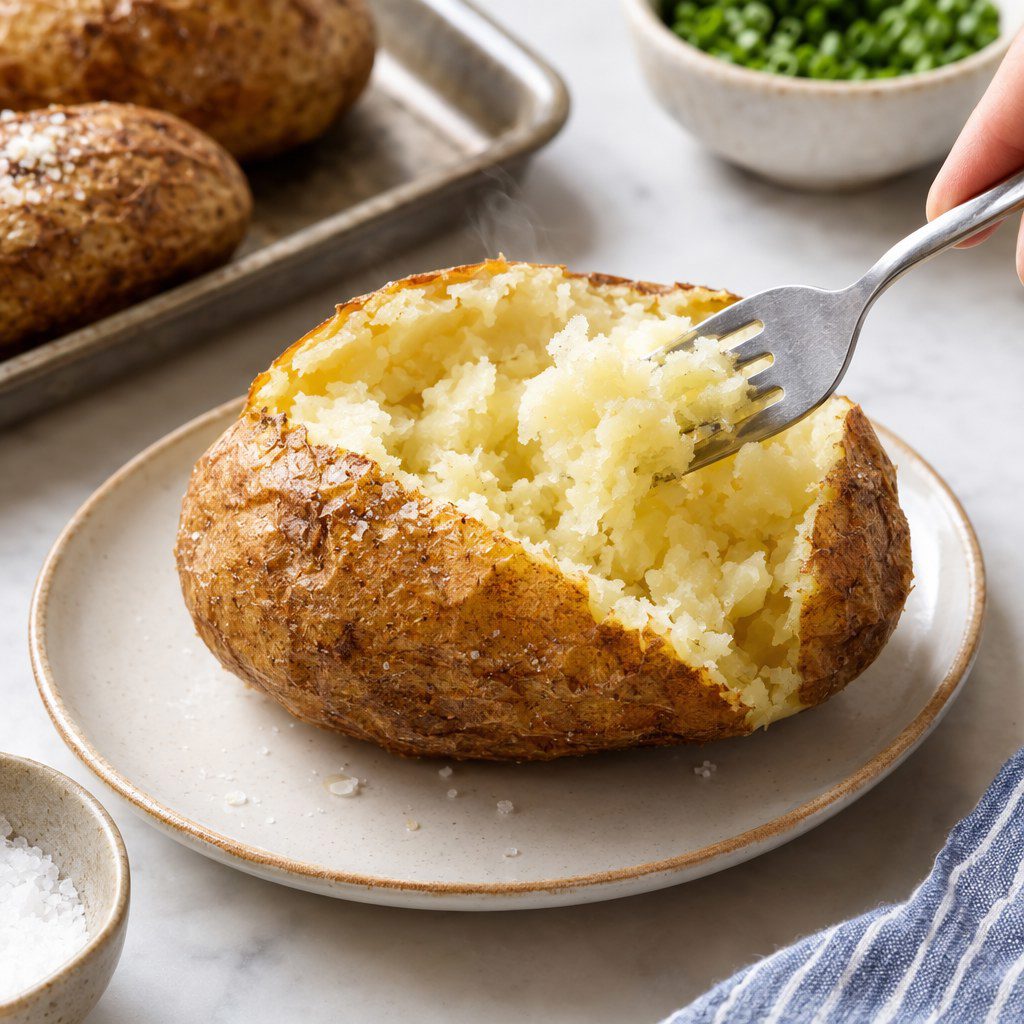
Once cooked, cut a deep cross in the top. Hold the potato with a clean towel or oven glove and gently press the ends inward to open it. Use a fork to loosen the flesh, lifting it rather than mashing it. Add butter, seasoning, or a warm filling while the centre is steaming.
Do not leave fully cooked potatoes closed for a long period. Steam condenses beneath the skin and can make the inside gummy. Opening them is not just for presentation; it protects the texture you worked to create.
Timing and batch planning
Baked potatoes are forgiving when you build in checking time. The table below gives practical planning ranges for a hot oven. Treat them as a guide, because variety, potato shape, oven accuracy, and how full the oven is can all change the result.
For a larger service, avoid stacking potatoes or packing them tightly into a deep roasting tin. Use multiple racks if your oven heats evenly, and rotate trays partway through only if you know your oven has hot spots. Opening the door repeatedly releases heat, so check a sample potato first rather than handling every one.
If you are preparing toppings, make them before the potatoes finish. Warm fillings, such as beans, chilli, sautéed vegetables, or cheese sauce, should be ready to serve. Cold toppings can be added after the potato has been fluffed.
Mistakes to avoid and how to recover
Wrapping potatoes in foil by default
Foil creates a steamed result. It is useful only when a soft skin is your goal. If you already used foil and want a crisper finish, remove it near the end of cooking and return the potatoes to the oven uncovered until the skin dries.
Using a low oven temperature
A low oven can cook the interior, but it takes longer to dry and crisp the skin. If your potatoes are tender but pale and soft, increase the heat for a short final period while watching them closely. Do not use a grill as a substitute for a fully cooked centre; it can darken the skin before the middle is ready.
Skipping the drying step
Wet skins steam before they roast. If you have already placed damp potatoes in the oven, they can still cook safely, but expect less crispness. Drying is easiest to get right before oiling, when it takes only a moment.
Cutting too early or mashing the centre
Opening an undercooked potato releases steam before the starch has softened. Return it to the oven if the centre is firm. Once tender, fluff it with a fork using a light touch. Stirring aggressively turns the interior pasty, especially after adding butter or cheese.
Warning: Do not rely on skin colour alone. A deeply browned skin can hide an underdone centre, particularly with very large potatoes or an oven that runs hot.
Serving and holding without losing texture
The best time to serve a baked potato is soon after it is cooked and opened. For a meal at home, place it on the plate, split it, fluff the centre, and add toppings in layers. Butter or oil first helps seasoning cling to the hot flesh; add wetter toppings after that.
If you need a short holding period, keep the potatoes unwrapped in a warm oven rather than sealing them in foil or a covered container. Leave enough airflow for moisture to escape. Check them regularly: extended holding gradually dries the flesh, while covered holding makes the skin soft.
For a self-serve meal, put out split potatoes and toppings separately. Offer options with different moisture levels, such as grated cheese, chopped herbs, roasted vegetables, yoghurt-based toppings, or beans. This lets people build their own potato without every serving becoming soggy before it reaches the table.
A simple decision framework
If your priority is a classic fluffy baked potato, choose a floury variety, dry it well, oil and salt the skin, bake it uncovered in a hot oven, and test the centre before serving. If you prefer a soft skin, foil can be appropriate, but accept that the result will be closer to steamed than roasted.
When the outcome is inconsistent, diagnose the issue in order: check potato type, oven heat, size variation, crowding, and whether the potatoes were opened promptly. This approach is more reliable than changing every part of the method at once.
Make your next batch deliberately simple
Start with evenly sized floury potatoes, keep them uncovered, and open each one while it is hot. Those 3 decisions do most of the work for a fluffy centre.