How to Choose Bedside Lighting for Different Needs
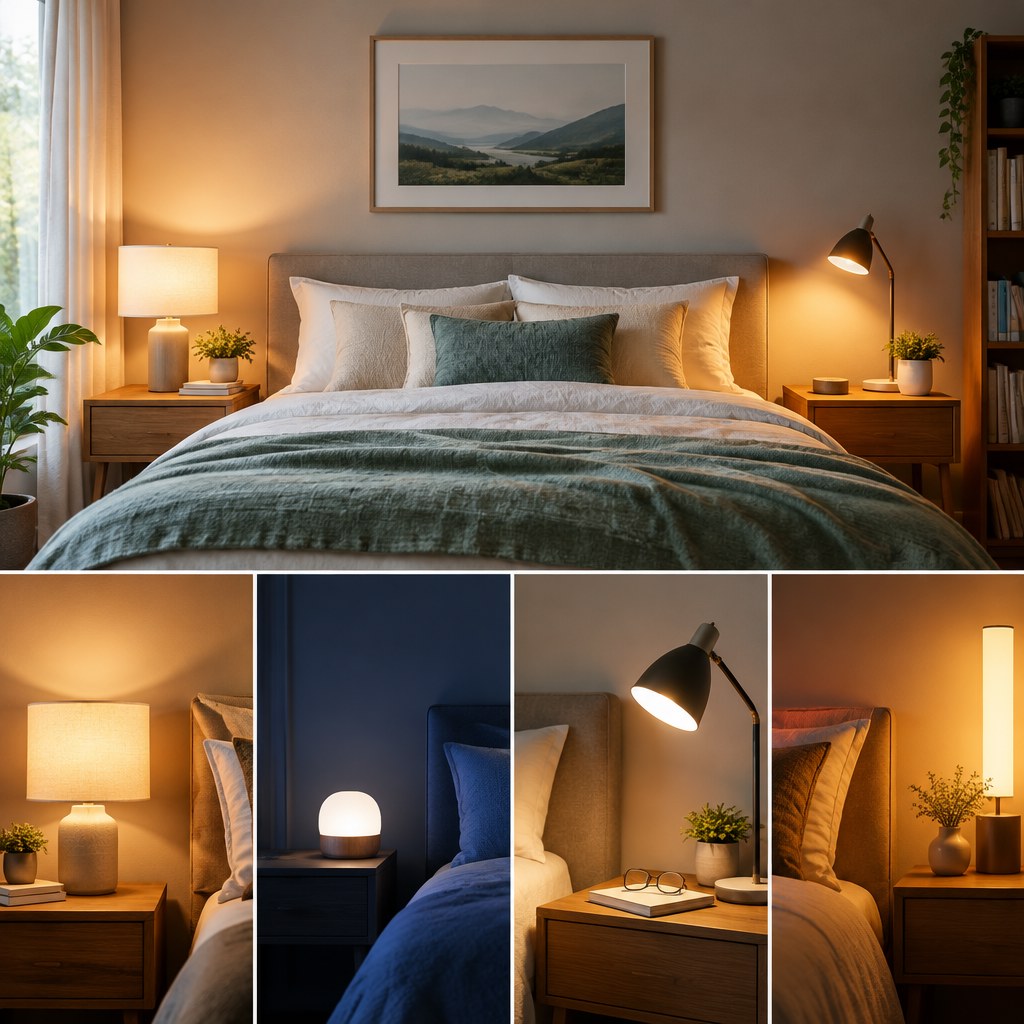
Choose bedside lighting by matching the fixture to the task, the bed layout, and the people using the room. A successful setup combines comfortable ambient light with controlled task light, places controls within easy reach, and prevents glare for both the person reading and anyone trying to sleep.
Start with what happens at the bedside
“Bedside lighting” is not one requirement. You may need enough light to read a novel, locate a glass of water without waking a partner, make the bed safely, or create a calm atmosphere before sleep. Identifying the dominant use first prevents a common mistake: buying a decorative lamp that looks right but does not provide useful light.
For a bedroom used by 2 people, plan each side separately. One person may read in bed every evening while the other only needs a low-level light for moving around at night. Separate fixtures and separate controls let each person set light without forcing a compromise.
Reading and close work
Choose directional task lighting that sends light onto the page, tablet, or knitting rather than across the entire room. Adjustable arms, shades, and dimmers provide useful control.
Night-time navigation
Use a low, shielded source that defines the path to the door or bathroom. The goal is orientation, not bright room illumination that makes it harder to settle again.
Comfort and atmosphere
Select a diffused lamp or wall fixture with a dimmable bulb. It can soften the room in the evening while supporting simple tasks such as talking or getting dressed.
Consider the room and furniture before the fixture
Measure the available surface and wall area around the bed. A large table lamp can overwhelm a narrow nightstand, while a wall-mounted fitting can free space for medication, a phone, books, or water. Also consider the headboard: a tall upholstered headboard may block a low lamp, and a reflective surface can bounce light into your eyes.
If you are specifying rooms for a rental, guest accommodation, or hospitality setting, prioritize intuitive controls and durable designs. Guests should not have to search behind furniture or decode a complicated switching system just to turn a light off.

Choose the right lighting type
The best fixture type depends on the relationship between the bed, the wall, and the bedside table. You do not need every type of light in every room. Instead, combine only the layers that solve a clear need: general light for the room, focused light for tasks, and low-level light for orientation.
Table lamps
Table lamps are flexible, familiar, and easy to replace. They work well when the nightstand has a stable, usable surface and an accessible outlet. A shade helps diffuse light, but check where it directs illumination. A lamp with an opaque shade may create a pleasant pool of light while offering too little brightness for reading unless it also has an open bottom or adjustable bulb position.
Wall-mounted lights and sconces
Wall lights keep tabletops clear and give the bed area a more intentional layout. Swing-arm or adjustable models are especially useful for reading because you can move the light toward the task and away from a sleeping partner. Installation is more involved than placing a plug-in lamp, so confirm wiring, wall construction, and control locations before committing to the design.
Clip-on, headboard, and plug-in options
These options can suit temporary homes, compact rooms, bunk beds, and situations where electrical work is not practical. Look for a secure mounting point, a protected cable route, and a fitting that stays in position. Avoid placing a cord where it can be pulled, trapped by a moving bed frame, or become a trip hazard.
💡 Tip: Test a lamp from the position where you actually sit or lie down. A fixture that appears bright when standing can still leave your book in shadow or shine directly into your eyes in bed.

Plan placement, brightness, and controls
Placement has as much effect as the lamp itself. A bedside light should illuminate the intended task without exposing the bulb directly to your line of sight. Positioning also needs to account for pillows, headboard height, the reach of your arm, and any movement around the bed.
Place light where you can control it comfortably
You should be able to switch bedside lighting on and off without getting out of bed. A control on the fixture, a cord switch that does not fall behind furniture, or a wall switch within reach can all work. For shared beds, independent controls are generally more practical than one central switch.
When choosing wall fixtures, mount them with the likely seated reading position in mind, not only the center point of the mattress. If the light sits too high, it may cast shadows onto the page. If it sits too low or too close to the headboard, it may create glare and feel cramped.
Use brightness and color thoughtfully
For task lighting, choose a bulb and fixture combination that gives sufficient light on the specific surface. Because bulb performance and shade materials vary, the practical test is whether you can read comfortably without squinting or relying on the room’s main light. Dimming is valuable because it lets one fixture serve both a focused evening task and a quieter wind-down period.
Many people prefer warmer-looking light in bedrooms because it feels less stark than cooler light. However, the right choice also depends on your décor, the amount of daylight in the room, and the accuracy needed for tasks. If you are fitting out several rooms, standardize the bulb type where practical so replacements remain simple.
Build a layered setup
- Use ceiling or general room lighting for cleaning, dressing, and finding items.
- Add an adjustable bedside lamp or sconce for reading and focused activities.
- Include a gentle low-level light if you need to move through the room after dark.
- Use dimming where it supports multiple uses, rather than adding unnecessary fixtures.
- Check that lampshades, bulbs, and controls are easy to maintain and replace.
Avoid common bedside-lighting mistakes
The most frequent failures are not usually technical. They come from overlooking how the light will be used after installation. Addressing these issues early can save you from replacing otherwise attractive fittings.
Choosing appearance before function
A matching pair of lamps can make a room look orderly, but symmetry is not always the most useful choice. If one side of the bed needs reading light and the other does not, use different fixtures that still share a finish, color, or visual style. This keeps the room coherent while respecting different routines.
Ignoring glare and light spill
An exposed bulb, a glossy shade, or a poorly aimed spotlight can be uncomfortable at bedtime. If glare is already a problem, change the bulb orientation, add a more shielding shade, or replace the fitting with one that directs light down toward the task. In a shared room, test the light while the other side of the bed is occupied.
Forgetting practical safety and maintenance
Keep portable lamps on stable surfaces, avoid overloaded extension leads, and route cords away from walkways and moving furniture. Use bulbs compatible with the fixture and any dimmer. For hardwired lights, consult a qualified electrician when installation or wiring condition is uncertain. In guest spaces, periodically check switches, plugs, shades, and mounting hardware for damage.
⚠️ Check before buying: Do not assume a dimmable bulb will dim correctly in every fitting. Confirm that the bulb, fixture, and dimmer control are compatible before installation.
Use a simple bedside-lighting decision framework
Start with the activity, then choose the fixture, test its position, and confirm that its controls are easy to reach. A good final check is simple: can you read, rest, and move safely without disturbing anyone else?
- Define the main use for each side of the bed.
- Measure the nightstand, wall space, and likely reach distance.
- Select task, ambient, or navigation lighting only where needed.
- Check glare, light spill, cable routing, and bulb compatibility.
- Test the setup from the bed before treating the project as complete.