How to Compare Unit Prices at the Supermarket

To compare unit prices at the supermarket, divide the shelf price by the product’s weight, volume, length, or count—or read the unit price on the shelf label. The lowest unit price is usually the best value for the same usable product, but consider quality, waste, storage, and expiry.
This habit helps households shop deliberately and helps small food businesses, offices, and hospitality operations control repeat purchases. Compare like with like, use a consistent unit, and remember that a low sticker price is only part of the decision.
What unit price means—and why the shelf price can mislead
A unit price is the cost in one standard measure: per ounce, pound, gram, litre, metre, sheet, load, or item. It lets you compare different package sizes without relying on the headline price.
For example, a $3.60, 24-ounce pasta sauce costs 15 cents per ounce. A $4.20, 32-ounce jar costs about 13 cents per ounce. The second jar costs more at checkout but less per ounce.
Promotional wording, “family size” labels, and rounded prices do not automatically identify the lowest usable cost. Unit price turns them into a comparable number.
Unit price is a comparison tool, not an automatic buying rule
The largest pack is not always best. Savings disappear if food spoils, storage is limited, or the purchase ties up money needed elsewhere. Best value is what you will use at the required quality and in time.
💡 Tip: Use unit price to narrow options, then consider use, storage, requirements, and expiry.

Compare like for like before you compare prices
The most common error is comparing products that are not equivalent. Before choosing the lower figure, check product type, quality, intended use, and usable yield.
Match the product and the unit
Compare the same category in the same measurement where possible. Compare price per pound with price per pound and price per litre with price per litre. Convert measurements before deciding when labels differ.
- Compare regular coffee with regular coffee, not whole beans with ready-to-drink coffee.
- Compare similar grades of rice, flour, oil, or meat rather than assuming all versions perform equally.
- Check whether a multipack price is per item, per serving, per load, or per total package.
- For concentrates, compare the prepared yield if the label provides clear instructions.
- For products packed in liquid, distinguish total package weight from drained weight where that affects how you use it.
A can of beans may have a low price per total ounce, although some weight is liquid. For recipes using drained beans, compare drained quantities where available. Likewise, a concentrate may cost more per bottle but make more usable solution.
Include quality and operational requirements
For businesses, a lower unit price is false economy if it causes poor results, extra preparation, complaints, or rework. Start with approved brands, dietary needs, pack formats, or performance standards, then compare valid alternatives.
Read supermarket shelf labels correctly
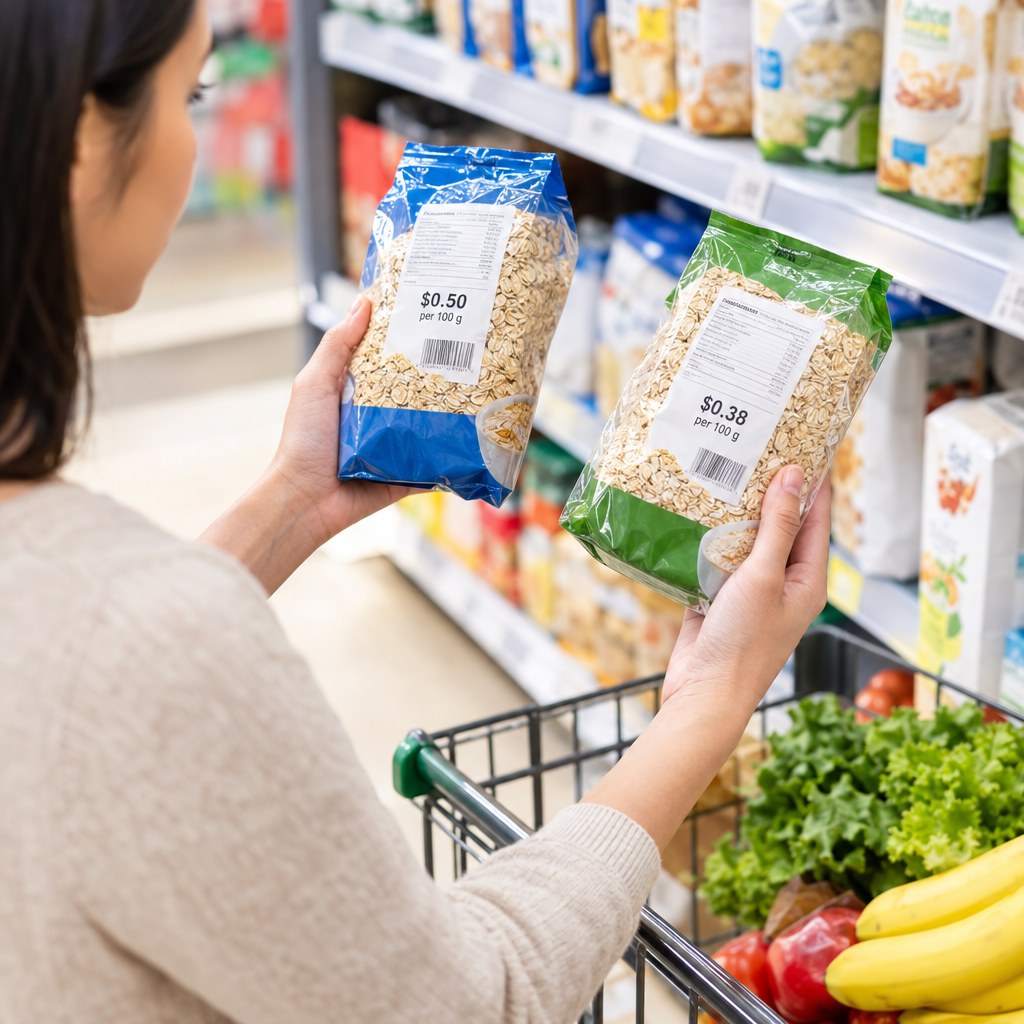
Supermarkets often show unit price beneath or beside the selling price. It may be in small type, so check both the number and its unit. A label reading “$0.18 per oz” should be compared only with another price per ounce.
A sale tag may not show the final unit price. Offers can require multiple purchases, loyalty membership, or digital coupons. Read the conditions and calculate the cost for the quantity you plan to buy. Extra items are not savings if unused.
Also confirm that the label matches the product in your hand. Similar sizes can be placed in the wrong slot, so check the brand, variety, package size, and barcode where available.
Calculate unit prices yourself when labels are missing
If a shelf label has no unit price, use this calculation:
Unit price = package price ÷ quantity in the package
Use the same unit for every option. A 750 ml bottle costing $6.00 is $0.008 per ml, or 80 cents per 100 ml. Compare other bottles on the same per-100-ml basis.
Useful shortcuts for common supermarket items
- Weight: divide by ounces, grams, pounds, or kilograms consistently.
- Liquids: divide by fluid ounces, millilitres, or litres consistently.
- Counted goods: divide by the number of rolls, sheets, pods, servings, or items.
- Bulk bins: compare the stated price per weight unit, then buy only the quantity you need.
- Multi-buy offers: divide the qualifying total price by the total quantity received.
A phone calculator works for occasional choices. For workplace, café, rental, or event supplies, keep a spreadsheet with product, brand, pack size, unit price, supplier, date, and notes on quality or waste.
Use a practical unit-price shopping process
You do not need to calculate every cart item. Focus on frequent purchases, products with many sizes, and categories where packaging hides value, such as staples, drinks, paper goods, cleaning products, pet food, and frozen items.
- Define the need. Note the item, quantity, quality standard, and use-by deadline.
- Identify comparable options. Limit choices to products that meet the need.
- Read the shelf unit price. Check its measurement and promotion conditions.
- Calculate when needed. Convert sizes to a shared unit if labels differ or are absent.
- Adjust for waste. Avoid oversized packs unless you can store and use them safely.
- Record repeat purchases. Keep preferred products and acceptable unit-price ranges.
- Review at checkout. Confirm promotional pricing and resolve discrepancies if possible.
This process is useful when several people buy supplies. A written standard reduces inconsistent substitutions and separates sensible bulk buying from an impulse purchase.
Common mistakes to avoid—and how to recover
Choosing the lowest shelf price
A small pack may cost less upfront but more per unit. If you can use the larger pack, compare unit prices first. When cash flow matters more this week, choose the affordable option deliberately.
Buying bulk without a usage plan
Bulk works best for shelf-stable or reliably used goods. Consider normal usage, storage, and deterioration after opening. If unsure, try a smaller package first.
Ignoring promotions and membership conditions
If checkout price differs from the shelf, save the receipt and ask staff to review the item, label, and terms. Photograph a confusing tag where permitted. Treat conditional offers as claims to verify, not guaranteed savings.
Comparing misleading units
A lower price per sheet or pod may not mean better value if sizes or capacity differ. When stated units do not reflect real use, compare price per prepared serving, usable sheet, or standard load.
A simple decision framework for better supermarket value
First confirm that products are suitable substitutes. Next compare unit prices using the same measure, check promotion conditions, then consider waste, storage, quality, and cash flow. Choose the lowest realistic cost for what you will use.
Perfect calculations are unnecessary. Comparing two or three plausible choices instead of reacting to a headline price makes shopping more consistent and helps you recognize genuine deals.
Make your next shopping list unit-price ready
Pick 3 frequently purchased items, compare package options on your next trip, and note the lowest usable unit price.