How to Design a Flexible Guest Corner
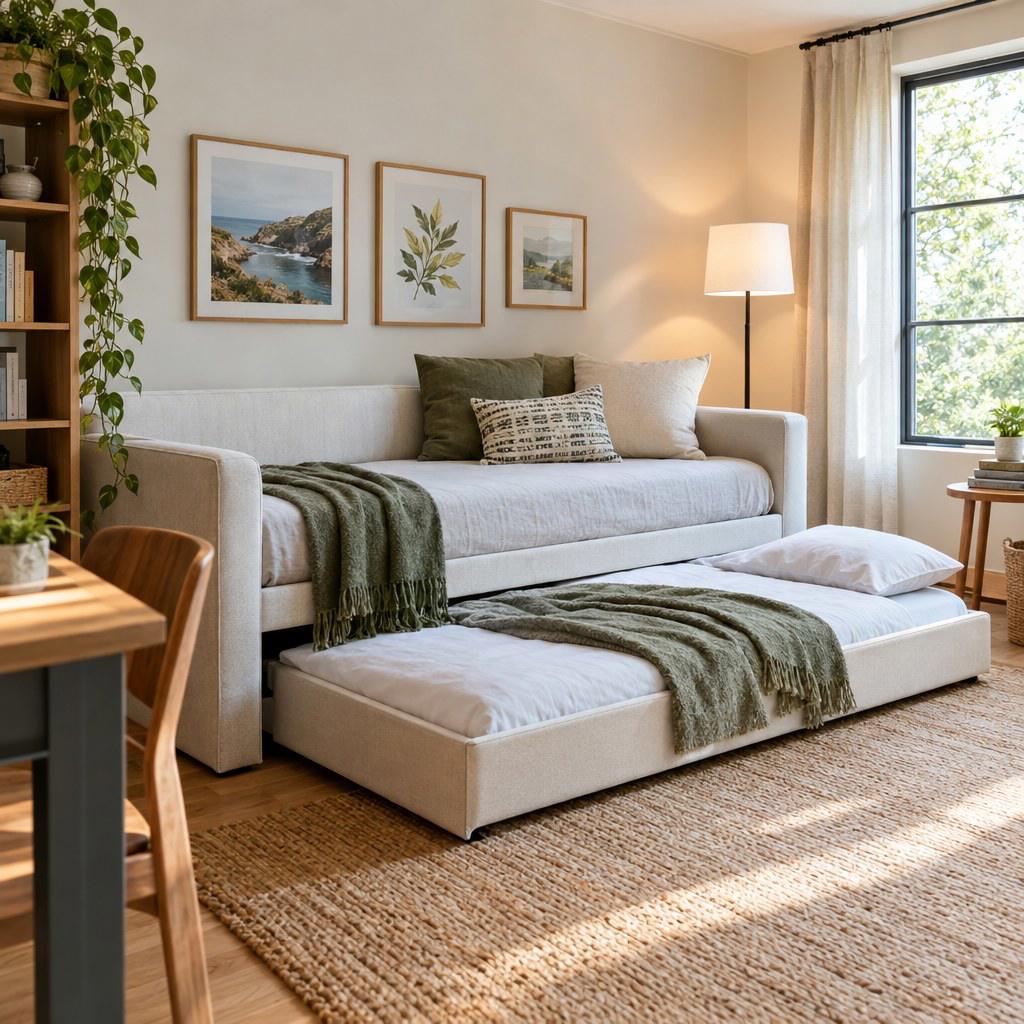
A flexible guest corner is a small area that works for visitors without becoming unused space when no one is staying over. You can create one by combining a comfortable sleep option, easy-access storage, privacy controls, and a setup that returns to its everyday role quickly.
The best result is not a miniature hotel room. It is a practical, welcoming zone that respects your available space, your household’s routine, and the comfort of the person using it.
Define what the guest corner must do
Start with use, not furniture. A guest corner might need to host an occasional overnight visitor, provide a quiet place for a relative during a busy holiday, or give a friend somewhere to rest after a late evening. Each situation calls for a slightly different solution.
Write down the room’s primary function first. It may be a home office, living room, dining area, studio, or bedroom shared with another purpose. Then identify what must remain usable while a guest is present. For example, if the corner sits in a work area, you may need access to a desk in the morning without packing away all bedding.
Separate essentials from extras
A functional guest setup needs a sleep surface, bedding, a place for personal items, nearby light, and reasonable privacy. Everything else is optional. A decorative bench, elaborate side table, or dedicated wardrobe may look appealing, but it can make a small room less adaptable.
Consider your likely guest rather than an imaginary average visitor. Someone staying for 1 night may be content with a quality sofa bed and a charging point. Someone visiting for several days benefits more from a supportive mattress, a place to unpack, and a way to close off visual clutter.
💡 Tip: Design for the most frequent realistic use. If overnight guests arrive only occasionally, prioritize furniture that improves daily life as well as guest comfort.
Plan the zone before buying furniture
Flexible corners fail when the furniture fits on paper but blocks movement in practice. Measure the available floor area, nearby doors, cabinet fronts, drawers, windows, radiators, and walkways. Measure again with any bed, chair, or sofa fully opened.
You do not need to make the space feel large; you need to make it easy to use. A guest should be able to get into bed, reach a light, place a phone or glasses nearby, and leave the room without climbing over bags or household items.
Map the open and closed layouts
Draw 2 simple plans: the room in its normal state and the room with the sleeping arrangement deployed. Mark the path from the bed to the door and, if relevant, to a bathroom. This process exposes conflicts early, such as a pull-out bed that prevents a closet from opening.
Also consider sightlines. A guest corner located directly beside a busy entry route can feel exposed even when it has enough floor area. A tall open shelf, a folding screen, a curtain track, or the back of a bookcase can provide separation without permanently building a wall.
Work with existing anchors
Use the room’s fixed elements to guide the layout. A corner beside an outlet may simplify charging and bedside lighting. A wall with fewer doors can support a fold-down bed or daybed. A location near a window may feel pleasant during the day, but check whether morning light, street noise, or drafts could disturb sleep.
If you rent or need the room to change often, favor freestanding solutions. They are easier to reposition, remove, or reuse than permanently mounted features.
Choose flexible components that earn their space
Choose items based on how easily they change function, how comfortably they support sleep, and how much storage they require. Avoid selecting a solution only because it is compact when folded; an uncomfortable or cumbersome bed will not serve guests well.
Daybed or trundle
Useful where seating is needed every day. Test how the extended bed affects walking space and confirm that stored bedding stays easy to reach.
Sofa bed or sleeper chair
A strong option for living spaces. Open it before purchase if possible, and check both mattress support and the effort required to convert it.
Folding guest bed
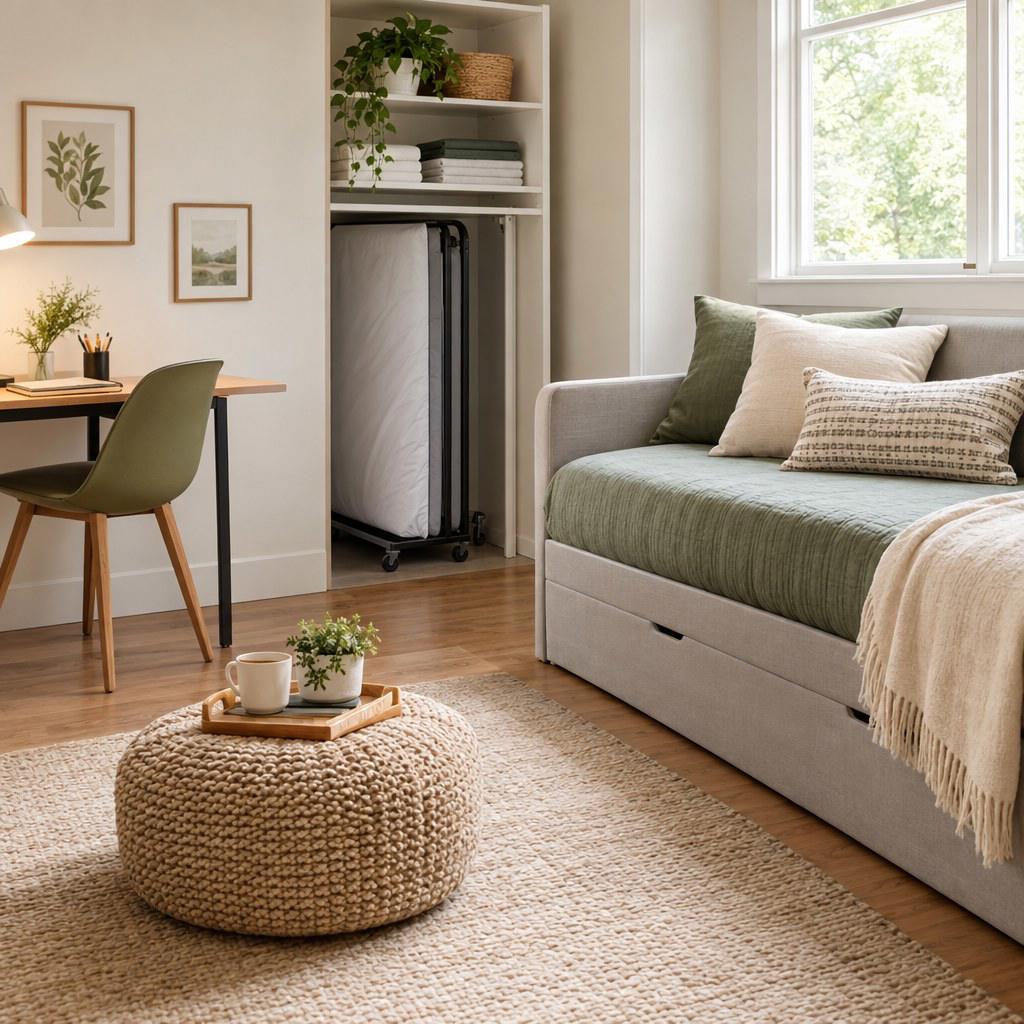
Appropriate for occasional stays when you have a dedicated storage spot. It keeps the room flexible, but setup and storage must be manageable.
Add a compact hospitality kit
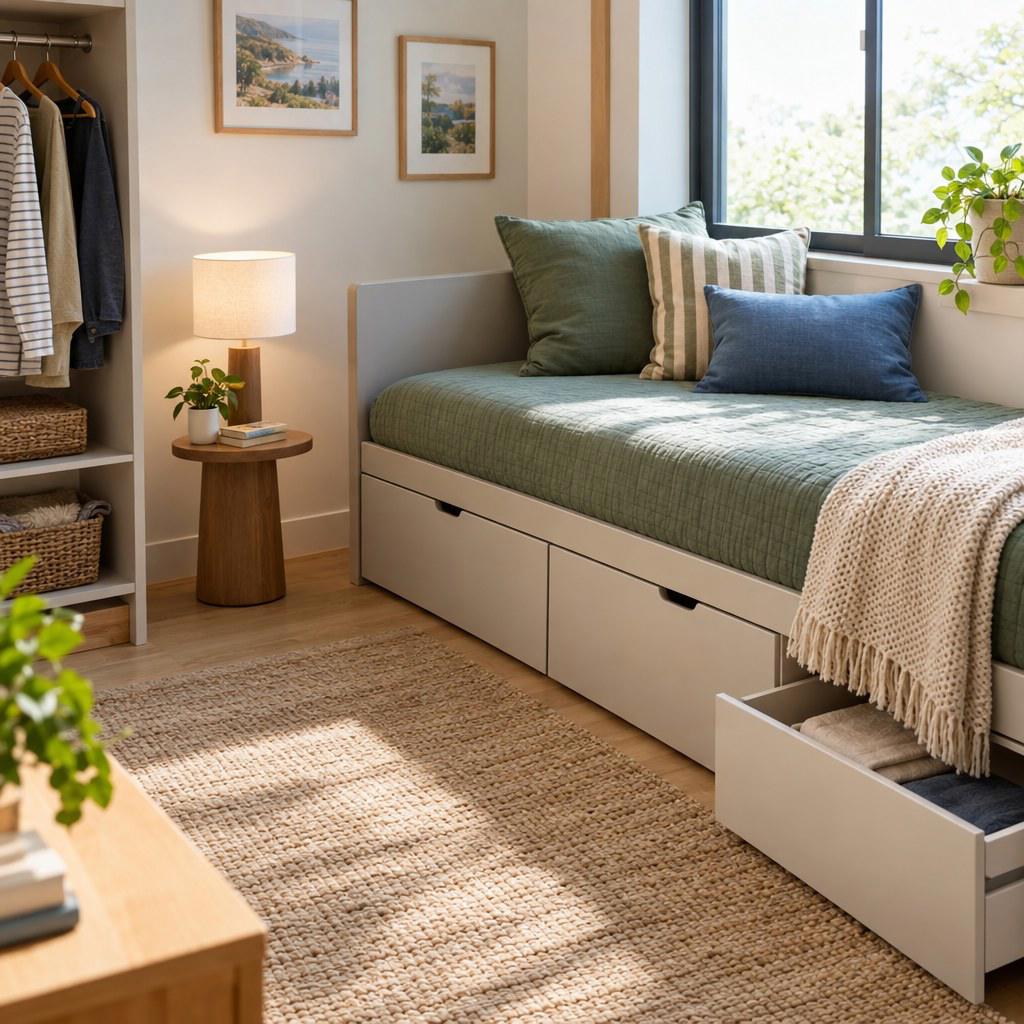
Keep guest essentials together in a lidded box, drawer, or fabric basket. Include clean bedding, an extra blanket, towels if appropriate, a small waste bin, and a few spare charging options. This reduces preparation time and stops the guest corner from collecting unrelated household overflow.
A small surface matters more than many hosts expect. It can be a narrow shelf, movable side table, or stable stool used only when needed. Your guest needs somewhere for water, a phone, glasses, or a book. Place a lamp or accessible light within reach, rather than relying only on an overhead fixture.
Set up the corner step by step
Once you have selected the main pieces, build a repeatable setup process. The goal is to prepare the room without a long scramble before every visit.
- Clear the floor zone. Remove loose cables, workout equipment, piles of paper, and fragile objects from the route around the bed.
- Open the sleep solution fully. Check that it sits level, locks correctly where applicable, and does not interfere with doors, drawers, or circulation.
- Make the bed completely. Use a fitted sheet where suitable, clean pillows, and layers that allow the guest to adjust for warmth.
- Create a landing place. Add a small surface, a reachable light, and access to an outlet without forcing cables across a walkway.
- Provide contained storage. Reserve a basket, shelf, hooks, or part of a drawer so bags and clothing do not remain on the bed or floor.
- Check privacy and noise. Close curtains, test a screen or divider, and identify whether household routines need a simple adjustment during the stay.
Run the setup yourself before relying on it. Lie down briefly, reach for the light, walk to the exit in low light, and sit in the room with the divider in place. These small checks reveal whether the arrangement feels usable rather than merely presentable.
Avoid common mistakes and recover quickly
Buying for appearance instead of operation
A sleek fold-out bed is not a practical choice if it takes too much effort to open or requires moving several heavy objects. Before committing, consider the entire conversion routine: where cushions go, where bedding lives, and who can safely manage the mechanism.
If you already own a difficult piece, simplify around it. Store bedding nearby, reduce surrounding furniture, and create a written setup sequence for anyone in the household who may prepare the room.
Using the guest corner as permanent storage
Guest spaces often become a holding area for donations, seasonal items, and unopened deliveries. This makes every visit stressful and signals that the guest is an interruption. Give the corner a defined storage limit and review it regularly.
If storage pressure is unavoidable, use closed, labeled containers that can move as a group. You can relocate 1 orderly box far more easily than clearing many loose items.
Overbuilding privacy
Large partitions, bulky wardrobes, or fixed walls can make a compact room darker and less useful every day. Begin with the lightest effective measure: curtains, a folding screen, a movable shelf, or a clear agreement about quiet hours. Increase separation only if regular stays show that it is necessary.
Use a simple decision framework
Make your choice by balancing frequency of use, available storage, room function, and guest needs. If visitors stay often, invest more in sleep comfort and a dedicated place for their belongings. If stays are rare, prioritize an easy-to-store bed or seating that serves the room every day.
A good guest corner is ready enough, not elaborate. When it can change from ordinary room to comfortable sleeping space with minimal effort, it will remain useful to both your household and your visitors.
Start with one practical test
Choose the proposed corner, map its open-bed layout, and prepare it once from start to finish. Keep what works, remove what blocks movement, and build the final setup around that real trial.