How to Explore Stockholm by Public Transport
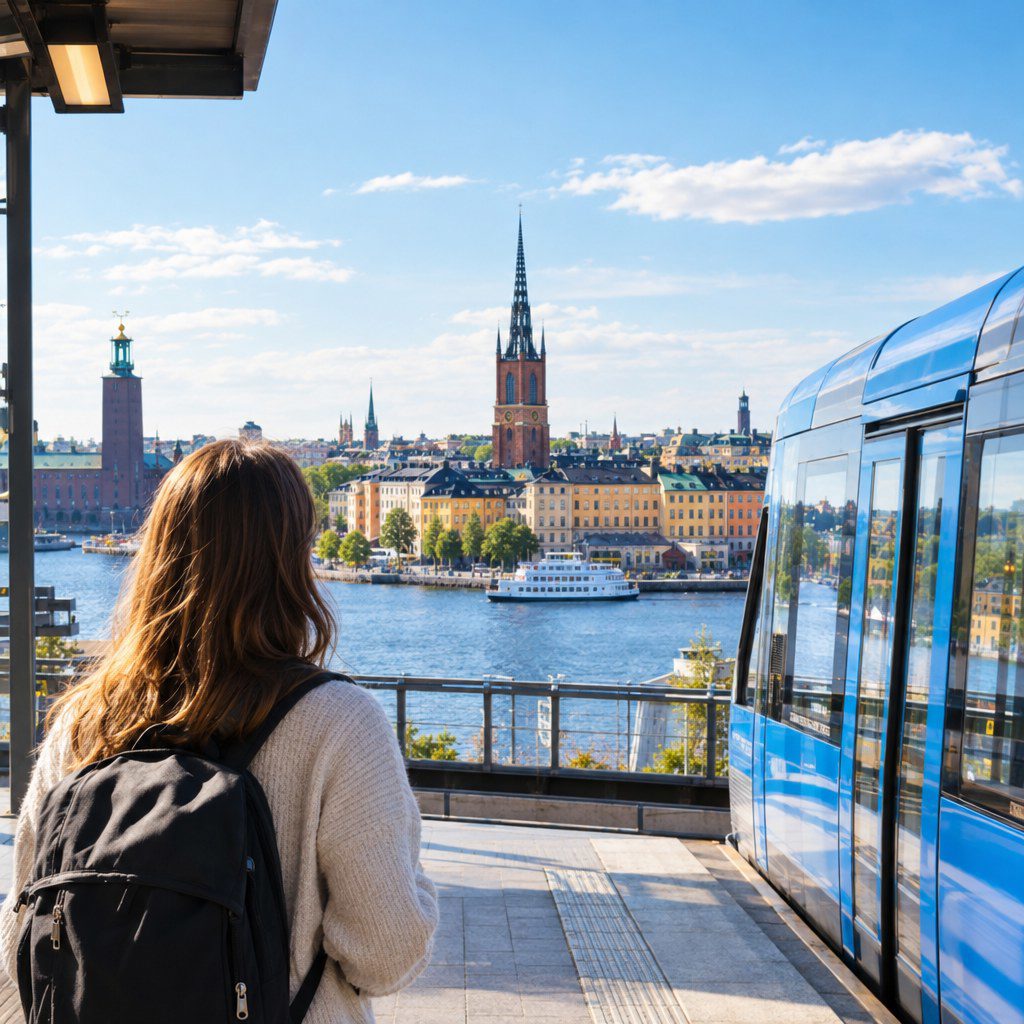
Stockholm is straightforward to explore by public transport once you treat the system as one connected network rather than a collection of separate trains, buses and boats. You can combine the metro, commuter rail, trams, buses and selected ferries to move between major sights, business districts, residential neighbourhoods and the archipelago-facing waterfront without relying on a car.
The practical outcome is a calmer itinerary: choose the right ticket before your first trip, use live journey planning for each transfer, and group stops by the line or district that serves them. This approach reduces backtracking and leaves room for delays, weather and spontaneous stops.
Understand Stockholm’s transport network
Most urban journeys use services coordinated by SL, Stockholm’s public transport authority. The network is built around the Tunnelbana metro, commuter rail, buses, light rail and trams. In central areas, you will often have more than one workable route, which is useful when a platform is busy or a connection is disrupted.
The metro is usually the fastest way to cross central Stockholm or reach areas beyond the inner islands. Stations are marked with a blue “T”, and several are known for their public art. Commuter rail is more useful for longer suburban trips and some airport connections. Buses fill the gaps between rail lines, while trams can be particularly convenient for Djurgården and parts of the eastern city.
Water matters in Stockholm, but not every ferry is part of the same fare system. Some passenger boats are covered by public transport tickets, while other sightseeing and archipelago services have separate operators and fares. Before boarding, check the service in the official journey planner or at the quay rather than assuming your ticket is valid.
Match the mode to the journey
For a work trip, this variety lets you stay flexible. You might take the metro to a morning meeting, walk through the compact centre for lunch, and use a bus for a final appointment in a district without a nearby station. Build a little slack into any journey with a fixed arrival time.
Choose a ticket that fits your visit
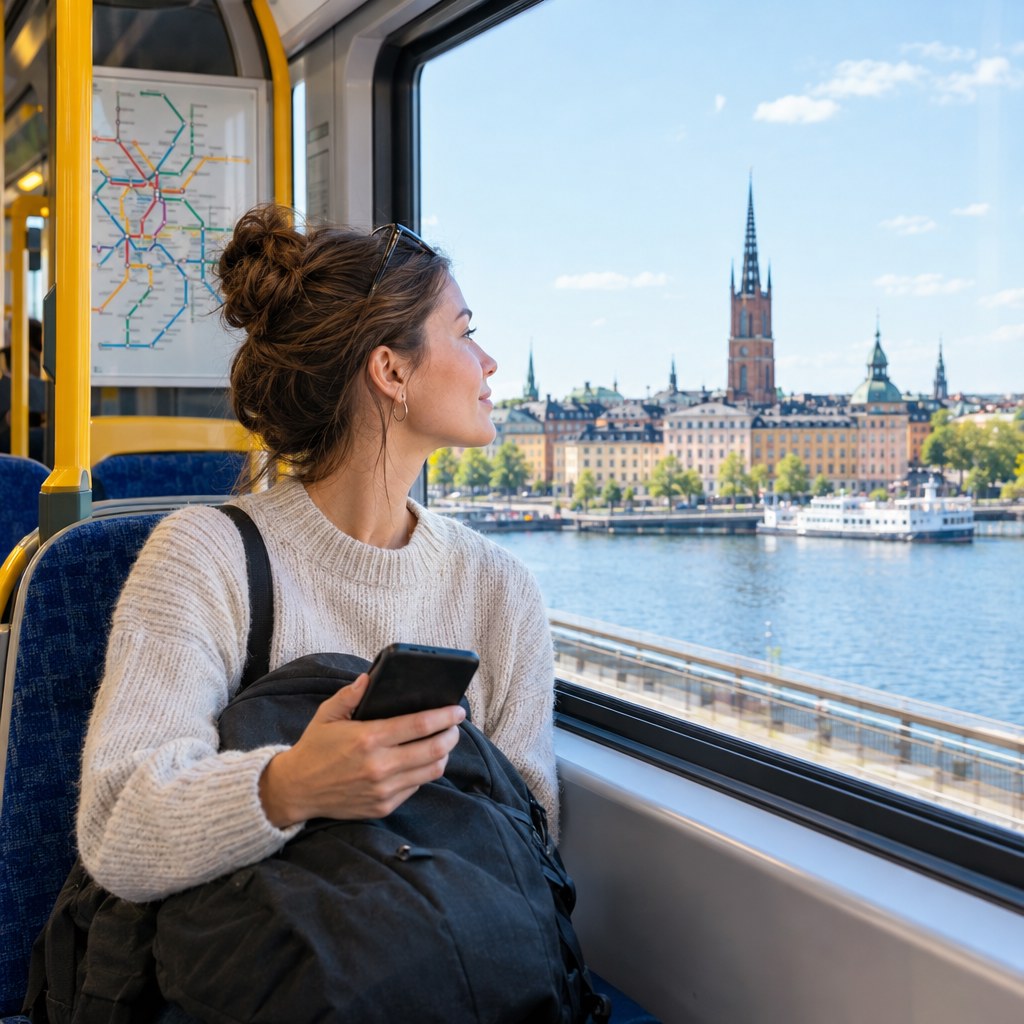
Ticket rules, prices and available products can change, so check the current options through SL before you travel. The key decision is not finding the cheapest product in isolation; it is choosing the least complicated option that covers the trips you realistically expect to make.
For occasional travel, a single journey ticket may be suitable if you are staying in one walkable area and only need a few rides. If you expect several trips across one or more days, a time-based ticket can be simpler because it removes the need to decide whether every additional journey is worthwhile. Visitors commonly use the SL app, a contactless payment method where supported, or a reloadable travel card, depending on the current rules.
💡 Tip: Download the official SL app while you have reliable internet, then save your accommodation and key meeting locations. Check whether the ticket starts immediately on purchase or requires activation, and keep enough phone battery to show it if requested.
Questions to answer before buying
- How many days will you actually be moving around the city?
- Will you make return journeys to locations outside the central islands?
- Do your plans include an airport transfer or a ferry that may require a separate fare?
- Will everyone in your group use the same ticket type, or do age and eligibility rules differ?
- Can you rely on a charged smartphone, or is a physical card more practical?
Keep proof of your valid ticket accessible. Ticket inspections can occur, and buying only after you have boarded may not meet the operator’s conditions. If you are unsure at a gate or on a platform, pause and ask staff rather than taking a chance.
Plan days around geography, not landmarks
Stockholm’s water, bridges and islands make a map look deceptively compact. A route that appears short can involve a long walk around a shoreline, a steep section, or an inconvenient transfer. Start with districts and transport corridors, then add individual places within each area.
For example, you could keep Gamla Stan, the central waterfront and nearby shopping streets in one walking-focused block. Reserve Djurgården for another block, using tram, bus or ferry access depending on your starting point. Södermalm works well as a separate half-day because its streets, viewpoints and cafés reward walking once you arrive by metro.
Use a realistic transfer rule
When an itinerary gives you two similar options, prefer the one with fewer changes. A direct bus that takes slightly longer than a metro-and-bus combination can be the better choice when you have luggage, a group, a mobility need or a time-sensitive appointment. For important commitments, aim to arrive one earlier connection before the one that appears strictly necessary.
Also distinguish between “near a station” and “easy from a station.” Check the exit you need, the final walking route and the direction of travel. This matters especially around large interchanges, where choosing the wrong exit can add unnecessary minutes.
Use the system step by step
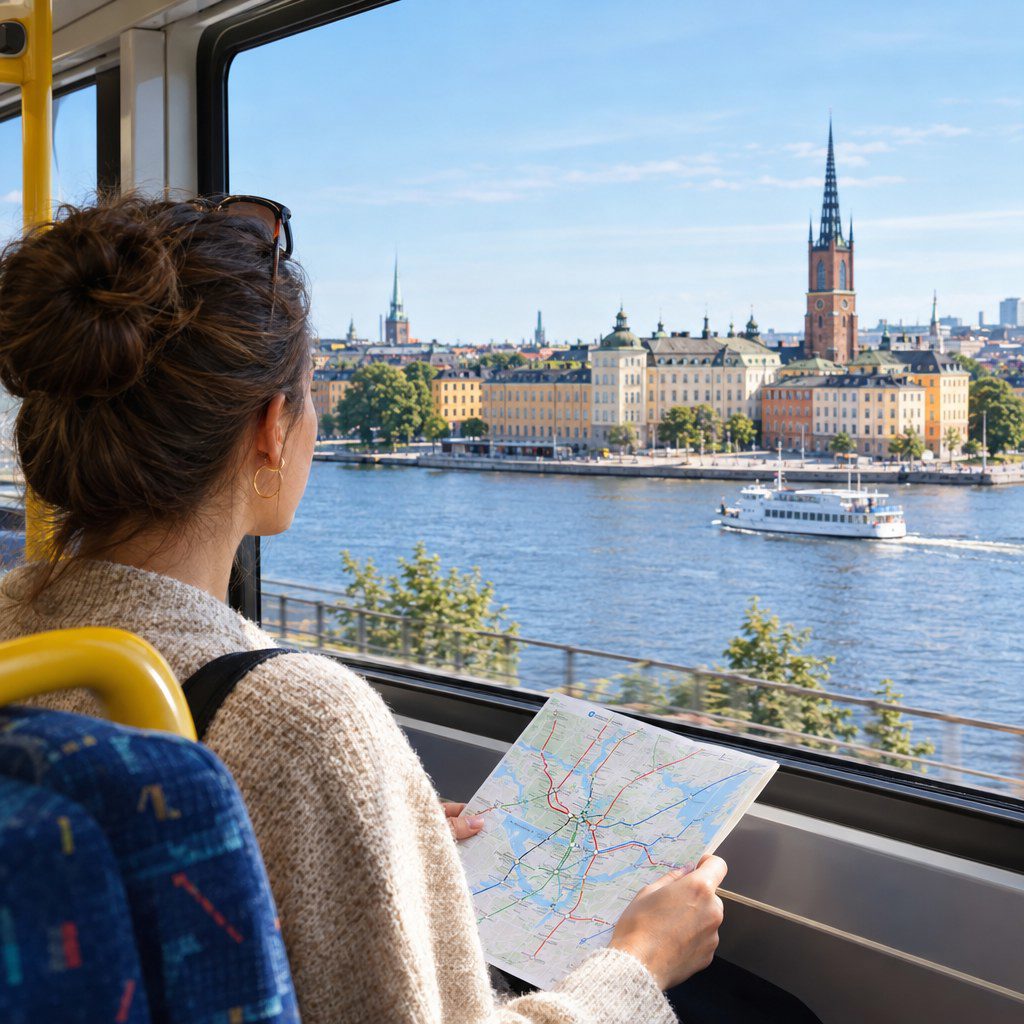
- Set your destination. Use a street address, venue name or station in the official journey planner. Confirm the date and approximate departure time.
- Compare 2 routes. Note total travel time, number of changes, walking distance and the platform or stop name. Select the simpler route if the time difference is small.
- Validate ticket coverage. Confirm that your ticket is active and valid for every planned service. Treat airport and private boat connections as separate checks.
- Follow the line’s final destination. On trains and trams, the destination display helps you verify direction. On buses, confirm the route number and destination before boarding.
- Watch live updates. Check again shortly before leaving and at interchange stations. A revised platform or replacement bus can change the best route.
- Keep a fallback. Save the next-best route or identify a nearby metro station. This is particularly useful when you have a dinner reservation, flight connection or client meeting.
At busy stations, let passengers leave before boarding and move away from doors once inside. On buses, signal clearly when you want to get off. These small habits make journeys smoother for you and for everyone sharing the service.
Avoid common mistakes and recover quickly
Assuming every boat accepts the same ticket
Stockholm has public transport ferries, tourist boats and archipelago services with different arrangements. Check the named departure in your route plan and read the boarding information. If you have already reached the quay and discover your ticket is not valid, compare the next public transport connection with the separate boat fare before changing your plans.
Underestimating walking and weather
Winter conditions, rain, wind and uneven streets can turn a short walk into a slow one. Wear footwear that suits pavement and stairs, carry layers, and allow extra time when conditions are poor. If walking becomes uncomfortable, use a bus for the final link rather than forcing the original plan.
Following a route without checking disruption notices
Engineering work and incidents can affect evening or weekend services. Check live information on the day, not only when building your itinerary. If a line is interrupted, look first for a parallel metro line, a bus route or a nearby station rather than waiting indefinitely for the original service.
📋 Check before leaving: ticket status, live departure time, direction of travel, final walking distance and a backup route. This 1-minute check prevents most avoidable transport problems.
Use a simple decision framework
Choose public transport when your day includes more than one district, when parking would create friction, or when you want predictable travel between central locations. Choose walking for tightly clustered stops, then use a rail or bus connection to reset your location rather than walking the entire city.
For each journey, make 3 decisions: select the mode that fits the distance, select the ticket that covers your actual pattern of travel, and select the route with the least operational risk. The fastest option on paper is not always the best option when it relies on a tight connection or a long unfamiliar walk.
If you are coordinating colleagues or visitors, share a simple plan: meeting address, closest useful station, recommended arrival time and an alternate route. That is often more useful than sending a long list of attractions or line numbers without context.
Make your first Stockholm journey the easy one
Before you leave your accommodation, open the current SL journey planner, confirm your ticket and save one backup route. Then explore one connected area at a time.