How to Keep Reusable Shopping Bags Ready
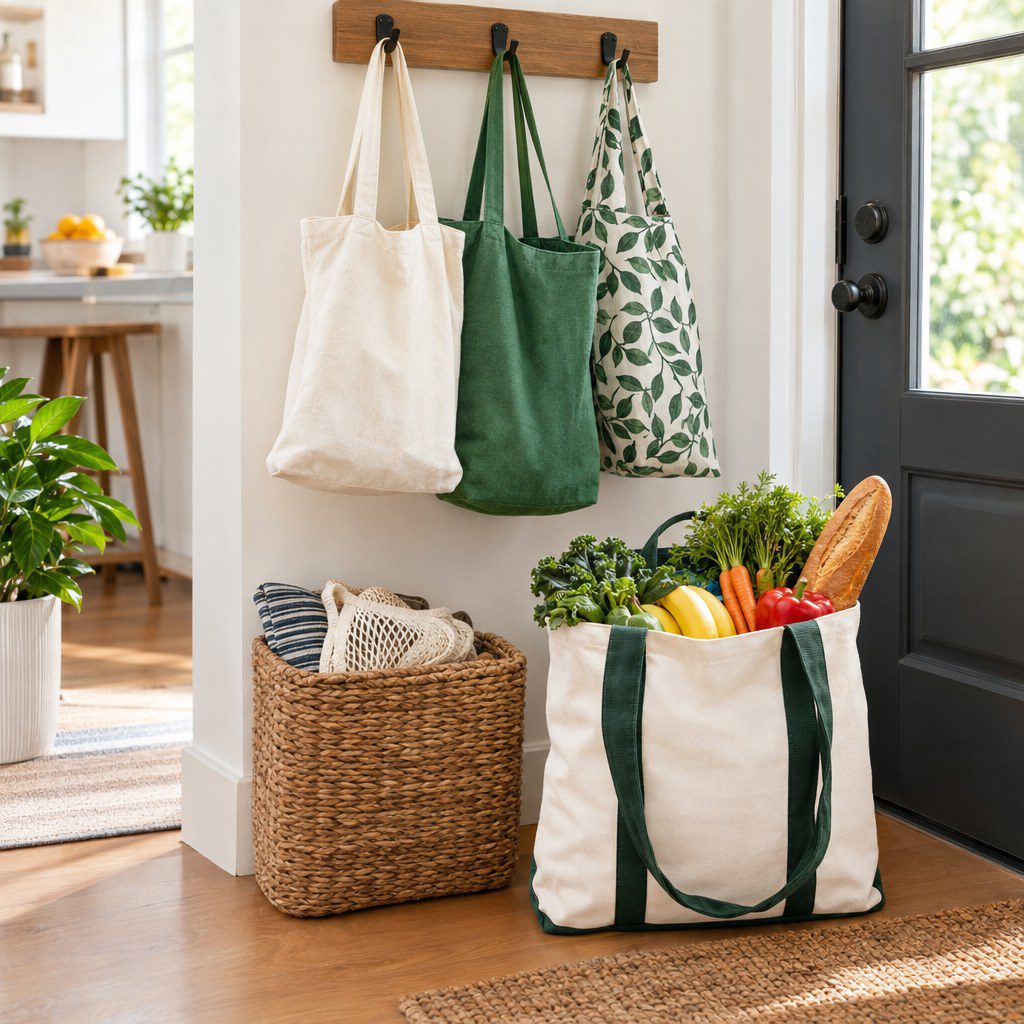
Keep reusable shopping bags ready by giving them one dependable home, returning them after unloading, and carrying a small backup set where you make shopping decisions. The goal is not more bags; it is a simple reminder-and-return system.
Forgotten bags usually reflect a broken routine, not poor intentions. Bags get left in kitchens, closets, or mixed with other supplies. A clear storage point and short reset routine solve most problems without adding clutter.
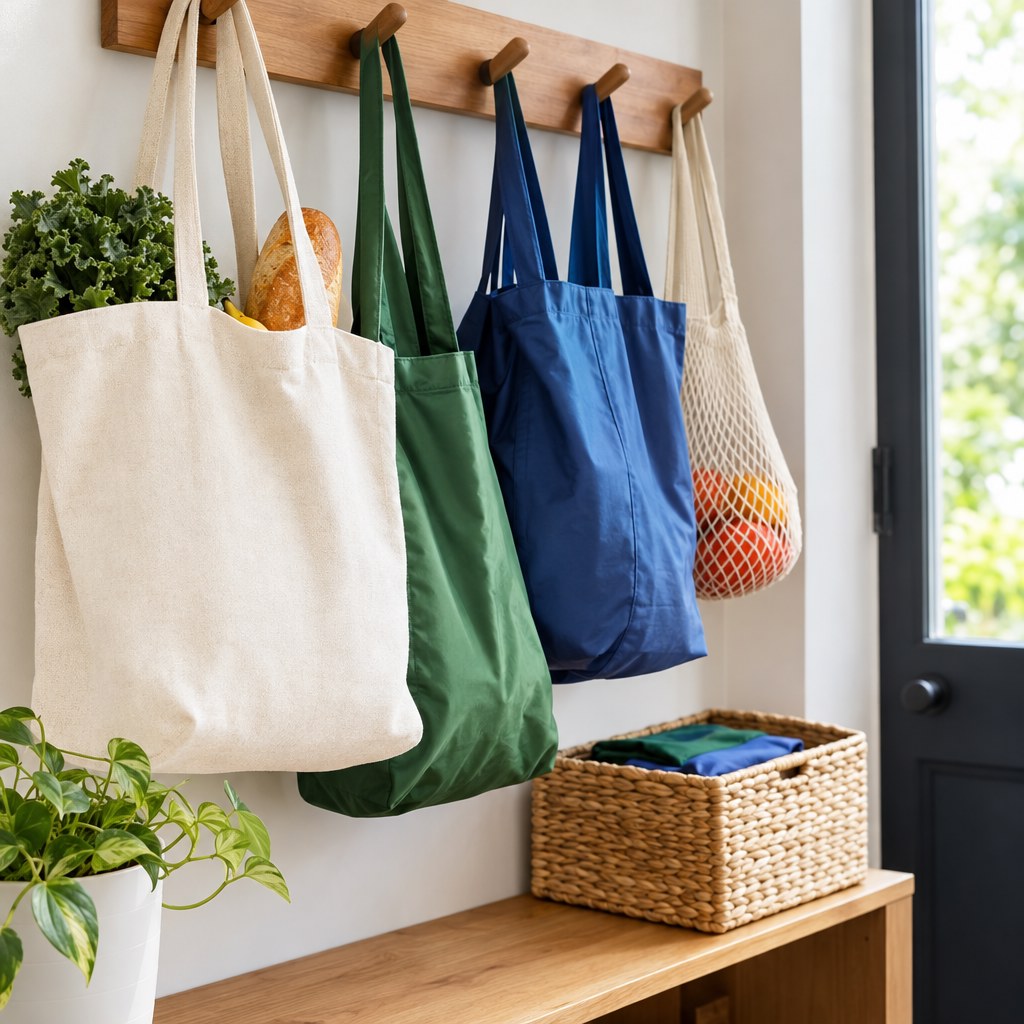
Why reusable bags are not ready when you need them
A bag system fails at transition points: after unloading, before leaving, or when plans change. Without an assigned destination, bags land on chairs, counters, or car floors. Temporary locations quickly become forgotten locations.
Friction is the second problem. A bulky tote that must be folded, sorted, and carried elsewhere is less likely to be put away. Storage should allow a quick drop, hang, fold, or bin placement.
No fixed home
When bags can go anywhere, they stay where the last trip ended. One visible home removes guesswork.
No departure cue
Bags far from keys, coats, or the vehicle depend on memory. Put them beside a reliable leaving-home cue.
No replenishment
Bags move between home, car, office, and laundry. A quick check keeps each location supplied.
Treat bags as a small operating system: a primary supply, backup supply, return point, and place for bags needing cleaning or repair.
Build a bag-ready system around your actual shopping pattern
Consider how you shop before choosing hooks or containers. Think about planned grocery trips, quick stops, transport, and pickup orders. The best setup matches your routine rather than someone else’s organization method.
Separate bags by job
Most people need few categories. Keep grocery totes and regularly used insulated bags together, while storing specialty bags separately. These may include produce bags, large flat bags, or a durable work-supply bag.
- Everyday set: the bags you want available for normal shopping trips.
- Vehicle or travel set: compact bags that remain near your usual transport.
- Overflow set: extra bags for larger shops, events, or unexpected errands.
- Cleaning set: bags waiting to be wiped, washed, dried, or repaired before returning to use.
Choose enough bags for a normal trip plus a little margin. If you run short, add capacity or use larger bags. If a pile is rarely used, reduce the active set and store or donate usable extras.
💡 Tip: Make one bag the “carrier bag” for folded compact bags. Put loose bags inside it as you find them to create a visible collection point.
For a small business, name an owner. Label the storage location and decide who returns bags after supply runs, deliveries, or events. Shared equipment needs an explicit reset step.
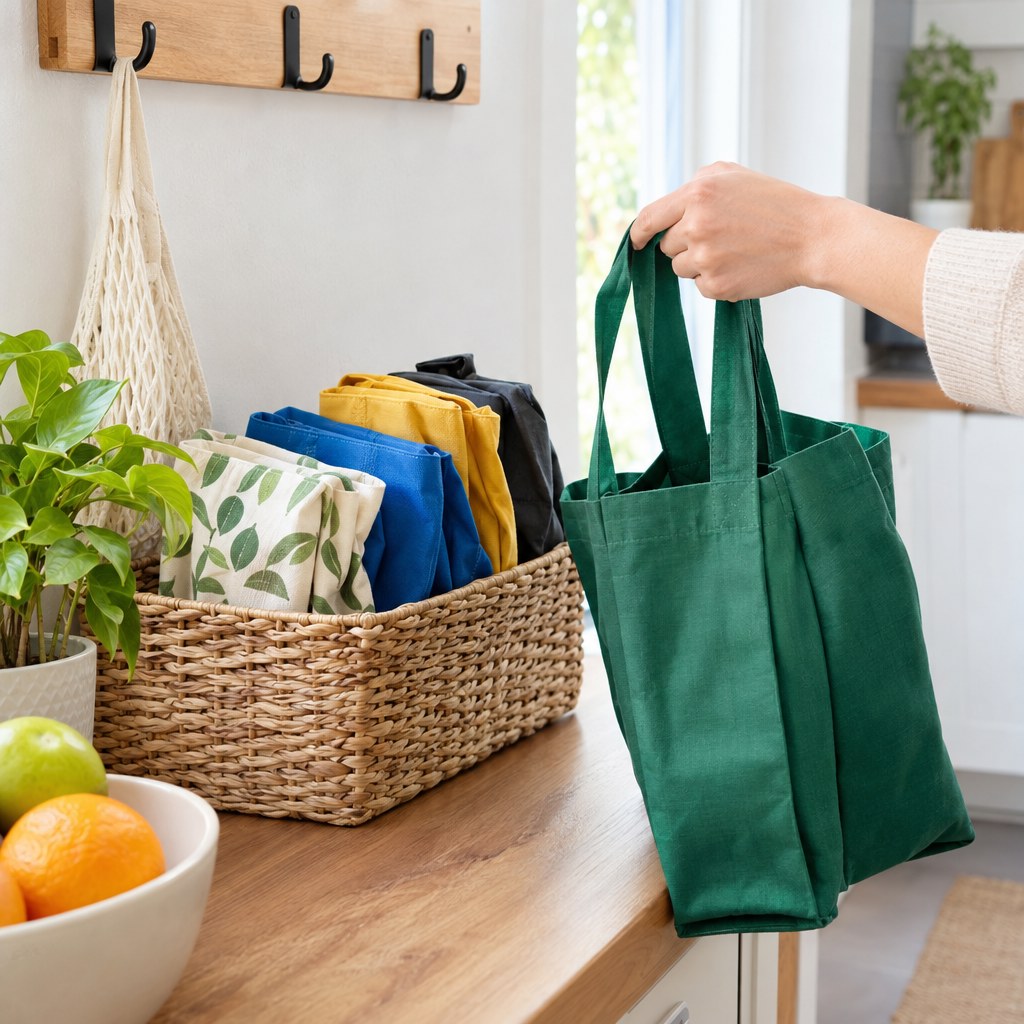
Choose a storage location you will use
The best location sits between unloading purchases and leaving for the next errand. It may be near an entrance, garage door, mudroom, or grocery-unpacking area. Car-dependent households can keep compact bags in the vehicle, but should replace bags brought inside.
Use a primary station and a backup station
Your primary station holds the active set. An open basket, bin, hook, or low shelf works well when bags are visible and easy to grab. Closed storage may look tidier but can hide the supply.
Your backup station is a small supply at another decision point: a work bag, front door, or car. It provides resilience for last-minute stops without creating unnecessary duplication.
Keep the area for bags and related items only. If it collects mail, umbrellas, chargers, and returns, it becomes another clutter zone.
Use a 3-step reset routine after every trip
Consistency matters more than elaborate folding. Attach the reset to unloading, when every bag is already in your hands, before moving on to other tasks.
- Empty completely. Check corners and pockets for receipts, packaging, produce, or small items. This prevents odors and surprises.
- Sort by condition. Return clean, dry bags to the active station. Set aside bags with spills, moisture, or damage.
- Restore the backup. If you used a car, work, or travel bag, return compact bags to that location before the day ends.
Use a recurring reminder only while the routine forms. A brief weekly check can help shared households or teams confirm that bags are present, clean, and properly distributed.
Keep cleaning practical
Follow care labels, especially for insulated or coated bags. Do not return damp bags to closed storage. Dry them fully, clean spills promptly, and remove damaged bags from active use until repaired or replaced.
Apply the system to workplace and business use
Reusable bags can carry supplies, organize event materials, or support local purchases. The principle is the same: assign a home, purpose, and person or role responsible for resetting the supply.
Label the storage point, such as “Shopping Bags: Return Here After Use.” Label different bags by function, such as “Supplies,” “Events,” or “Cold Items,” so staff can choose correctly without asking.
Avoid storing shared bags in one employee’s desk or vehicle unless that person owns the responsibility. Use an accessible common location and, if bags leave frequently, a simple checkout note or shared task list.
Avoid common mistakes and recover quickly
The most common mistake is creating too many locations. Start with one main station and one backup. Add another only when a repeated problem clearly requires it.
Another mistake is buying bags before fixing the return process. First gather what you have, remove damaged or unwanted items, and test a simple station for several shopping cycles.
⚠️ Watch for: A bag station hidden behind doors, blocked by seasonal items, or inconvenient to reach. If bags are repeatedly left elsewhere, change the station.
If the system breaks down, reset it in one session. Collect and empty all bags, separate clean bags from those needing attention, and choose one active set. Put the rest in labeled overflow storage, then place the active set near your next likely departure point.
A practical decision framework
Ask three questions: Where do bags accumulate after use? Where do you pass before shopping? Who needs to understand the system? The answer is usually a visible station near that route plus a small backup set.
Keep the routine light: empty, inspect, return. Review the active quantity only when you run short or notice unused excess. A system that works on a busy day is better than perfect storage that needs constant attention.
Set up your bag station today
Gather your bags, choose one easy-to-reach home, and restore a small backup set before your next shopping trip.