How to Make a Dark Corner Feel More Inviting
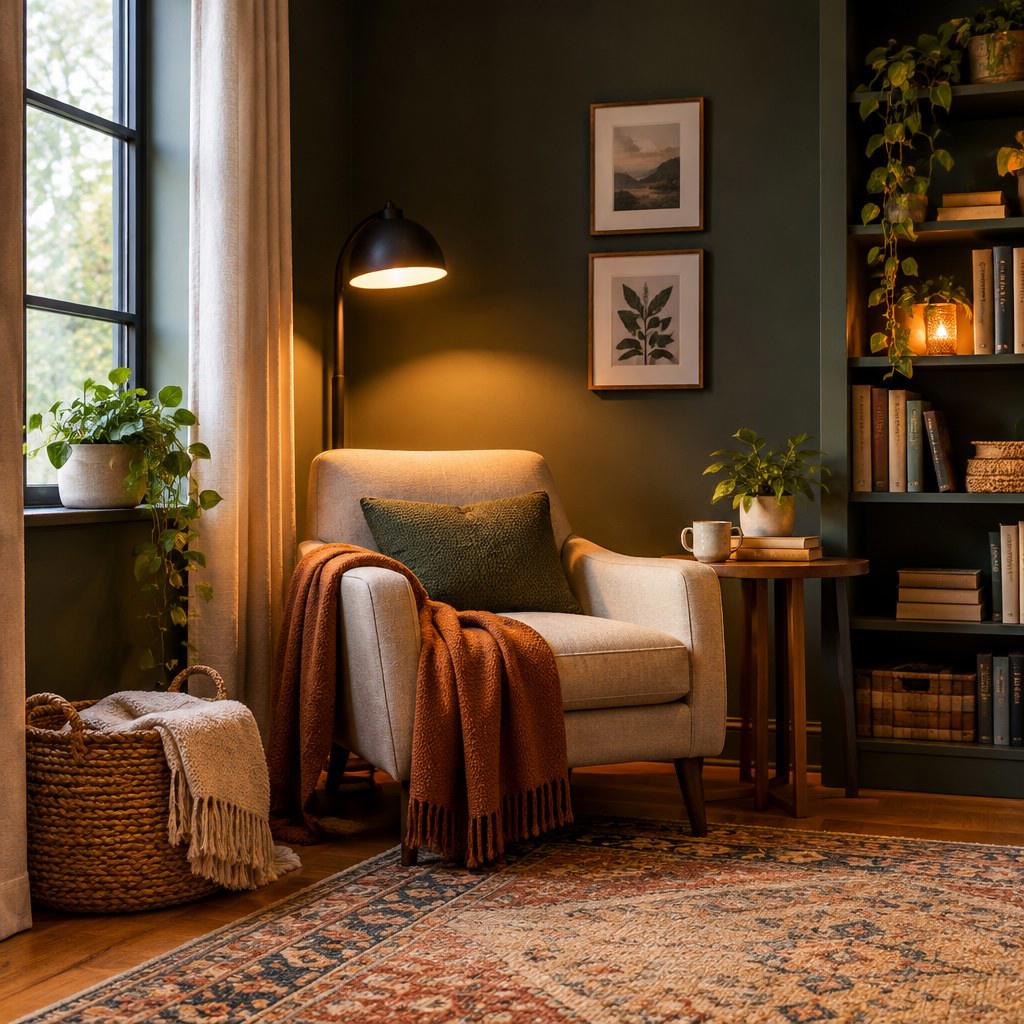
A dark corner becomes more inviting when you give it a clear purpose, add layered light, and choose surfaces that reflect rather than absorb what light is available. You do not need to renovate the whole room: a focused combination of lighting, furniture, texture, and editing can turn an ignored spot into a useful, comfortable part of the space.
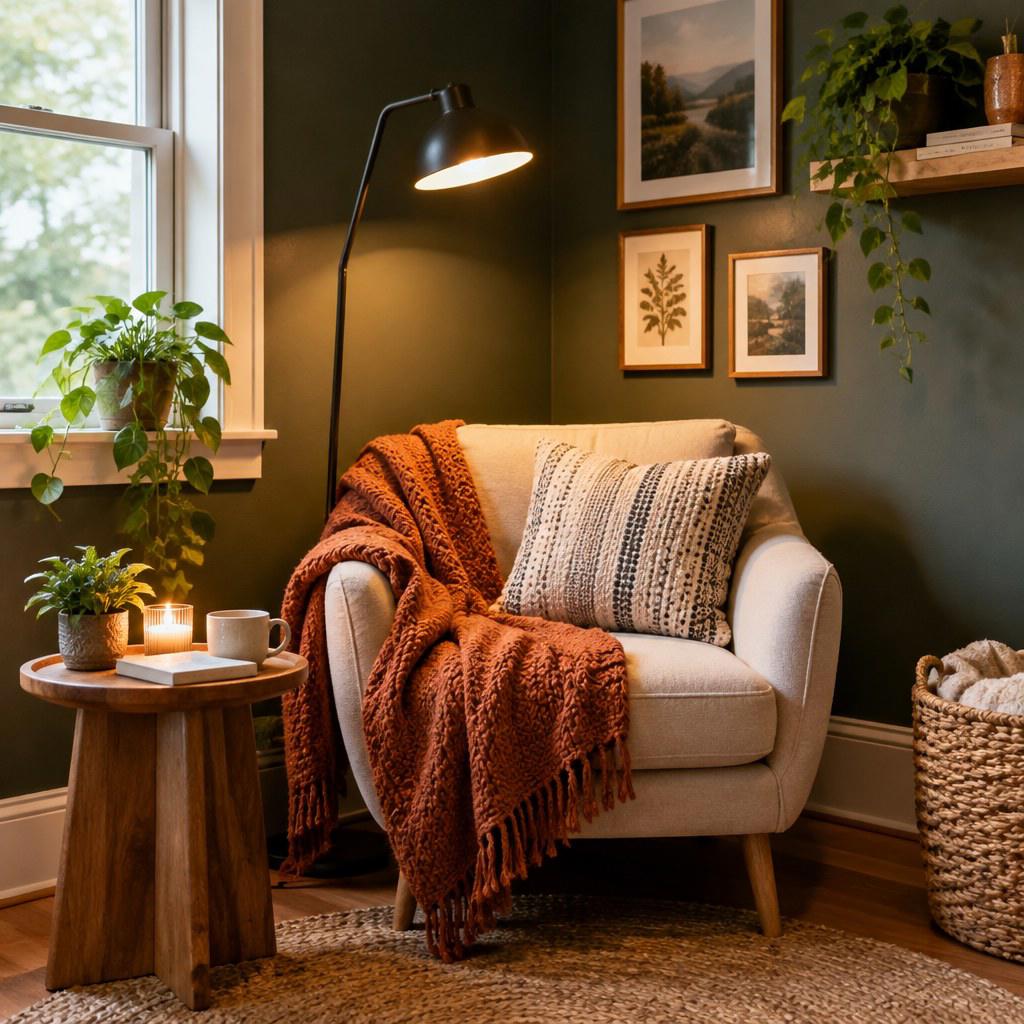
Why a corner feels unwelcoming
A dark corner is rarely only a lighting problem. It often sits beyond the reach of the main ceiling fixture, receives little daylight, and contains furniture or finishes that visually recede. In a home, that can make the area feel unfinished. In a reception area, studio, shop, or office, it can make usable square footage feel neglected.
Start by identifying which of these conditions applies. You may need more than 1 solution, but diagnosing the dominant problem prevents you from buying decorative items that do not improve the space.
Insufficient light
The corner may receive light indirectly, but not enough to reveal its depth, colour, or function after daylight fades.
No defined role
An empty corner can look accidental, while a crowded one can become a storage zone rather than an inviting destination.
Absorbing finishes
Very dark walls, bulky furniture, heavy window coverings, and bare floors can make limited light disappear rather than travel.
Also check sightlines. A corner behind an open door, tall cabinet, or projecting sofa can feel hidden even when it is well lit. If people cannot easily see or approach it, the first improvement may be rearranging rather than decorating.
Choose one useful purpose before decorating
The fastest way to make a dark corner feel intentional is to assign it a single job. A vague “decorative corner” often accumulates miscellaneous items. A specific role gives you a practical limit for furniture, light, and accessories.
Match the purpose to the corner’s location
- Near seating: create a reading spot with a compact chair, small table, and directional lamp.
- Near an entry: use a narrow console, wall hooks where appropriate, a tray, and soft lighting for a calmer arrival point.
- In a living or waiting area: build a display zone with a plant, artwork, or one sculptural object.
- In a work setting: add a focused task area, printer station, or quiet perch, provided access and circulation remain clear.
- Beside a window: use the corner for a low-light-tolerant plant arrangement or occasional seating rather than blocking the glass.
Keep the purpose proportionate. A narrow corner does not need an armchair and a floor lamp if it can only comfortably hold a stool and a wall-mounted light. Measure the floor area, door swing, and circulation path before choosing furniture. You should be able to use the corner without creating an obstacle in the room.
💡 Tip: If you cannot describe the corner’s purpose in a short phrase, such as “reading seat” or “entry drop zone,” reduce the number of items before adding anything new.
Layer light instead of relying on one source
Overhead lighting makes a room generally visible, but it often leaves corners in shadow. A more inviting result comes from adding a local light source that puts illumination at the level where people sit, walk, or look. Think of the ceiling light as background and the corner light as the reason the area exists.
Pick the right kind of light
A floor lamp is useful beside a chair or tall plant because it introduces height without needing wall work. A table lamp works well on a console, cabinet, or side table and creates a softer pool of light. A plug-in wall light can be a good answer where floor space is limited. Accent lighting, such as a small picture light or concealed strip light, can highlight art or shelving but should support rather than replace usable room lighting.
Choose a bulb and shade that suit the job. A shade that directs light downward helps reading and task work. A translucent shade spreads a gentler glow for an entry or lounge area. If the rest of your room uses noticeably warm or cool light, keep the corner consistent so it does not look disconnected. Check the fixture’s bulb requirements and follow the manufacturer’s safety guidance, especially for enclosed shades or integrated lighting.
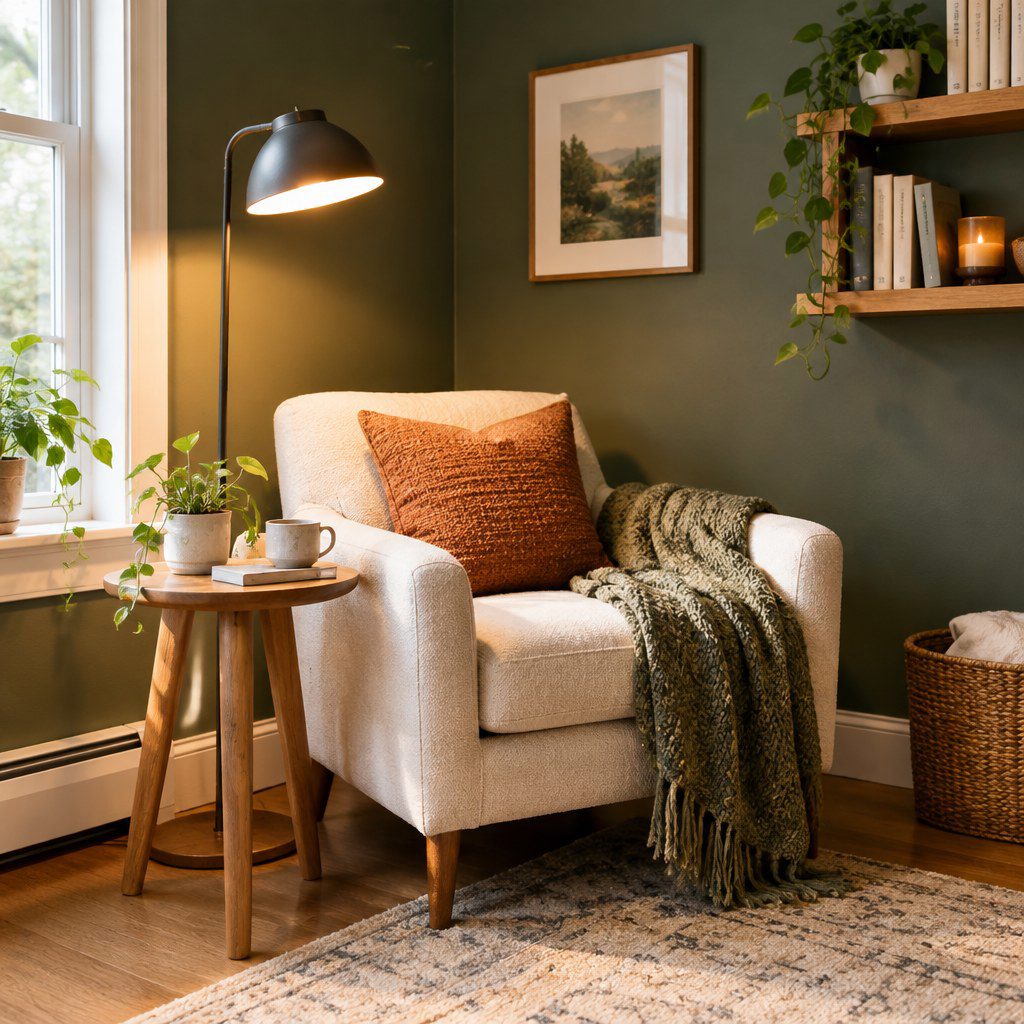
Position the light so it reaches the corner’s back wall or a nearby vertical surface. Lighting only the floor can leave the area visually hollow. Lighting a wall, artwork, plant leaves, or open shelving gives the eye something to land on and makes the corner appear more finished.
Use surfaces, colour, and texture to hold the light
You do not have to paint every dark corner white. Dark paint can feel rich and intentional when there is enough contrast and a local light source. The goal is to balance light-absorbing surfaces with materials that create definition.
Make thoughtful, limited changes
Start with the largest visible surfaces. A lighter rug can separate a seating nook from a dark floor. Pale or medium-toned upholstery may be more effective than a large dark chair. A mirror can bounce existing light when positioned to reflect a window, lamp, or brighter wall; avoid placing it where it reflects clutter or glare.
Add texture in a controlled way. A woven basket, wood side table, linen shade, framed print, or leafy plant can make the area feel layered without making it busy. In a business environment, favor durable finishes and fewer objects that are easy to clean and maintain.
Put the corner together in a practical order
Work from function to decoration. This approach reduces wasted purchases and makes it easier to see which change is actually improving the space.
- Clear the area. Remove temporary storage, damaged décor, and anything that blocks access.
- Observe it at different times. Check daylight, evening conditions, shadows, reflections, and nearby switches.
- Set one purpose. Decide whether the corner is for seating, display, entry organization, work, or greenery.
- Add the main light. Test the lamp or fixture in the evening before committing to other changes.
- Place one anchor item. This might be a chair, console, cabinet, plant stand, or artwork.
- Add 1 or 2 supporting elements. Use a small table, rug, basket, cushion, or framed print only if it reinforces the purpose.
- Review from across the room. Check whether the corner now looks connected to the wider space and whether it remains easy to use.
Avoid common mistakes and know how to recover
The most common mistake is treating every dark corner as a place for more objects. Too many small items make limited light work harder and create visual noise. Use fewer, larger elements with clear shapes instead.
Problems to correct
- A lamp is present but the corner still looks gloomy: move it closer to a wall or add a shade that spreads light more effectively.
- The furniture feels squeezed in: replace bulky seating with a smaller chair, stool, narrow table, or wall-mounted option.
- The corner looks staged but is not useful: return to the chosen purpose and remove purely decorative pieces that interfere with it.
- The corner is bright but harsh: soften the effect with a shaded lamp, indirect light, or textiles that reduce visual starkness.
- It becomes cluttered again: give the area a defined storage boundary, such as one tray or basket, and avoid expanding beyond it.
Do not hide cords under loose rugs, run cables across walkways, or overload extension leads. If you need a permanent electrical change, consult a qualified professional who can assess the space and local requirements.
Make the next decision simple
Choose the corner’s purpose first. Then add one local light, one anchor item, and only the supporting details that make the space easier and more pleasant to use.
If the result feels crowded, remove something. If it still feels flat, improve the light before buying more décor.