How to Make a Versatile Tahini Dressing
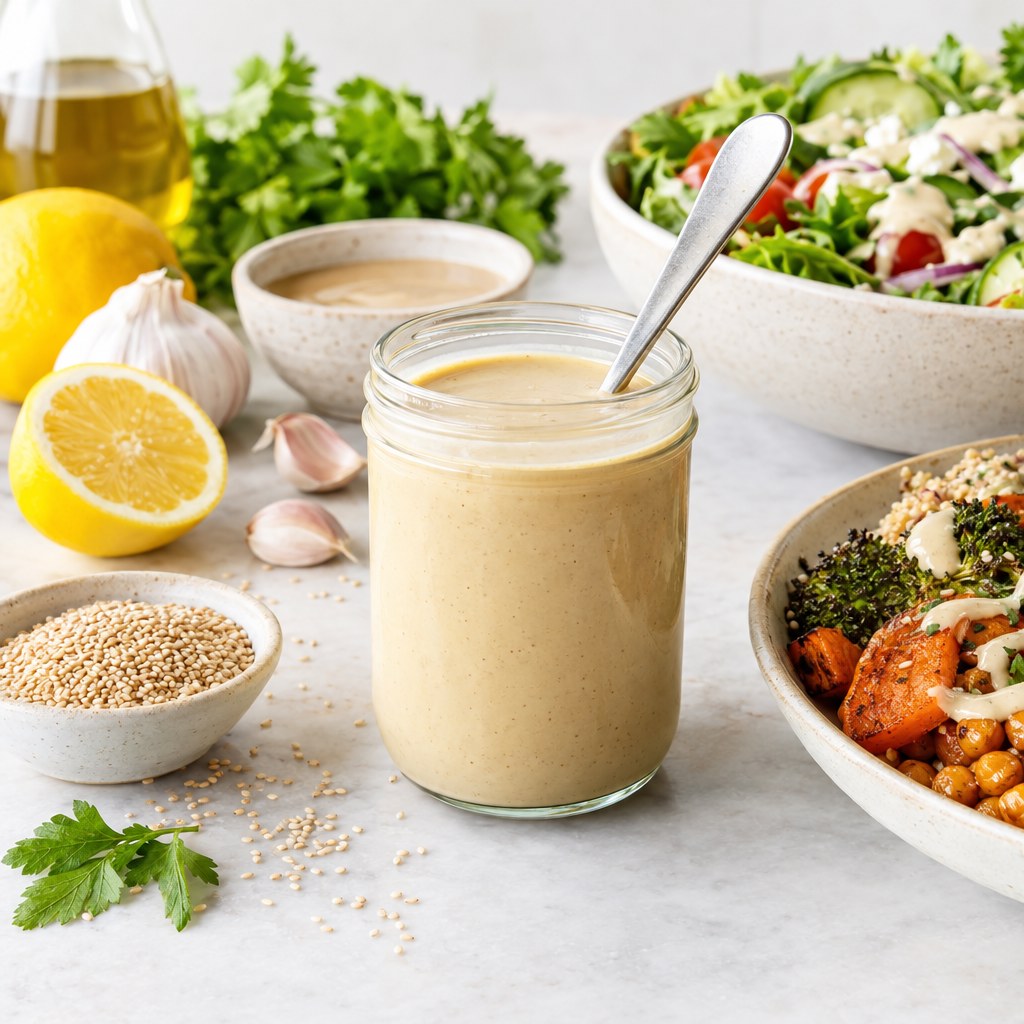
A versatile tahini dressing starts with sesame paste, acid, water, and salt, then becomes useful across salads, grain bowls, roasted vegetables, sandwiches, and simple proteins. The key is learning how to control thickness, balance bitterness, and add flavour without losing the creamy texture that makes tahini so adaptable.
Once you understand the base method, you can make a small batch that suits the meal in front of you rather than relying on a separate bottled dressing for every dish. This article gives you a dependable formula, practical variations, storage guidance, and quick fixes for common problems.
Why tahini dressing works in so many meals
Tahini is a paste made from ground sesame seeds. Its rich, savoury, slightly bitter flavour gives a dressing more body than a basic oil-and-vinegar mixture. It can coat leafy greens, cling to roasted vegetables, and bring dry grains together without needing dairy.
The apparent simplicity can be misleading. Tahini reacts strongly when you add lemon juice or another acidic ingredient: it often becomes thick and stiff before it loosens again with water. That change is normal. If you expect it, you can build a smooth dressing deliberately instead of assuming the batch has split.
Creamy without cream
Tahini provides a full texture without yoghurt, mayonnaise, or cream. This makes it useful when you want a plant-based dressing with substance.
Easy to adjust
Water changes texture, while acid, salt, garlic, herbs, and spices change direction. You can make one base suitable for several dishes.
Useful for batch cooking
A prepared jar makes assembled lunches and weeknight meals easier, particularly when your ingredients need moisture and a strong flavour anchor.
Quality matters. Before measuring, stir the tahini thoroughly in its jar, scraping up any settled paste from the bottom and mixing in the separated oil. Unstirred tahini can make one batch overly oily and the next unusually dry or bitter.
The dependable base formula
Use this as a starting point for a dressing that serves several portions. The quantities are flexible, but the order of mixing helps you evaluate the result accurately.
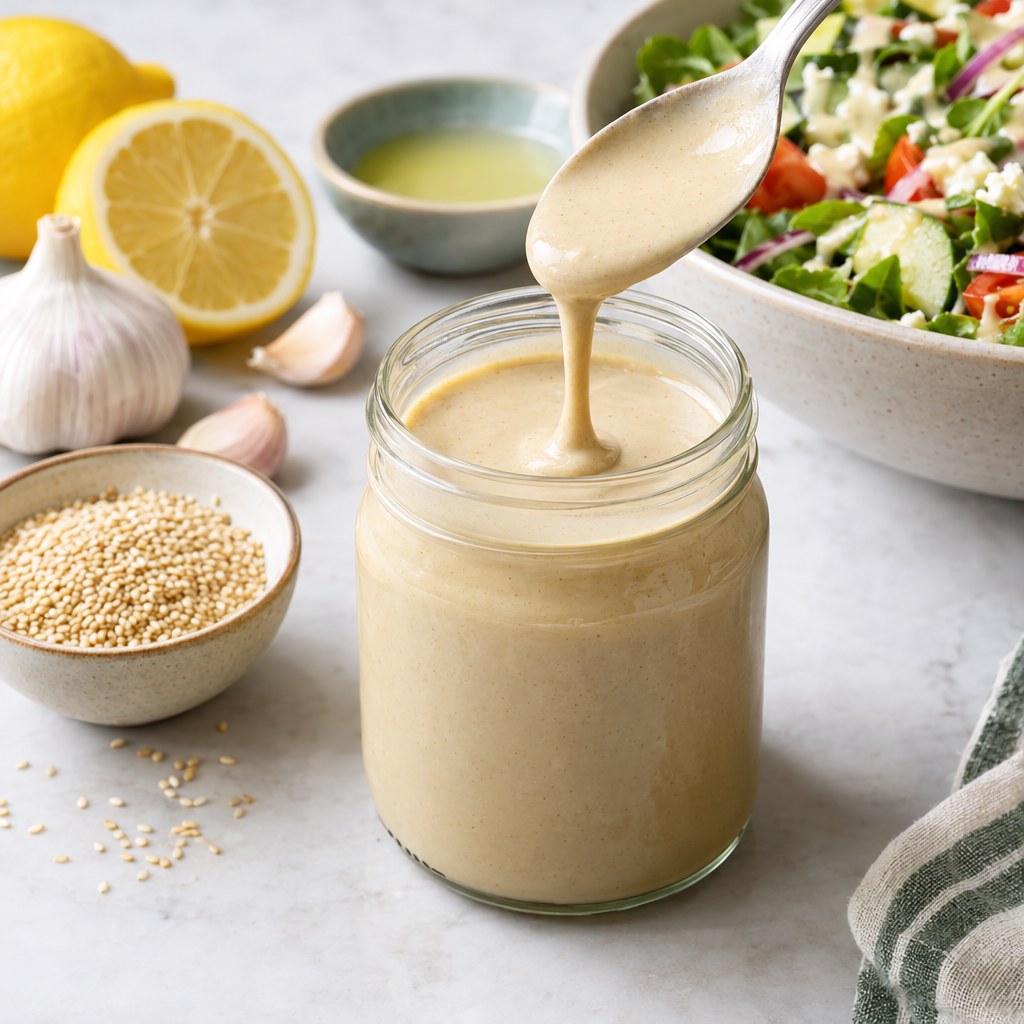
Start with less water than you think you need. A bowl dressing should fall from a spoon in a thick ribbon; a sauce for roasted cauliflower can be slightly thicker; a dip should hold a soft peak. The same ingredients can do all 3 jobs when you alter water slowly.
💡 Tip: Taste only after the dressing has reached its intended thickness. A sauce that seems adequately salted while very thick may taste flat once you add more water.
How to make it step by step
- Stir the tahini jar. Mix the paste and oil until the texture looks even. Measure 4 tablespoons into a medium bowl or jar.
- Add the acid and seasonings. Whisk in lemon juice, salt, and garlic if using it. The mixture may seize and become noticeably thicker.
- Add cold water 1 tablespoon at a time. Whisk thoroughly after each addition. At first it may look grainy or stubborn; keep mixing before adding more.
- Stop at the right texture. For dressing, aim for a glossy sauce that pours easily but still coats a leaf or piece of vegetable.
- Taste and correct. Add a little lemon for lift, a pinch of salt for depth, or water for flow. If the flavour is too aggressive, use a small amount of sweetener or a little more tahini rather than excessive water.
- Rest briefly, then check again. Let the dressing sit for a few minutes so garlic and salt disperse. Stir once more before serving.
A whisk works well for a small batch. For a larger quantity, a jar with a tight lid is practical: combine ingredients, seal, and shake. If you use a blender, avoid making a very small quantity in a large blender jug, as the blades may not catch the mixture evenly.
Adapt the flavour to the meal
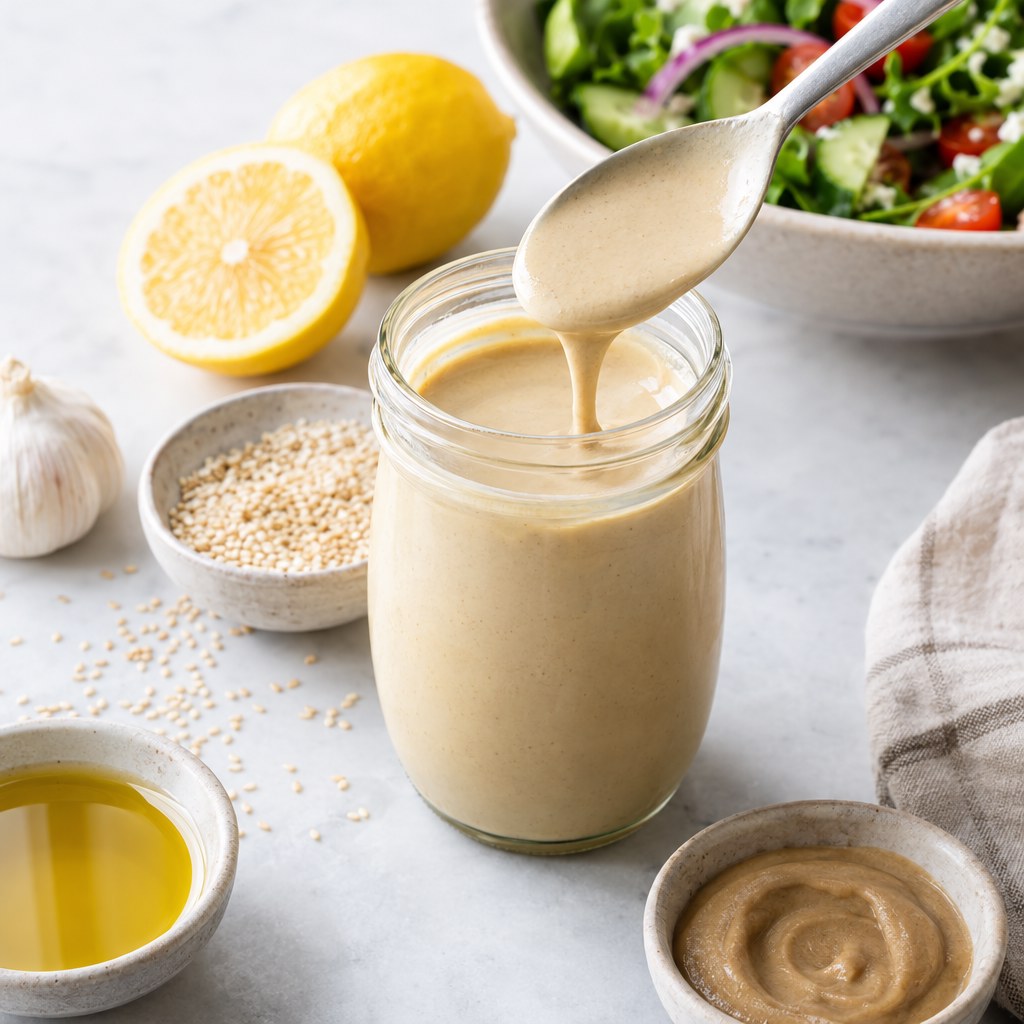
The base becomes more versatile when you change only 1 or 2 flavour elements at a time. This preserves the familiar sesame character and makes it easier to identify what needs adjustment.
For a bright everyday salad dressing
Keep lemon as the main acid and add chopped parsley, dill, or mint. Use enough water to make the sauce pourable, especially if you are dressing sturdy greens, cucumber, chickpeas, or a grain salad. Fresh herbs are best added shortly before serving.
For roasted vegetables and grain bowls
Add ground cumin, smoked paprika, or a pinch of chilli flakes. A small spoonful of maple syrup or another mild sweetener can soften bitter greens and charred vegetables. Use a medium-thick texture so the sauce sits on the food rather than pooling beneath it.
For noodles, wraps, and crunchy slaws
Use lime juice or rice vinegar in place of some or all of the lemon, then add grated ginger and a small amount of soy sauce or tamari. Because soy sauce adds salt, season cautiously and taste before adding extra salt. Thin this version enough to distribute through noodles or shredded vegetables.
For a thicker dip or sandwich spread
Use less water and consider adding finely chopped herbs, roasted garlic, or a pinch of cumin. Spreadable tahini sauce works well in wraps with roasted vegetables and beans, or as a dip beside raw carrots, radishes, and toasted flatbread.
Ways to use and serve it well
Think of tahini dressing as a finishing sauce rather than an afterthought. Its flavour is concentrated, so you usually need less than you would with a thin vinaigrette. Start with a modest amount, toss or drizzle, then add more only where the food still seems dry.
- Drizzle it over roasted carrots, sweet potato, cauliflower, or squash after cooking.
- Toss it with lentils, quinoa, brown rice, or couscous, then add herbs and crunchy vegetables.
- Use it to dress kale, cabbage, or broccoli slaw; these sturdy ingredients benefit from a creamy sauce.
- Spoon it onto baked tofu, falafel, grilled chicken, or fish if sesame complements the rest of the meal.
- Serve it alongside a platter of vegetables, olives, beans, and warm flatbread.
If you are preparing food ahead, store the dressing separately from greens and crisp vegetables. The dressing will soften delicate leaves and may dull their texture over time. Add it shortly before eating whenever possible.
Mistakes, risks, and fixes
“It turned into a thick paste”
This is the usual reaction between tahini and acid, not a failed batch. Whisk in cold water gradually. Keep going until the mixture relaxes into a smooth sauce. Adding all the water at once can make it harder to control the final consistency.
“It tastes bitter or harsh”
First check whether the tahini itself tastes fresh and pleasant. Then balance, rather than conceal, the bitterness: add a little more lemon for brightness, a small amount of sweetener for roundness, and enough salt to bring the flavours together. Raw garlic can also dominate, so reduce it in the next batch.
“It is too thin”
Whisk in another spoonful of tahini, then retaste for salt and acid. Avoid trying to thicken it with flour or starch; that changes its clean, creamy character and can leave an unpleasant texture.
Food safety and storage
Transfer leftover dressing to a clean, covered container and refrigerate it promptly. Because fresh lemon and garlic do not make a homemade sauce shelf-stable, do not leave it out for extended serving periods. Check it before reuse; discard it if it develops an off smell, visible mould, or an unusual appearance. It will often thicken in the refrigerator, so stir in a little water before serving.
A simple decision framework
Choose your texture first: thin for tossing, medium for drizzling, thick for dipping. Next, match the acid and seasonings to the meal: lemon and herbs for fresh salads, warm spices for roasted vegetables, or lime and ginger for noodle-based dishes. Finally, taste after thinning and make only small corrections.
The most reliable approach is to keep the base restrained. Start with tahini, acid, water, and salt; then add one flavour direction that supports the ingredients you are serving. That keeps the dressing flexible, easy to troubleshoot, and suitable for repeat use throughout the week.
Make one base, then make it your own
Start with a small batch today, adjust it spoon by spoon, and note the variation that best suits your regular meals.