How to Prepare for a First Train Trip Across Europe

Preparing well for your first train trip across Europe turns a complicated-looking itinerary into a manageable sequence of decisions. You need a realistic route, the right tickets and reservations, valid travel documents, and a plan for handling changes without losing your day.
Train travel gives you flexibility, city-centre arrivals, and time to work or rest between destinations. The trade-off is that each operator, country, and train type can have different booking, luggage, validation, and reservation rules. Build your trip around those differences before you leave.
Build a route that works in practice
Your first route should prioritize reliable connections and sensible travel days rather than the maximum number of countries. A rail map can make nearby cities appear easy to combine, but a journey can still involve station changes, border controls, limited services, or several hours of travel.
Start with fixed commitments: meetings, accommodation dates, event tickets, or a flight home. Then choose a small number of overnight bases. Staying 2 or 3 nights in a city often reduces check-in time, luggage handling, and the pressure to make an early departure every morning.
Check the journey, not only the destination
For every travel day, record the departure station, arrival station, departure time, total duration, number of changes, and the minimum connection time. Also confirm whether the station name is central or an outlying station. Large cities can have several major terminals that are not interchangeable.
As a practical rule, give yourself more margin on the first and last train of the day, on cross-border connections, and when you must reach a flight, meeting, or cruise departure. A slightly longer route with one easy change is often more useful than the fastest route with a very tight connection.
💡 Tip: Treat each connection as a small project. If you have luggage, limited mobility, children, or an unfamiliar station, allow enough time to find the correct platform without rushing.
Plan around operating realities
Timetables can change because of engineering work, weather, strikes, seasonal schedules, or local events. Check your itinerary again shortly before departure and on each travel day. If a connection is essential, identify a later alternative before you board the first train.
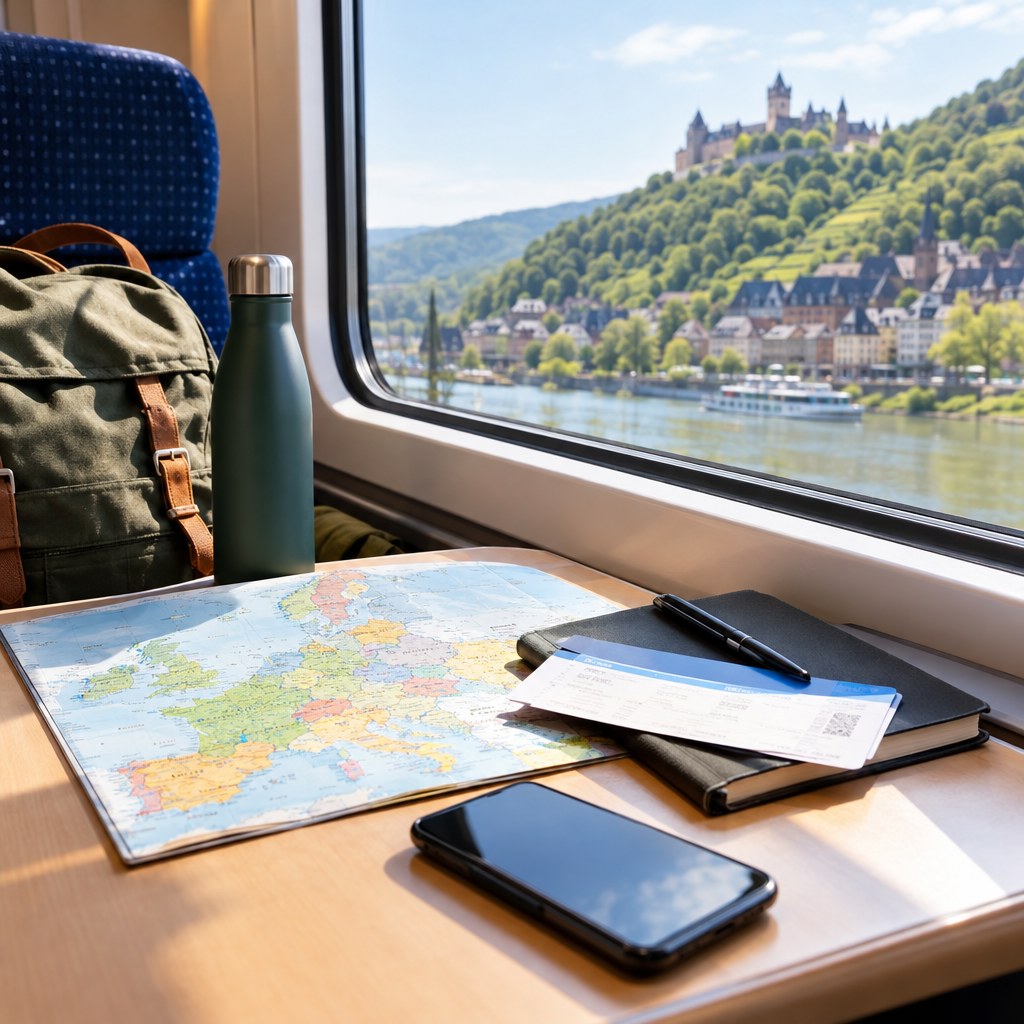
Choose tickets, passes, and reservations deliberately
There is no universally best way to pay for European rail travel. Point-to-point tickets can suit a fixed itinerary, especially when you can buy early. A rail pass may suit a flexible trip with frequent long journeys. The right choice depends on your actual route, not on the number of countries you hope to visit.
Make a simple comparison before buying. List every major journey, estimate its individual ticket cost where available, then compare that total with the pass options you are considering. Add the cost and availability of mandatory reservations, because a pass does not always mean you can board every train without an extra step.
Separate travel authority from seat entitlement
A ticket or pass proves that you can travel under particular conditions. A reservation gives you a designated place on a particular service when required or purchased. High-speed and international services commonly have stricter reservation practices than regional trains, but rules vary. Read the conditions for each train rather than relying on assumptions from a previous journey.
Save tickets and reservation references in the operator’s app if available, but also keep accessible copies of the booking details. Screenshots or downloaded documents can help when reception is weak or a battery is low.
Prepare documents, payments, and connectivity
Rail trips cross borders more easily than road journeys, but border requirements do not disappear. Your nationality, route, and destination determine what documents you need. Check official government guidance for passport validity, visas, entry requirements, and any rules that apply to transit countries before booking non-refundable travel.
Keep your passport, insurance details, payment cards, essential medication, and accommodation information in a small bag that stays with you. Do not place these essentials in a suitcase stored at the end of a carriage or on a distant rack.
Create a compact offline folder
- Passport details and a secure backup method for essential document copies.
- Train tickets, reservation references, and accommodation confirmations.
- Addresses and check-in instructions for each overnight stop.
- A contact method for your bank or card provider if a payment is declined.
- Offline maps for arrival cities and downloaded entertainment for long legs.
Tell your bank about international travel if its procedures require it. Carry more than 1 payment method, and keep them separately. Card acceptance varies by location, while small purchases, station lockers, or local transport may occasionally be easier with some local currency.

Pack for stations and changing conditions
The best rail luggage is luggage you can carry up stairs, lift into an overhead rack, and move through a crowded platform without assistance. Platforms may be narrow, lifts may be busy or unavailable, and carriages do not all have large luggage areas.
Use 1 main bag and 1 smaller day bag if possible. Choose clothing that layers well, since carriage temperatures and outdoor conditions can differ. Pack for laundry rather than for every day of the trip, particularly if you are moving frequently.
Keep a travel-day kit within reach
- Passport, tickets, wallet, phone, charger, and power bank.
- Water, a simple snack, and any items you need during a delay.
- Headphones, a light layer, and a reusable bag for rubbish or groceries.
- Basic toiletries and a change of underwear for an overnight service or disrupted connection.
- A luggage tag and a clear way to recognize your bag quickly.
Avoid packing valuables in external pockets. On busy trains, place bags where you can monitor them when practical, and take your smallest bag with you when leaving your seat.
Use a repeatable travel-day routine
Consistency reduces stress. The evening before a journey, check the train number, station, departure time, platform information if published, and the local route from your accommodation. Confirm whether you need to validate a paper ticket or activate a travel day before boarding.
Arrive early enough to orient yourself, buy water, use the restroom, and find the platform without running. You do not need to spend hours at a station, but unfamiliar terminals deserve more time than a small local stop.
Once you are on board
Confirm that you are in the correct carriage and seat if one is assigned. Keep your ticket ready for inspection. If you have a change, set an alarm before arrival and review the next station and platform information during the journey. This is especially useful after a long day or on a train where announcements are difficult to hear.
For work travel, avoid scheduling calls around tight transfers. Use train time for tasks that tolerate interruptions: reviewing notes, drafting, reading, or preparing for the next meeting. Treat onboard Wi-Fi and mobile coverage as useful when available, not as infrastructure you can always rely on.
Avoid common mistakes and recover quickly
The most common first-trip mistake is booking an ambitious route that leaves no room for normal travel friction. Another is assuming all trains have the same rules. A regional service, an overnight train, and a premium international service can have very different requirements.
If a delay or cancellation disrupts your plan
First, verify the disruption through station boards, staff, or the relevant operator’s official channels. Take a screenshot or photo of useful information, including the delayed service and any announced alternatives. Then identify the next viable connection and speak to staff before boarding an unfamiliar replacement service if you are unsure whether your ticket is valid.
Keep receipts if you incur reasonable extra costs and believe you may be eligible to request reimbursement under the ticket conditions. Do not assume compensation or accommodation is automatic; eligibility depends on the carrier, route, cause of disruption, and terms of travel.
⚠️ Avoid: Booking the final available connection before an important commitment. If you must be somewhere at a fixed time, travel earlier or plan an overnight stop nearby.
Use a simple final decision framework
Before you buy, test every major part of the trip against 4 questions: Is the route realistic? Do you understand the ticket and reservation rules? Can you manage the luggage and station transfers? Do you have a fallback if a key train is disrupted?
If the answer is no to any question, simplify the itinerary before departure. Fewer stops, longer connection windows, and clearly documented bookings usually create a better first European rail trip than a packed schedule.
Make your first booking with confidence
Write out your route, check every connection and reservation requirement, then save your travel documents offline before you leave. Preparation gives you more freedom to enjoy the journey when plans change.