How to Roast Cauliflower With Crisp Edges
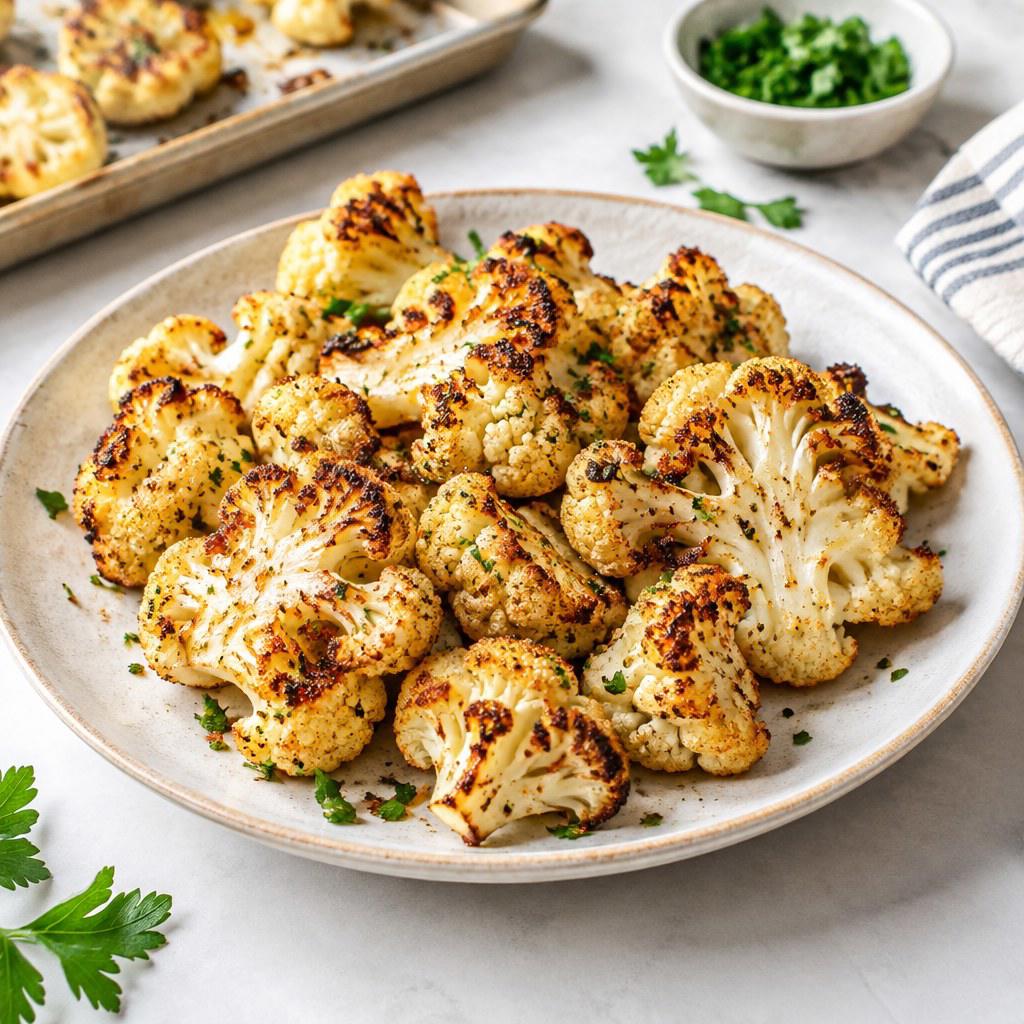
To roast cauliflower with crisp edges, use a hot oven, dry florets thoroughly, give them room on the pan, and roast until the cut sides are deeply browned. The goal is not merely tender cauliflower: you want caramelized surfaces, soft centers, and enough seasoning to make the vegetable useful as a side dish, bowl component, or simple main meal.
Cauliflower can turn out pale, wet, or uneven when it steams instead of roasts. The fix is mostly operational: manage moisture, pan space, heat, and timing. Once you understand those controls, you can repeat the result with different spices, sauces, and meal formats.
Why cauliflower develops crisp edges
Crisp edges come from dry heat meeting a relatively dry surface. In the oven, moisture must evaporate before the cauliflower can brown effectively. Once the surface dries, its natural sugars and proteins begin to brown, producing the nutty, toasted flavor associated with good roasted vegetables.
Several conditions work together. High heat encourages evaporation and browning. Oil helps the florets make better contact with the hot pan and promotes an even, golden surface. A single layer leaves escape routes for steam. Turning the pieces once exposes a new side to direct heat without interrupting the roast too often.
Steam is the main obstacle
Overcrowding is the most common reason cauliflower stays soft. When florets sit in a heap or overlap heavily, released water becomes trapped around them. Instead of roasting, the vegetables effectively steam. You may still get tender cauliflower, but the browned edges will be limited.
Cut size matters as well. Very small crumbs can burn before larger pieces soften, while very large pieces may brown outside before the core is tender. Aim for bite-size florets with a few flat cut surfaces. Those cut surfaces brown especially well when they touch the baking sheet.
💡 Tip: Treat dryness as a preparation step, not a detail. After washing cauliflower, drain it and pat it dry with a clean kitchen towel or paper towel before adding oil.
Choose ingredients and equipment that support browning
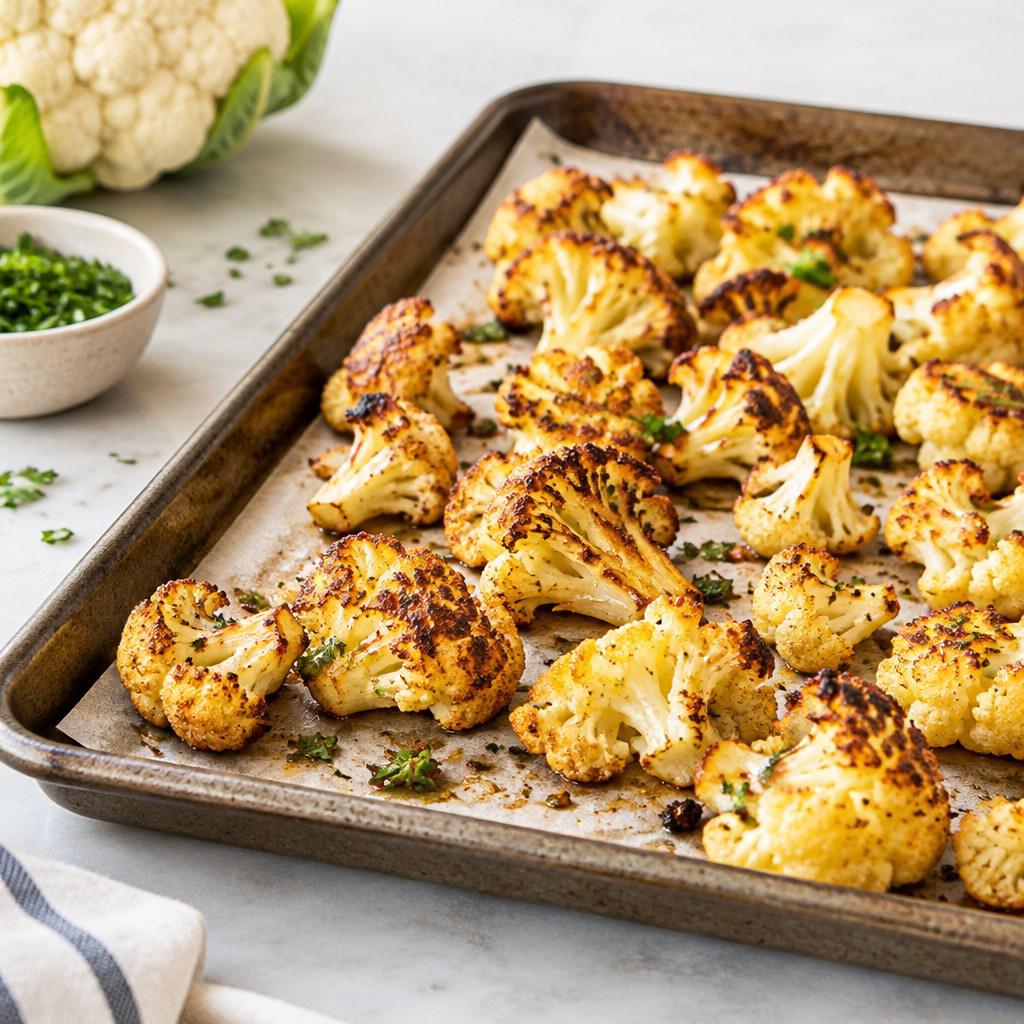
You need fresh cauliflower, cooking oil, salt, and a sturdy baking sheet. A rimmed metal sheet pan is practical because it conducts heat efficiently and keeps oil or small pieces from sliding off. A heavy pan tends to brown more reliably than a thin, lightweight tray that cools quickly when vegetables are added.
Use an oil with a neutral or complementary flavor and a heat tolerance suitable for roasting. Olive oil works well for many preparations, while another everyday cooking oil can be useful when you want a more neutral result. Use enough to coat the florets lightly; excessive oil can make the finished cauliflower greasy rather than crisp.
Parchment paper makes cleanup easier, but a bare, lightly oiled metal sheet can give more direct contact and stronger browning. Both approaches work. If crispness is your priority, test your own pan and oven rather than assuming one setup is always superior.
Step-by-step method for crisp-edged roasted cauliflower
This method is designed for reliable results with one medium head of cauliflower. Exact cooking time varies with floret size, pan material, and oven behavior, so use color and tenderness as your final indicators.
- Heat the oven first. Set it to a hot roasting temperature, typically around 220°C / 425°F. Let the oven fully preheat so the cauliflower starts cooking in strong, dry heat.
- Prepare the cauliflower. Remove leaves and trim the stem. Cut the head into evenly sized florets, leaving some flat sides where possible. Rinse only if needed, then dry the pieces thoroughly.
- Season in a large bowl. Toss the florets with oil and salt until every piece has a light sheen. Add dry spices now if you are using them. Mixing in a bowl is more even than pouring oil directly onto the tray.
- Arrange in one layer. Spread the florets across the sheet pan with visible space between most pieces. Place several flat sides against the pan. If the tray is crowded, divide the batch between 2 pans.
- Roast without constant interference. Put the pan in the oven and allow the cauliflower to brown. Check after the first stretch of roasting, then turn or stir the pieces once when the underside has begun to color.
- Finish by appearance, not only time. Remove the cauliflower when the edges are dark golden to brown in places and a fork enters the center easily. It should look roasted, not uniformly pale.
- Season after roasting. Taste while the cauliflower is hot. Add another small pinch of salt, a squeeze of lemon, grated cheese, herbs, or a sauce just before serving.
If you are preparing several components for a meal, roast the cauliflower first or alongside foods that benefit from similar high heat. Add wet sauces only after roasting. Sauce applied too early can prevent the exterior from crisping and can burn if it contains sugar.
Seasoning options and finishing touches
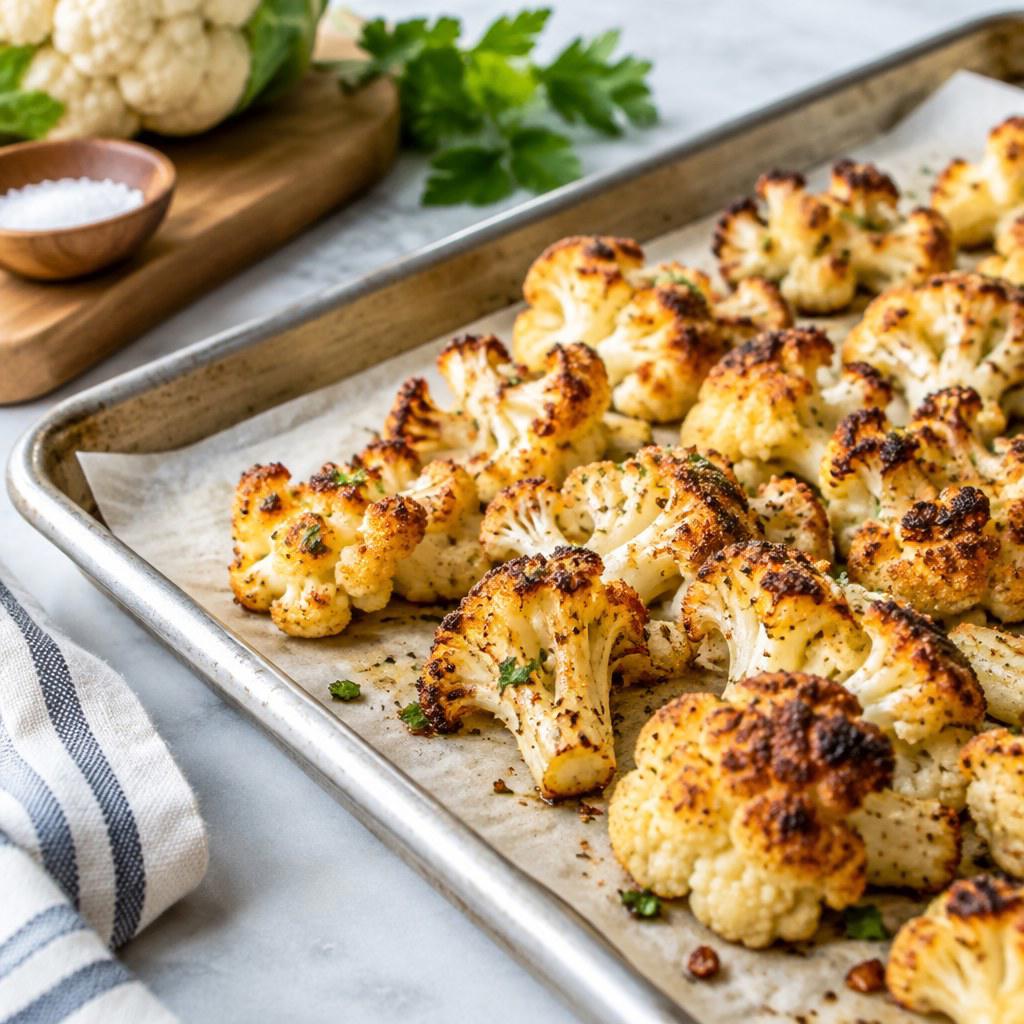
A basic combination of oil, salt, and black pepper lets the cauliflower flavor lead. From there, choose a direction based on the rest of your meal. Keep initial seasoning dry and restrained; you can always build flavor after roasting.
For a savory everyday side
Use garlic powder, black pepper, and a small amount of dried herb. Finish with lemon juice and chopped parsley after the pan leaves the oven. The lemon adds contrast without affecting browning because it is applied at the end.
For a warm spiced version
Toss the florets with paprika, cumin, and a modest pinch of chili powder before roasting. Serve with yogurt, tahini, or another cool topping after cooking. Add the topping in spoonfuls rather than covering every edge if texture matters.
For a richer finish
Add finely grated hard cheese during the final part of roasting or immediately after the pan comes out. The residual heat softens the cheese and lets it cling to the cauliflower. A small amount of toasted nuts or seeds can add contrast without masking the roasted flavor.
Common mistakes and how to recover
Even a weak batch can often be improved. Identify the failure point before changing everything at once, because most disappointing cauliflower comes from moisture, insufficient heat, crowding, or seasoning timing.
- The cauliflower is soft and pale: Spread it onto a larger pan, return it to a hot oven, and continue roasting. Avoid adding sauce. If the oven was not fully preheated, allow it to recover before continuing.
- The pieces browned but remain too firm: Lower the oven slightly and continue cooking, or cover loosely for a short period to soften the center. Remove the cover for the final few minutes if you need to restore surface crispness.
- Spices are burning: Use less sugar-containing seasoning, reduce delicate spices, or add them later. Paprika and garlic powder can darken quickly on exposed edges.
- The cauliflower tastes flat: Add salt carefully, then use acid such as lemon juice or vinegar after roasting. A finishing ingredient often solves blandness more effectively than extra oil.
- There is uneven browning: Rotate the pan if your oven has hot spots and turn the florets once. You do not need every piece to look identical; varied browning is normal.
⚠️ Watch closely near the end: cauliflower can move from deeply browned to scorched quickly, especially when small florets or spice-heavy coatings are involved.
A simple decision framework for better results
Before roasting, make 4 quick decisions. First, decide whether the florets are dry enough to brown. Second, check whether your pan gives them enough space. Third, use a hot oven and avoid opening the door repeatedly. Finally, decide which flavors belong before roasting and which should be saved for finishing.
If you want the crispest result, prioritize a bare metal pan, dry florets, moderate oil, generous spacing, and a post-roast sauce. If convenience matters more than maximum browning, parchment and a simple seasoning blend are still a dependable approach. The important trade-off is clear: more moisture and crowding mean less crispness.
Frequently asked questions
Should you boil cauliflower before roasting?
No, not when crisp edges are the goal. Boiling adds moisture and can make the florets more fragile. Roast raw cauliflower directly for the best chance of a browned exterior and tender interior.
Can frozen cauliflower become crisp in the oven?
It can brown, but it usually releases more water than fresh cauliflower. Roast it from frozen on a large pan, avoid overcrowding, and expect a softer texture. For the strongest crisp edges, fresh cauliflower is the simpler choice.
Do you need to flip every floret?
No. A single turn or stir during roasting is usually enough. Positioning several cut sides downward at the start gives you reliable browning without the need for detailed handling.
Make your next tray count
Use a hot oven, dry cauliflower, a spacious pan, and a final seasoning adjustment. Those 4 checks turn an ordinary tray of vegetables into cauliflower with crisp, deeply roasted edges.