How to Use Cabbage Across Three Different Meals
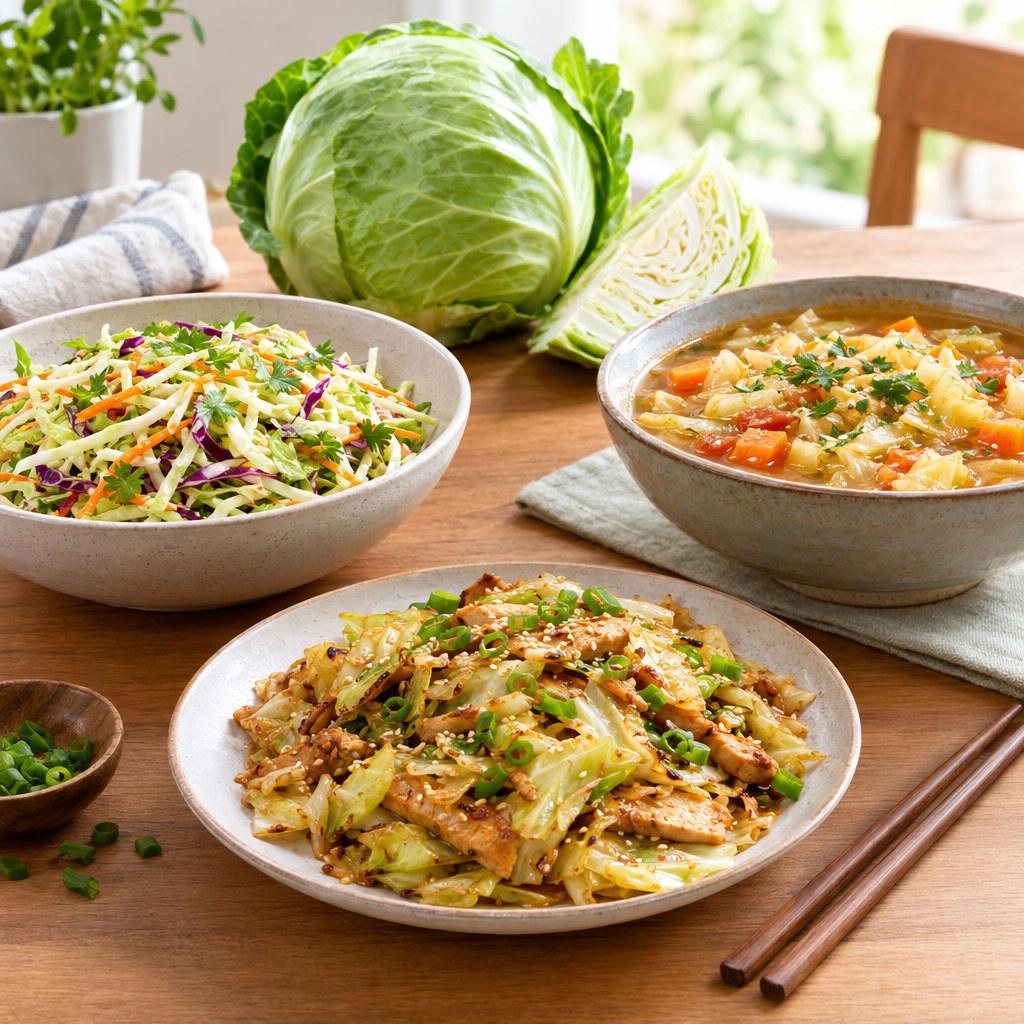
Use 1 head of cabbage as a planned ingredient rather than a side dish: serve some raw for crunch, cook some quickly for a warm meal, and braise or roast the rest for a deeper-flavoured final meal. With a simple storage plan and a few flexible seasonings, you can turn one affordable vegetable into 3 distinct meals without making every plate taste the same.
Cabbage works particularly well when you need to manage food costs, reduce waste, or prepare meals with limited time. The key is to divide it by cooking method first, then build each meal around a different texture, flavour profile, and supporting ingredient.
Plan the cabbage before you cook
A whole cabbage holds up better than many leafy vegetables, but the cut surface dries out and its flavour becomes more pronounced over time. The most practical approach is to prepare it once, store it in portions, and use the most delicate pieces first.
Start by removing any damaged outer leaves. Cut the cabbage into quarters through the core, then remove the tough core from each quarter. Keep 1 section thinly sliced for a raw meal, slice another section for a quick skillet meal, and reserve the remaining wedges for roasting or braising. This division gives you 3 noticeably different results from the same starting ingredient.
Choose the right cabbage for the job
Green cabbage is a reliable all-purpose option because it stays crisp when raw and softens well with heat. Savoy cabbage has tender, crinkled leaves that suit sautés and braises. Red cabbage brings colour and a firmer bite; it is especially useful in slaws, pickles, and slow-cooked dishes, although its colour can shift when cooked with acidic ingredients.
If you are cooking for a household, a shared kitchen, or a small food operation, choose the variety that fits the planned meals rather than treating all cabbages as interchangeable. A firm, heavy head with compact leaves generally gives you the most flexibility.
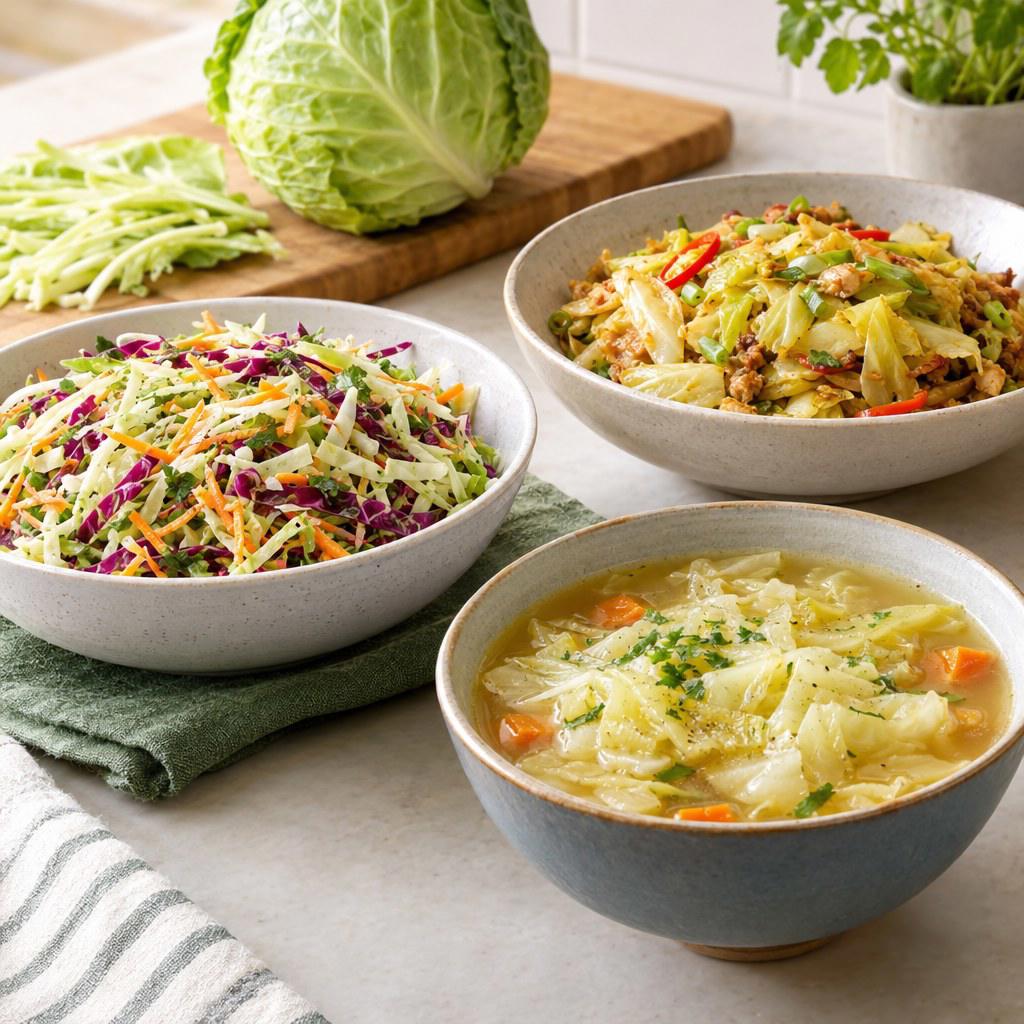
Meal 1: Build a crunchy raw cabbage bowl
Use the freshest sliced cabbage for a slaw, salad bowl, or sandwich filling. Raw cabbage adds volume and crunch, so it can support a meal without requiring large amounts of more expensive ingredients. The goal is not simply to serve shredded cabbage; it is to balance its firmness with salt, acid, fat, and a substantial topping.
Make a flexible cabbage slaw
Thinly slice cabbage and add a small pinch of salt. Leave it for 10 to 15 minutes, then squeeze it gently if you prefer a softer texture. This step is optional, but it can make dense cabbage easier to eat and helps seasoning reach the leaves.
- Add grated carrot, sliced apple, cucumber, spring onion, or herbs if you have them.
- Dress with oil and vinegar, lemon juice, or a yogurt-based dressing.
- Include a protein such as beans, eggs, chicken, tofu, fish, or leftover meat.
- Finish with seeds, nuts, toasted breadcrumbs, or crisp noodles for contrast.
For example, you could combine cabbage, carrot, white beans, parsley, and a mustard-vinegar dressing for a lunch bowl. Alternatively, use the slaw inside wraps with leftover roast chicken or spread it over grain bowls. Keep the dressing separate if you need the cabbage to stay crisp for later service.
💡 Tip: Slice cabbage as thinly and evenly as you can. Uneven, thick pieces are harder to dress and can make a raw dish feel coarse rather than crisp.
Meal 2: Turn sliced cabbage into a fast skillet meal
The second portion is ideal for high-heat cooking. A hot pan softens cabbage, concentrates its mild sweetness, and gives you a useful base for a quick dinner. Unlike a long stew, this method keeps some texture, which is important if you want the meal to feel fresh rather than heavy.
Use a simple skillet sequence
- Heat a wide pan, then add oil and an aromatic such as onion, garlic, ginger, or chilli.
- Add sliced cabbage in batches if needed so it can contact the pan rather than steam in a crowded pile.
- Season with salt and cook until the edges soften and show a little colour.
- Add a flavour direction: soy sauce and sesame, cumin and tomato, curry spices and coconut milk, or lemon and herbs.
- Fold in a cooked protein or serve the cabbage with eggs, beans, noodles, rice, or potatoes.
A practical weeknight version is cabbage, onion, garlic, and canned beans cooked with smoked paprika and tomatoes. Another is a stir-fry with cabbage, carrots, noodles, tofu, and a soy-based sauce. If you are working with leftovers, add cooked grains near the end so they warm through without breaking down.
Watch the heat and moisture. If the pan is too cool or too full, cabbage releases water and turns soft before it develops flavour. In that situation, keep cooking uncovered until excess moisture evaporates, then adjust the seasoning. A small amount of acid at the end can brighten a dish that tastes flat.
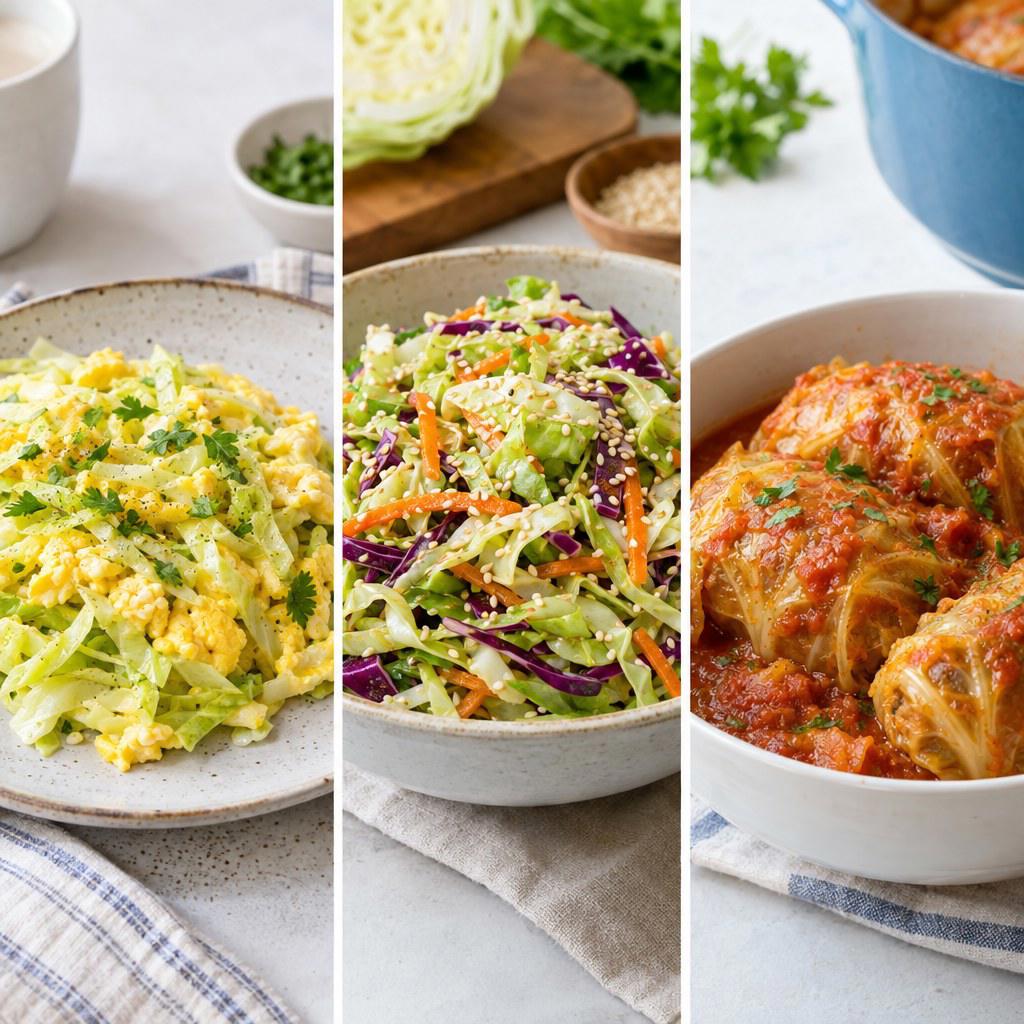
Meal 3: Braise or roast cabbage wedges for a deeper meal
Save the most intact cabbage wedges for the final meal. Larger pieces work well when roasted or braised because they hold their shape while their outer leaves brown and their centres become tender. This approach makes cabbage the focus of the plate rather than an add-on.
Roast for caramelised edges
Cut cabbage into wedges, leaving a little core attached so each wedge stays together. Coat lightly with oil, season with salt and pepper, and roast until the edges darken and the centre is tender. Serve with a sauce, a grain, and a protein, or use the wedges as part of a warm salad.
Tahini-lemon sauce, yogurt with herbs, tomato sauce, mustard dressing, or a vinaigrette can all work. For a complete meal, pair roasted cabbage with lentils and a soft-boiled egg, or with chickpeas and toasted bread. The cabbage brings enough structure that you do not need a complicated side dish.
Braise when you want a softer, comforting result
For braised cabbage, brown the wedges or thick slices first, then add a modest amount of broth, tomato, cider, or another cooking liquid. Cover and cook gently until tender. Add sausage, beans, mushrooms, or cooked meat if you want a more substantial dish. The liquid should support the cabbage rather than drown it.
Use this method when you have more time, when the cabbage is no longer at peak crispness, or when you need a make-ahead meal. Its flavour often settles well after resting, but cool leftovers promptly and store them in a covered container in the refrigerator.
Practical execution checklist
You can make the 3-meal plan easier by completing a short prep session when you bring cabbage home. Keep each portion loosely tied to its intended use, but stay flexible if your schedule changes.
- Day 1: Make the raw cabbage meal while the leaves are at their crispest.
- Day 1 or 2: Cook the sliced portion in a skillet for a quick meal.
- Day 2 or 3: Roast or braise the wedges for the final meal.
- Storage: Refrigerate cut cabbage in a sealed container or reusable bag. Keep dressings, sauces, and wet toppings separate until serving.
- Seasoning plan: Choose 3 different flavour directions before you start, such as tangy, savoury-spiced, and herb-forward.
- Protein plan: Use what you already have, but ensure each meal includes a protein or another satisfying anchor if it is intended as a main meal.
This workflow is also useful for menu planning at a small scale. You can prep the vegetable once, then vary sauces and accompaniments to prevent repetition while maintaining a predictable ingredient list.
Risks, mistakes, and recovery steps
The most common problem is using the same treatment for every portion. Three meals of soft, lightly seasoned cabbage can feel repetitive even when the ingredients differ. Change the texture first, then change the seasoning.
Avoid these common mistakes
- Overcrowding the pan: Cook in batches or use a larger pan when you want browning rather than steamed cabbage.
- Underseasoning: Cabbage needs salt, acid, fat, or savoury ingredients to taste complete. Taste near the end and correct gradually.
- Adding acid too early in every dish: Acid is valuable, but adding it at the end often keeps cooked cabbage brighter and easier to balance.
- Ignoring the core: Remove the hard central core for thinly sliced raw dishes, but leave a small amount attached to wedges for roasting or braising.
- Storing dressed slaw too long: If it becomes watery, drain excess liquid and refresh it with a small amount of new dressing or crunchy toppings.
If cabbage develops an unpleasant smell, visible mould, or a slimy surface, discard it rather than trying to cook around the affected area. When in doubt, check your local food-safety guidance and use sound judgement about storage time and temperature.
A simple decision framework
Use raw cabbage when you need crunch and speed. Use a skillet when you need a warm meal in a short cooking window. Use roasting or braising when you want cabbage to become the centrepiece and have more time available. This sequence helps you use the vegetable in the order that best matches its changing texture after cutting.
Before buying cabbage, decide on 3 different meal formats—not just 3 recipes. A bowl, a skillet, and a roasted or braised plate create enough contrast to make one ingredient feel deliberate rather than repetitive.
Put one cabbage on your next meal plan
Choose 1 raw meal, 1 quick cooked meal, and 1 slow-cooked meal before you shop. You will have a clearer use for every portion and fewer leftovers competing for attention at the end of the week.