Papaya Nutrition and Benefits: A Practical Guide
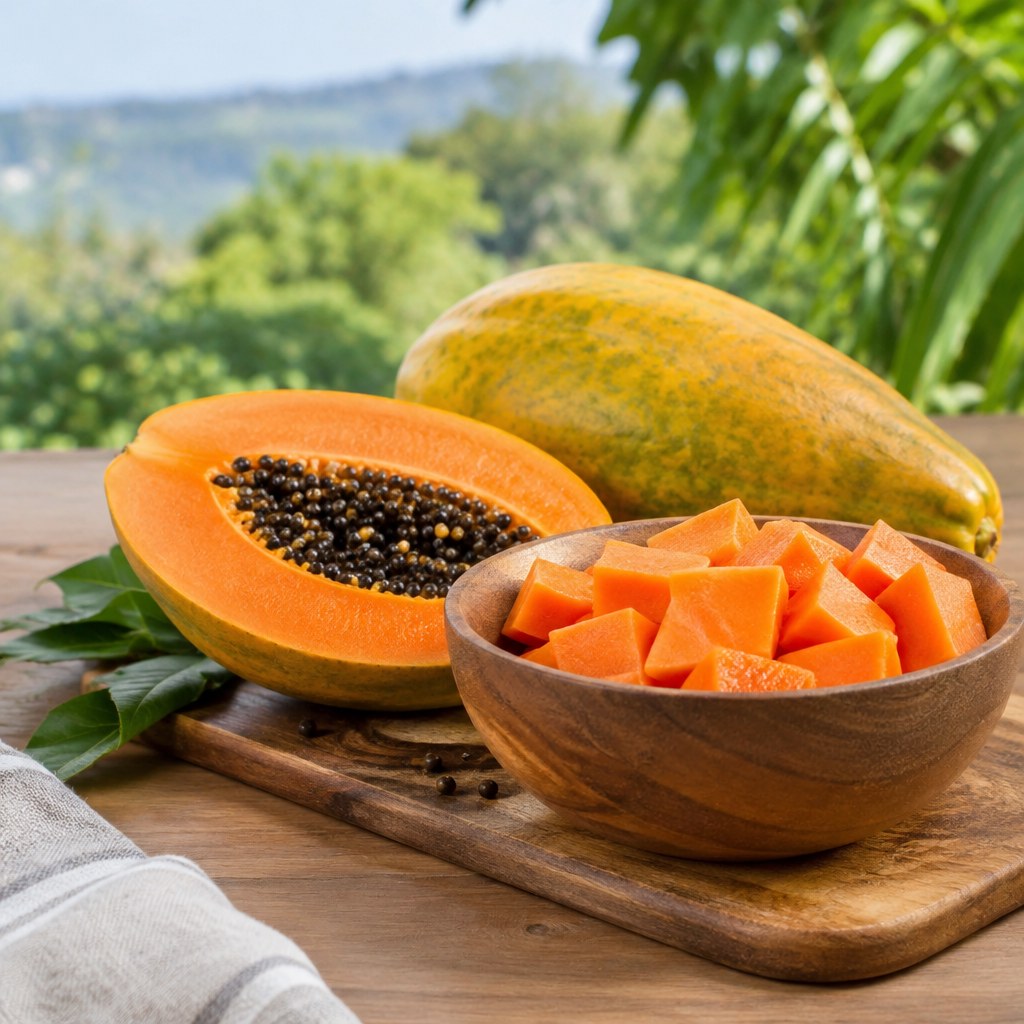
Ripe papaya is a soft, sweet tropical fruit with orange flesh and black seeds. It is especially notable for vitamin C and also provides fibre, folate, potassium and carotenoid pigments. Those nutrients make papaya a useful food—not a cure for diabetes, cancer, digestive disorders or other diseases.
This guide separates realistic nutrition benefits from exaggerated claims and shows how to choose, prepare and serve papaya safely.
Papaya nutrition at a glance
A cup of ripe papaya cubes is mostly water and provides roughly 60 calories, about 2.5 grams of fibre and a substantial amount of vitamin C. It also supplies folate, potassium and provitamin A carotenoids. Values vary with serving size and ripeness; the USDA FoodData Central papaya entries provide detailed nutrient data.
Papaya contains an enzyme called papain, especially in the latex of unripe fruit. That fact is often used to market papaya products for digestion, but enzyme content does not prove that eating papaya treats irritable bowel syndrome, ulcers or other medical conditions.
Evidence-based benefits of ripe papaya
It is rich in vitamin C
Vitamin C helps the body make collagen, supports normal immune function and improves absorption of iron from plant foods. The National Institutes of Health notes that fruits and vegetables are important vitamin C sources. Getting enough vitamin C supports normal body functions; it does not make one food an “immune booster” that prevents routine infections.
It contributes fibre and fluid
Ripe papaya contains water and fibre, both of which support a balanced eating pattern. Fibre helps normal bowel function, particularly when total fibre intake and fluid intake are adequate. Papaya may be a comfortable fruit for some people, but it has not been proven to cure constipation, bloating, IBS or ulcers.
It provides carotenoids
The orange colour comes partly from carotenoids, including beta-carotene and lycopene. The body can convert some carotenoids to vitamin A, which supports normal vision, immune function and cell growth. Eating papaya helps supply these nutrients; it does not correct every cause of poor vision.
It can help add variety to meals
Variety is one of papaya’s most useful qualities. It works in breakfast bowls, fruit salads, salsas and savoury dishes. A varied diet makes it easier to obtain a broader mix of nutrients than relying on one “superfood.”
What papaya has not been shown to do
Promising laboratory results with isolated papaya compounds, leaf extracts or cells do not establish that ordinary ripe fruit prevents or treats disease in people.
- Cancer: papaya is not a cancer-prevention treatment. People receiving cancer care should discuss supplements, extracts or major diet changes with their clinical team.
- Diabetes: people with diabetes can often include whole fruit in a planned meal, but papaya still contains carbohydrate. Portion size and the complete meal matter. The CDC notes that whole fruit generally affects blood sugar more slowly than juice.
- Heart, liver or thyroid disease: eating fruit can be part of a heart-healthy pattern, but papaya has not been shown to prevent or cure these conditions.
- Weight loss: papaya can replace a more energy-dense dessert or snack, but no fruit causes fat loss by itself.
- Skin ageing: applying raw papaya can irritate some skin. It is not a proven treatment for oily skin, wrinkles or sagging.
Ripe papaya, green papaya and papaya products
Ripe papaya has orange or reddish flesh and is normally eaten raw after the skin and seeds are removed. Green papaya is firmer and used as a vegetable in cooked dishes and shredded salads. They are not nutritionally or chemically identical, so advice about ripe fruit should not automatically be applied to latex, leaf, seed or unripe-fruit products.
Papaya leaf extracts and concentrated supplements are different from food portions. “Natural” does not guarantee safety, purity or effectiveness. Avoid using them to replace prescribed care, and ask a qualified clinician or pharmacist before taking a papaya supplement—especially during pregnancy, while breastfeeding, before surgery, or when taking medicines.
How to choose a ripe papaya
- Look for skin that is turning from green to yellow or orange.
- A ripe papaya should yield slightly to gentle pressure, much like a ripe avocado. Avoid fruit with deep sunken areas, leaking liquid or mould.
- If the papaya is still firm and partly green, leave it at room temperature until it softens.
- Once ripe, refrigerate it to slow further softening.
How to cut papaya safely
- Wash your hands and clean the work surface.
- Rinse the whole papaya under running water before cutting, even though the skin is not eaten. The FDA advises against washing produce with soap or detergent.
- Cut the fruit lengthwise on a clean board.
- Scoop out the seeds with a spoon.
- Peel the halves or scoop the flesh away from the skin, then slice or cube it.
- Refrigerate cut papaya promptly in a covered container and discard it if it develops mould, a fermented smell or a slimy texture.
Practical ways to serve papaya
- Add cubes to plain yoghurt with nuts or seeds.
- Serve it with oatmeal for colour, vitamin C and natural sweetness.
- Combine papaya, lime, onion and herbs for a fresh salsa.
- Mix it into fruit salad just before serving.
- Blend a small portion with yoghurt or milk; remember that a smoothie can be consumed faster than whole fruit and may be less filling for some people.
- Use shredded green papaya only in a recipe designed for it, and handle it with the same clean-produce practices.
Who may need extra care?
Anyone can be allergic to a food. Stop eating papaya and seek urgent help for trouble breathing, throat tightness, faintness or rapidly spreading swelling. People with a known latex allergy may sometimes react to certain fruits, including papaya, and should ask an allergy professional for personalised guidance.
Pregnancy advice online often confuses ripe fruit, unripe fruit, latex and concentrated products. Rather than relying on claims that papaya is universally safe or unsafe, pregnant people with questions about green papaya, papaya enzymes or supplements should ask their maternity-care professional.
Bottom line
Ripe papaya is a nutrient-dense fruit that is particularly rich in vitamin C and contributes fibre, folate, potassium and carotenoids. Enjoy it for flavour and variety, not as a medicine. Whole fruit, sensible portions, safe handling and a varied overall diet matter more than dramatic claims about a single food.