Making a Simple Bean Salad for Lunch
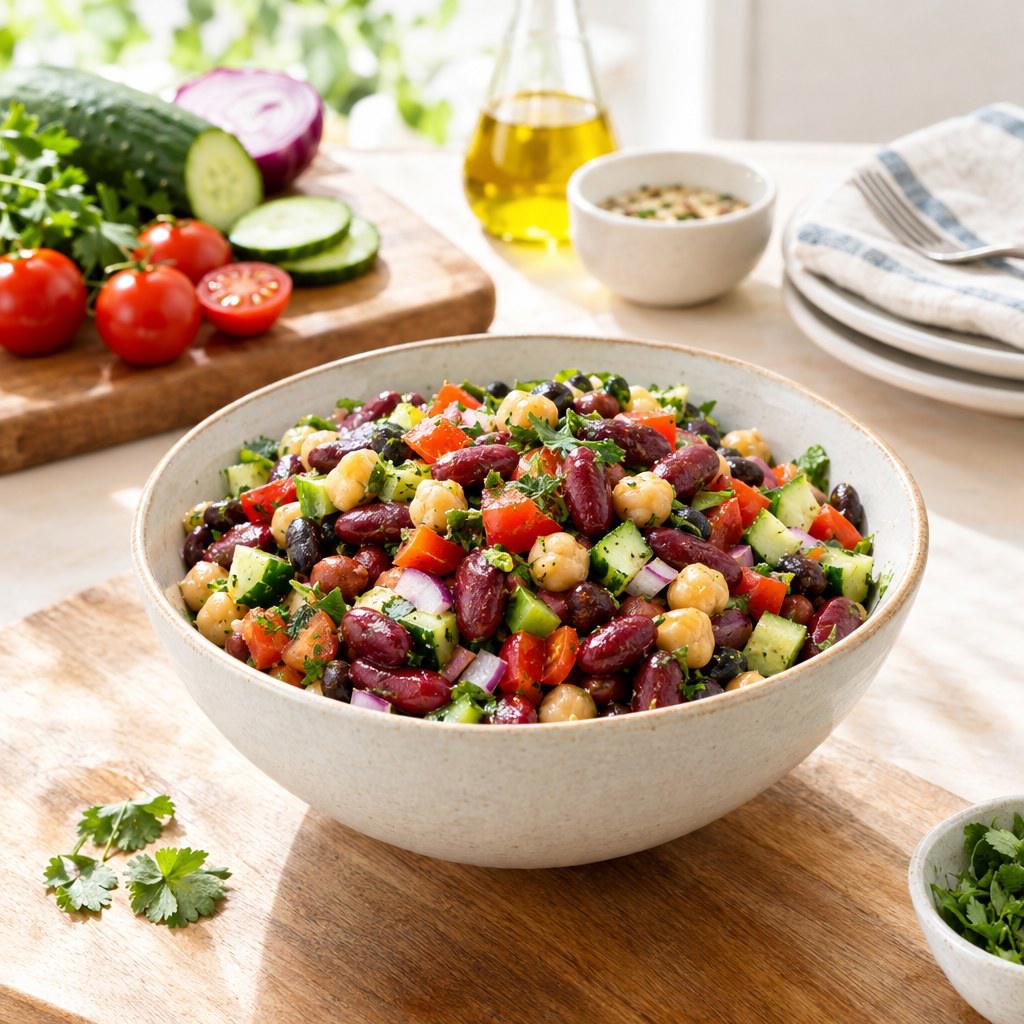
A simple bean salad is a practical lunch when you need something filling, portable, and easy to prepare ahead. Combine well-rinsed beans, crisp vegetables, a sharp dressing, and a few optional extras, then store it safely so you have a reliable meal without a complicated recipe.
The useful part is not just mixing ingredients: it is choosing a balance that stays appealing after chilling. This article gives you a flexible base formula, a step-by-step method, storage guidance, and clear ways to fix common problems such as a watery or bland salad.
Why bean salad works for lunch
Lunch often fails for predictable reasons: there is not much time, ingredients spoil before you use them, or a prepared meal becomes limp and unappealing by midday. Bean salad addresses those problems because canned beans are convenient, sturdy vegetables hold their texture, and an oil-and-acid dressing usually improves after a short rest.
Beans provide a substantial base, while vegetables supply crunch and freshness. You can serve the salad cold or closer to room temperature, which makes it suitable for an office lunch, a packed meal, or a quick meal at home. It also lets you use small quantities of herbs, onions, or leftover roasted vegetables that might otherwise be wasted.
The key trade-off is texture. A leafy salad can be dressed just before eating, but bean salad is generally better after the flavors have had time to combine. Choose ingredients that will not release excessive water or soften too quickly. Build the salad around beans first, then add a crisp element, an acidic element, a savory element, and a dressing.
Choose ingredients that work together
Use this as a flexible formula rather than a rigid recipe. For 2 generous lunch portions, start with about 2 cans of beans, drained and rinsed. A mix of beans creates visual variety, but a single type works perfectly well.
Bean base
Try chickpeas, cannellini beans, kidney beans, black beans, or butter beans. Rinsing canned beans removes excess packing liquid and gives the dressing a cleaner flavor.
Crunch and color
Use diced bell pepper, celery, cucumber with seeds removed, red onion, radishes, or shredded carrot. Cut pieces small enough to get several elements in each bite.
Flavor anchors
Fresh parsley, dill, basil, or cilantro add lift. Olives, feta, toasted seeds, pickled peppers, or chopped nuts can add salty, creamy, or crunchy contrast.
A dependable dressing
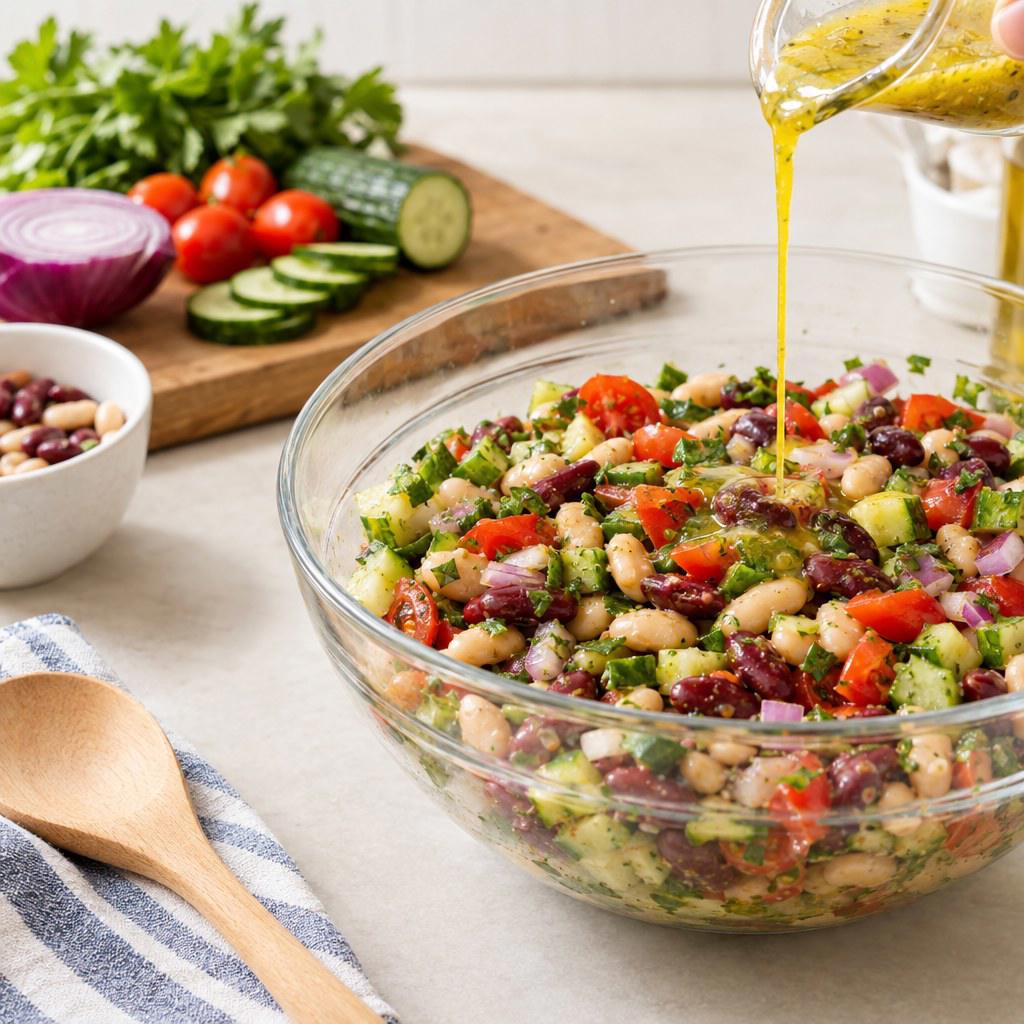
Whisk olive oil with lemon juice or vinegar, a small amount of mustard, salt, pepper, and a pinch of dried herbs. The exact amount depends on the quantity of beans and vegetables, so add gradually. The beans should look lightly coated, not submerged. Taste after mixing because beans absorb seasoning.
💡 Tip: If raw red onion tastes too sharp for your lunch, soak the chopped onion briefly in cold water, then drain it thoroughly before adding it to the bowl.
Make a simple bean salad step by step
You need a large bowl, a colander, a cutting board, and a small bowl or jar for the dressing. Keep the process simple: prepare the driest ingredients first, then combine and adjust.
- Drain and rinse the beans. Tip them into a colander, rinse under cool water, and let them drain well. If they still seem wet, spread them briefly on a clean kitchen towel or paper towel.
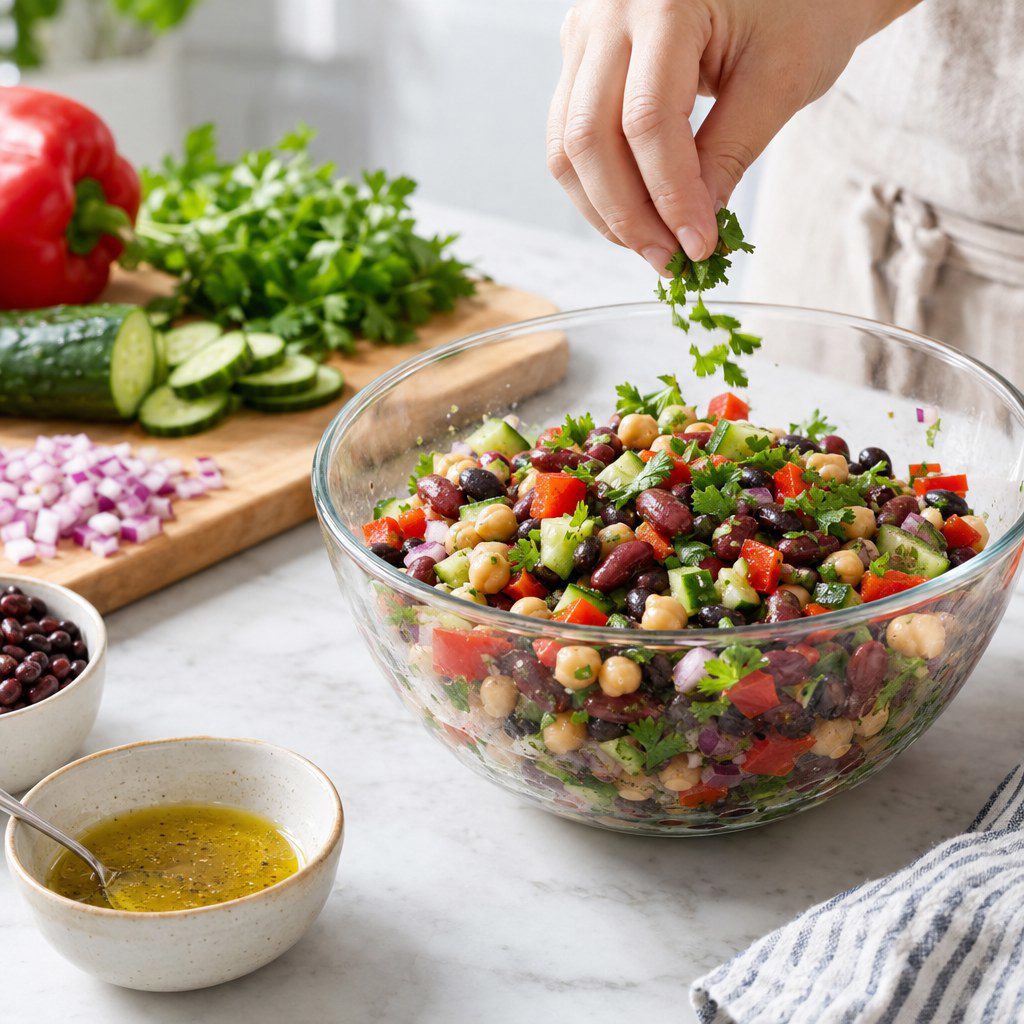
- Prepare the vegetables. Dice bell pepper, celery, cucumber, and onion into similar bite-size pieces. Remove watery cucumber seeds when you want the salad to keep its texture longer.
- Mix the dressing separately. Combine oil, acid, mustard, salt, pepper, and any dried seasonings. Mixing first prevents concentrated pockets of salt or vinegar in the finished salad.
- Combine gently. Add beans, vegetables, herbs, and dressing to the large bowl. Fold with a spoon until everything is coated without crushing soft beans.
- Taste and rest. Taste a spoonful, then adjust salt, acid, or herbs. Refrigerate for at least a short period if possible, then taste once more before packing.
- Add delicate extras at the right time. Stir in feta, avocado, toasted nuts, or seeds just before eating when you want them to keep their best texture.
A straightforward example is chickpeas and cannellini beans with red bell pepper, celery, red onion, parsley, lemon juice, olive oil, mustard, salt, and pepper. If you prefer a warmer flavor direction, use black beans with corn, peppers, cilantro, lime juice, and a modest amount of ground cumin.
Adapt the base recipe to your lunch plan
A bean salad is easier to repeat when you make one deliberate change rather than adding every available ingredient. Decide whether your priority is a more substantial meal, a brighter flavor, or a way to use food already in your kitchen.
When adding grains or roasted vegetables, make sure they are cooled before mixing. Warm ingredients can wilt herbs and make the salad less suitable for packed storage. If you are using a salty ingredient such as feta, olives, or capers, season the dressing cautiously and correct it only after tasting.
Avoid common mistakes and recover quickly
Watery salad
Watery salad usually comes from poorly drained beans, cucumber seeds, tomatoes, or vegetables salted too early. Pour off visible liquid, add a few more beans or crisp vegetables, and refresh with a small amount of dressing. For the next batch, drain ingredients more thoroughly and keep tomatoes separate until serving.
Flat or dull flavor
Bean salads need enough acid and salt to taste lively, but add both in small stages. If the salad tastes flat, add a little lemon juice or vinegar first, then taste again. Fresh herbs, black pepper, mustard, chopped pickles, or a small amount of olive brine can also add character.
Too much sharpness
If raw onion, vinegar, or lemon dominates, balance rather than cover it up. Add more beans, a mild vegetable, a little olive oil, or a creamy element such as feta. Avoid adding sugar automatically; it may make the flavor less clear instead of solving the problem.
Mushy texture
Overmixing and very soft beans are frequent causes. Fold gently, choose firmer canned beans when possible, and add fragile ingredients last. If the mixture is already soft, serve it in a wrap, on toast, or alongside crunchy crackers rather than discarding it.
Pack, store, and serve it safely
Pack bean salad in a clean, lidded container and refrigerate it promptly. Keep it cold until lunch, using an insulated lunch bag and a cold pack when refrigeration will not be available. Follow the storage guidance on packaged ingredients, especially for cheese, cooked proteins, and prepared dressings.
For the best result, pack crunchy toppings separately. Nuts, seeds, crackers, avocado, and delicate herbs can lose texture or discolor if mixed in too far ahead. If you are preparing several lunches, divide the base salad into portions first. This reduces repeated handling and makes it easier to add different extras each day.
Before eating, stir the salad and check its smell and appearance. When in doubt about whether a refrigerated prepared food has been kept safely, discard it rather than trying to correct it with extra seasoning or heat.
A simple lunch decision framework
Choose your bean salad by answering 3 questions. First, what beans do you already have? Second, which crisp vegetables or herbs need using soon? Third, do you need a light side dish or a complete lunch? Your answers determine the base, the flavor direction, and whether to add grains, cheese, eggs, fish, or another protein.
For a dependable result, remember the practical sequence: drain well, cut evenly, dress lightly, taste twice, and keep delicate toppings separate. That approach gives you a lunch that is flexible enough for everyday use while remaining easy to prepare consistently.
Make your next lunch easier
Choose 2 cans of beans, 2 crisp vegetables, and 1 simple dressing today. Prepare a small batch, taste it after chilling, and note the combination you want to repeat.