Making a Simple Lentil and Carrot Soup
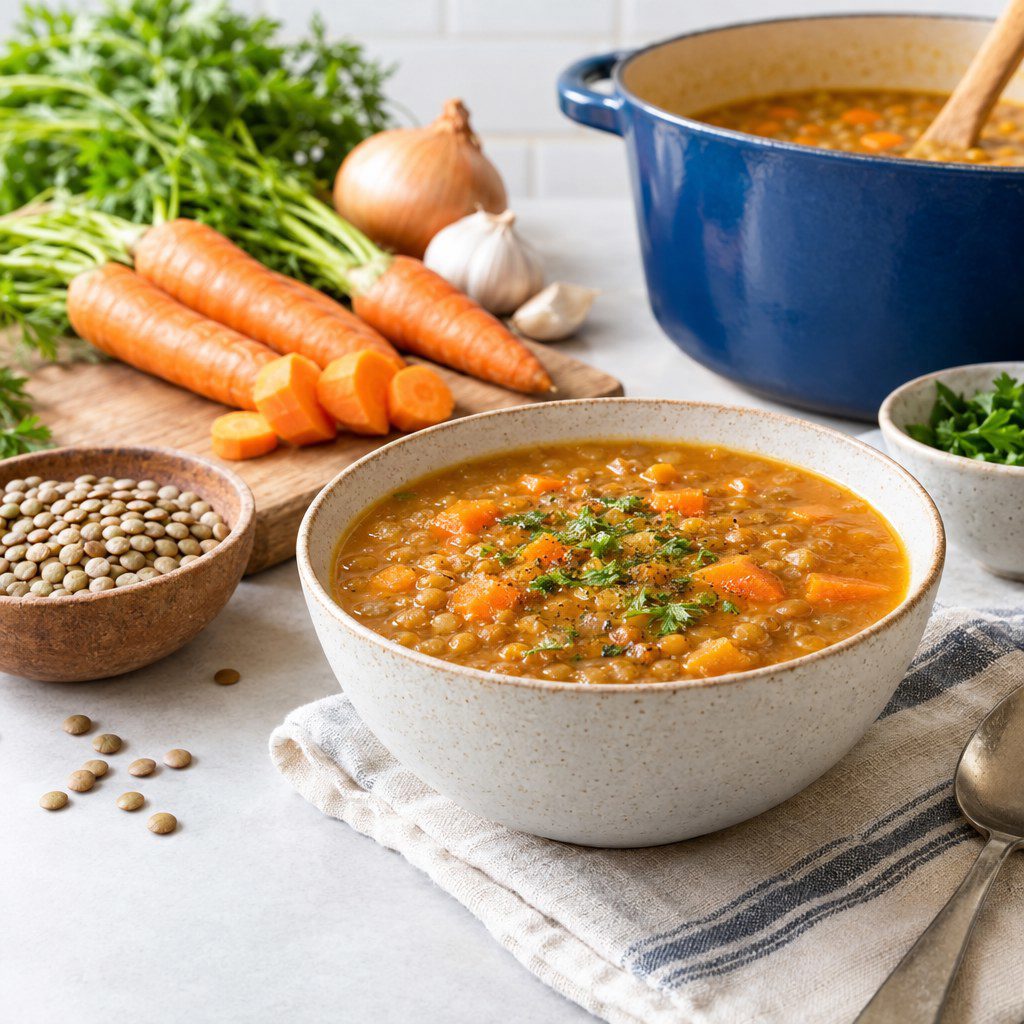
A simple lentil and carrot soup is a dependable, low-cost meal built from pantry staples, a few vegetables, and one pot. You can make it smoothly blended or leave it brothy, then adjust the seasoning and texture to suit a quick home dinner, packed lunches, or a small batch for the week.
The key is to use the right lentil, soften the vegetables before adding liquid, and simmer only until the lentils are tender. This article gives you a practical base recipe, clear options for changing it, and a recovery plan for the most common problems.
Why lentils and carrots make a reliable soup
Red lentils are especially useful for a simple soup because they cook quickly and break down naturally as they simmer. That gives the finished pot body without requiring cream, flour, or a long cooking time. Carrots add gentle sweetness and a bright orange colour, which balances the earthy flavour of lentils.
For a straightforward version, use red lentils. Brown or green lentils can work, but they hold their shape longer and produce a more rustic, less creamy result. If you choose them, expect a longer simmer and do not rely on the soup becoming smooth without blending.
Fast-cooking base
Red lentils usually soften within a short simmer. They are a sensible choice when you need dinner with limited preparation.
Practical ingredients
Onion, carrot, lentils, stock, and basic seasoning are easy to keep on hand and easy to scale for a larger pot.
Flexible finish
You can blend it silky smooth, leave it textured, or change the seasoning without changing the underlying method.
This flexibility makes the recipe useful when you need a repeatable lunch option. You can keep the core method constant and vary only the final garnish, spice, or accompaniment.
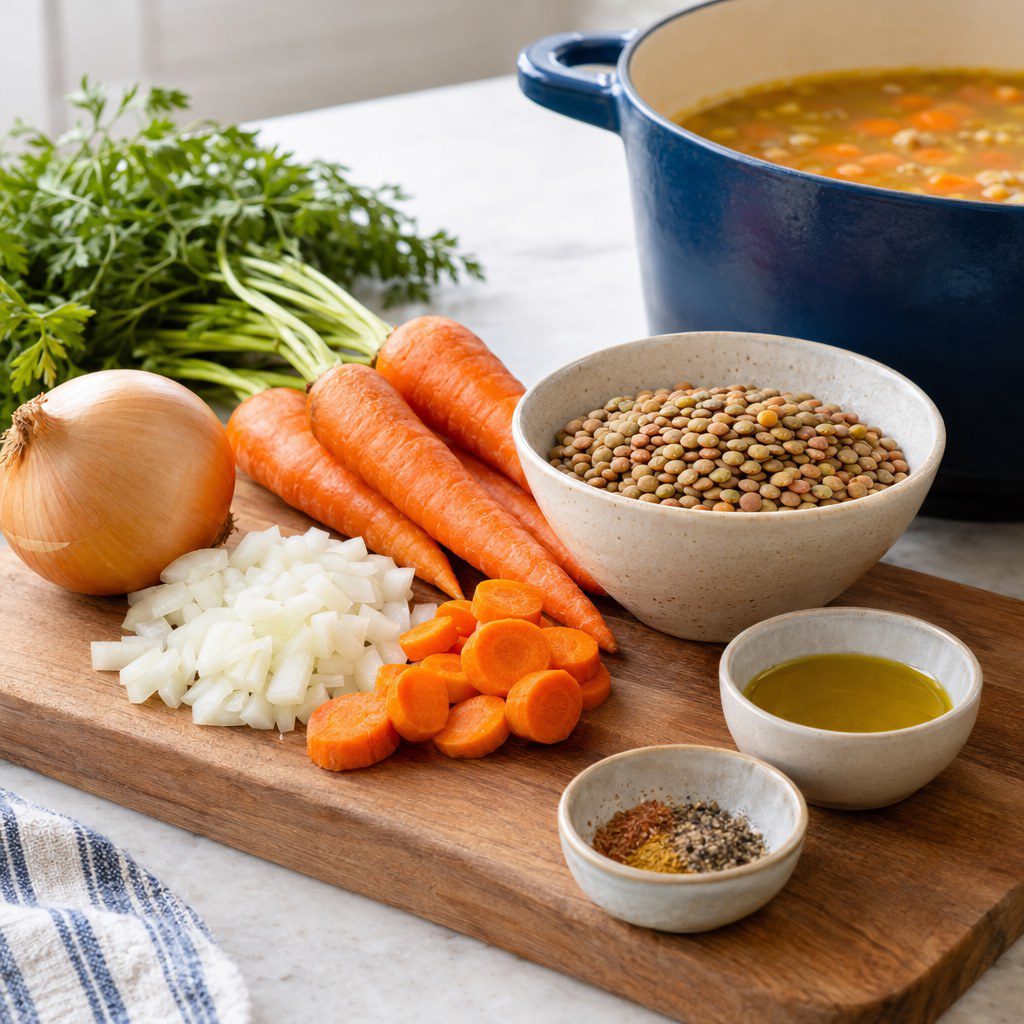
Ingredients and useful choices
This base recipe makes approximately 4 generous bowls, depending on how much liquid you use and whether you serve bread or another side. Treat quantities as a practical starting point: carrots differ in size, stock differs in saltiness, and lentils can absorb liquid at slightly different rates.
A good stock adds flavour, but it also introduces salt. If you use stock from a carton, cube, concentrate, or homemade batch, taste before adding much extra salt. Lemon juice or vinegar should be added near the end, when you can judge whether the soup needs brightness.
💡 Tip: Cut the carrots into similarly sized pieces. Even pieces cook at a similar rate, reducing the chance that some remain firm while others turn mushy.
Step-by-step method for a balanced pot
1. Prepare before heating the pot
Dice the onion and carrots, mince the garlic, and rinse the lentils in a fine sieve under cool water. Rinsing is a small step, but it removes surface debris and makes it easier to inspect the lentils before cooking. Measure your stock or water so you do not need to guess once the pot is hot.
2. Soften the vegetables
Warm the oil in a large saucepan over medium heat. Add the onion and a small pinch of salt. Cook until it looks softened and translucent rather than browned. Add the carrots and cook for several more minutes, stirring occasionally. Add garlic and any dry spice for the final minute only, so the garlic does not burn.
3. Simmer the lentils
Add the rinsed red lentils and pour in 4 cups of stock or water. Bring the pot to a gentle boil, then lower the heat to a steady simmer. Partially cover the pot and stir from time to time, especially near the end, because lentils can settle and catch on the base.
4. Check tenderness, then season
After roughly 20 minutes, test a carrot piece and a spoonful of lentils. Continue cooking if either is still firm. Once tender, season with pepper and add salt only after tasting. Add more hot water or stock if the soup has become thicker than you intended.
5. Choose the final texture
For a smooth soup, use a stick blender directly in the pot, or blend carefully in batches using a countertop blender. For more texture, blend only part of the soup or simply crush some lentils against the side of the pan with the back of a spoon. Finish with a squeeze of lemon if the soup tastes flat.
- Soften onion, then carrot, before adding liquid.
- Keep the simmer gentle rather than aggressively boiling.
- Stir more often as the soup thickens.
- Taste at the end before making final seasoning changes.
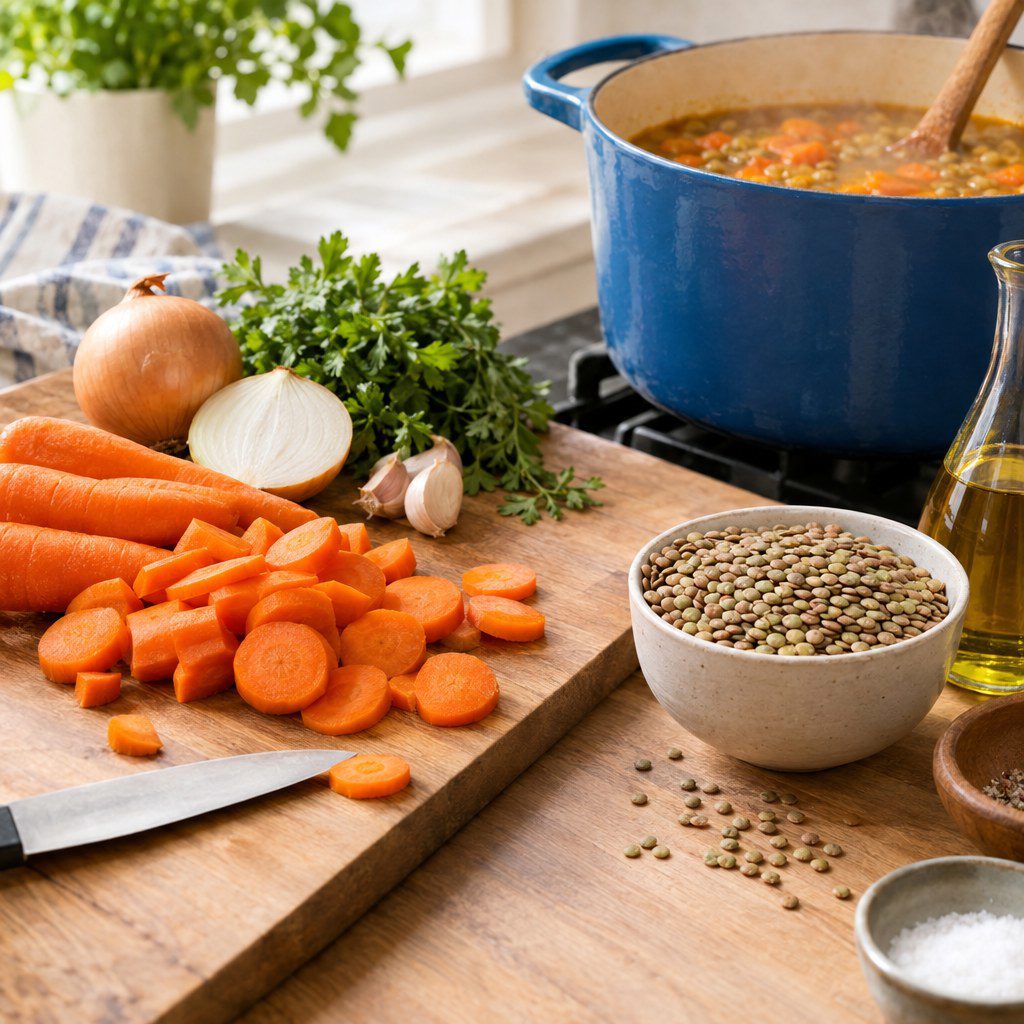
Choose the texture and flavour direction
The base is intentionally mild. That gives you control over the final direction and helps avoid a pot where several spices compete. Select 1 flavour route, then taste before adding more.
Earthy and warm
Add cumin and a little smoked paprika with the garlic. This works well with a swirl of plain yogurt or a spoonful of plant-based yogurt at serving time. Keep the quantities modest; smoked paprika can dominate the carrots if used heavily.
Fresh and bright
Add lemon juice at the end and scatter chopped parsley or coriander over each bowl. This is a good option if you have used a richer stock, because acidity lifts the overall flavour without needing more salt.
More filling
Serve the soup with toasted bread, a baked potato, or a simple grain. If you need a larger batch, increase the lentils and liquid together rather than only adding lentils. That preserves the soup’s spoonable consistency.
More vegetable-forward
Add celery with the onion, or stir in a handful of spinach near the end. Avoid adding delicate greens too early: they lose colour and can make the soup taste overcooked.
Mistakes to avoid and how to recover
Most lentil soup problems are reversible. Work in small adjustments, taste after each one, and give the pot a few minutes to settle before deciding it still needs more.
The soup is too thick
Add hot water or warm stock in small pours, stir thoroughly, and simmer for 2 to 3 minutes. Red lentils continue absorbing liquid as the soup cools, so make it slightly looser than your ideal serving texture if you plan to refrigerate it.
The soup is too thin
Simmer uncovered until some water evaporates, stirring regularly. Alternatively, blend a portion of the soup to thicken it. Adding dry lentils late is less predictable because they need time and extra liquid to cook properly.
The flavour is dull
First check salt. If it is adequately seasoned but still muted, add a small amount of lemon juice or vinegar. If it needs warmth rather than acidity, add a pinch of cumin, pepper, or paprika and let it cook briefly before tasting again.
The base has caught or tastes burnt
Do not scrape the burnt layer into the soup. Carefully transfer the unburnt portion to a clean pan, leaving the stuck residue behind. Add a little fresh liquid and retaste. If the burnt flavour is strong throughout, starting again is usually the better use of ingredients.
⚡ Watch closely: Never fill a countertop blender tightly with hot soup. Blend in smaller batches and allow steam to escape according to your blender’s instructions.
Storage, serving, and batch planning
Let leftover soup cool promptly, then transfer it to covered containers and refrigerate it. Reheat only the portion you intend to eat, stirring well as it warms. Add a splash of water or stock during reheating because the lentils will have thickened the soup in storage.
For freezing, use portion-sized containers with some space at the top for expansion. Label containers with the preparation date so you can rotate meals sensibly. Thaw in the refrigerator when possible, then reheat until piping hot. Check local food-safety guidance if you are preparing food for anyone with specific dietary or health needs.
For a workday lunch, pack a separate topping rather than adding it in advance. Croutons, herbs, toasted seeds, yogurt, and lemon wedges retain their texture and make a repeated meal feel less repetitive.
A simple decision framework
Use red lentils when speed and a naturally creamy texture matter. Use brown or green lentils when you want distinct lentils and can allow more cooking time. Start with 4 cups of liquid, then add more only after the lentils have softened and you can judge the actual thickness.
For the most dependable result, keep the first batch simple: onion, carrot, garlic, lentils, stock, salt, pepper, and lemon. Once you know how your preferred lentils and stock behave, introduce one optional spice or garnish at a time. This approach makes the recipe easy to repeat and easier to improve.
Make your first pot uncomplicated
Gather the basic ingredients, rinse the lentils, and make the plain version once. Take note of the texture and seasoning you prefer, then use that result as your practical baseline for future batches.