Planning a Low-Waste Gift-Wrapping Station
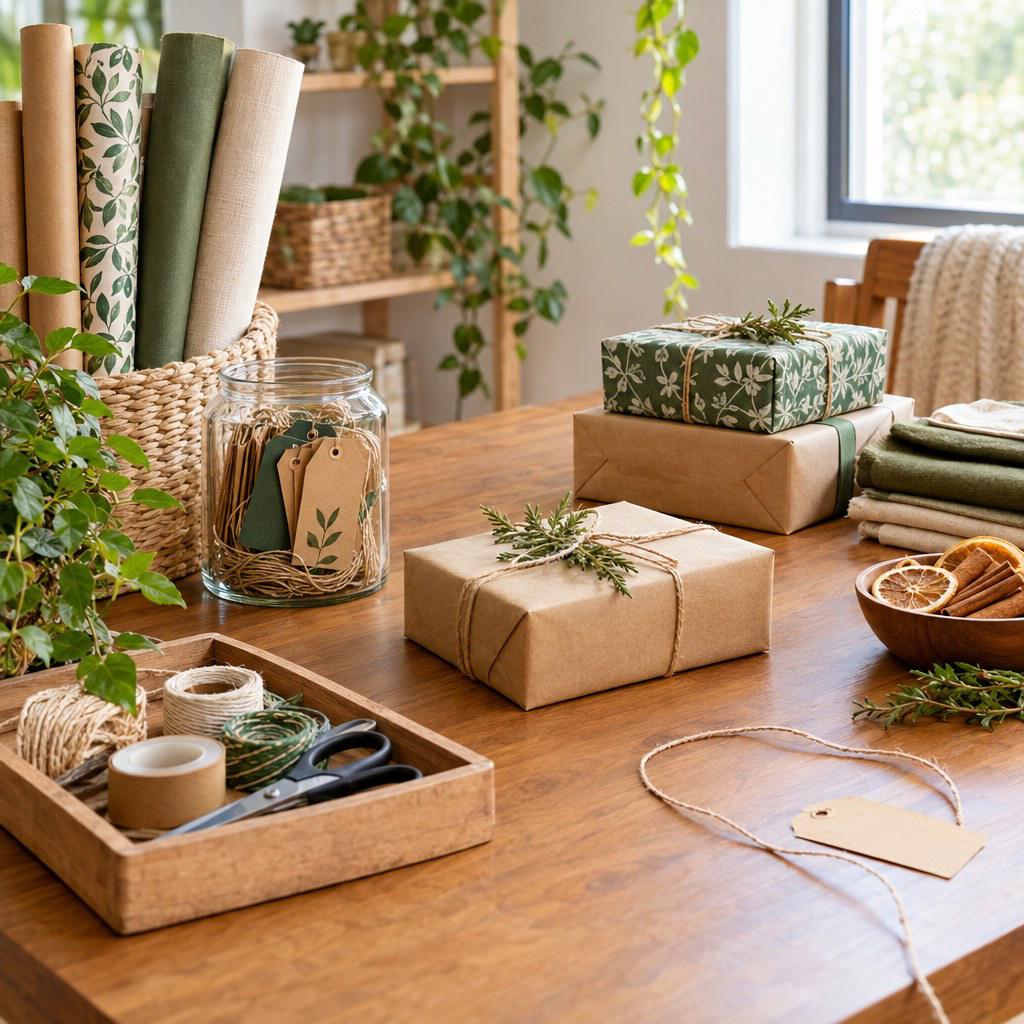
A low-waste gift-wrapping station helps you wrap faster, buy fewer single-use supplies, and keep reusable materials ready when an occasion arrives. The practical goal is not to make every package look identical; it is to create a compact system that separates reusable, recyclable, and compostable options from items that are difficult to recover.
For a business, team, household, or small retail operation, the best station is easy to restock and simple enough that anyone can use it without creating a pile of offcuts, tape scraps, and duplicate supplies. Start with the materials you already have, then design storage and routines around the types of gifts you wrap most often.

Why gift-wrap waste builds up
Waste usually begins before the gift is wrapped. Supplies are stored in several places, rolls are bought because nobody can see what remains, and the only available option is often a large sheet of decorative paper. The result is more material than the package needs, plus unusable narrow strips, plastic film, and labels that make paper harder to recycle.
A second cause is poor fit. Oversized boxes and bags demand extra filler and wrapping material. An item that could travel safely in a reused shipping box, a fabric pouch, or a correctly sized paper bag may instead be placed in a larger presentation box simply because it looks convenient.
Finally, waste increases when the station has no return path. Gift bags, tissue paper, ribbons, and sturdy boxes can often be used again, but only if recipients and staff know where to put them. A dedicated “reuse” container turns a vague good intention into a repeatable practice.
💡 Tip: Treat wrapping as a materials-management task, not a last-minute decorative task. When every item has a place and a next use, you are less likely to open a new roll for one small package.
Choose materials by their next use
Low-waste wrapping does not require a single “perfect” material. It requires choosing each material with its likely next step in mind: reuse, recycling, composting where locally accepted, or disposal. Local collection rules vary, so check what your waste provider accepts before describing any material as recyclable or compostable in business instructions.
Reuse-first materials
Keep sturdy gift bags, clean boxes, fabric wraps, ribbon, twine, and removable tags. These work best when they are clean, untorn, and stored flat or loosely coiled.
Paper-based options
Use plain paper, saved packing paper, paper tape where suitable, and paper labels. Avoid assuming that glossy, metallic, glittery, or plastic-coated papers follow the same local recycling route.
Gift-specific choices
Match the wrap to the gift. A book may need a paper band, while a fragile item may need a reused box and protective filler. Do not add layers that serve no handling purpose.
Limit the hard-to-separate extras
Glitter, foil accents, adhesive bows, laminated tags, plastic ribbon, and mixed-material decorations may look festive, but they complicate sorting and are rarely reusable once damaged. If visual consistency matters for your brand or event, choose 2 or 3 repeatable elements instead: one paper style, one reusable tie, and one simple tag format.
Also consider closure methods early. Twine, reusable ribbon, paper tape, folded tabs, and tuck-in closures can reduce reliance on clear tape. The right choice depends on package weight and handling. Test one wrapped package before rolling out a new method for a larger event or order run.
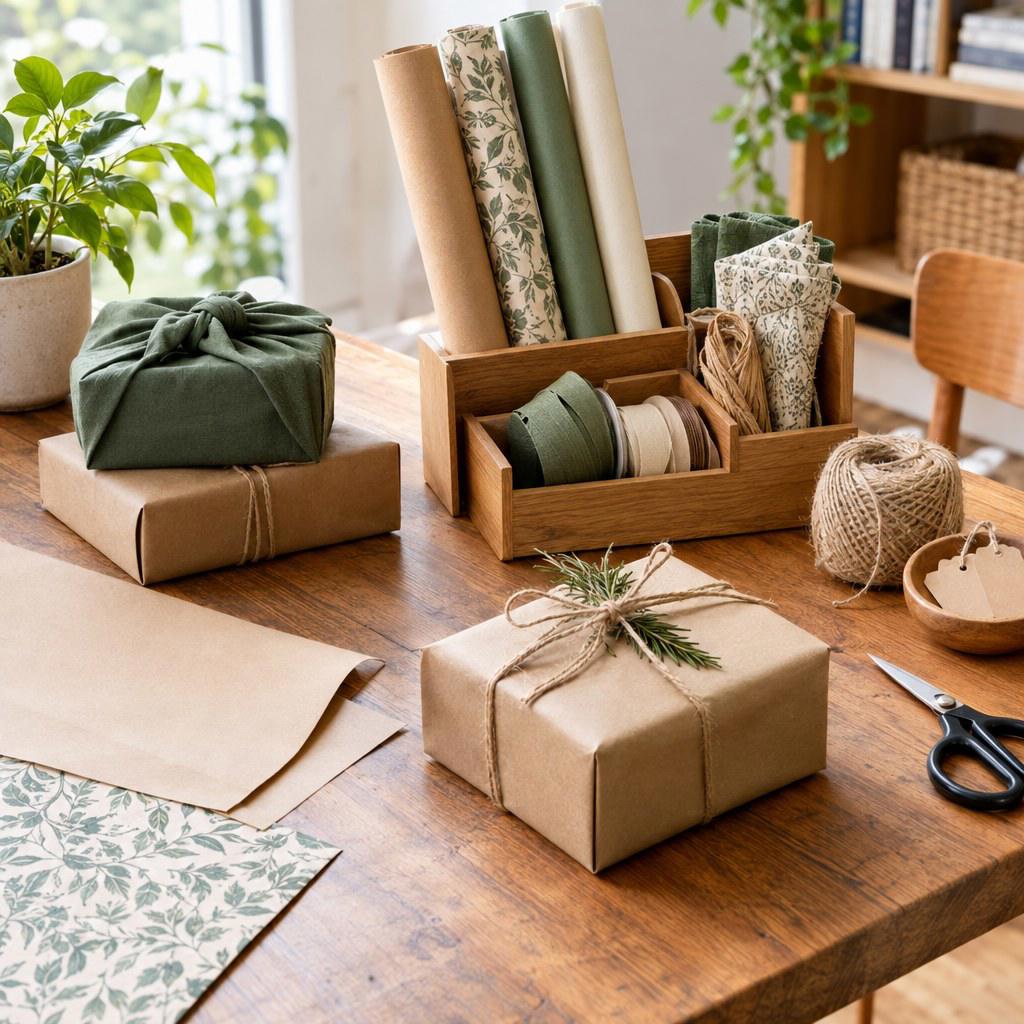
Build a station people will actually use
Place the station near the point where gifts are packed, stored, or handed over. If the supplies live in a distant cupboard, people will improvise with whatever is closest. A small rolling cart, shelf, drawer unit, or table zone can work well if it has a clear work surface and visible categories.
Set up 5 functional zones
- Measure and cut: Keep scissors, a ruler or measuring guide, a pencil, and tape or twine together.
- Wrap: Store paper sheets, folded reused paper, fabric wraps, and bags vertically or in labeled folders.
- Protect: Place reused clean filler, cardboard pieces, and small boxes here for fragile or irregular gifts.
- Finish: Hold tags, stamps, markers, reusable ribbon, and a small selection of decorations in one tray.
- Return and sort: Add containers for reusable bags, reusable ribbon, clean paper pieces, and materials that need local disposal guidance.
Labels should describe the action, not just the object. “Use again,” “small paper pieces,” and “return clean bags” are clearer than vague labels such as “miscellaneous.” If several people use the station, add a short instruction card explaining what belongs in each container.
Design for the volume you really handle
Estimate the busiest period you expect, then stock enough of the essentials to avoid emergency purchases. Do not fill every shelf with seasonal paper. Keep a small active selection at the station and reserve overflow supplies elsewhere. This makes stock visible and helps prevent duplicate buying.
Use a low-waste wrapping workflow
A station only reduces waste when its workflow is repeatable. Use the same short sequence for each package, especially during busy periods. This reduces over-cutting and makes it easier to identify where supplies are being used unnecessarily.
Step-by-step checklist
- Choose the smallest safe box, bag, or wrap format for the item.
- Check the reusable container first before opening new material.
- Measure the wrap around the package and cut only what is needed.
- Use protective filler only where movement or breakage is a real risk.
- Choose a closure that fits the package weight and expected handling.
- Add one clear label or tag instead of several decorative attachments.
- Return clean offcuts, bags, ribbon, and tools to their assigned zones.
For example, if you are preparing employee gifts, choose a small group of standard package sizes before the wrapping session. This allows you to pre-cut a limited number of paper sheets, reuse the same tying method, and avoid opening several decorative materials for a single batch.
Review the station after a busy use period. Look for unopened supplies, overflowing reuse bins, and recurring scraps. Then make one adjustment: change the paper size, add a better storage divider, or remove a material that consistently creates waste. Small operational changes are more sustainable than a complete reset every season.
Avoid common mistakes and recover quickly
Buying “eco” supplies without a use plan
A material with environmental marketing may still become waste if it is oversized, contaminated, or incompatible with local collection. Buy modest quantities first, test them in your workflow, and record whether users can reuse or sort them as intended.
Keeping every scrap
Saving materials is useful only when they remain usable. Set a minimum size for paper offcuts based on your typical tags, bands, or small gifts. Recycle or otherwise dispose of tiny, crumpled, taped, or contaminated pieces according to local guidance rather than letting them block access to useful supplies.
Making the system too complicated
Too many bins, colors, and exceptions lead to mistakes. Begin with a few obvious categories and expand only when a specific material needs separate handling. If people repeatedly put an item in the wrong place, revise the label or simplify the choice instead of assuming they need more rules.
Ignoring presentation and durability
Low-waste wrapping should still protect the gift and feel intentional. If paper tears or a tie comes loose, reinforce the weak point with a more suitable closure or package size. A failed wrap often creates more waste because it must be redone.
Use a simple decision framework
Before adding an item to your wrapping station, ask 4 questions: Can you use it more than once? Does it fit the gifts you actually wrap? Can people separate it easily after use? Does it protect the item without extra layers? If the answer is mostly no, it does not earn valuable station space.
Prioritize reusable containers and ties first, right-sized paper-based options second, and decorative extras last. Keep the station visible, limit active inventory, and review the return bin regularly. That combination reduces unnecessary purchases while keeping gift preparation orderly and professional.
Set up the first version this week
Gather your existing bags, boxes, paper, ties, and tools; sort them into the 5 zones; then test the station on 3 gifts. Use what you learn to refine the layout before buying anything new.