Planning Errands to Save Time and Extra Trips
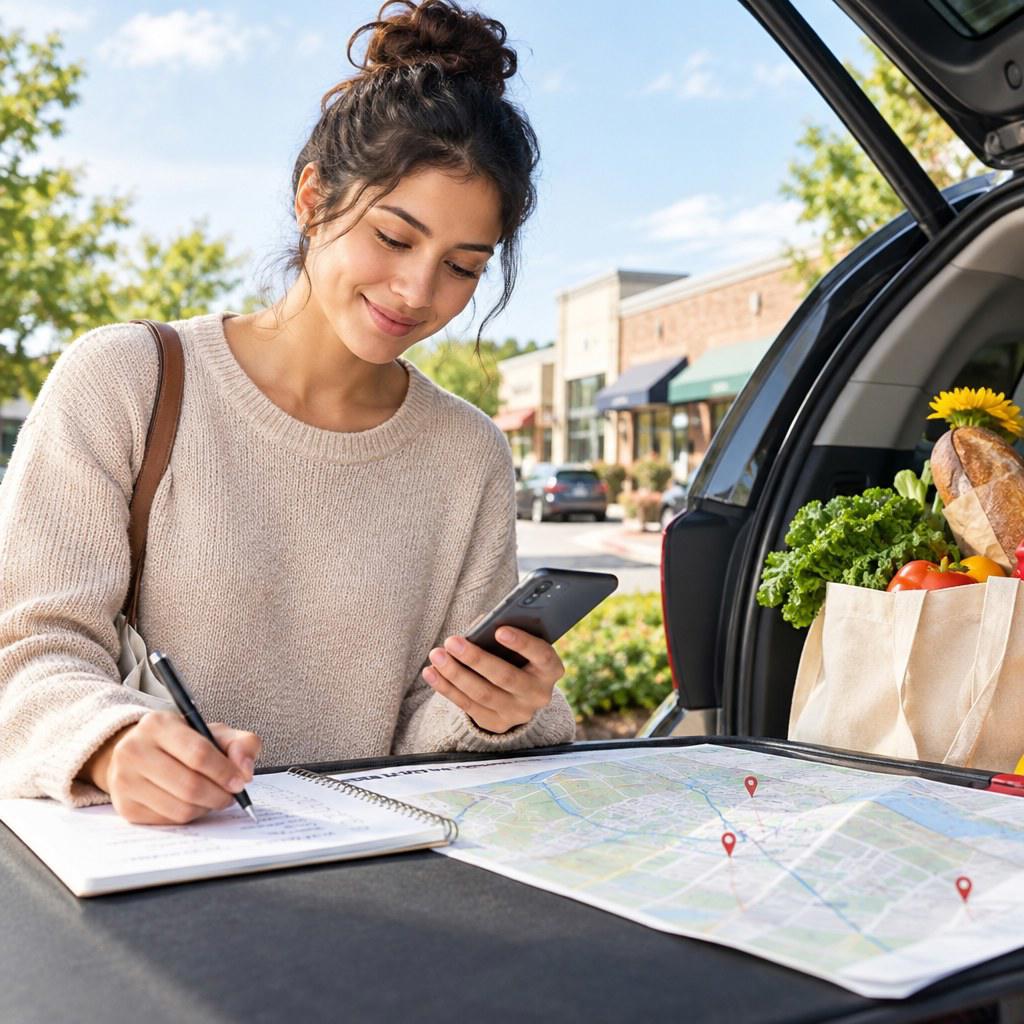
Planning errands as a coordinated route instead of a series of separate tasks helps you spend less time driving, waiting, and returning for forgotten items. The goal is not to create a rigid schedule; it is to make each trip purposeful, flexible, and easy to adjust when plans change.
For a household, this can mean grouping groceries, returns, prescriptions, and appointments into one practical loop. For a business owner or practitioner, it can also mean reducing non-billable travel, protecting work time, and making sure supplies are available before they become urgent.
Why errands turn into extra trips
Extra trips usually begin before you leave home or work. A task is remembered late, an item is not checked before departure, or several stops are planned without considering hours, location, and what must be carried. The result is a familiar pattern: one quick stop becomes several disconnected journeys across the week.
The biggest cause is treating errands as individual reminders rather than parts of one operating system. A note that says “buy batteries” is useful, but it does not tell you whether the hardware store is near your regular grocery stop, whether you already have batteries in storage, or whether the store is open when you will be nearby.
Common sources of wasted travel
- Keeping lists in several places, such as paper notes, messages, and memory.
- Leaving without checking store hours, appointment times, or stock availability.
- Buying an item without confirming the right size, model, quantity, or return policy.
- Making a special trip for a low-priority task that could wait for your normal route.
- Combining stops that create a poor sequence, such as collecting cold groceries before a long appointment.
- Failing to keep a small reserve of frequently used household or office supplies.
💡 Tip: Treat every errand as either urgent, route-compatible, or deferrable. That simple classification stops convenience tasks from interrupting higher-value work or personal time.
Build an errand route that works
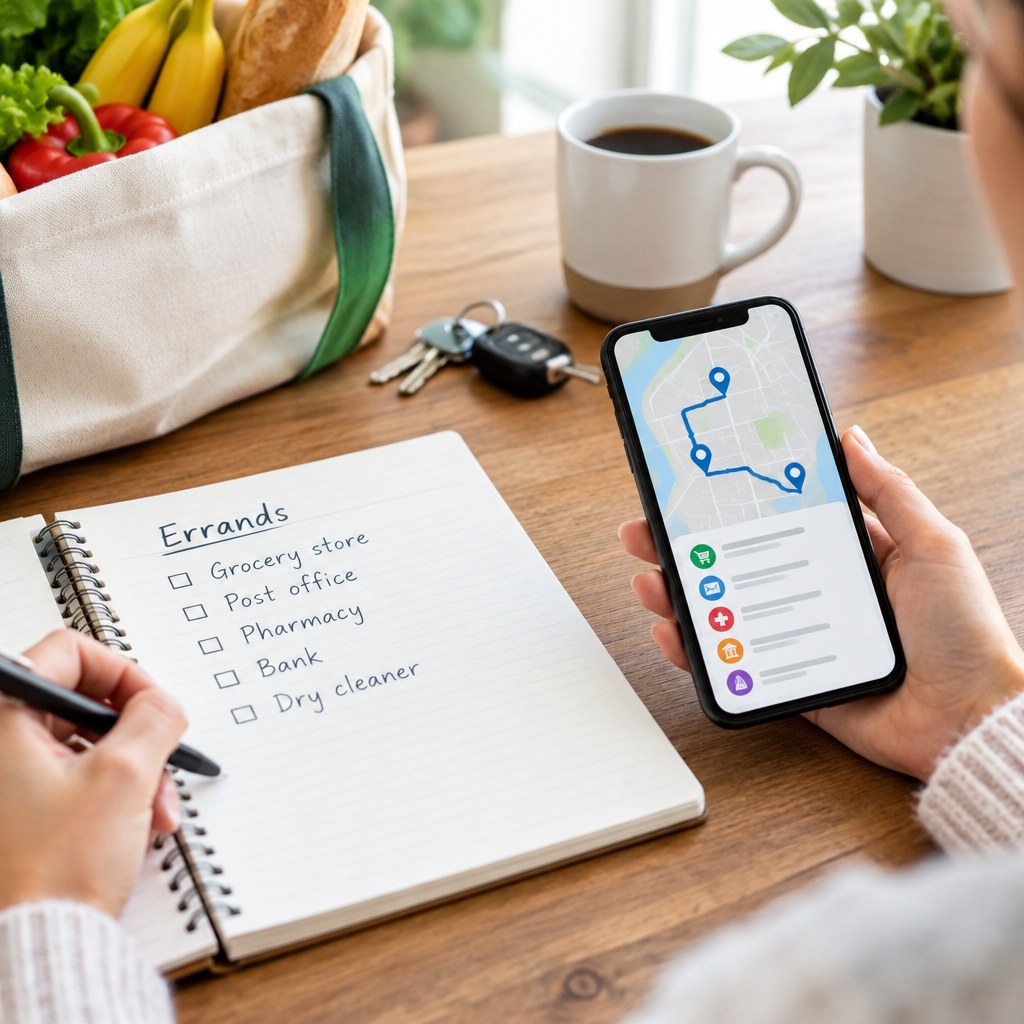
A good route starts with a complete list, then arranges tasks according to constraints. Geography matters, but it is only one part of the decision. Store hours, appointment windows, parking, item handling, and the importance of each stop all affect the best order.
Capture tasks in one trusted place
Choose one list that you will actually consult before leaving. It might be a shared digital note, a task app, or a paper list kept by the door. The tool matters less than consistency. Add the location, required item, deadline, and any detail that could prevent a failed trip.
For example, instead of writing “return light,” write “return unopened desk lamp; receipt in wallet; electronics store near bank; return deadline Friday.” The extra detail makes the task ready to complete rather than merely easy to remember.
Sort each task by location and constraint
Review the list and label each errand by area: near home, near work, or on a regular travel route. Then add constraints. A pharmacy pickup may need to happen before closing. A parcel drop-off may require packaging. Groceries should usually be later in the route if they include chilled or frozen items.
Sequence stops for the real world
Put fixed-time commitments first, then arrange flexible stops around them. Handle returns and parcel drop-offs before purchases if they free up space in your vehicle. Leave fragile, bulky, chilled, or frozen purchases until close to the time you will go home. If parking is difficult, consider whether walking between nearby stops is simpler than moving the vehicle repeatedly.

A practical planning checklist
Use this checklist before a planned errand run. It is designed to take only a few minutes, but it addresses the details that most often create a second trip.
- Collect every open task. Check your main list, calendar, messages, and any paper reminders.
- Remove duplicates. Confirm whether an item has already been bought, ordered, returned, or completed by someone else.
- Check urgency. Identify deadlines, store hours, appointment times, and consequences of waiting.
- Group by area. Put tasks near home, work, and your planned route into separate clusters.
- Verify requirements. Bring receipts, identification, measurements, payment methods, containers, packages, or product details as needed.
- Confirm availability when practical. For a specific or essential item, check that the location is open and can provide what you need.
- Choose the order. Start with fixed commitments, account for carrying needs, and leave temperature-sensitive purchases until last.
- Add a buffer. Leave room for parking, queues, traffic, and an unexpected missing item.
- Set a stopping rule. Decide which optional errands you will skip if the route takes longer than expected.
Keep a small “go bag” near your exit point or in your vehicle if that suits your routine. It can hold reusable bags, a pen, a measuring tape, parcel labels, and a folder for returns. Only include items you use regularly; an overfilled kit becomes another thing to manage.
Applying the method to business errands
Business errands deserve the same discipline as meetings because unplanned travel can fragment a workday. Supplier pickups, bank visits, equipment returns, shipping, client-site materials, and office purchases often look minor individually. Combined without a route, they can displace focused work and delay customer commitments.
Set replenishment points
Define a minimum practical supply level for routine items. Reorder before an urgent same-day pickup becomes necessary.
Assign a route owner
Make one person responsible for checking the list and combining stops, even when several people submit requests.
Close the loop
Record what was completed, what was unavailable, and what needs follow-up before the next route is planned.
Where tasks affect purchasing, client work, or inventory, clarify who can approve substitutions and spending before departure. That avoids a stalled errand when the exact item is unavailable. If you delegate the trip, provide the item specification, acceptable alternatives, budget boundary, and proof-of-purchase process.
Mistakes to avoid and how to recover
The aim is not a perfect route. Conditions change, shops run out of items, appointments run late, and urgent needs arise. A useful system makes those disruptions visible so you can choose the next best action instead of automatically making another trip.
Overloading one outing
Trying to complete every open task can make the route fragile. A long list increases the chance that one delay affects everything else. Prioritize essential stops and choose a few optional tasks that are genuinely nearby. Carry unfinished tasks forward without treating them as a failure.
Ignoring preparation details
A return without the required documentation, a hardware purchase without measurements, or a shipment without a label can waste more time than the drive itself. Before leaving, ask: “What would make this stop impossible to complete?” Then check that item first.
Making urgency the default
Not every reminder deserves immediate action. When a task has no deadline and sits outside your normal route, place it in an area-based list. Review that list before trips you already need to make. Reserve special journeys for issues with a real operational, safety, or time-sensitive consequence.
⚡ Recovery rule: If a key stop fails, do not immediately backtrack. First ask whether another location is on your route, whether the task can be completed remotely, or whether it can join the next scheduled trip.
A simple decision framework
Before adding an errand to today’s route, assess 4 questions: Is it urgent? Is it on or near a route you already need to travel? Are you prepared to complete it? Does doing it now prevent a larger problem later? A “yes” to several questions usually supports going now. A task with few “yes” answers can normally wait.
Review your system after a few weeks. Notice the errands that repeatedly cause extra travel and identify the underlying reason: poor supply tracking, unclear ownership, forgotten preparation, or inconvenient scheduling. Improve that one point rather than creating a more complicated list.
Plan the next trip before the next need appears
Start with one shared errand list, group tasks by area, and take 5 minutes to prepare before you leave. Small planning habits can reduce repeated travel without making your day overly scheduled.