What Museum Conservators Actually Do
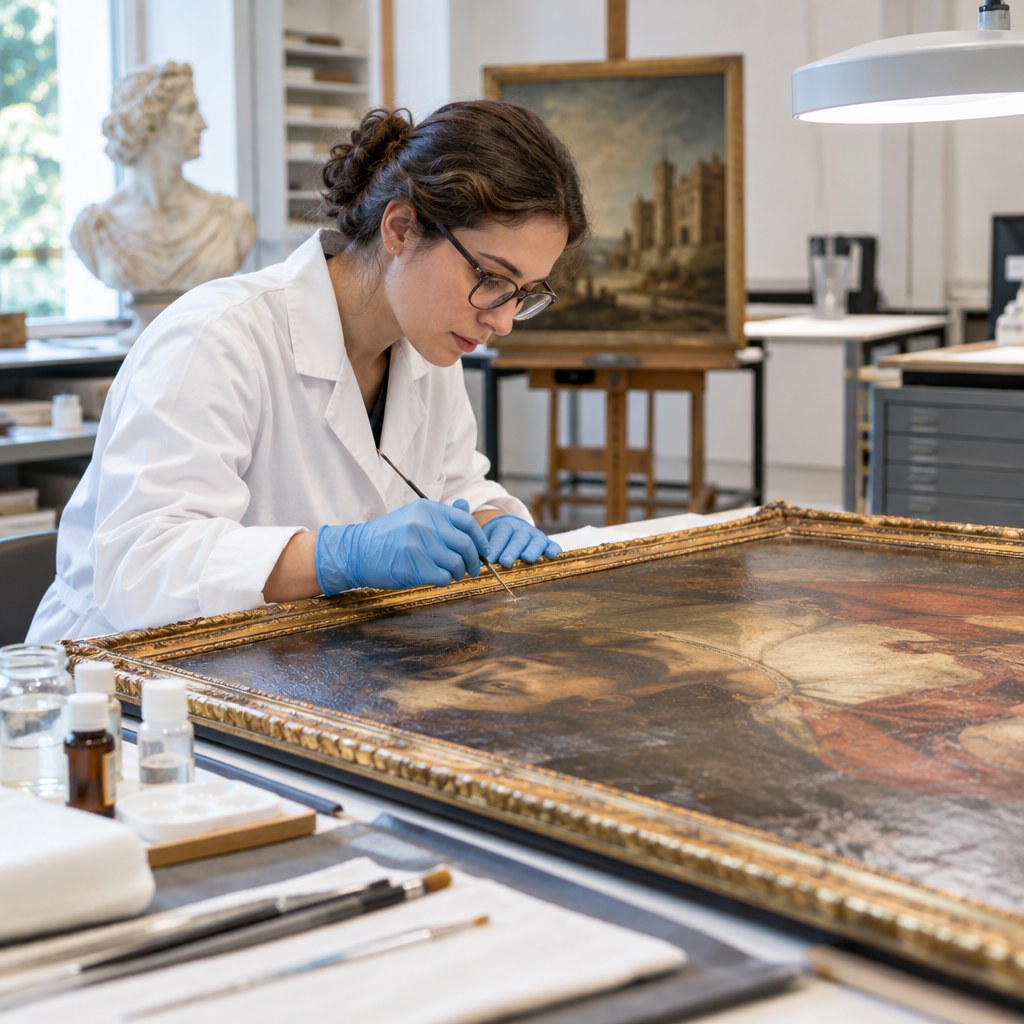
Museum conservators protect objects so they can be safely studied, displayed, stored, and shared in the future. Their work combines material knowledge, careful documentation, risk management, and hands-on treatment; it is not simply “repairing old things” until they look new.
If you manage a collection, own historically significant objects, or are planning an exhibition, understanding conservation helps you make better decisions about handling, budgets, loans, storage, and outside specialists. The practical outcome is a clearer way to identify when an object needs professional help—and what to expect from that help.
Conservation is about preserving evidence, not making objects look new
A museum object carries more than its visible appearance. Wear, repairs, labels, residue, construction details, and even damage can reveal how it was made, used, collected, altered, or valued. A conservator works to retain that evidence while reducing avoidable deterioration.
This sets conservation apart from restoration in the everyday sense. Restoration may aim to return an object to a preferred earlier appearance. Conservation may include restoration where it supports interpretation or stability, but it starts with a broader question: what changes are appropriate, necessary, and defensible for this particular object?
For example, a chipped ceramic vessel may not need its missing rim rebuilt. If the vessel is stable and the loss does not prevent research or display, the conservator might clean it, join loose pieces, and use a discreet support. If it is needed for a display where visitors must understand its original form, a removable and visibly distinguishable fill may be considered.
💡 Practical principle: Good conservation usually changes as little as possible while doing enough to make an object stable, understandable, and safe to handle or exhibit.
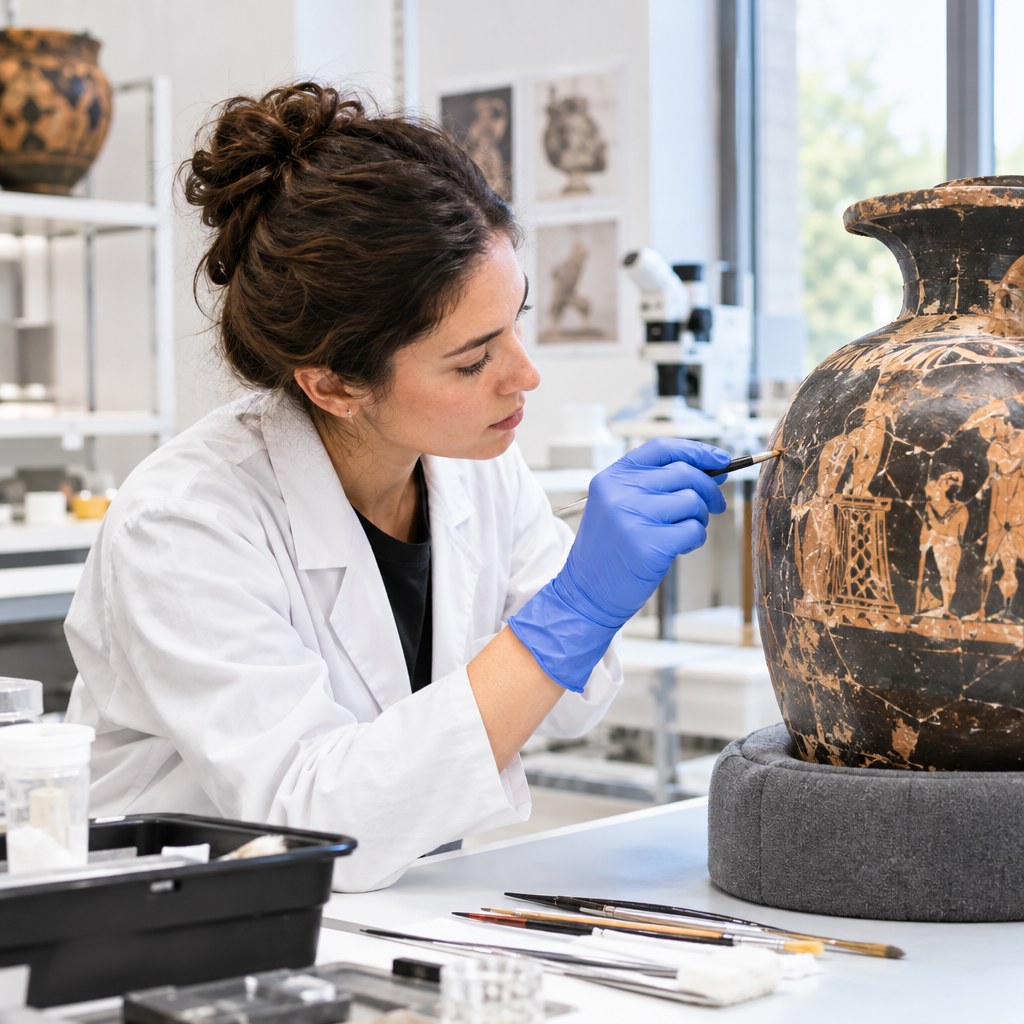
What conservators do day to day
Hands-on treatment is only one part of a conservator’s work. Much of the role is preventive: reducing the conditions that cause damage before intervention is needed. This can be more valuable—and less invasive—than repairing objects after a problem has developed.
Examine and document
Conservators inspect materials, construction, previous repairs, and damage. They record condition through written reports, photographs, measurements, and diagrams before objects move or receive treatment.
Prevent deterioration
They advise on light exposure, handling, pests, dust, storage materials, display mounts, packing, and environmental conditions that may cause gradual damage.
Treat and stabilize
When treatment is justified, conservators may clean surfaces, consolidate fragile materials, mend breaks, remove harmful past repairs, or construct safe supports.
They assess materials and mechanisms of change
Different objects fail in different ways. Paper can become brittle or discolored. Metals may corrode. Paint layers can crack, lift, or become obscured by aged coatings. Plastics can deform, ooze, discolor, or become fragile. Organic materials such as wood, leather, feathers, and textiles can respond strongly to moisture, pests, pollutants, and light.
Conservators identify likely causes before proposing action. This may involve visual examination under magnification, ultraviolet illumination, microscopy, or other analytical methods available through a museum or specialist laboratory. The goal is not to test an object without reason; it is to gather enough evidence to choose the least risky course.
They make collections usable
Conservation also enables access. A fragile costume may need a custom mannequin and low-stress mounting before display. A historic document may need a protective enclosure before researchers can consult it. A heavy sculpture may require an engineered base before it can travel. In each case, the conservator helps balance access with preservation.
How conservators decide whether to treat an object
Treatment is not automatic when damage is visible. Conservators weigh the object’s condition against its intended use, significance, history, risks, and available resources. A museum may decide that careful storage is the best option for one object and approve treatment for another that is required for an upcoming exhibition or research project.
Ethical practice also emphasizes documentation. A condition report explains the object’s state before work. Treatment records identify what was done and, where possible, what materials were used. This allows future caretakers to understand the object’s treatment history rather than guessing at changes made decades earlier.
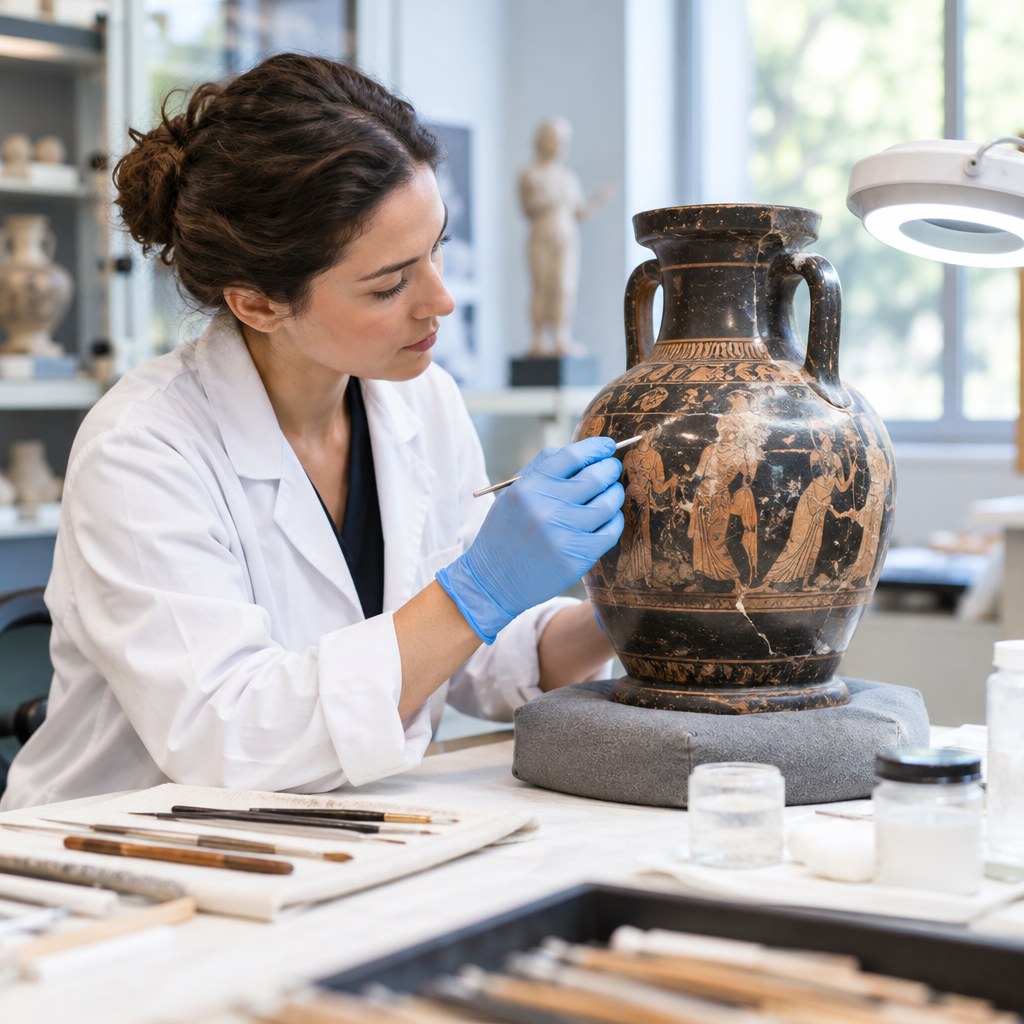
How to work with a conservator: a practical process
If you are responsible for a business collection, local archive, historic property, or private object intended for public use, give a conservator the information needed to assess risk before asking for a repair estimate. A clear brief reduces avoidable handling and helps you compare options fairly.
- Pause unnecessary handling. Keep fragile objects supported, clean your hands before touching them, and avoid testing cleaners, tapes, glues, oils, or household repair products.
- Record the current condition. Take clear overall and detail photographs, note dimensions, record visible damage, and identify when you first noticed a change.
- Describe the object’s purpose. State whether it will stay in storage, be displayed, travel, be photographed, or be handled by staff or visitors.
- Share its history. Include known materials, previous repairs, storage conditions, pest or water events, and relevant provenance information where available.
- Ask for options, not just a single fix. A useful proposal may distinguish urgent stabilization, preventive measures, and optional aesthetic work.
- Plan implementation. Confirm who will prepare the space, move the object, approve decisions, maintain records, and monitor it after treatment.
For a collection-wide project, start with a survey rather than selecting items by appearance alone. A survey can identify high-risk objects, recurring storage problems, and priorities for phased action. This is especially useful when budgets are limited and the collection includes many different materials.
Risks and common mistakes to avoid
The most damaging mistakes often come from well-intended attempts to make an object presentable quickly. Irreversible changes can reduce historical information, complicate future treatment, or create new instability.
Cleaning without knowing the surface
Dusting may sound harmless, but loose pigment, fragile gilding, powdery corrosion, and degraded coatings can be disturbed by cloths, brushes, compressed air, or vacuum attachments. Do not use water, solvents, commercial polish, or cleaning wipes on collection objects unless a qualified professional has assessed the surface.
Using pressure-sensitive tape, glue, or laminating products
Common adhesives can stain, become brittle, migrate into porous materials, or make later repair more difficult. If pieces must remain together temporarily, minimize movement and seek advice about safe support or containment rather than applying a quick adhesive.
Treating environmental control as optional
Expensive treatment can be undermined by poor storage. Direct sunlight, unstable conditions, dirty shelving, crowding, pest access, and unsuitable packing materials can all create recurring damage. You do not need to build a perfect museum store overnight, but you should address the most serious and controllable risks first.
⚠️ Recovery step: If an object has been exposed to water, pests, mold, impact, or sudden material change, photograph it, isolate it from unaffected objects where practical, and avoid drying, cleaning, or repairing it aggressively before seeking specialist advice.
A short decision framework for collection managers
Use 3 questions when deciding what to do next. First, is there an immediate threat to the object or nearby collection items? Second, does the object need to be accessed, displayed, moved, or loaned soon? Third, can preventive care reduce the risk without altering the object?
If there is active damage, prioritize stabilization and specialist assessment. If the object is stable but needs use, plan documentation, safe handling, and any support required for that use. If it is stable and not needed soon, improve storage and monitor its condition. This approach directs resources toward risk and purpose rather than surface appearance alone.
Start with condition, purpose, and risk
Before approving a repair or moving a vulnerable object, document what you have, define how it will be used, and ask whether stabilization or better storage should come first.