Why Cats Knead Blankets
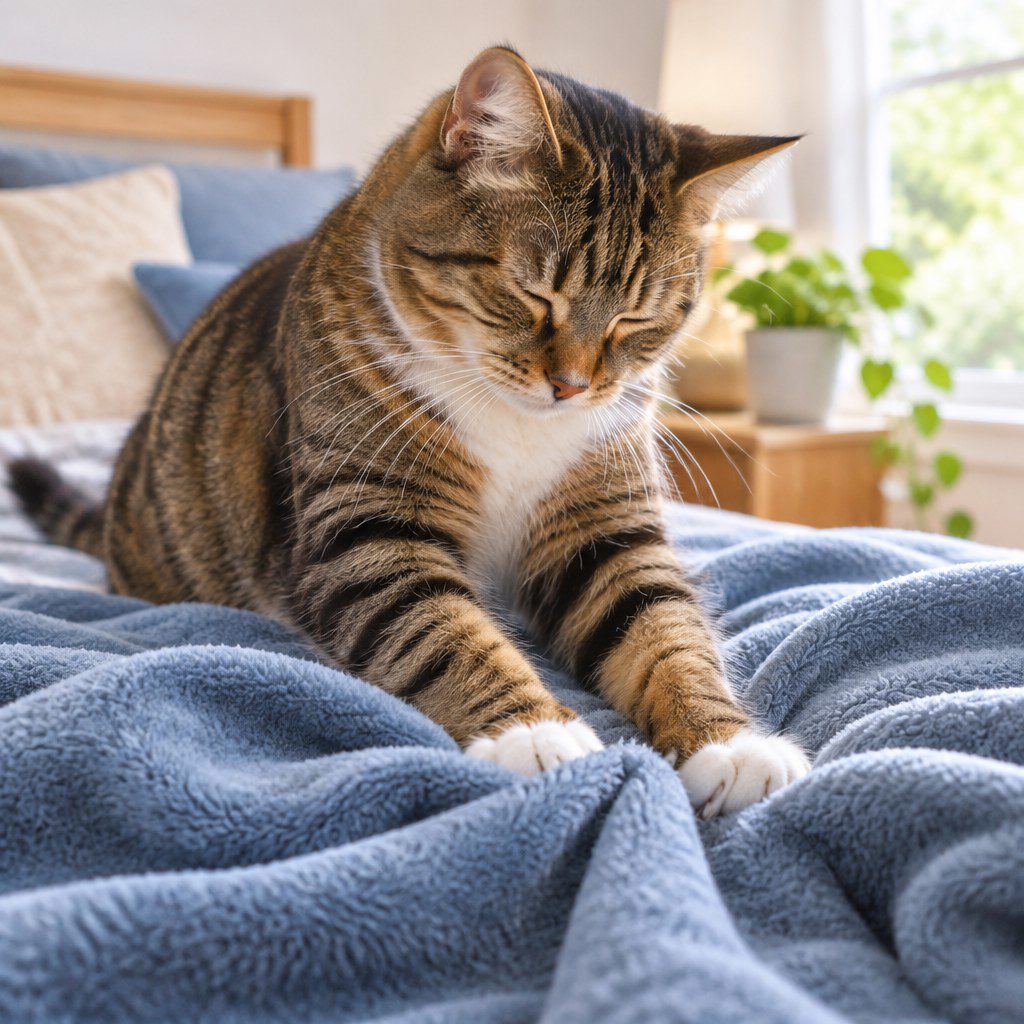
Cats knead blankets because the motion is strongly linked to comfort, early nursing behavior, scent-marking, and the search for a secure resting place. In most cases, a cat rhythmically pressing its paws into a soft blanket is a normal sign that it feels relaxed, content, or ready to settle down; the useful outcome is knowing when to let it happen and when a change in behavior needs attention.
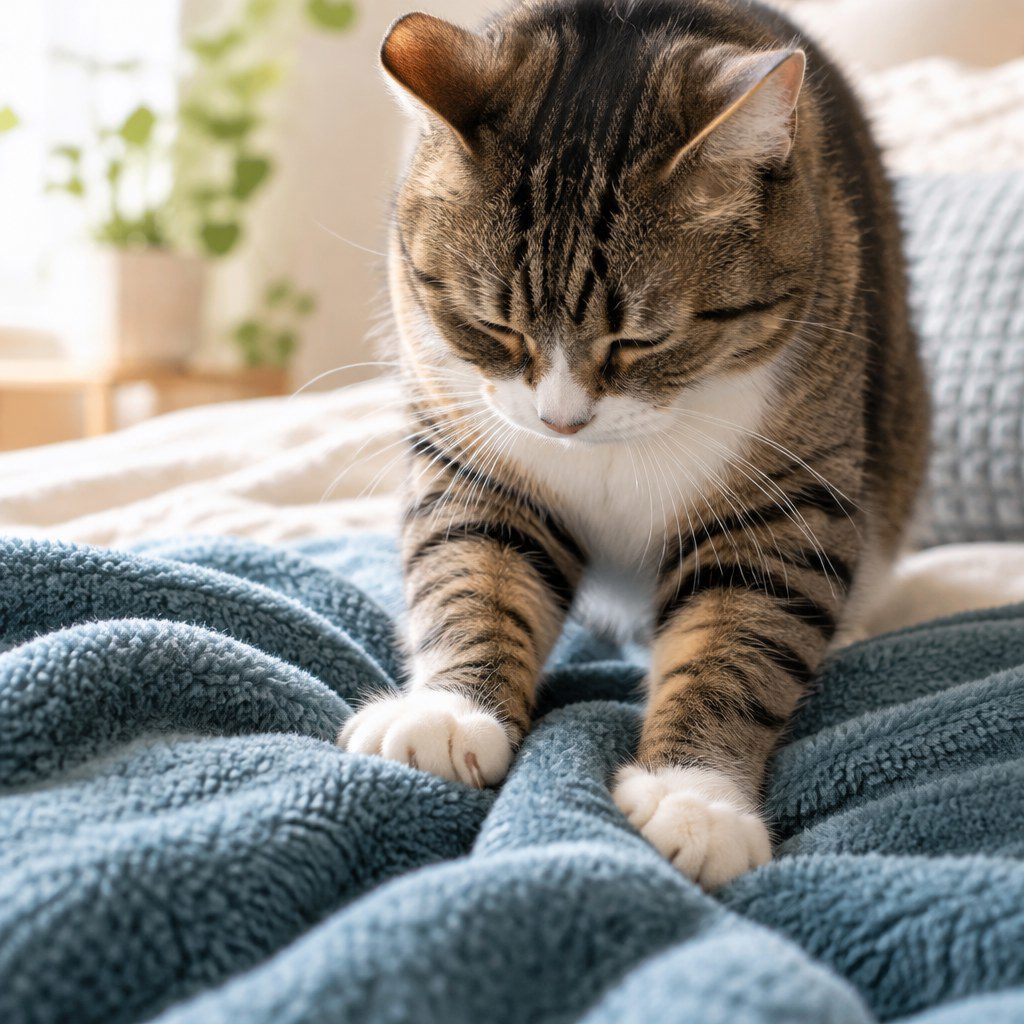
Why cats knead blankets
Kneading is the alternating push-and-release motion cats make with their front paws. Some cats use both paws slowly, some purr while doing it, and some extend and retract their claws. The behavior can look like they are making dough, which explains the familiar phrase “making biscuits.”
It begins with kittenhood
Kittens press their paws against their mother while nursing. That movement is associated with feeding, warmth, and safety. Many adult cats retain the motion, especially when they are sleepy, comfortable, or close to a person they trust. A blanket offers a soft surface that can recreate part of that sensory experience.
Soft surfaces invite nesting behavior
Cats naturally investigate and prepare places where they intend to rest. A plush throw, fleece bed, sweater, or duvet may be especially appealing because it shifts slightly under the paws. Kneading can be part of choosing a sleeping spot, much like turning in place before lying down.
It can leave a familiar scent
Cats have scent glands in their paw pads. When your cat kneads a blanket, it may deposit scent on a place it considers safe or familiar. This is not usually a problem; it is one way cats make their environment feel more predictable. It can be particularly noticeable on blankets that already smell like you.
It helps some cats regulate excitement
Kneading often appears alongside purring, slow blinking, half-closed eyes, or a relaxed body. These signals commonly suggest calm enjoyment. However, cats can also knead when mildly excited or when working through a change in routine. The surrounding body language matters more than the paw movement alone.
What kneading may mean in context
Rather than treating kneading as a single-message behavior, look at the whole situation. The same cat may knead for slightly different reasons depending on the location, time of day, people nearby, and its current stress level.
💡 Tip: If you are unsure why your cat is kneading, record the circumstances for several days: location, blanket texture, time, body language, and whether anything in the household changed. Patterns are usually more informative than one episode.
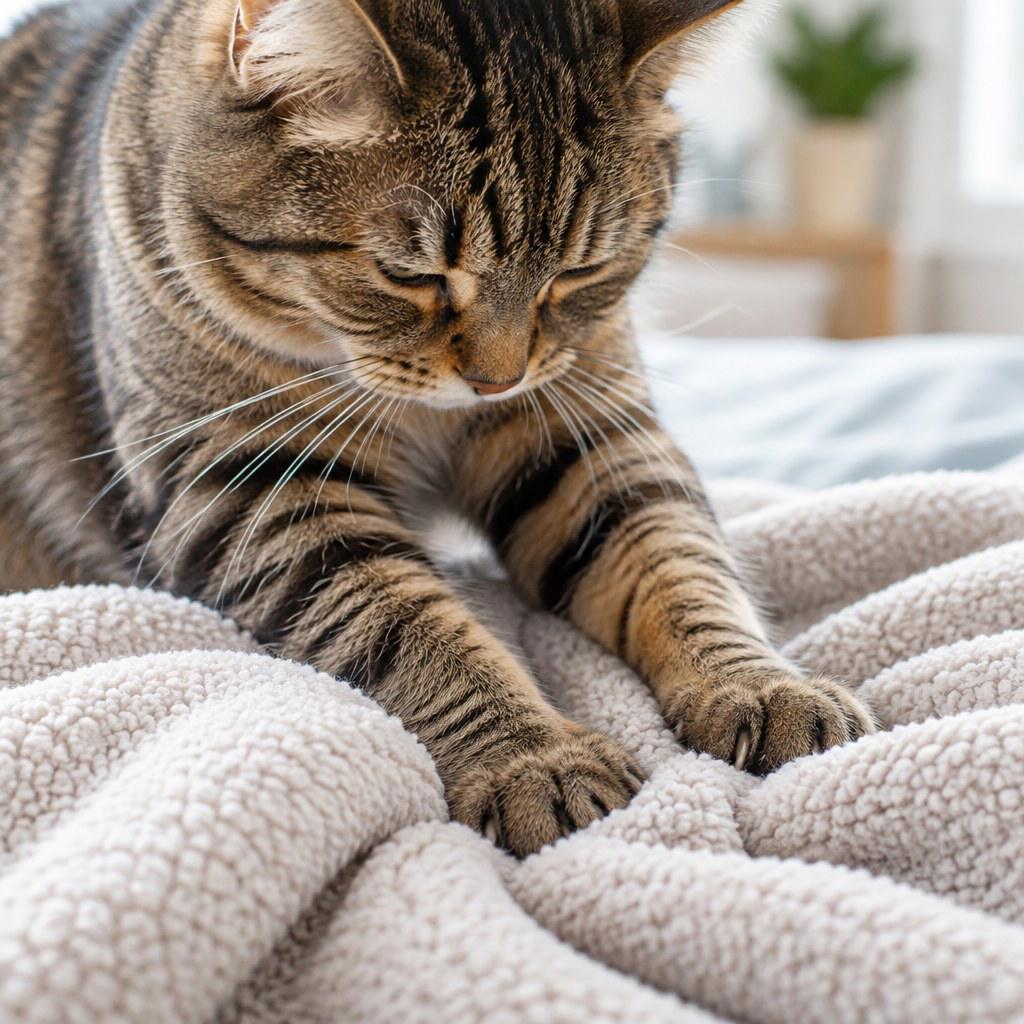
How to make kneading comfortable for you and your cat
You do not need to stop normal kneading. The practical goal is to give your cat an appropriate place to do it, reduce accidental scratches, and keep the chosen fabrics safe. A simple setup can make this routine easier for everyone in the household.
Create a designated kneading blanket
Choose a washable, reasonably thick blanket with no loose threads, tassels, or easily detached decorations. Put it where your cat already tends to settle: a preferred chair, the end of the bed, or a quiet corner near a window. Familiarity matters, so avoid moving the blanket constantly once your cat adopts it.
Protect laps without rejecting affection
If your cat kneads on you, keep a folded throw within reach. Place it gently over your lap before the cat settles. This preserves the interaction while adding a barrier between claws and skin. Avoid abruptly pushing your cat away unless it is becoming overstimulated; sudden rejection can create confusion around an otherwise positive routine.
Keep claws managed
Regular claw care can reduce painful pressure during kneading. If you trim claws at home, use cat-appropriate tools, work calmly, and stop before either of you becomes distressed. If your cat resists, ask a veterinarian or qualified grooming professional for guidance rather than forcing the process.
Maintain a calm resting zone
Cats often knead most when they can fully relax. Keep the resting area away from noisy appliances, active foot traffic, and another pet that repeatedly interrupts it. You do not need an elaborate cat room; a predictable soft spot and some uninterrupted quiet time are often enough.
- Notice the fabric and location your cat already prefers.
- Offer one durable blanket in that location for several days.
- Put the blanket on your lap before cuddle time if claws are uncomfortable.
- Reward calm settling with a quiet voice or gentle petting only if your cat welcomes it.
- Wash the blanket when needed, but keep a familiar backup available during laundry.
When kneading deserves closer attention
Most kneading is harmless, but a sudden change in any familiar behavior is worth noticing. Consider the wider picture rather than assuming that kneading itself is the issue. Changes in appetite, litter box habits, mobility, social behavior, grooming, or sleep can provide more useful context.
Fabric eating is a safety concern
Some cats suckle, chew, or pull fibers from blankets while kneading. If your cat swallows material, remove the item and offer a safer alternative. Stringy, frayed, or loosely woven textiles are especially poor choices because ingested fibers can create a serious problem. Contact a veterinarian promptly if you think your cat has swallowed fabric or is showing signs of illness.
Pain can change normal routines
Watch for reluctance to jump, stiffness, hiding, flinching when touched, limping, or a noticeable change in how your cat uses its paws. Kneading does not diagnose pain, but an altered pattern alongside these signs is a reason to seek veterinary advice. Do not try to assess an injury by repeatedly manipulating the paw or leg yourself.
Stress signals call for environmental review
A move, renovation, new pet, schedule shift, or conflict between animals can make a cat seek comfort more often. Review what changed and restore predictable routines where you can. Ensure separate food, water, litter, rest, and retreat spaces in multi-cat homes. If your cat seems persistently distressed, a veterinarian can help rule out medical contributors and discuss appropriate next steps.
Mistakes to avoid and how to recover
The most common mistake is treating kneading as bad behavior simply because it is inconvenient. Punishment, shouting, or spraying water can make a cat anxious and does not explain what you want instead. It may also make your cat avoid you when it is seeking comfort.
- Do not pull a blanket away mid-knead. If you need to move it, wait until your cat has settled or redirect it with a similar blanket nearby.
- Do not use a thin or frayed throw as a claw barrier. Choose a thicker fabric that protects your skin and is less likely to unravel.
- Do not force cuddling. Kneading can be affectionate, but it does not always mean your cat wants prolonged handling.
- Do not ignore chewing or swallowing. Replace unsafe textiles and seek veterinary advice if you suspect ingestion.
- Do not assume every increase is emotional. Review physical and behavioral changes before deciding it is merely a new habit.
If you have already discouraged kneading harshly, reset the routine gently. Provide a designated soft spot, keep interactions calm, and allow your cat to choose when to use it. Consistent, low-pressure redirection is more useful than trying to eliminate a natural comfort behavior.
A simple decision framework
Use this short check before deciding whether you need to intervene. If your cat kneads a safe blanket, looks relaxed, and returns to normal activities afterward, let the behavior continue. If claws are the only issue, add a lap blanket and keep claw care manageable.
Take action when the blanket is damaged or unsafe, when your cat chews or swallows fabric, or when kneading changes alongside signs of stress, pain, or illness. In those situations, replace the fabric, reduce environmental pressure, and contact a veterinarian when there is any concern about ingestion or a significant change in health.
Give your cat a safe comfort ritual
Choose one sturdy, washable blanket for your cat’s preferred resting spot, then observe whether its kneading remains calm, comfortable, and free from chewing or swallowing hazards.