Why Some Frogs Change Colour
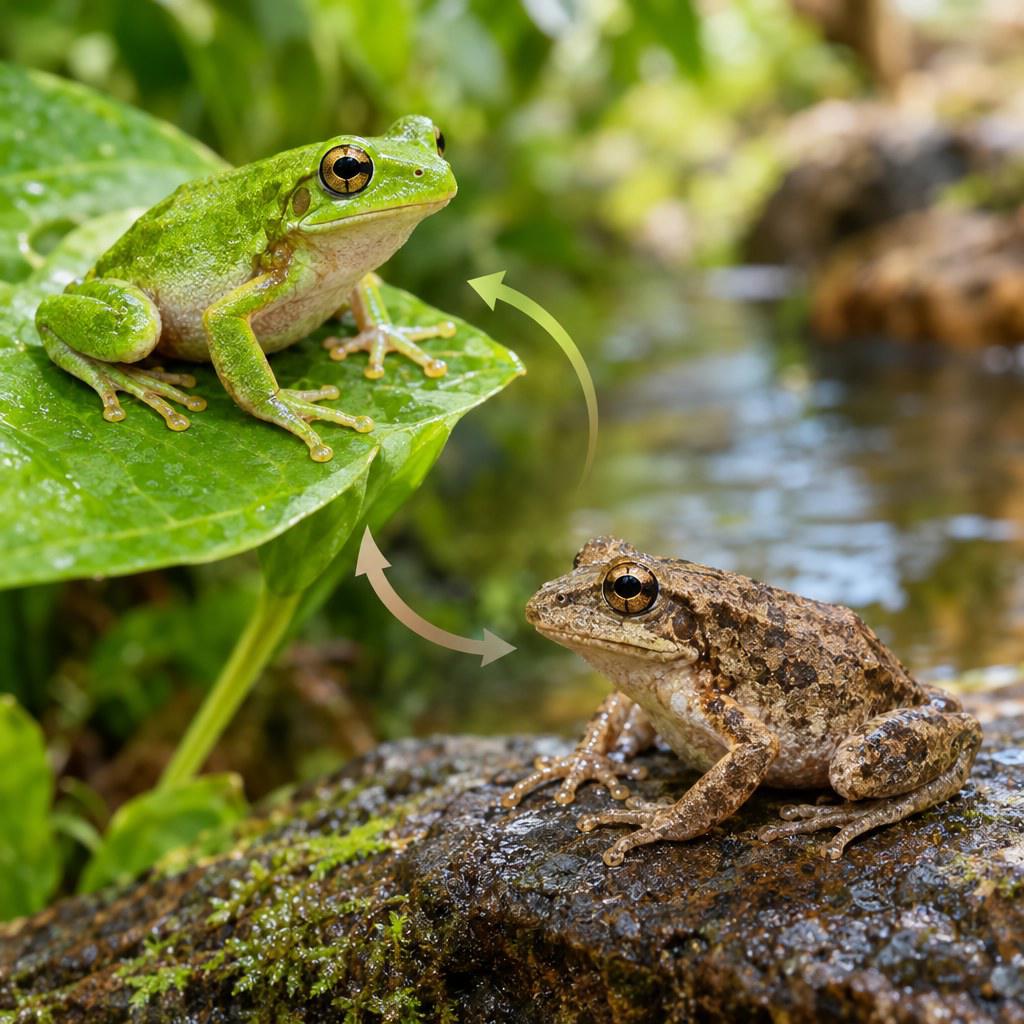
Some frogs change colour because specialised skin cells redistribute pigment or reflect light differently in response to their surroundings, body condition, temperature, light, stress, and breeding season. The change can help with camouflage, communication, and temperature management, but it is not always immediate, and not every frog species can do it.
For you, the useful takeaway is simple: colour is one clue to a frog’s biology, not a complete health diagnosis. By understanding what drives normal colour variation and what may signal trouble, you can observe frogs more responsibly—whether you encounter one in a garden, photograph wildlife, or care for an amphibian in an appropriate setting.
How frogs change colour
A frog’s skin is more than a coloured outer layer. Beneath the surface are pigment-containing cells called chromatophores. Different types contribute different visual effects: melanophores contain dark pigment, xanthophores contribute yellow to reddish tones, and iridophores reflect light using tiny structural elements in the skin.
When these cells expand, contract, or alter how pigment is distributed, the frog’s visible colour can shift. Dark pigment spread across a cell can make the animal appear deeper brown, grey, or green. When that pigment is concentrated, lighter colours or reflective layers beneath may become more visible.
Fast versus slow changes
Some changes happen over a relatively short period. These are often called physiological colour changes and are controlled by the frog’s nervous system and hormones. A frog may look darker in dim, cool, or shaded conditions, then lighter after conditions change.
Other changes develop over days, weeks, or seasons. These slower shifts can reflect growth, diet, seasonal activity, or reproductive condition. A juvenile frog may also look noticeably different from an adult of the same species, so comparing an animal only with a single online photograph can be misleading.
💡 Useful distinction: A colour shift is not the same as a frog changing into a completely unrelated pattern. Most species work within a limited palette determined by their genes and skin structure.
Why a frog’s colour changes
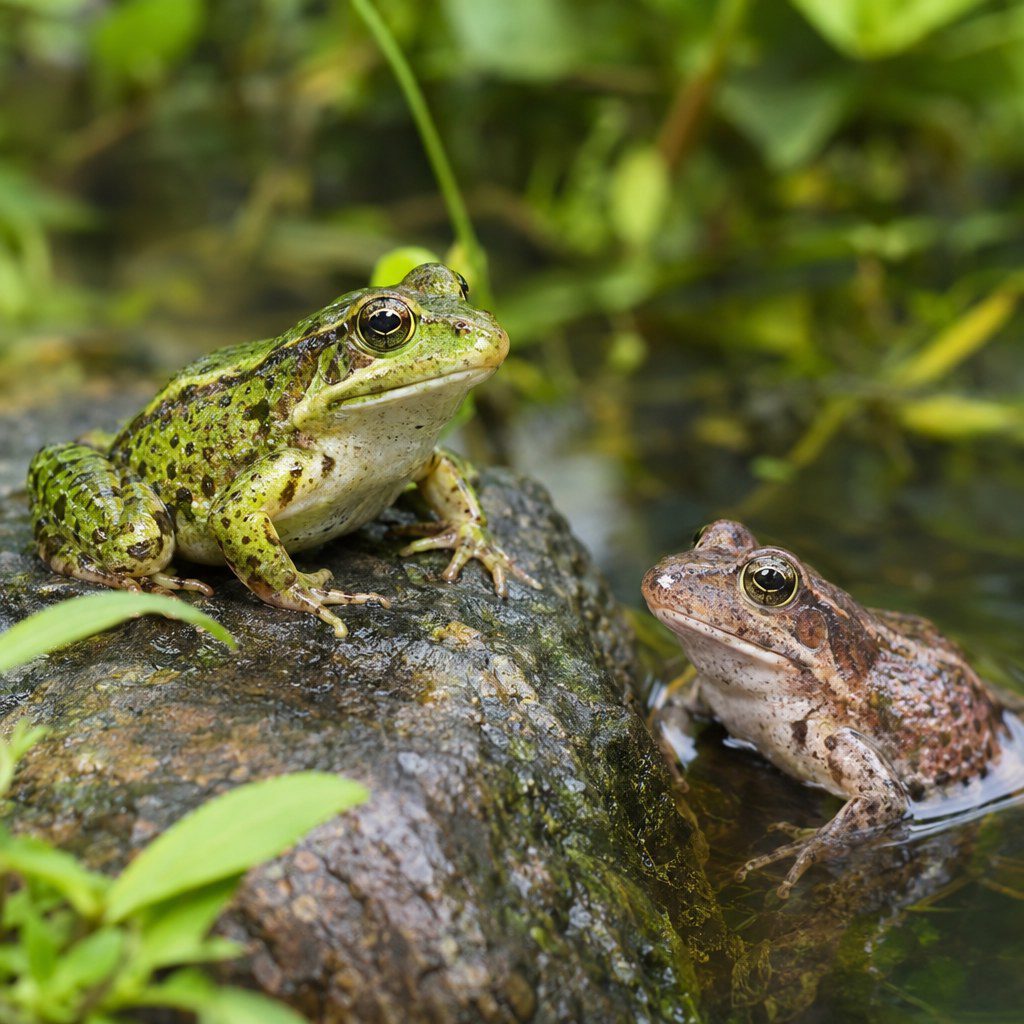
Colour change is usually a practical response to conditions rather than a performance. Several influences can act at the same time, which is why the same frog may look different in a wet garden, a shaded pond edge, or a bright container used for temporary observation.
Camouflage
A darker body against dark soil, bark, or leaf litter may be less conspicuous. A lighter appearance can be useful on pale surfaces or in brighter conditions.
Light and temperature
Because frogs rely heavily on external conditions to regulate body temperature, darker or lighter skin may affect how they absorb or reflect available light.
Breeding signals
In some species, males develop stronger or altered colours during the breeding period. These seasonal colours can help individuals recognise suitable mates.
Moisture and condition
Hydration, skin moisture, recent activity, and general condition can change how skin reflects light, making existing colours appear more vivid or muted.
Stress can also affect colour. A frog that is handled, exposed to a sudden light change, chased by a pet, or placed in an unfamiliar setting may darken, pale, or show a temporary change in pattern contrast. That response does not automatically mean illness, but it is a reason to reduce disturbance.
Importantly, colour change is not a reliable way to identify every species. Markings, body shape, toe pads, calls, habitat, and location are often more useful identification clues. If you need a confident identification, use several observations rather than treating colour as the deciding feature.
What normal colour change looks like
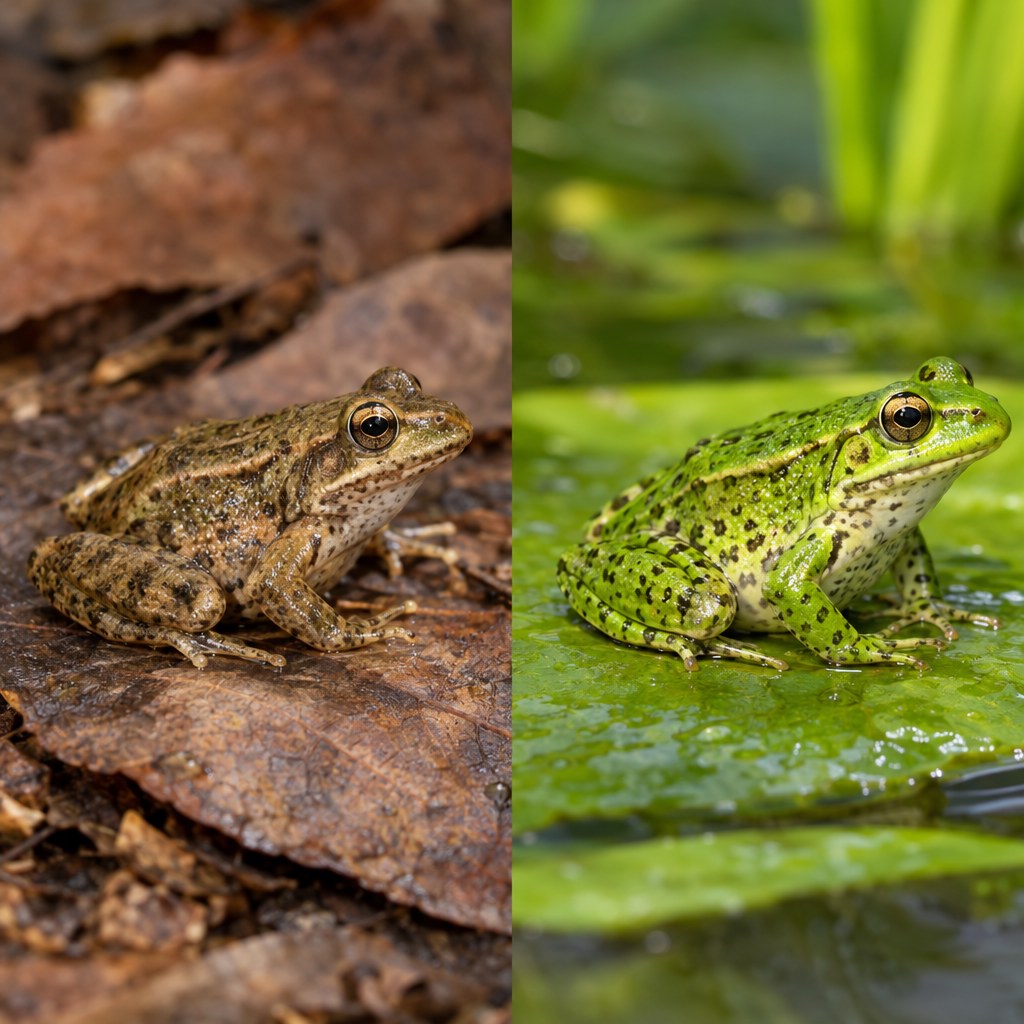
Normal variation tends to be even, gradual, and consistent with the frog’s environment. For example, a frog may appear deeper green or brown while resting in a shaded, damp hiding place, then look lighter after moving into brighter surroundings. The animal should otherwise move normally, hold itself steadily, and respond to its environment.
Look for the whole picture
Colour alone has limits. A healthy-looking frog can vary widely in shade, while an unwell frog may not show an obvious colour change. Instead, consider colour together with posture, movement, skin appearance, breathing, appetite if you are responsible for its care, and whether the change is temporary or persistent.
How to observe frogs responsibly
If you notice a frog whose colour seems to change, the best first action is usually to leave it where it is and watch quietly. Amphibian skin is delicate and can absorb substances from hands, including soap residue, sunscreen, insect repellent, and oils.
A low-impact observation checklist
- Observe from a short distance without touching, moving, or cornering the frog.
- Note the setting: shade or sun, wet or dry ground, vegetation, water nearby, and time of day.
- Record what changes: overall shade, markings, posture, movement, or skin texture.
- Take a photograph only if you can do so without using flash or blocking the frog’s escape route.
- Compare observations over time rather than making a judgement from one brief encounter.
- If the frog appears injured or trapped, contact an appropriate local wildlife rehabilitator or animal welfare service for advice before intervening.
If you keep amphibians under lawful, suitable conditions, avoid treating a colour shift as a cue to make rapid changes to the enclosure. First check the basics: appropriate species-specific temperature range, clean dechlorinated water where needed, humidity, hiding places, lighting, and minimal handling. Sudden environmental adjustments can create more stress than the colour change itself.
Risks and common mistakes
The most common mistake is assuming that a brighter, darker, or differently coloured frog must be sick—or must be healthy. Colour can be informative, but it is only one visible response among many. Avoid making treatment decisions, changing diet, or moving a wild animal based on colour alone.
What to avoid
- Frequent handling: this can stress the frog and expose its skin to contaminants.
- Using flash photography: bright, sudden light may disturb a nocturnal or hiding animal.
- Relocating a healthy wild frog: it may already be in suitable cover or within its familiar territory.
- Using online photos as proof of species or health: lighting, camera processing, and natural variation can all distort colour.
- Ignoring additional symptoms: wounds, abnormal posture, difficulty moving, or marked lethargy deserve more attention than shade alone.
⚠️ When to escalate: If a frog is visibly injured, caught in netting or adhesive material, unable to escape danger, or showing severe abnormal behaviour, keep people and pets away and ask a local wildlife professional for guidance. Do not attempt home treatment.
A practical decision framework
Use a simple sequence when you see a colour-changing frog. First, ask whether the surrounding light, temperature, moisture, or background could explain the change. Next, look for normal movement and intact skin. Then decide whether observation is enough or whether signs of injury or distress justify contacting a qualified local service.
If the frog is wild, your default should be minimal interference. If it is in your care, review its established husbandry requirements before changing anything. In either situation, a pattern of colour change makes more sense when you record the context rather than reacting to a single shade.
Observe first, intervene only when needed
A frog’s changing colour is often an adaptive response. Note the conditions, protect its space, and seek expert help when colour changes appear alongside injury, unusual behaviour, or poor condition.