Why Squirrels Bury Food
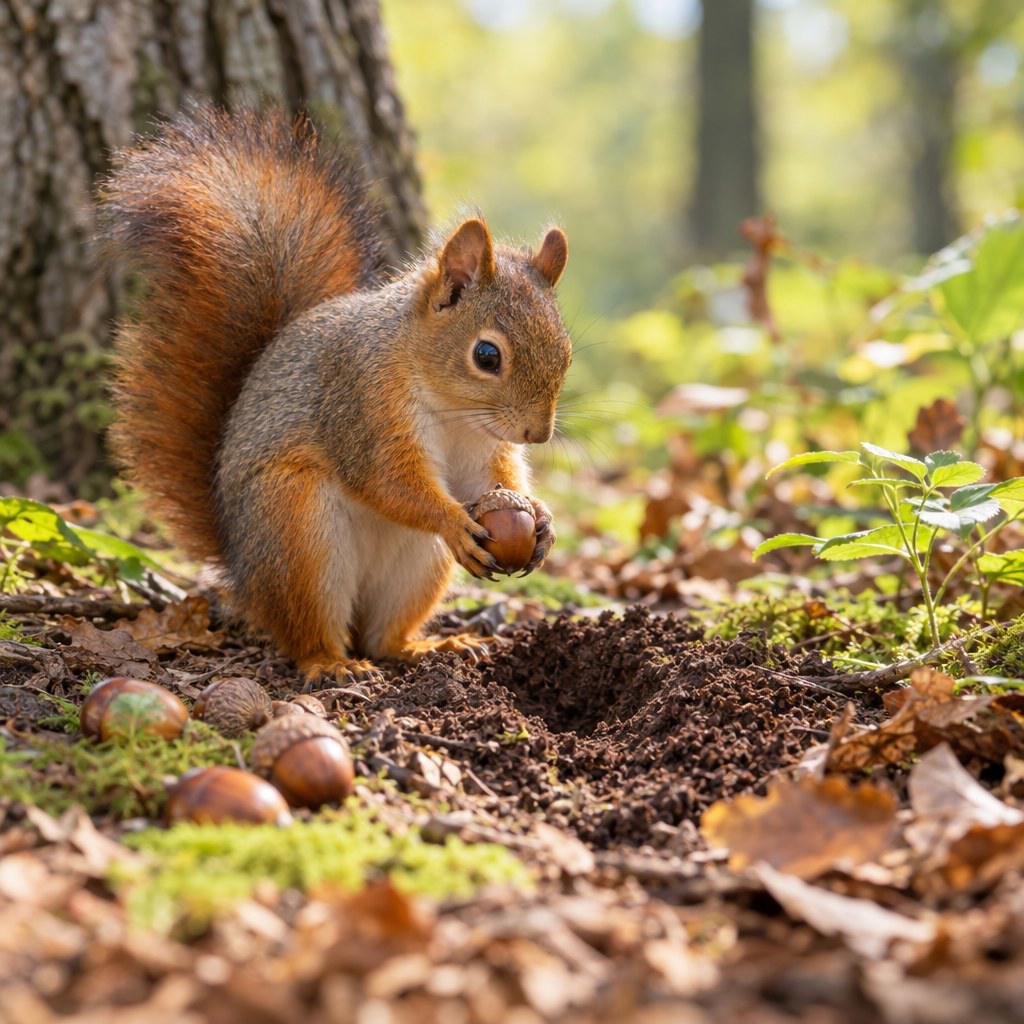
Squirrels bury food because storing a surplus helps them survive when fresh food is scarce. This behavior, often called caching, is a practical food-security strategy: an animal can collect a valuable item now, hide it in a place it may remember later, and return when conditions are less favorable.
If squirrels are digging in your lawn, planters, garden beds, or commercial landscaping, understanding that purpose helps you respond more effectively. You can protect vulnerable areas without assuming every hole signals a serious pest problem, and you can focus effort where squirrels are actually causing damage.
Why food burial works for squirrels
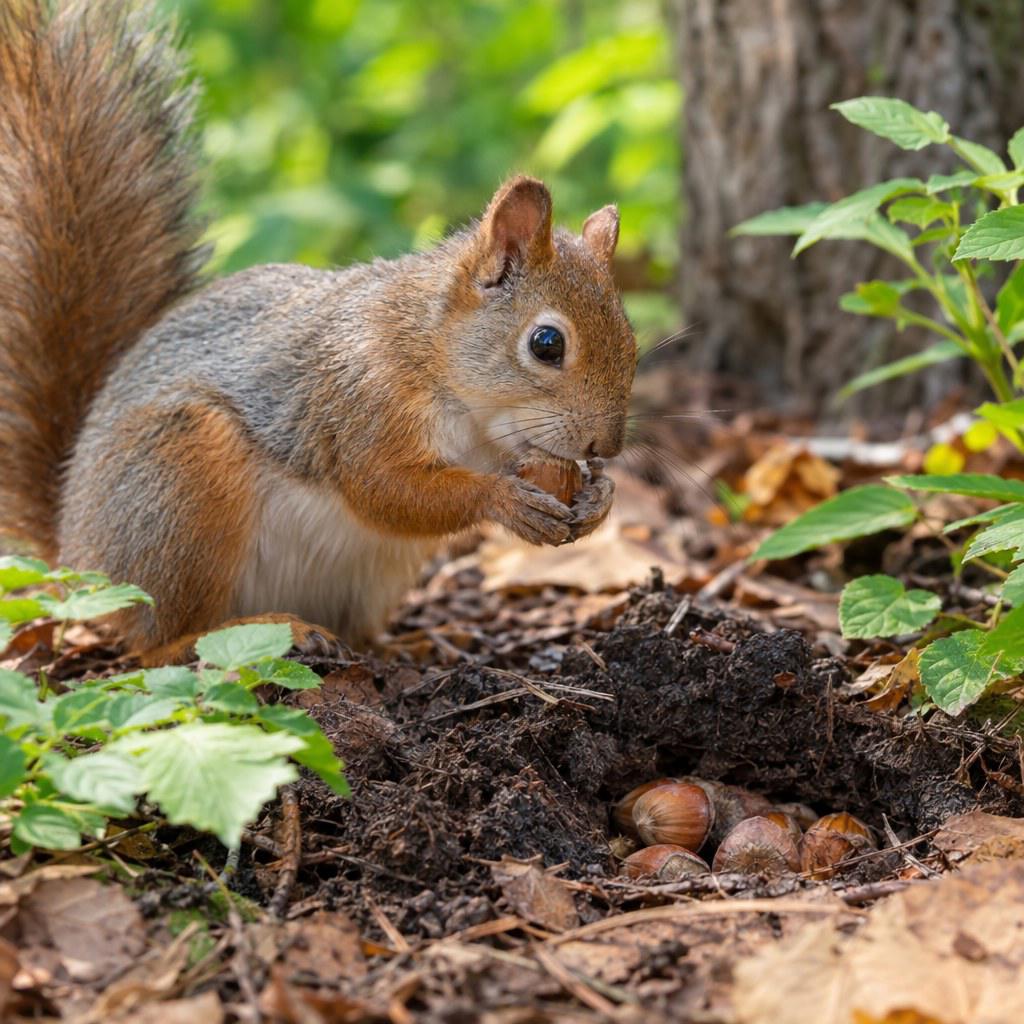
Many squirrels do not store all their food in one nest or den. Instead, they use a pattern known as scatter-hoarding: placing individual nuts, seeds, or other food items in many separate locations. A buried acorn may look like a random lawn disruption to you, but it can be one small part of a distributed food reserve.
This approach reduces risk. If another animal finds one cache, it does not get the squirrel’s entire supply. If one area is disturbed by weather, mowing, foot traffic, or other animals, food stored elsewhere may still be available. Spreading caches also lets squirrels use food sources near where they find them rather than carrying every item long distances.
Food burial is especially associated with seasonal availability. Trees can produce abundant nuts during a relatively short period, while winter and dry periods can limit what is easy to find. Caching converts a temporary abundance into food that may be available later. Squirrels may also eat some food immediately, carry some away, and bury some, depending on the item and local conditions.
It is not simply “forgetfulness”
Squirrels do fail to recover some buried food. That is a normal outcome of a system involving many hiding places, changing landscapes, competing animals, and food that may spoil or germinate. But they also use memory and environmental cues to locate at least part of their stored supply.
In practical terms, a squirrel does not need to retrieve every buried nut for caching to be worthwhile. Recovering enough items during lean periods can still provide a survival advantage. The unrecovered seeds have another ecological effect: some may sprout, helping disperse trees and shrubs.
How squirrels choose hiding places
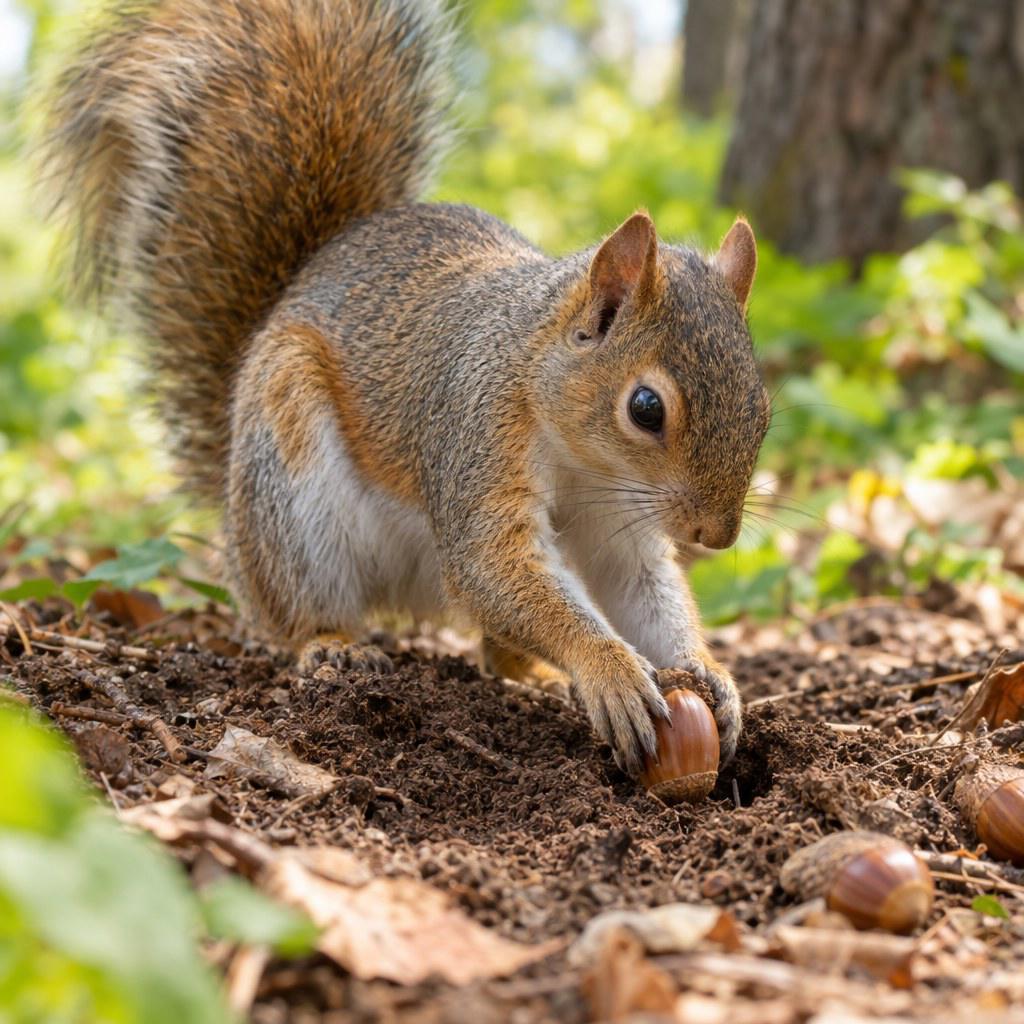
A squirrel generally needs soil, mulch, leaf litter, loose turf, or another material it can move quickly. The ideal site is easy to dig, offers some concealment, and is not so exposed that another animal can watch the entire process. This is why you may notice small holes around trees, shrubs, raised beds, planters, and the edges of lawns.
Location cues
Squirrels can use landmarks, spatial relationships, and familiar routes. A fence line, tree trunk, garden edge, or large rock may help orient a cache location.
Concealment
Loose mulch and planted areas make a cache less visible than bare ground. Concealment may lower the chance that other animals immediately find the food.
Soil conditions
Soft soil is quicker to excavate. Recently watered planters, freshly turned beds, and deep mulch can therefore attract repeated digging.
Squirrels may also make misleading movements. For example, one may appear to dig, cover the spot, and leave without depositing food. This can help conceal the location of a valuable item from nearby competitors. From a property-management perspective, this means a visible digging attempt does not always indicate a buried nut is present.
💡 Tip: Look for patterns before acting. A few shallow, scattered holes near mature nut-producing trees usually suggest caching. Persistent digging in containers, irrigation damage, chewed structures, or entry into a building calls for a closer inspection.
What food burial means for your yard or business property
Caching is natural, but it can conflict with tidy landscaping and food-production spaces. Small holes can displace seeds, uproot young plants, scatter mulch, and make containers look neglected. On a customer-facing property, repeated activity around entrance planters or outdoor dining areas can create an avoidable maintenance burden.
The right response depends on the location and severity. A squirrel burying nuts in a mature landscape may be tolerable. A squirrel repeatedly digging up new seedlings in a nursery display, community garden, patio planter, or storefront bed is a more direct operational problem.
Identify the food source first
Before changing the landscape, check what is attracting activity. Nut-bearing trees are an obvious source, but bird feeders can also supply seeds that squirrels carry elsewhere. Fallen fruit, unsecured compost, and accessible pet food may add to the attraction. Removing every food source is rarely realistic, but reducing easy, concentrated food can lower repeated visits.
Protect the most vulnerable areas, not every square foot
Targeted protection is usually more manageable than trying to exclude squirrels from an entire outdoor property. Cover newly planted seeds with appropriate mesh or screening, use physical barriers around vulnerable containers, and place a coarse protective layer over exposed soil where it will not interfere with plant health or drainage.
For commercial or shared sites, define who checks planters and beds after busy periods. A simple maintenance routine can catch displaced soil or uprooted plants before the area appears poorly maintained.
A practical prevention checklist
You do not need to eliminate normal wildlife activity to reduce disruption. Use this process to protect the areas that matter most while keeping maintenance proportionate to the problem.
- Map the damage. Note where digging happens, how often it occurs, and what is disturbed. Photograph repeat locations if several people share maintenance responsibilities.
- Check nearby attractants. Look for fallen nuts, feeder spills, open compost, fruit debris, and food left outdoors. Correct the easiest issues first.
- Prioritize high-value planting zones. Protect seedlings, bulbs, freshly seeded areas, decorative containers, and customer-facing beds before treating established landscaping.
- Use physical protection. Fit suitable mesh, screening, or plant guards securely over soil where digging is recurring. Make sure barriers do not trap wildlife or block needed watering.
- Refresh disturbed surfaces. Level mulch, replant displaced starts, and firm loose soil after activity. Prompt repair removes the easy digging conditions that can invite repeat caching.
- Review after weather and seasonal changes. Caching behavior can become more noticeable when nuts and seeds are plentiful. Adjust your maintenance schedule rather than assuming one repair is permanent.
Use humane, site-appropriate measures. If squirrels are entering buildings, damaging wiring, or creating a persistent sanitation issue, contact a qualified local wildlife-control or property-maintenance professional and check local rules before using any exclusion or removal method.
Mistakes to avoid and how to recover
Reacting to every small hole as an emergency
A few shallow holes are often an ordinary part of a landscape with squirrels and nut-producing trees. Overreacting can waste time and lead to unnecessarily broad measures. Instead, set a threshold: act when digging damages plants, affects a public-facing area, creates a trip concern, or coincides with other property damage.
Relying only on scare tactics
Visual deterrents, noise devices, and frequent rearrangement may have limited or temporary effects, especially where food remains easy to access. Use them, if at all, as a supplement to practical changes such as securing food sources and protecting soil.
Leaving fresh soil exposed
Newly filled pots and freshly planted beds can be particularly attractive because the soil is loose. If you have just installed plants, add your chosen protective layer immediately. If digging has already occurred, re-firm the soil, inspect roots, and replace or stabilize plants that have been dislodged.
⚠️ Caution: Avoid using poisons or unverified home remedies. They can create risks for pets, children, non-target wildlife, and the wider environment. Physical protection and sanitation are more controllable first steps.
Use a simple decision framework
Squirrels bury food because scattered caches improve access to food later. First decide whether the activity is normal and tolerable or causing measurable damage. Then reduce easy food sources, protect only vulnerable soil and plants, and monitor the results through the season.
Your next step: inspect the 3 areas with the most digging, identify the likely attractant in each, and choose one physical protection measure to test this week.