How to Smooth and Stretch Hair Without Heat
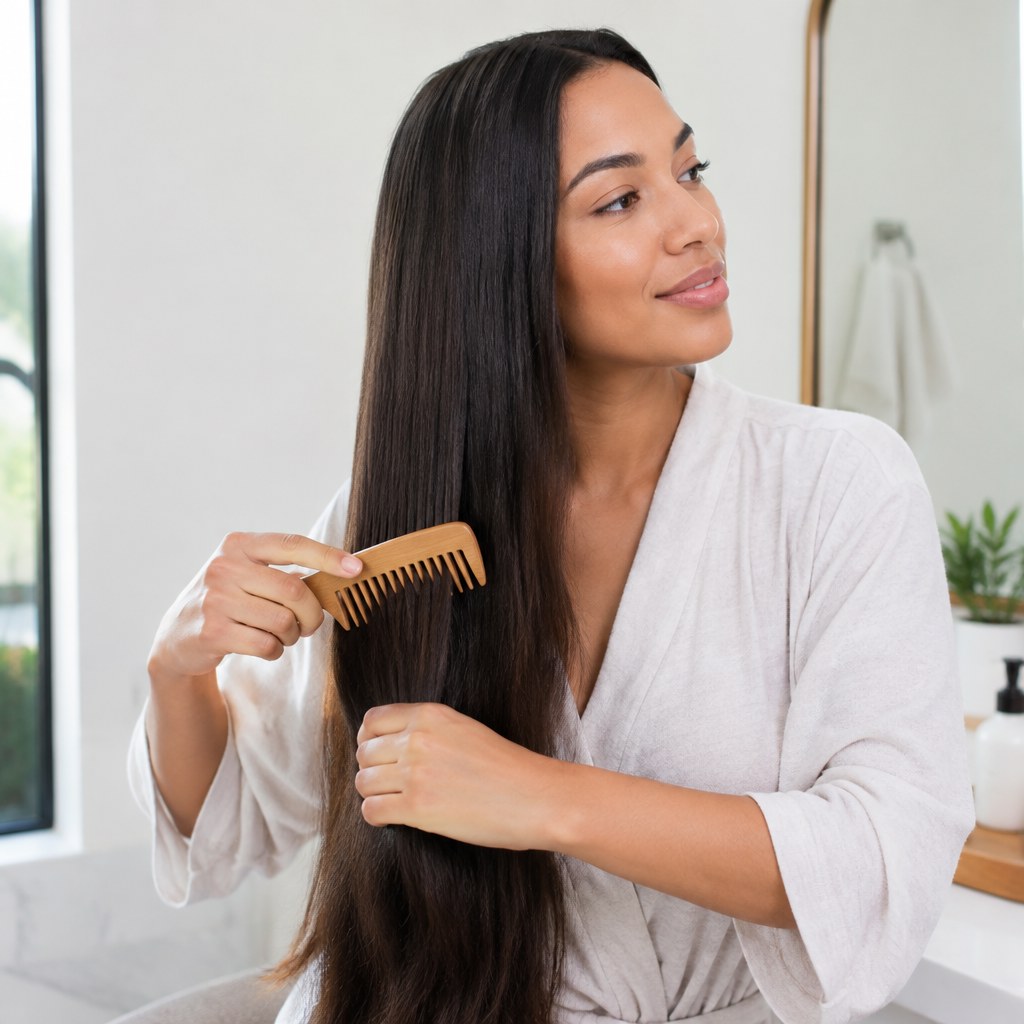
You can make hair easier to detangle and try a straighter-looking style without a hot iron. The result depends on your natural texture, length and the method you use. Heat-free styling may soften waves or stretch curls, but it will not permanently change the way new hair grows.
Curly and coily hair can be healthy without being straight. If you want a different look, choose a method that feels comfortable and avoids repeated pulling. Food masks are not proven chemical-free relaxers, despite the promises in many online recipes.
Set a realistic goal before styling
Decide whether you want fewer tangles, less frizz, a longer-looking stretched style or very straight hair. These are different goals. A conditioner can help with manageability; a temporary styling method can arrange hair in a different shape. Neither guarantees a salon-straight result on every texture.
DermNet explains that temporary straightening methods differ from chemical relaxers, which alter stronger bonds within the hair. Water and humidity can undo a temporary set. That means a style changing after washing or a humid day is expected, not evidence that you need a stronger homemade mixture.
Prepare the hair gently
Start with your usual suitable shampoo and conditioner. Avoid rough towel rubbing. Detangle in small sections with a wide-tooth comb or your fingers, beginning near the ends rather than pulling through a knot from the scalp.
The best time to detangle depends on texture: tightly curled hair is generally easier to handle damp with conditioner, while other hair types may benefit from drying partially first. If strands snap or your scalp hurts, stop and change the method. Extra brushing does not make a set safer or more permanent.
Three heat-free methods you can try
These are optional styling techniques, not treatments for damaged hair. Trial a small section first. Keep the tension low and accept some remaining wave or curl rather than tightening the style to force a result.
1. A loose wrap for a smoother finish
- After gentle detangling, arrange slightly damp hair around the head in manageable sections.
- Use smooth clips to keep it in place without pulling at the temples or hairline.
- Allow it to dry fully, then remove the clips carefully and arrange the hair with your fingers.
This may suit some longer, looser textures better than very short hair or tight coils. Skip it if the wrap feels uncomfortable or needs firm tension to stay put. A wrap that repeatedly pulls at the same area is not a harmless alternative to heat.
2. Large rollers for a looser shape
Large, smooth rollers can create a less tightly curled finish, although they may leave a bend rather than straight hair. Work in sections, secure gently and wait until the hair has dried before unwinding. Avoid tangling the ends around rough roller surfaces. There is no need to sleep on an uncomfortable set.
3. Gentle stretching for curls and coils
Loose banding or another familiar low-tension stretching technique may reduce shrinkage temporarily. Use soft covered ties and leave the roots comfortable. If ties leave tight dents, pull at the edges or require force to remove, loosen the style or choose a different approach.
None of these methods should cause headache, stinging or scalp soreness. The AAD warns that repeated traction can cause hair loss, which can become permanent. Comfort takes priority over a perfectly straight finish.
What the popular food and plant masks can—and cannot—do
The earlier version of this article described ten ingredients as reliable straightening treatments. That overstates the evidence. A temporary change in softness or shine does not demonstrate that an ingredient straightens hair.
- Yogurt and eggs: Their protein content as foods does not make them proven hair relaxers. There is no basis for guaranteeing tangle-free hair until the next wash.
- Aloe vera: An aloe-containing styling product may appeal to you, but aloe is not an established straightener. It can cause skin reactions in some people.
- Jasmine oil: Fragrance or a slicker feel is not evidence of uncurling. Do not rub the scalp or ends firmly to force curls out.
- Henna: This is a hair colorant, not a dependable straightening method. It can change color and should not be used casually as a weekly conditioning experiment.
- Coconut milk: A homemade rinse cannot promise an immediate straight style. Use a formulated conditioner if detangling is your main goal.
- Apple cider vinegar: Acidity does not make a rinse a straightener. There is no need to add vinegar to this styling routine.
- Milk and honey: A sticky food mask is not a reliable alternative to products designed to rinse out of hair.
- Coconut oil: Research on hair-fiber protein loss is different from research on straightening. A little oil may suit some hair-care routines, but it does not permanently relax curls.
- Banana and papaya: A mashed-fruit recipe has no established ability to change natural curl pattern. Difficult rinsing and extra manipulation can defeat the purpose of a gentle routine.
Do not apply an ingredient you are allergic to. If a product causes burning or a rash, rinse it off and stop using it. “Natural” is not a guarantee of skin tolerance.
If you choose heat or a salon treatment later
Use hot tools sparingly and follow their safety instructions. The AAD advises using flat irons only on dry hair, at a low or medium setting. Repeated high heat can cause damage, but it is inaccurate to say every use will certainly cause hair loss.
Ask a salon exactly which product it plans to use. The FDA warns that some smoothing products release formaldehyde when heated, exposing both the client and stylist. Ingredient names and ventilation matter more than an appealing “natural” marketing claim. Chemical relaxers also have different risks from temporary heat-free styling.
Make the next attempt easier
Note which method you used, how damp the hair was and how long it took to dry. Change one thing next time, rather than adding multiple masks. If hair becomes brittle, breaks unusually easily or starts thinning at the edges, pause straightening attempts and seek professional advice.
Sources
Information checked on 1 October 2026.