10 Houseplants to Consider: Care Tips and the Air-Purifying Myth
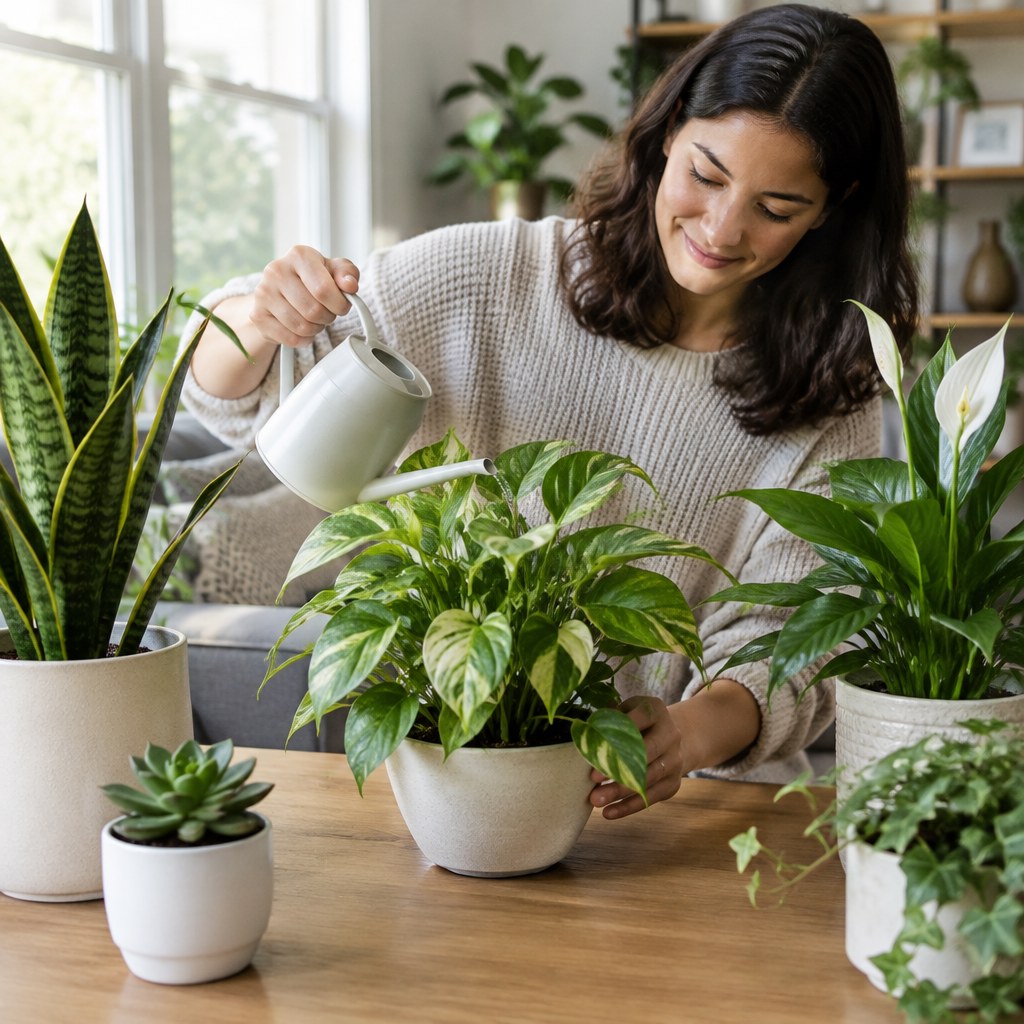
Houseplants can add color and texture to a room and give you an enjoyable care routine. Choose them for those qualities and for how well they suit your home.
Can houseplants purify indoor air?
Laboratory experiments are often used to market plants as air purifiers. However, the US Environmental Protection Agency says there is no evidence that a reasonable number of houseplants removes significant amounts of pollutants in homes and offices. A few pots cannot replace control of pollution sources, appropriate ventilation or suitable filtration.
This guide corrects our earlier air-purification claims. The ten plants below are options for decoration and gardening, rather than a ranking of air-cleaning performance.
Ten houseplants to consider
1. Aloe vera
Aloe’s fleshy leaves suit a bright spot and a pot that drains freely. Check soil moisture before watering; it is a succulent, not a plant to keep standing in water. Leaf discoloration is not a household pollution test. Keep it away from pets and children who may chew it.
Plant care or safety reference
2. Peace lily
Choose a position out of direct sun. Keep the growing mix from becoming soggy and use a container with drainage. Its white spathes and glossy foliage provide visual interest, but chewing the plant can irritate the mouth. Place it where children and pets cannot reach it.
Plant care or safety reference
3. Spider plant
Its arching leaves work well in a hanging container with secure support. Give it suitable light and inspect soil moisture instead of automatically watering every day. ASPCA’s plant database lists Chlorophytum comosum as non-toxic to dogs and cats; that does not make the plant a pet food.
Plant care or safety reference
4. English ivy
Ivy offers a trailing shape for a container, but it is a poor choice where pets can chew the foliage: ASPCA lists Hedera helix as toxic to cats and dogs. Do not choose it to remove pet waste particles or mold from a room. Address those sources directly.
Plant care or safety reference
5. Boston fern
Boston fern is a choice for someone who can check moisture regularly. Its roots should not be allowed to dry out completely, but the pot still needs drainage. Consider your home’s humidity and your care routine before buying a large fern.
Plant care or safety reference
6. Chrysanthemum
Choose chrysanthemums for a colorful flowering display. Keep the nursery’s care label: maintaining the plant and encouraging it to flower again are different tasks. Chrysanthemum flowering responds to day length, so an indoor display will not necessarily bloom continuously.
Plant care or safety reference
7. Snake plant
The upright leaves can fit a narrow floor space. Snake plants tolerate lower light, but low light is not the same as no light. Select a position with usable daylight and avoid treating its hardy reputation as a reason to ignore growing conditions.
Plant care or safety reference
8. Barberton or gerbera daisy
Gerbera offers a flowering option for a bright position. Good drainage matters; a decorative outer pot should not trap excess water around the roots. Choose it for its flowers and the conditions you can provide, without expecting it to treat anxiety or depression.
Plant care or safety reference
9. Flamingo lily
Anthurium brings glossy foliage and colorful spathes to a container display. It needs a moist, well-drained growing medium. Keep it away from chewing pets and young children: its calcium oxalate crystals can cause irritation, and the sap can irritate skin and eyes.
Plant care or safety reference
10. Lady palm
Lady palm’s divided leaves offer a larger foliage display. It tolerates shade and grows slowly, but still needs appropriate light, space and drainage. Check the botanical name, Rhapis excelsa, when buying; common names alone can lead to confusion between different plants.
Plant care or safety reference
Before you bring a plant home
- Match its light and watering needs to the actual room, including changes through the seasons.
- Use a pot with drainage and check for water trapped in a decorative outer container.
- Check the exact species against the ASPCA plant database if you have pets. Contact your veterinarian promptly after a suspected toxic ingestion.
- Keep plant care products and potentially harmful foliage out of children’s reach.
What to do about indoor air instead
Identify the source of the problem: smoke, dampness, cleaning products and inadequate ventilation need different responses. Follow the EPA’s indoor-air guidance on source control, ventilation and air cleaning. Avoid overwatering plants; persistently damp soil can support microorganisms that bother people with allergies.
Editorial update: October 1, 2026. Corrected air-quality claims and added plant-care and pet-safety references.